
2 layers55 × 80 mm
Board esp32 v2
sudomesh/disaster-radio
A (paused) work-in-progress long-range, low-bandwidth wireless disaster recovery mesh network powered by the sun.
101 parts1.1k

 zevv/zoiadpy3
External display for Empress Zoia
Zoiadpy is an open-source printed circuit board by zevv, from the zevv/zoiadpy repository on GitHub. It is a 2-layer board of 100 × 71 mm with 22 parts on 44 nets, routed with 251 tracks and 38 vias.
It is built around the ESP32-WROOM-32U. Its parts include 6 capacitors, 6 resistors, 2 ICs, 2 connectors and 1 diode. It belongs with the lEDs and displays boards and the ESP32 boards of this library.
The repo holds the source code and schematics/pcb design for an external display for the Zoia. The Zoia comes with a screen so small you can cover it with the tip of your pinky. This is barely usable when prgramming the Zoia on your couch, but totally useless on stage when changing programs or parameters.
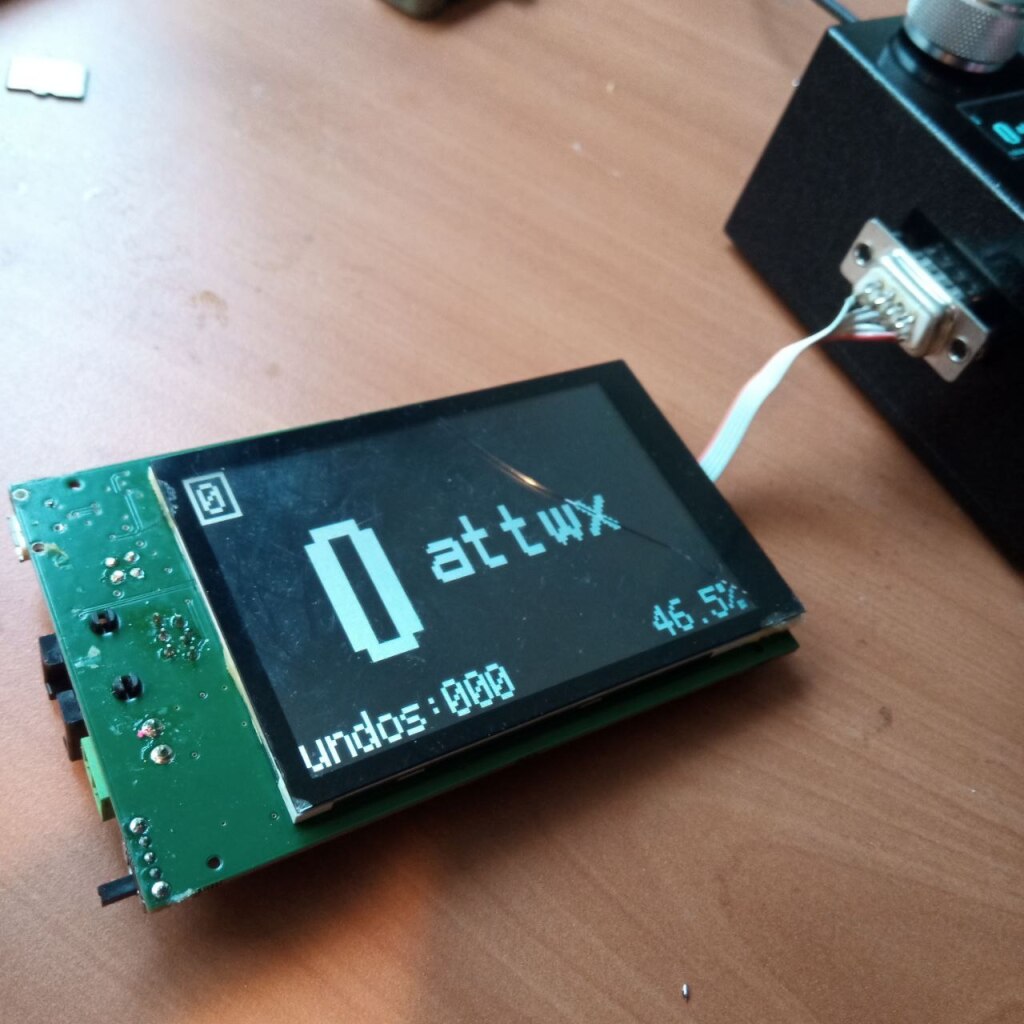
This external display hooks onto the SPI bus between the Zoia en the tiny OLED display and sniffs the screen contents when the display is updated. The screen is upscaled to 480x320 resolution and sent to a second larger display.
The Zoia luckily exposes the OLED SPI on a friendly 2.54mm header row, so anyone with basic soldering skills should be able to connect some wires to these and feed them out of the box. I used a retro style DB9 type connector for this myself, as this happened to be available in my parts drawer. You need 5 wires in total, so any connector with enough pins should do:
I love this little project for me personally, but I do not recommend others to go hack their Zoia: you will surely void the warranty of your box, and it is very possible it will break in the process of adding the screen. Do not complain to me when this happens.
Not too complicated: ESP32 has a bunch of SPI busses and supports both master and slave mode. The OLED SPI is running in slave mode and handles all SPI transfers of exactly 1024 bytes, as these contain the full updated screen data. All other SPI transfers are simply ignored, as these contain the usual setup parameters for the display.
The second SPI runs in master mode and drives an ILI4822 type TFT display which I happened to have lying around. Although this is a full color display, it's driven in 3 bits per pixel mode only to allow the big screen to keep up with the OLED frame rate.
Kicad schematics and PCB design are available, but I have not yet produced this as I'm happy to run on my current prototype hardware. I'm sure these are mostly ok but someone will have to actually build and test these to make sure. I might do this one day.
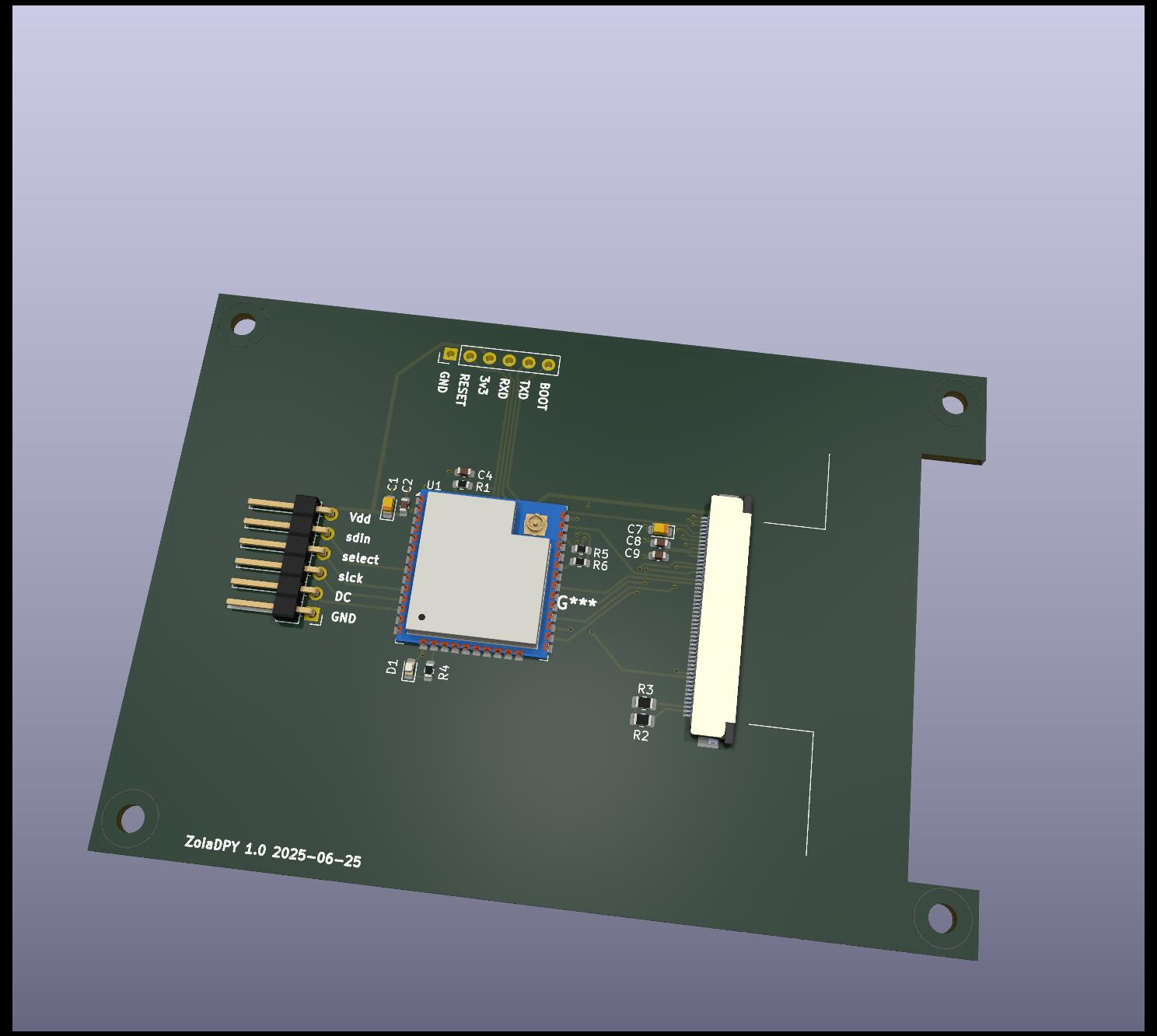
| Qty | Value | Footprint | References |
|---|---|---|---|
| 4 | 0.1uF | Capacitor_SMD:C_0603_1608Metric | C2, C4, C8, C9 |
| 4 | MountingHole | MountingHole:MountingHole_3.2mm_M3 | H1, H2, H3, H4 |
| 2 | 47R 125mW | Resistor_SMD:R_0805_2012Metric | R2, R3 |
| 2 | R | Resistor_SMD:R_0603_1608Metric | R5, R6 |
| 1 | 10k | Resistor_SMD:R_0603_1608Metric | R1 |
| 1 | 10uF | Capacitor_Tantalum_SMD:CP_EIA-2012-12_Kemet-R | C7 |
| 1 | 22uF | Capacitor_Tantalum_SMD:CP_EIA-2012-12_Kemet-R | C1 |
| 1 | 270R | Resistor_SMD:R_0603_1608Metric | R4 |
| 1 | Conn_01x06 | Connector_PinHeader_2.54mm:PinHeader_1x06_P2.54mm_Vertical | J3 |
| 1 | Conn_01x06 | Connector_PinHeader_2.54mm:PinHeader_1x06_P2.54mm_Horizontal | J1 |
| 1 | ESP32-WROOM-32U | RF_Module:ESP32-WROOM-32U | U1 |
| 1 | LED GREEN | LED_SMD:LED_0603_1608Metric | D1 |
| 1 | LOGO | LOGO | G*** |
| 1 | ~ | zoidadpy:62684-50210E9ALF | U3 |
sudomesh/disaster-radio
A (paused) work-in-progress long-range, low-bandwidth wireless disaster recovery mesh network powered by the sun.

freeDSP/freeDSP-aurora
freeDSP ADAU1452 with 8 analog input, 8 analog outputs, S/P-DIF I/O, ADAT I/O, USB Audio Class2, WiFi, Bluetooth

peterkrull/quad
Firmware, hardware and documentation for my autonomous quad copter project


evezor/tobor_v00
Tobor (robot spelled backwards), was built to be the most versatile open-source robotics system

pablozg/freeds
Derivador de energía solar excedente creado por Pablo Zerón, Diseño PCB por Amcalo, Tester original por Aeizoon, Wiki por Zoilo Mora

AlessandroAU/Chorus32-ESP32LapTimer
This is an ESP32 port of the popular Chorus RF Laptimer
It measures 100 × 71 mm and has 2 copper layers, 1.6 mm thick.
22 parts, built around the ESP32-WROOM-32U. The full list of its parts is on this page, with links to each part's symbol and footprint where PCBKit's library has them.
From the zevv/zoiadpy repository on GitHub, at the commit this page was made from: the board is sch/zoiadpy.kicad_pcb and its schematic sch/zoiadpy.kicad_sch. PCBKit opens the board in the browser, with nothing to install.
Its repository states no licence, so its author keeps all rights: ask zevv before reusing the design.