
4 layers300 × 120 mm

Le DAW!!!
Hat is an open-source printed circuit board by wang-edward, from the wang-edward/ledaw repository on GitHub, published under the MIT licence. It is a 4-layer board of 65 × 56 mm with 80 parts on 74 nets, routed with 480 tracks and 108 vias.
It is built around the CAT24C256LI and ESDA6V1BC6. Its parts include 30 capacitors, 5 resistors, 5 connectors, 4 ICs and 1 diode.


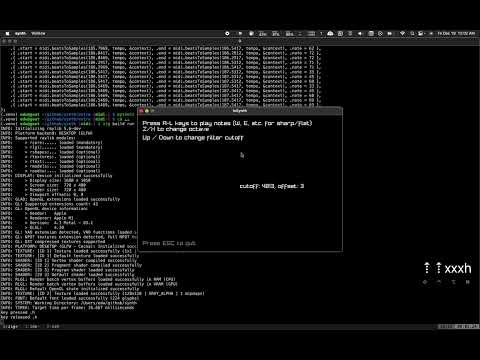
run desktop app
cargo runbuild
cargo buildbuild firmware
cargo build -p firmwaretest
cargo testlint + format
# rustup component add clippy rustfmt  # if you don't have it
cargo clippy --all-targets --all-features
cargo fmt --checksee firmware/README.md for flashing the rp2350.
| Qty | Value | Footprint | References |
|---|---|---|---|
| 15 | 1uF | Capacitor_SMD:C_0805_2012Metric | C205, C206, C207, C208, C209, C217, C218, C220, C221, C223, C225, C226, C227, C228, C229 |
| 6 | 100nF | Capacitor_SMD:C_0805_2012Metric | C101, C202, C204, C210, C212, C216 |
| 5 | 600Ohm@100MHz | Inductor_SMD:L_0805_2012Metric | FB201, FB202, FB203, FB204, FB205 |
| 4 | 10uF | Capacitor_SMD:C_0805_2012Metric | C201, C203, C213, C215 |
| 4 | 470pF | Capacitor_SMD:C_0805_2012Metric | C211, C214, C219, C222 |
| 4 | MountingHole_2.7mm_M2.5 | MountingHole:MountingHole_2.7mm_M2.5 | MH1, MH2, MH3, MH4 |
| 2 | 10k | Resistor_SMD:R_0805_2012Metric | R201, R203 |
| 2 | 3.9k | Resistor_SMD:R_0805_2012Metric | R101, R102 |
| 1 | 12.288MHz | Oscillator:Oscillator_SMD_SeikoEpson_SG210-4Pin_2.5x2.0mm | Y201 |
| 1 | 2.2k | Resistor_SMD:R_0805_2012Metric | R202 |
| 1 | 2.2uF | Capacitor_SMD:C_0805_2012Metric | C224 |
| 1 | 5V | TestPoint:TestPoint_THTPad_1.5x1.5mm_Drill0.7mm | TP101 |
| 1 | CAT24C256 | Package_SO:SOIC-8_3.9x4.9mm_P1.27mm | U102 |
| 1 | CODEC_MCLK | TestPoint:TestPoint_Pad_D2.0mm | TP201 |
| 1 | ESDA6V1BC6 | Package_TO_SOT_SMD:SOT-23-6 | D201 |
| 1 | GND | TestPoint:TestPoint_THTPad_1.5x1.5mm_Drill0.7mm | TP102 |
| 1 | GPIO | Connector_PinSocket_2.54mm:PinSocket_2x20_P2.54mm_Vertical | J101 |
| 1 | HPL | TestPoint:TestPoint_Pad_D2.0mm | TP212 |
| 1 | HPR | TestPoint:TestPoint_Pad_D2.0mm | TP209 |
| 1 | HPSNS | TestPoint:TestPoint_Pad_D2.0mm | TP214 |
| 1 | Headphone | footprints:CUI_SJ-43514-SMT-TR | J203 |
| 1 | ID_WP | Jumper:SolderJumper-2_P1.3mm_Open_RoundedPad1.0x1.5mm | JP101 |
| 1 | INA1 | TestPoint:TestPoint_Pad_D2.0mm | TP208 |
| 1 | INA2 | TestPoint:TestPoint_Pad_D2.0mm | TP211 |
| 1 | JACKSENSE | TestPoint:TestPoint_Pad_D2.0mm | TP203 |
| 1 | LDO_IN | TestPoint:TestPoint_Pad_D2.0mm | TP217 |
| 1 | LDO_OUT | TestPoint:TestPoint_Pad_D2.0mm | TP218 |
| 1 | LineIn | Connector_Audio:Jack_3.5mm_CUI_SJ-3523-SMT_Horizontal | J202 |
| 1 | LineOut | Connector_Audio:Jack_3.5mm_CUI_SJ-3523-SMT_Horizontal | J201 |
| 1 | MAX98089ETN_T | footprints:MAX98089ETN_T | U201 |
| 1 | MIC2N | TestPoint:TestPoint_Pad_D2.0mm | TP215 |
| 1 | MIC2P | TestPoint:TestPoint_Pad_D2.0mm | TP213 |
| 1 | MICBIAS | TestPoint:TestPoint_Pad_D2.0mm | TP207 |
| 1 | MicL | Sensor_Audio:Knowles_LGA-5_3.5x2.65mm | MK201 |
| 1 | MicR | Sensor_Audio:Knowles_LGA-5_3.5x2.65mm | MK202 |
| 1 | Oled | Connector_PinHeader_2.54mm:PinHeader_1x07_P2.54mm_Vertical | U101 |
| 1 | RECN | TestPoint:TestPoint_Pad_D2.0mm | TP206 |
| 1 | RECP | TestPoint:TestPoint_Pad_D2.0mm | TP204 |
| 1 | SPKLN | TestPoint:TestPoint_Pad_D2.0mm | TP205 |
| 1 | SPKLP | TestPoint:TestPoint_Pad_D2.0mm | TP202 |
| 1 | SPKRN | TestPoint:TestPoint_Pad_D2.0mm | TP216 |
| 1 | SPKRP | TestPoint:TestPoint_Pad_D2.0mm | TP210 |
| 1 | SpeakerL | TerminalBlock_Phoenix:TerminalBlock_Phoenix_MKDS-1,5-2-5.08_1x02_P5.08mm_Horizontal | LS201 |
| 1 | SpeakerR | TerminalBlock_Phoenix:TerminalBlock_Phoenix_MKDS-1,5-2-5.08_1x02_P5.08mm_Horizontal | LS202 |
| 1 | TPS7A20xxxDBV | Package_TO_SOT_SMD:SOT-23-5 | U202 |
| 1 | Uart | Connector_PinHeader_2.54mm:PinHeader_1x03_P2.54mm_Vertical | J102 |


martinribelotta/h7dragonman
STM32H7 board for industrial protocol bridge

themainframe/p3-cellular-module
CAD/CAM for a GPD Pocket 3 Cellular Module

dchwebb/MidiMonger
Eurorack MIDI interface supporting USB and serial MIDI. Based on ARM STM32F446 MCU.

Resaj/time2time
Chronometer with partials measurement for the line-following competitions

arraym/ESP8266Tetris
Tetris game with ESP8266 (ESP-12F) and WS2812B (128 RGB LEDs) - KiCAD schematic and PCB
It measures 65 × 56 mm and has 4 copper layers, 1.6 mm thick.
80 parts, built around the CAT24C256LI and ESDA6V1BC6. The full list of its parts is on this page, with links to each part's symbol and footprint where PCBKit's library has them.
From the wang-edward/ledaw repository on GitHub, at the commit this page was made from: the board is hardware/hat/hat.kicad_pcb and its schematic hardware/RP-008173-DS-1-CM4IO-KiCAD/CM4IOv5.kicad_sch. PCBKit opens the board in the browser, with nothing to install.
Its repository publishes it under the MIT licence: you may reuse it on that licence's terms (keep the author's notice, and for a copyleft licence share your changes alike).