2 layers33 × 23.9 mm
ESPTiny1614
tomtor/ESPTiny
KiCad ATtiny84/x14/x02 (SMD) and ESP-01 (ESP 8266) PCB boards
24 parts4GPL-3.0

 tomtor/ESPTiny4
KiCad ATtiny84/x14/x02 (SMD) and ESP-01 (ESP 8266) PCB boards
ESPTiny402 is an open-source printed circuit board by tomtor, from the tomtor/ESPTiny repository on GitHub, published under the GPL-3.0 licence. It is a 2-layer board of 26.4 × 23.9 mm with 21 parts on 16 nets, routed with 304 tracks and 25 vias.
It is built around the ATTINY402-SSN and BAT54S. Its parts include 5 resistors, 3 ICs, 3 connectors, 2 capacitors and 2 diodes. It belongs with the ESP32, ESP8266 and AVR (ATmega, ATtiny) boards of this library.


The main function of the ATtiny is acting as a battery friendly low power co-processor for the ESP. A bit like the ULP low power co-processor of the ESP32, except with a lot more IO functions and program memory.
ATtiny and ESP combined use 22uA in sleep mode or even less when the ESP is switched off by the ATtiny with CS.
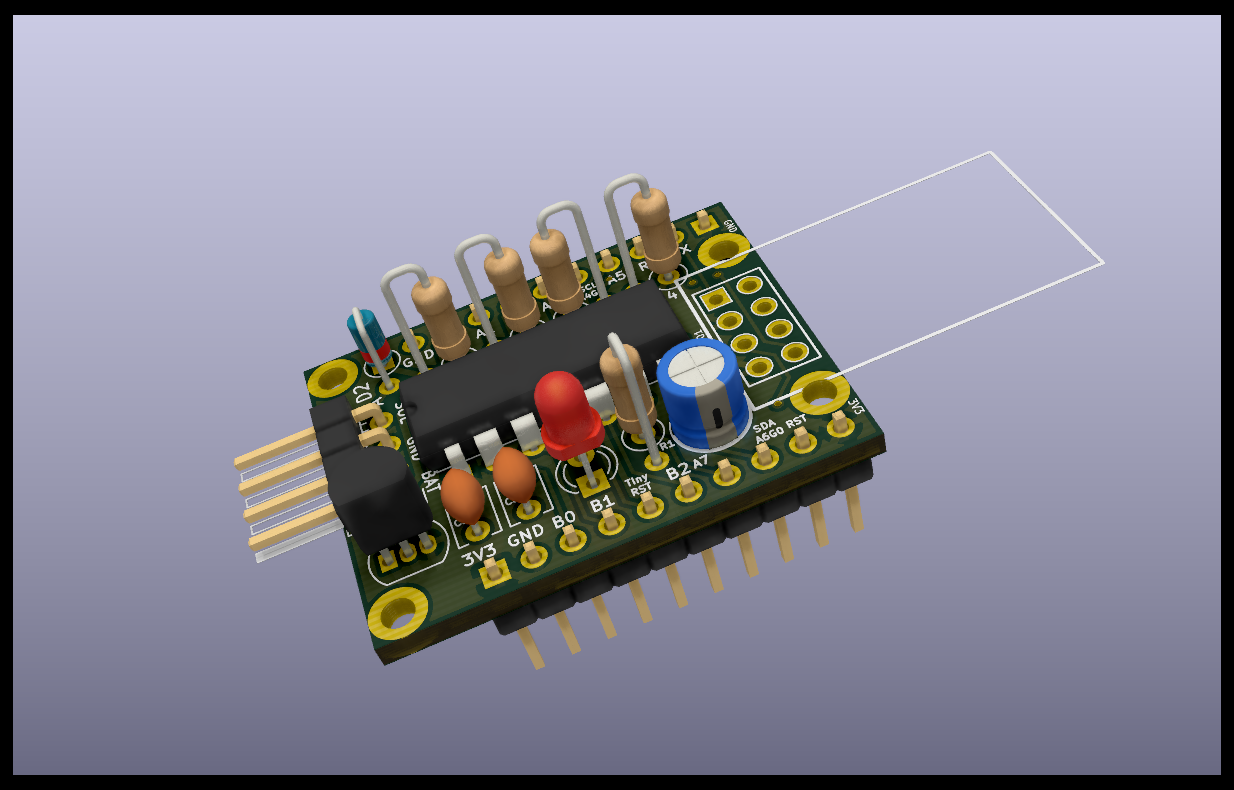
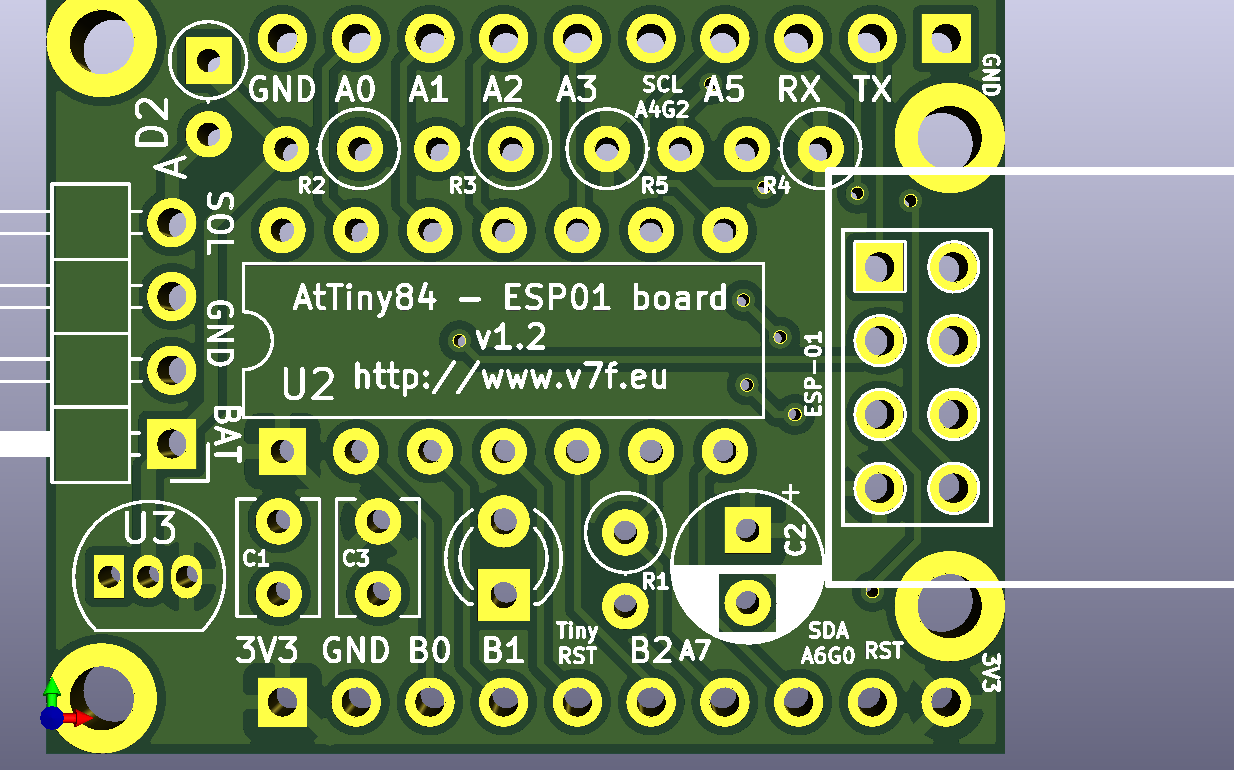
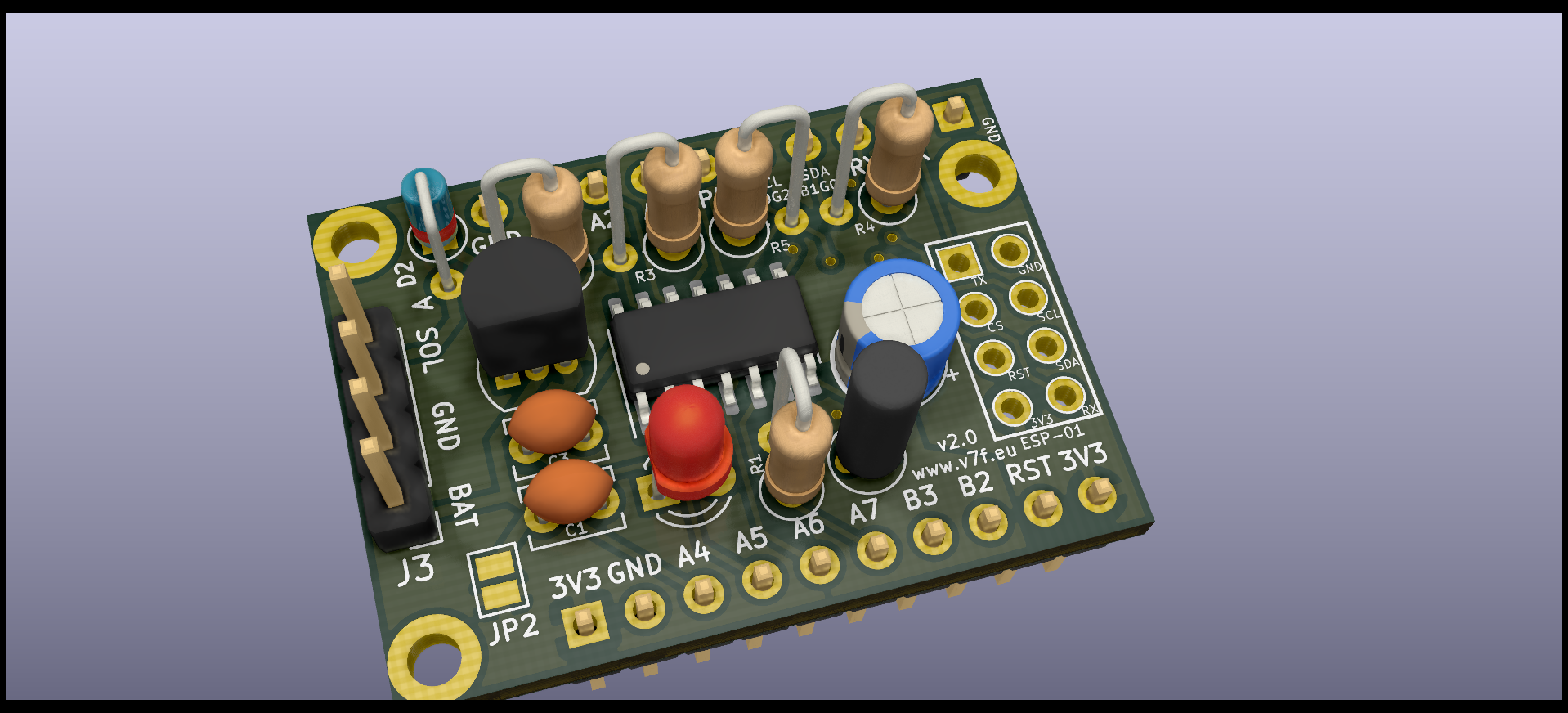
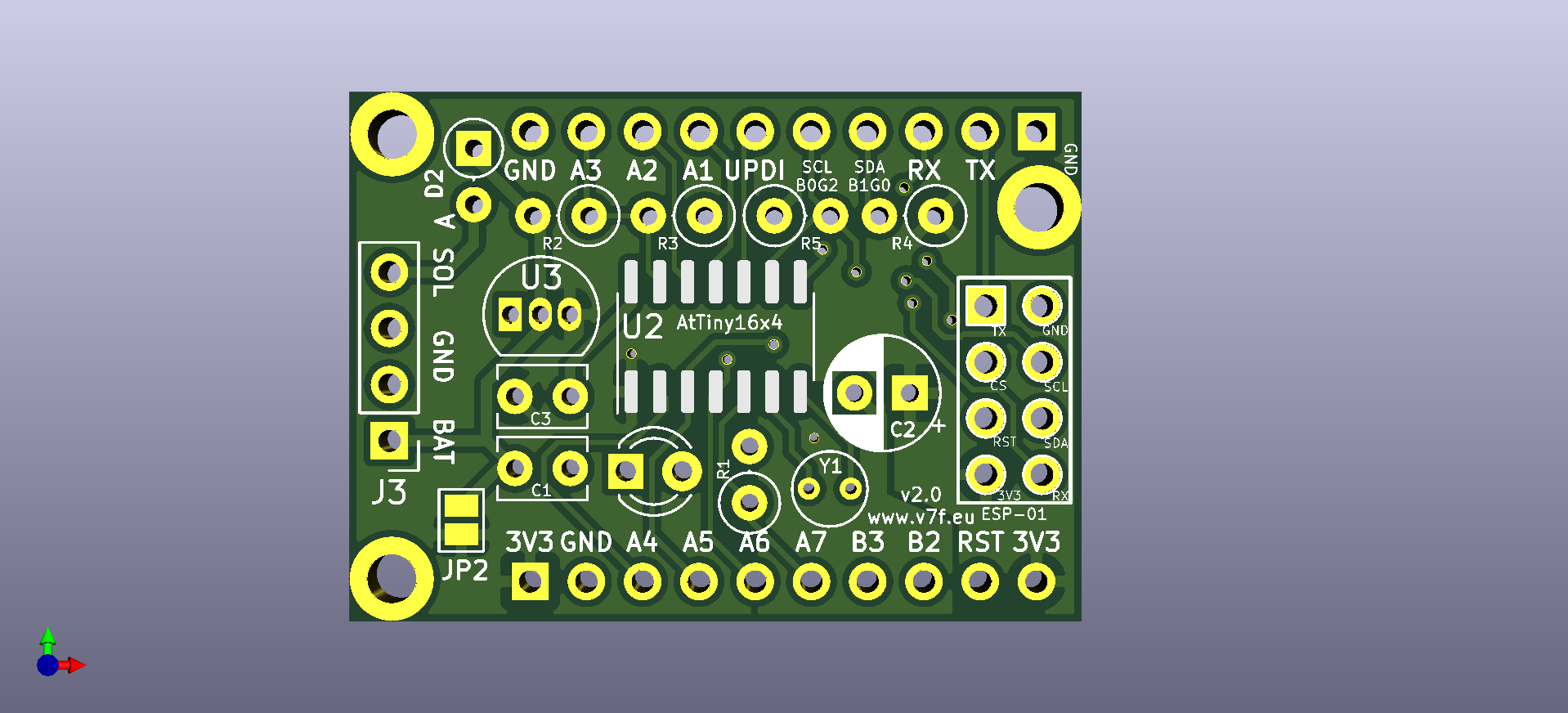
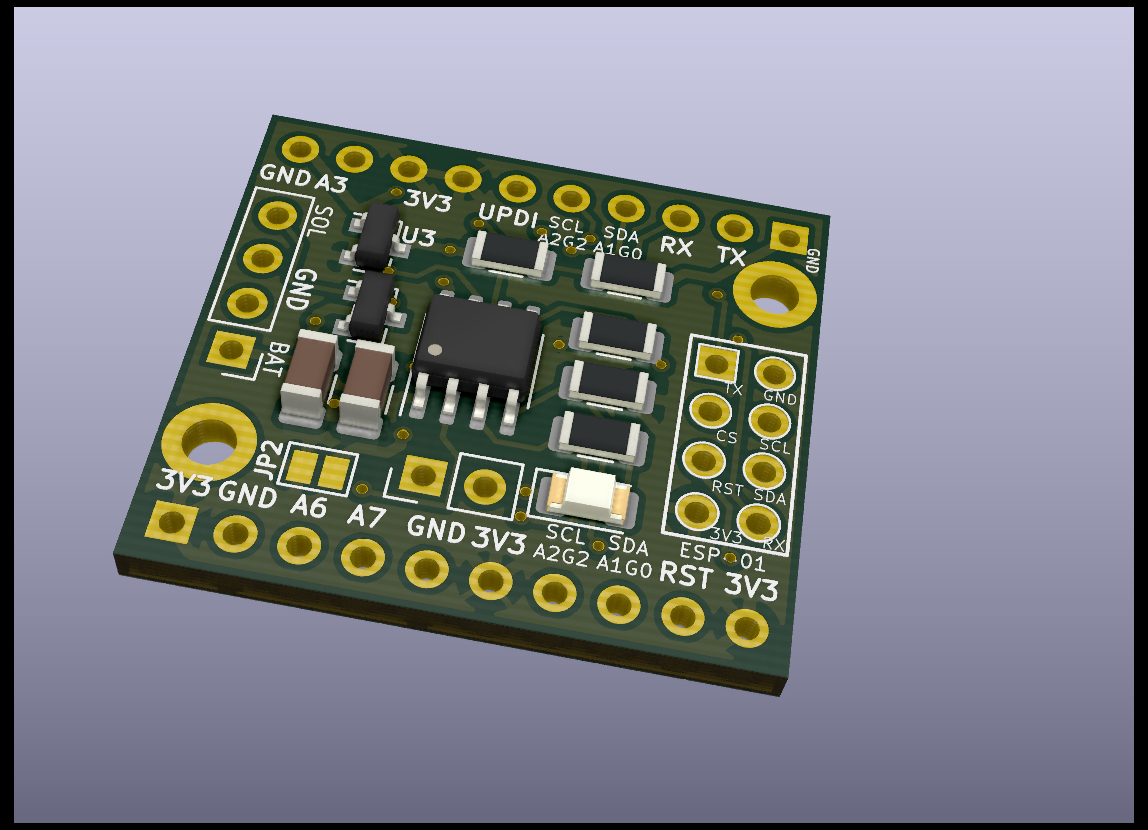
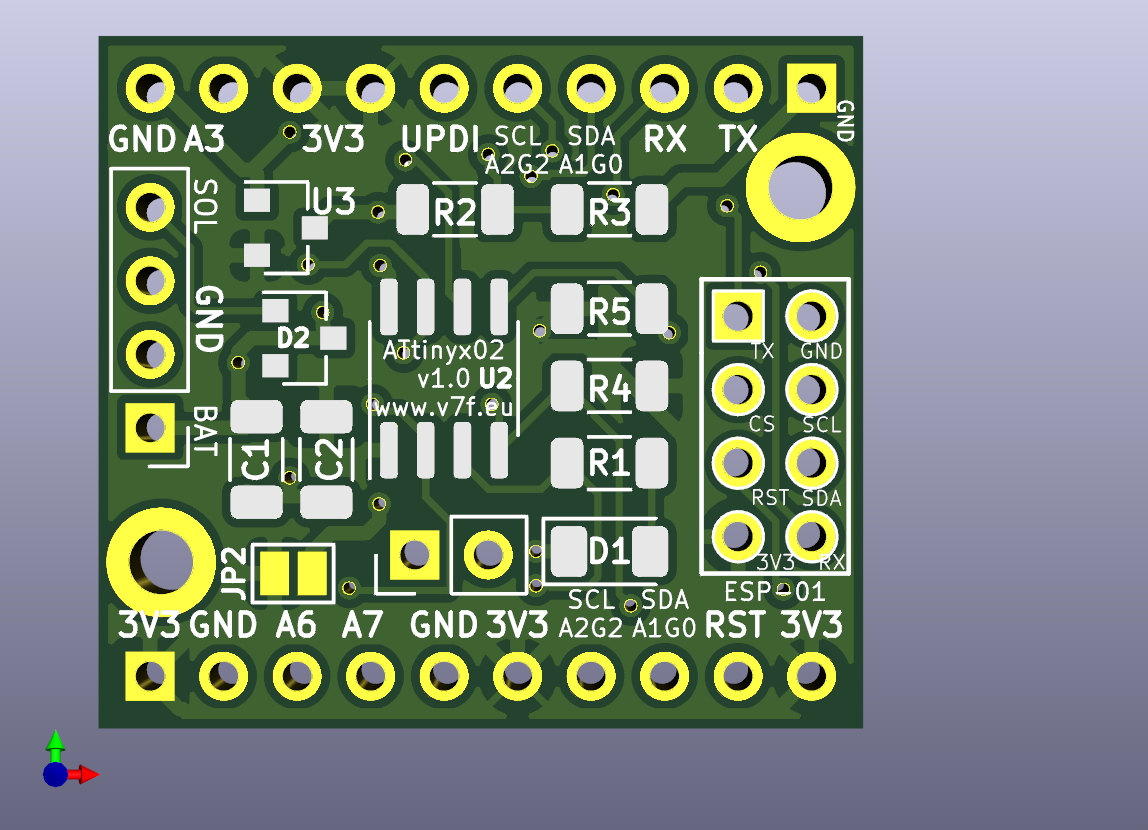
Usable on breadboard (ATtiny84: 9 rows high, leaves 2 rows empty and ATtiny16x4: 8 rows high) OR stand alone.
3 PCB designs: ATtiny84 or ATtiny16x4 or ATtinyx02
All components / features are optional:
The ATtiny wakes up the ESP every 10 minutes by pulling RST low and sends a counter and the supply voltage to it.
OTA for ESP program updates is activated for 20s when the I2C communication fails. This can be triggered by resetting the ESP by pulling the RST line low. Because the ATtiny is most of the time sleeping the I2C communication will fail.
There is a small chance that the ATtiny will reset the ESP during upload when the 10 minute interval is completed. You can prevent this by pulling the ATtiny RST low when using OTA, or just upload again.
https://github.com/tomtor/ESPTiny/raw/master/ESPTiny.pdf
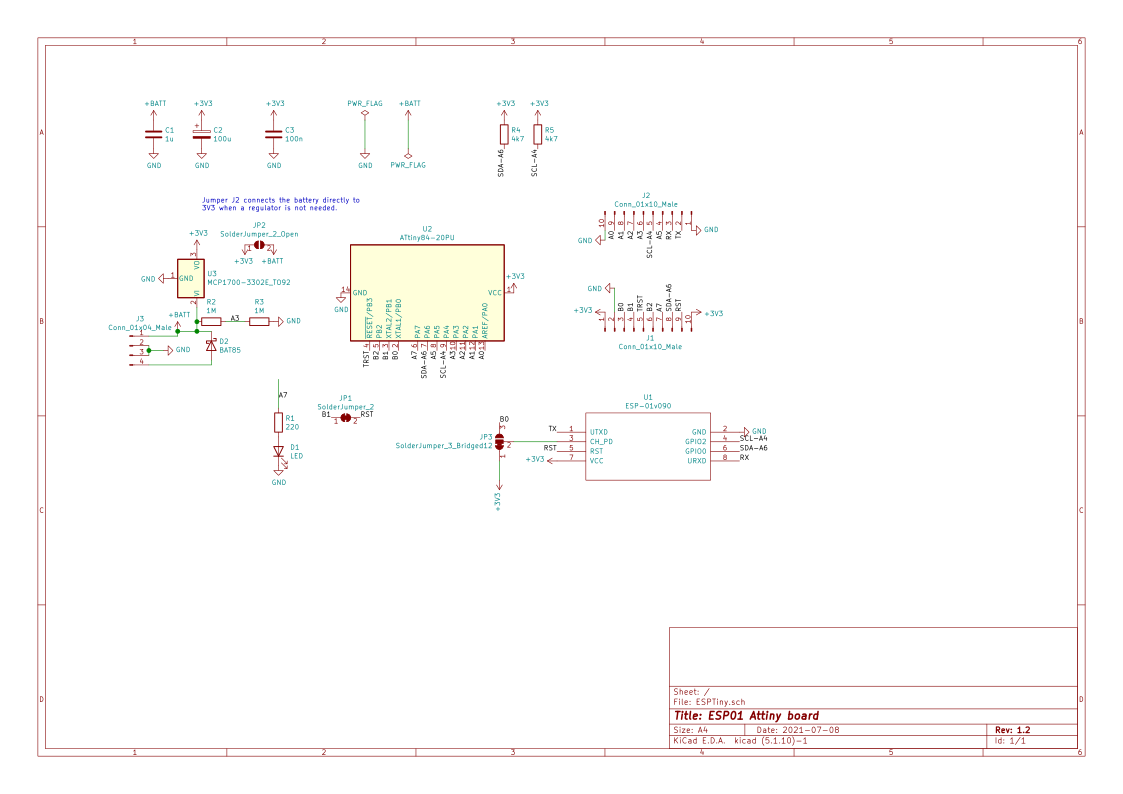
https://github.com/tomtor/ESPTiny/raw/master/ESPTiny1614.pdf
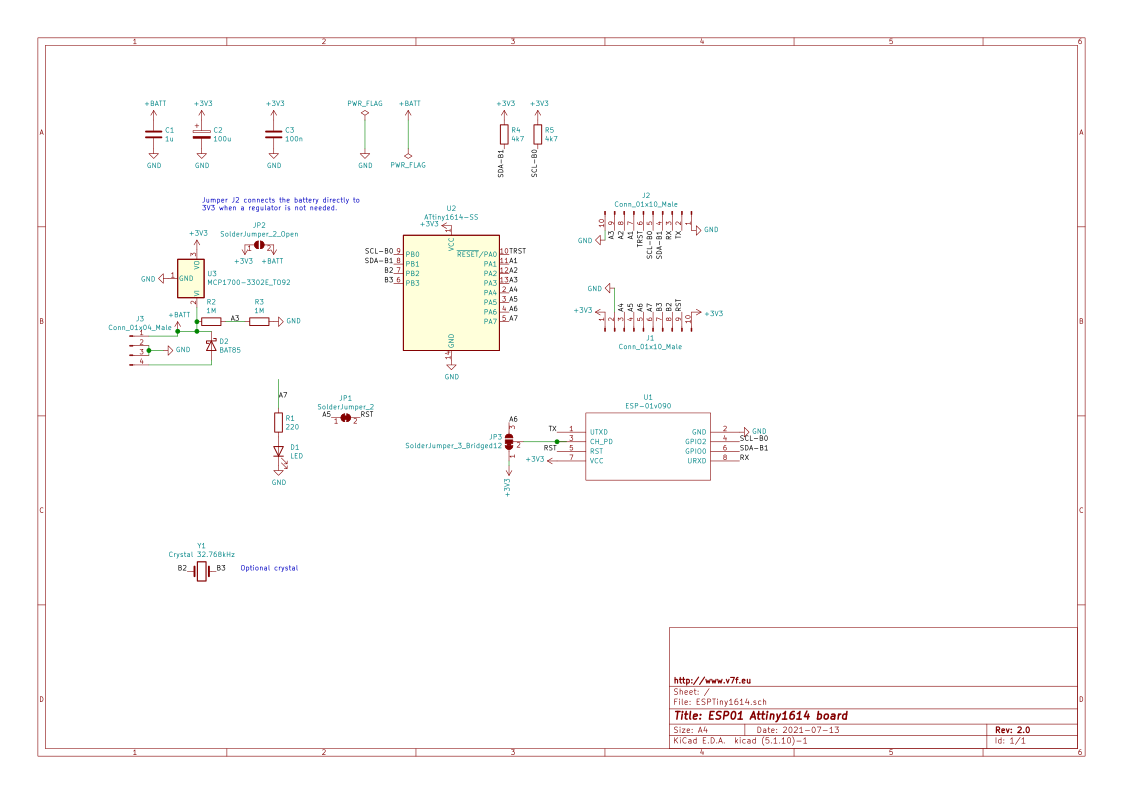
https://github.com/tomtor/ESPTiny/raw/master/ESPTiny402.pdf
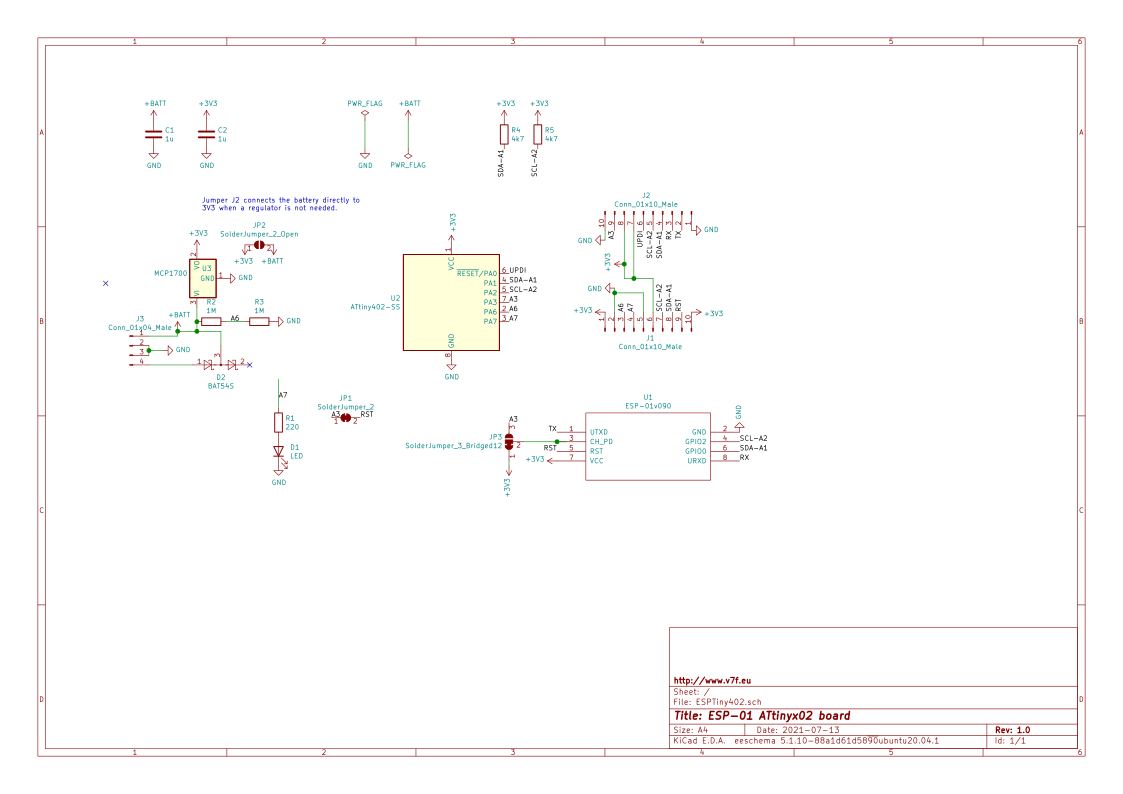
| Qty | Value | Footprint | References |
|---|---|---|---|
| 2 | 1M | Resistor_SMD:R_1206_3216Metric | R2, R3 |
| 2 | 1u | Capacitor_SMD:C_1206_3216Metric | C1, C2 |
| 2 | 4k7 | Resistor_SMD:R_1206_3216Metric | R4, R5 |
| 2 | Conn_01x10_Male | Connector_PinHeader_2.54mm:PinHeader_1x10_P2.54mm_Vertical | J1, J2 |
| 1 | 220 | Resistor_SMD:R_1206_3216Metric | R1 |
| 1 | ATtiny402-SS | Package_SO:SOIC-8_3.9x4.9mm_P1.27mm | U2 |
| 1 | BAT54S | Package_TO_SOT_SMD:SOT-23 | D2 |
| 1 | Conn_01x04_Male | Connector_PinHeader_2.54mm:PinHeader_1x04_P2.54mm_Vertical | J3 |
| 1 | ESP-01v090 | ESP8266:ESP-01 | U1 |
| 1 | LED | LED_SMD:LED_1206_3216Metric | D1 |
| 1 | MCP1700 | Package_TO_SOT_SMD:SOT-23 | U3 |
| 1 | SolderJumper_2 | Jumper:SolderJumper-2_P1.3mm_Bridged_RoundedPad1.0x1.5mm | JP1 |
| 1 | SolderJumper_2_Open | Jumper:SolderJumper-2_P1.3mm_Open_Pad1.0x1.5mm | JP2 |
| 1 | SolderJumper_3_Bridged12 | Jumper:SolderJumper-3_P1.3mm_Bridged12_RoundedPad1.0x1.5mm_NumberLabels | JP3 |
The 18 most common of 21 parts.
tomtor/ESPTiny
KiCad ATtiny84/x14/x02 (SMD) and ESP-01 (ESP 8266) PCB boards


tomtor/ESPTiny
KiCad ATtiny84/x14/x02 (SMD) and ESP-01 (ESP 8266) PCB boards


PocketConcepts/Pocket_PSU
A variable current & voltage PSU with 3S lipo charging, balancing, and protection circuit using PPS.

k-takata/PCB_avr_dx_unbricker
UPDI High Voltage programmer for AVR Dx/Ex series

HazeCore/Nametag_Hardware
This is the hardware for out Nametag Badge for Chaos Communication Camp 2023. You can find more information about the Project at https://hazeco.re/cccamp-nametag/.

markusgruen/DccFunctionDecoder
Open source, Arduino-based DCC function decoder


KNEAGHUST/PCB_Christmas_Tree_AGH
PCB Christmas tree designed for the AGH University of Krakow

It measures 26.4 × 23.9 mm and has 2 copper layers, 1.6 mm thick.
21 parts, built around the ATTINY402-SSN and BAT54S. The full list of its parts is on this page, with links to each part's symbol and footprint where PCBKit's library has them.
From the tomtor/ESPTiny repository on GitHub, at the commit this page was made from: the board is ESPTiny402.kicad_pcb and its schematic ESPTiny.kicad_sch. PCBKit opens the board in the browser, with nothing to install.
Its repository publishes it under the GPL-3.0 licence: you may reuse it on that licence's terms (keep the author's notice, and for a copyleft licence share your changes alike).