2 layers305 × 144.2 mm
Keyboard
TM90/Keyboard
Have as much as possible open source? Also the tools used to build the keyboard
176 parts3
 TM90/Keyboard3
Have as much as possible open source? Also the tools used to build the keyboard
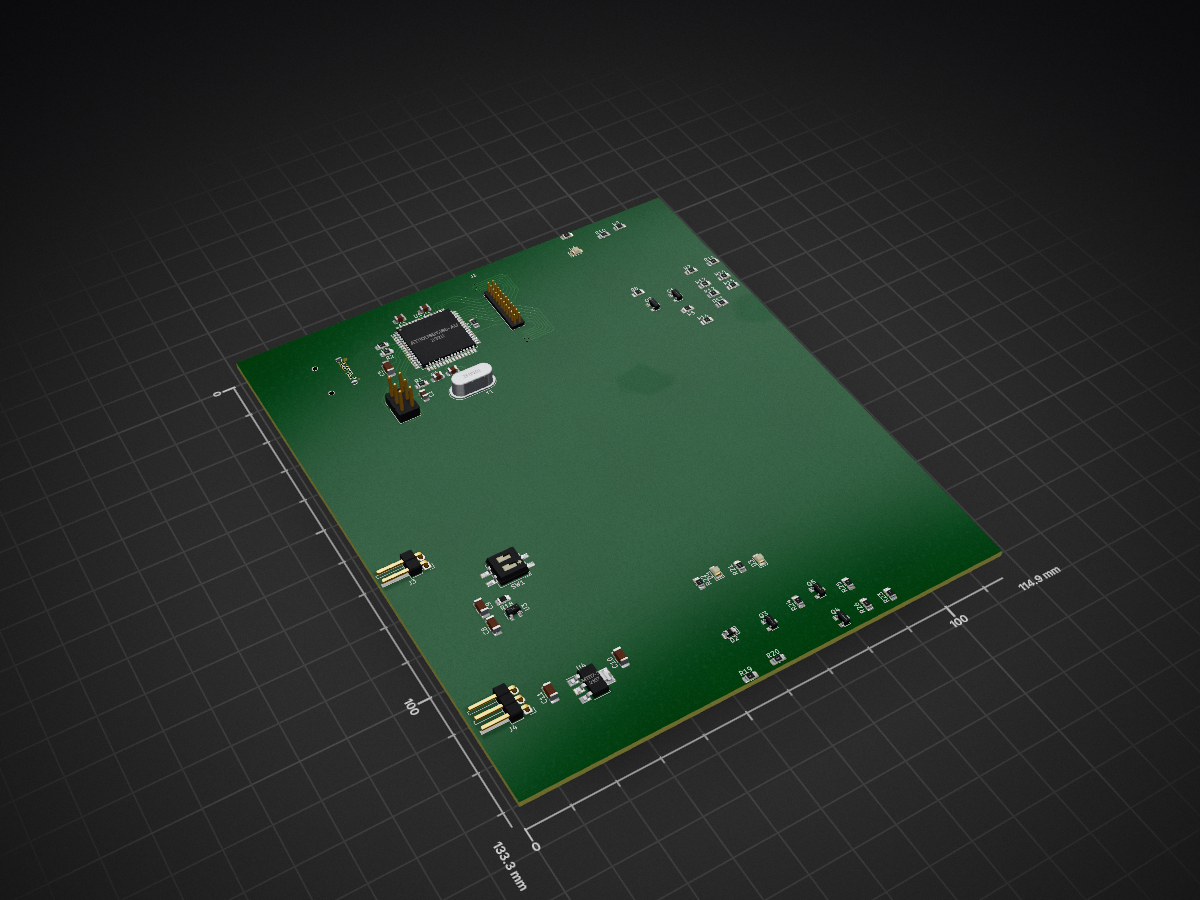
Keyboard controller is an open-source printed circuit board by TM90, from the TM90/Keyboard repository on GitHub. It is a 2-layer board with 57 parts on 103 nets, routed with 292 tracks and 16 vias.
It is built around the AT90USB1286-AU and LM1117-3.3. Its parts include 26 resistors, 11 capacitors, 5 transistors, 5 connectors and 4 ICs. It belongs with the keyboards and input boards and the AVR (ATmega, ATtiny) boards of this library.


Have as much as possible open source? Also the tools used to build the keyboard
Own layout and schematic but based on this project to keep compatibility with tmk firmware and qmk firmware:
https://github.com/tmk/HHKB_controller/blob/master/schematic/HHKB_controller_revG.pdf
Sandwich case or alu bend case
http://www.keyboard-layout-editor.com/#/
Prototype for Switches without big PCB and description how to build a small keyboard: https://learn.sparkfun.com/tutorials/cherry-mx-switch-breakout-hookup-guide
Fullsize Keyboard matrix example with atmega32u4: https://easyeda.com/farmakon/GH80_3000-4f3cee521afd4be3858c4b5cc3b76f9e
Maybe using a front panel service for the keyboard front, aluminum or acrylic would be possible at beta layout
| Qty | Value | Footprint | References |
|---|---|---|---|
| 13 | 10k | Resistor_SMD:R_0805_2012Metric_Pad1.15x1.40mm_HandSolder | R5, R7, R8, R10, R11, R12, R14, R16, R20, R23, R24, R25, R26 |
| 6 | 1k | Resistor_SMD:R_0805_2012Metric_Pad1.15x1.40mm_HandSolder | R1, R4, R6, R19, R21, R22 |
| 4 | 100n | Capacitor_SMD:C_0805_2012Metric_Pad1.15x1.40mm_HandSolder | C1, C2, C6, C7 |
| 3 | 15k | Resistor_SMD:R_0805_2012Metric_Pad1.15x1.40mm_HandSolder | R13, R15, R17 |
| 3 | LED | LED_SMD:LED_0805_2012Metric_Pad1.15x1.40mm_HandSolder | D1, D3, D4 |
| 3 | Q_NMOS_DGS | Package_TO_SOT_SMD:SOT-23 | Q1, Q2, Q4 |
| 2 | 10u | Capacitor_SMD:C_1206_3216Metric_Pad1.42x1.75mm_HandSolder | C10, C11 |
| 2 | 22 | Resistor_SMD:R_0805_2012Metric_Pad1.15x1.40mm_HandSolder | R2, R3 |
| 2 | 22p | Capacitor_SMD:C_0805_2012Metric_Pad1.15x1.40mm_HandSolder | C3, C4 |
| 2 | 4u7 | Capacitor_SMD:C_1206_3216Metric_Pad1.42x1.75mm_HandSolder | C8, C9 |
| 2 | Q_PMOS_DGS | Package_TO_SOT_SMD:SOT-23 | Q3, Q5 |
| 1 | 0 | Resistor_SMD:R_0805_2012Metric_Pad1.15x1.40mm_HandSolder | R9 |
| 1 | 16MHz | Crystal:Crystal_HC49-4H_Vertical | Y1 |
| 1 | 1u | Capacitor_SMD:C_1206_3216Metric_Pad1.42x1.75mm_HandSolder | C5 |
| 1 | AT90USB1286-AU | Package_QFP:TQFP-64_14x14mm_P0.8mm | U1 |
| 1 | AVR-ISP-6 | Connector_PinHeader_2.54mm:PinHeader_2x03_P2.54mm_Vertical | J2 |
| 1 | Conn_01x02_Male | Connector_PinHeader_2.54mm:PinHeader_1x02_P2.54mm_Horizontal | J3 |
| 1 | Conn_01x03_Male | Connector_PinHeader_2.54mm:PinHeader_1x03_P2.54mm_Horizontal | J4 |
| 1 | Conn_02x11_Odd_Even | Connector_PinHeader_1.27mm:PinHeader_2x11_P1.27mm_Vertical | J1 |
| 1 | D_Schottky | Diode_SMD:D_0805_2012Metric_Pad1.15x1.40mm_HandSolder | D2 |
| 1 | LM1117-3.3 | Package_TO_SOT_SMD:SOT-223-3_TabPin2 | U4 |
| 1 | MCP73832-3-OT | Package_TO_SOT_SMD:SOT-23-5 | U3 |
| 1 | PROG | Resistor_SMD:R_0805_2012Metric_Pad1.15x1.40mm_HandSolder | R18 |
| 1 | RN42 | RF_Module:RN42 | U2 |
| 1 | SW_DPST | Button_Switch_SMD:SW_DIP_SPSTx02_Slide_6.7x6.64mm_W8.61mm_P2.54mm_LowProfile | SW1 |
| 1 | USB_C_Plug_USB2.0 | Connector_USB:USB_C_Receptacle_Amphenol_12401548E4-2A_CircularHoles | P1 |
57 parts, built around the AT90USB1286-AU and LM1117-3.3. The full list of its parts is on this page, with links to each part's symbol and footprint where PCBKit's library has them.
From the TM90/Keyboard repository on GitHub, at the commit this page was made from: the board is electronics/keyboard_controller/keyboard_controller.kicad_pcb. PCBKit opens the board in the browser, with nothing to install.
Its repository states no licence, so its author keeps all rights: ask TM90 before reusing the design.
TM90/Keyboard
Have as much as possible open source? Also the tools used to build the keyboard


chadaustin/wired-sculpt-pcb
KiCad design files for the Wired Sculpt conversion mod


MacroLens/custom-keyboard
A custom mechanical keyboard I am making from scratch. The PCB will have functionality for Bluetooth LE, and USB-C outputs. Based on the AVR micro-controller family.