
2 layers95.3 × 161.9 mm
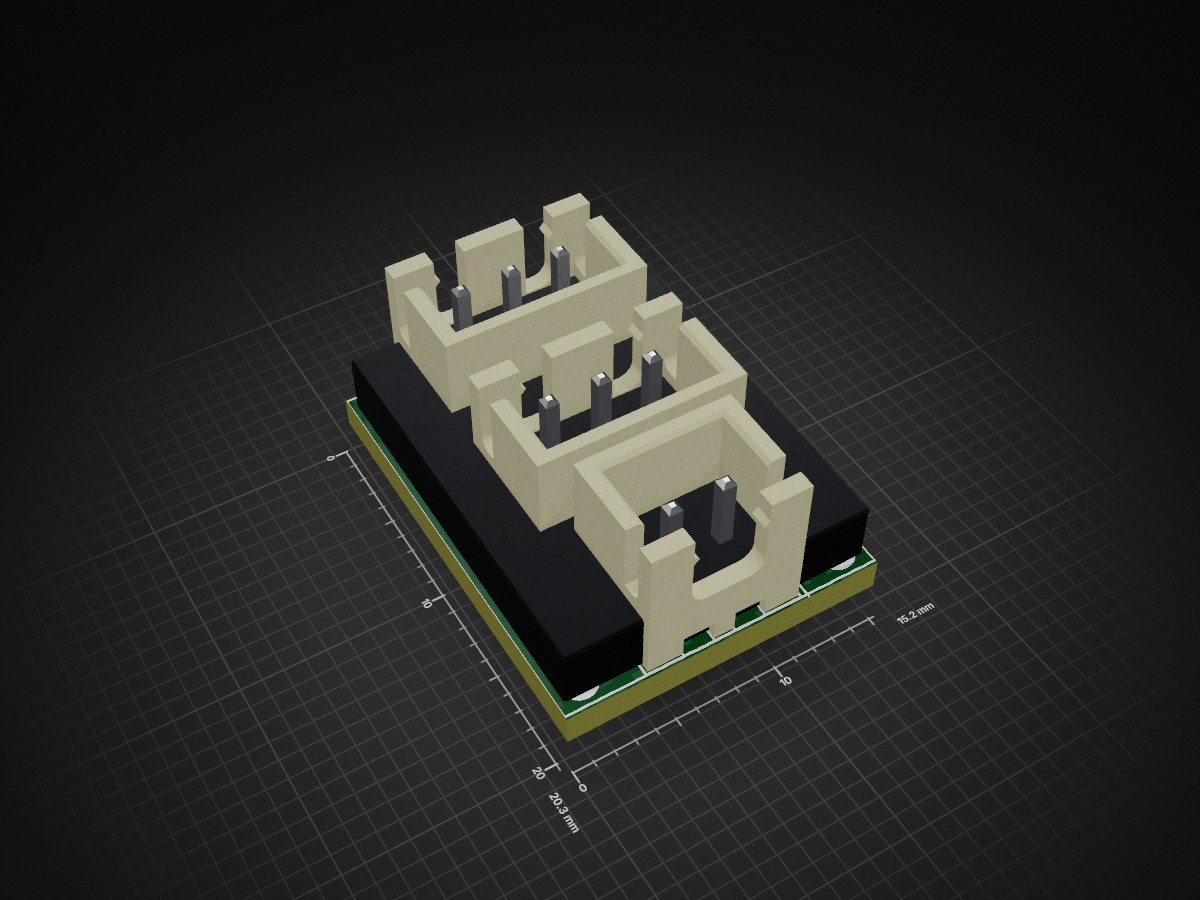
 timmit99/Stepstick_Neopixel_Board7
Stepstick socket level shifter for use with 2x Neopixel strips
Stepstick Pixel is an open-source printed circuit board by timmit99, from the timmit99/Stepstick_Neopixel_Board repository on GitHub, published under the GPL-3.0 licence. It is a 2-layer board of 15.2 × 20.3 mm with 6 parts on 19 nets, routed with 33 tracks and 0 vias.
It is built around the 74LVC1G17Z. Its parts include 3 ICs and 3 connectors.
Dual output level shifted Stepstick adaptor for neopixel strips.
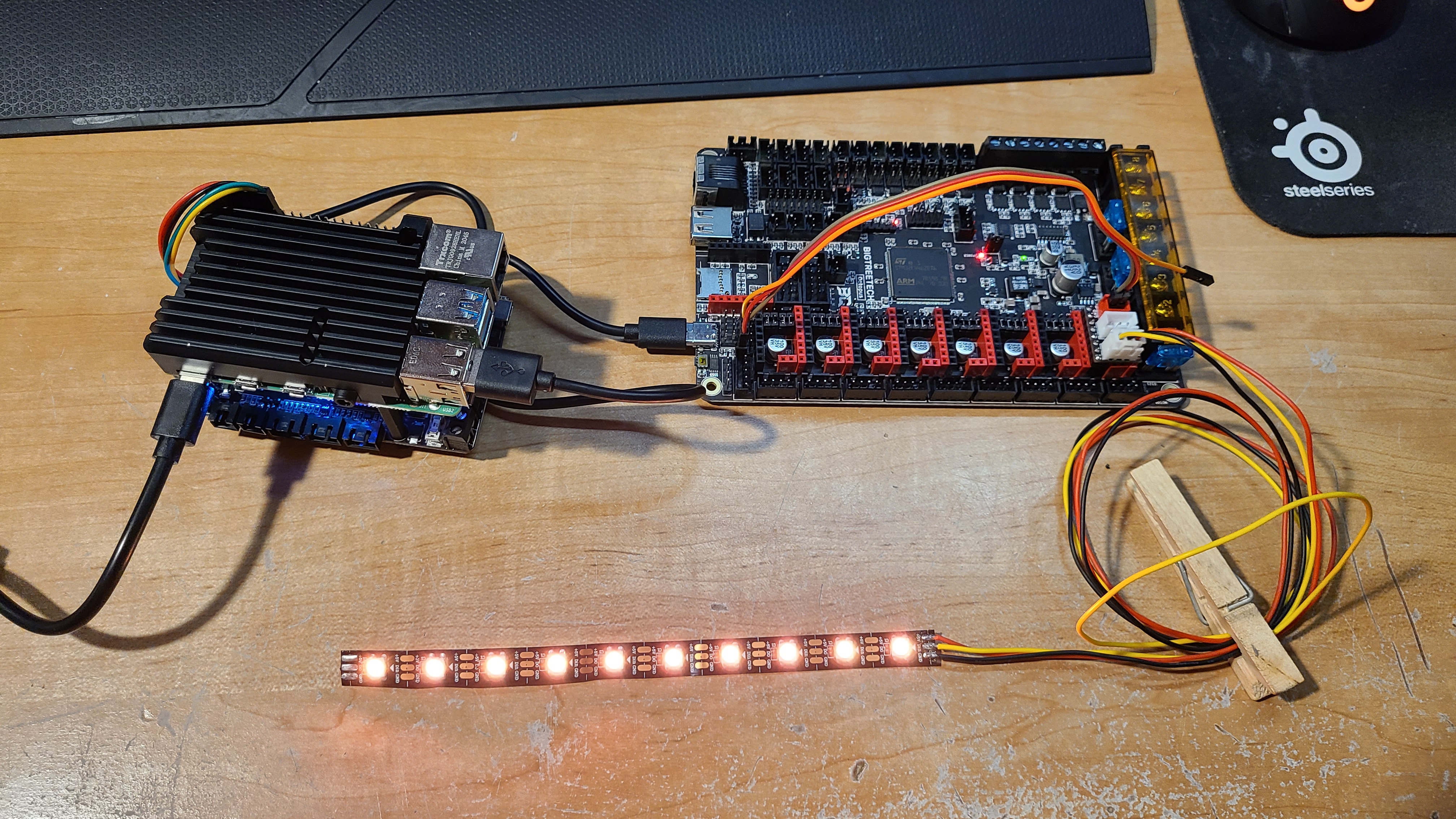
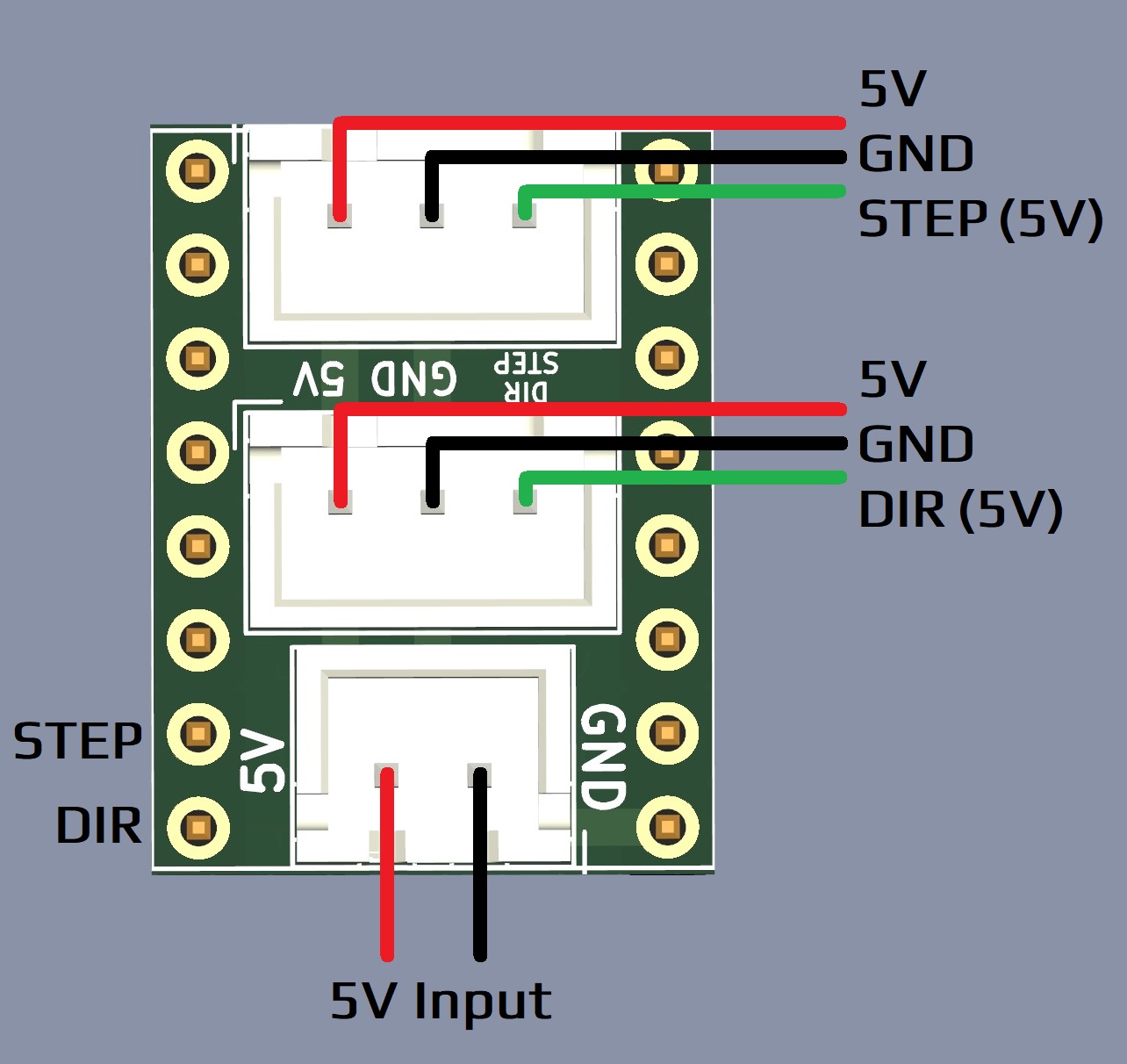
This board converts the logic level STEP and DIR outputs on a Stepstick header to 5V level for properly driving 2 Neopixel strips. Input 5V from a 2-pin JST-XH header, with 2 outputs on 3-pin JST-XH headers.
To use, simply configure the STEP/DIR pin for the socket you plug the board into as your neopixel pin. It's that simple!
| Reference | Name | Note | Quantity | LCSC |
|---|---|---|---|---|
| J3, J4 | Strip Out | 3-pin JST HX, B3B-XH | 2 | C144394 |
| J5 | 5V In | 2-pin JST HX, B2B-XH | 1 | C495685 |
| U1, U2 | Level Shifter | 74LVC1G17GV (SOT753) | 2 | C6076 |
| U3 | Stepstick Header | 8-pin Male Header Pin, 2.54mm | 2 | C124381 |
| Qty | Value | Footprint | References |
|---|---|---|---|
| 2 | 74LVC1G17 | Stepstick_Pixel:SOT-753 | U1, U2 |
| 1 | Dir_Out | Connector_JST:JST_XH_B3B-XH-A_1x03_P2.50mm_Vertical | J4 |
| 1 | Power_In | Connector_JST:JST_XH_B2B-XH-A_1x02_P2.50mm_Vertical | J5 |
| 1 | Step_Out | Connector_JST:JST_XH_B3B-XH-A_1x03_P2.50mm_Vertical | J3 |
| 1 | Stepstick_Socket | Stepstick_Pixel:Stepstick_Socket | U3 |

nkrackow/SingularitySurfer-FPGA-Lock-In-Amplifier
Repository for the development of an FPGA based DSP Lock-In Amplifier

Bouni/BSH-Board
A board that interfaces the DBUS of several home appliances and brings them into Home-Assitant via ESPHome

jbilander/SDBox-v2
SDBox-v2 for Amiga, compatible with the new updated card-detect firmware


ergomechstore/rp2040-bento
The RP2040-bento is a breakout board for the RP2040 MCU.


It measures 15.2 × 20.3 mm and has 2 copper layers, 1.6 mm thick.
6 parts, built around the 74LVC1G17Z. The full list of its parts is on this page, with links to each part's symbol and footprint where PCBKit's library has them.
From the timmit99/Stepstick_Neopixel_Board repository on GitHub, at the commit this page was made from: the board is Stepstick_Pixel.kicad_pcb and its schematic Stepstick_Pixel.kicad_sch. PCBKit opens the board in the browser, with nothing to install.
Its repository publishes it under the GPL-3.0 licence: you may reuse it on that licence's terms (keep the author's notice, and for a copyleft licence share your changes alike).