2 layers121.1 × 104.7 mm
Sepia officinalis
tapioki/cephalopoda
Low profile split ergonomic mechanical keyboards
57 parts240GPL-3.0

 tapioki/cephalopoda240
Low profile split ergonomic mechanical keyboards
Dosidicus gigas is an open-source printed circuit board by tapioki, from the tapioki/cephalopoda repository on GitHub, published under the GPL-3.0 licence. It is a 2-layer board of 276.5 × 88.7 mm with 41 parts on 22 nets, routed with 532 tracks and 0 vias.
Its parts include 32 switches and 2 capacitors.
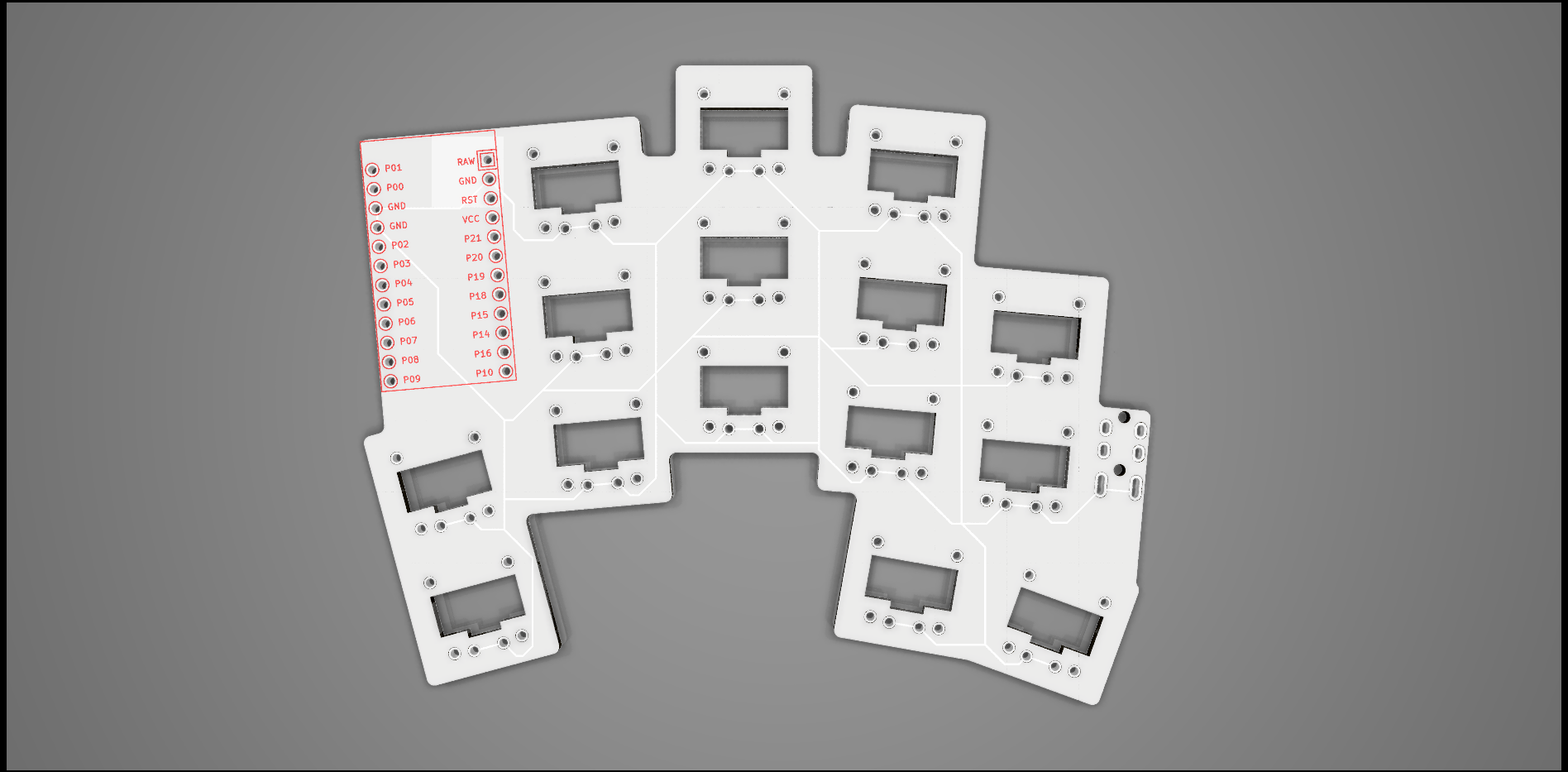 AKA T. pacificus, T.P., "The fourth one", "Japanese flying squid"
30 keys, 15, 5, 0, -5, -5 degree splay. My take on the Hummingbird layout.
| Qty | Value | Footprint | References |
|---|---|---|---|
| 32 | PG1350 | S1, S2, S10, S11, S12, S13, S14, S15, S16, S17, S18, S19, S20, S21, S22, S23 +16 | |
| 4 | lib:breakaway_cutout | H1, H2, H3, H4 | |
| 2 | TRRS-PJ-320A-dual | T1, T2 | |
| 2 | ProMicro | C1, C2 | |
| 1 | LOGO | Kicad:dgigas | G*** |
tapioki/cephalopoda
Low profile split ergonomic mechanical keyboards

tapioki/cephalopoda
Low profile split ergonomic mechanical keyboards

tapioki/cephalopoda
Low profile split ergonomic mechanical keyboards

tapioki/cephalopoda
Low profile split ergonomic mechanical keyboards

tapioki/cephalopoda
Low profile split ergonomic mechanical keyboards

tapioki/cephalopoda
Low profile split ergonomic mechanical keyboards


VoronDesign/Voron-Hardware
Cool Hardware designed by the Voron Design group

hackclub/OnBoard
💡 Join 1,000 teenagers and make your first PCB with a $100 grant!

openwch/ch32v003
CH32V003 is an ultra-cheap RISC-V MCU with 2KB SRAM, 16KB flash, and up to 18 GPIOs that sells for under $0.10

imchipwood/dumbpad
Simple 4x4 numpad with rotary encoder. Powered by QMK via ATmega32u4 Pro Micro

jrsteensen/OpenHornet
OpenHornet 1:1 F/A-18C Simulator Repository


fabiansteiner/OpenValve
3D-printable pinch valve for irrigation and sensor-driven liquid control.
It measures 276.5 × 88.7 mm and has 2 copper layers, 1.6 mm thick.
41 parts. The full list of its parts is on this page, with links to each part's symbol and footprint where PCBKit's library has them.
From the tapioki/cephalopoda repository on GitHub, at the commit this page was made from: the board is Dosidicus gigas/dosidicus_gigas.kicad_pcb. PCBKit opens the board in the browser, with nothing to install.
Its repository publishes it under the GPL-3.0 licence: you may reuse it on that licence's terms (keep the author's notice, and for a copyleft licence share your changes alike).