2 layers276.5 × 88.7 mm
Dosidicus gigas
tapioki/cephalopoda
Low profile split ergonomic mechanical keyboards
41 parts240GPL-3.0

 tapioki/cephalopoda240
Low profile split ergonomic mechanical keyboards
Sepia officinalis is an open-source printed circuit board by tapioki, from the tapioki/cephalopoda repository on GitHub, published under the GPL-3.0 licence. It is a 2-layer board of 121.1 × 104.7 mm with 57 parts on 22 nets, routed with 420 tracks and 0 vias.
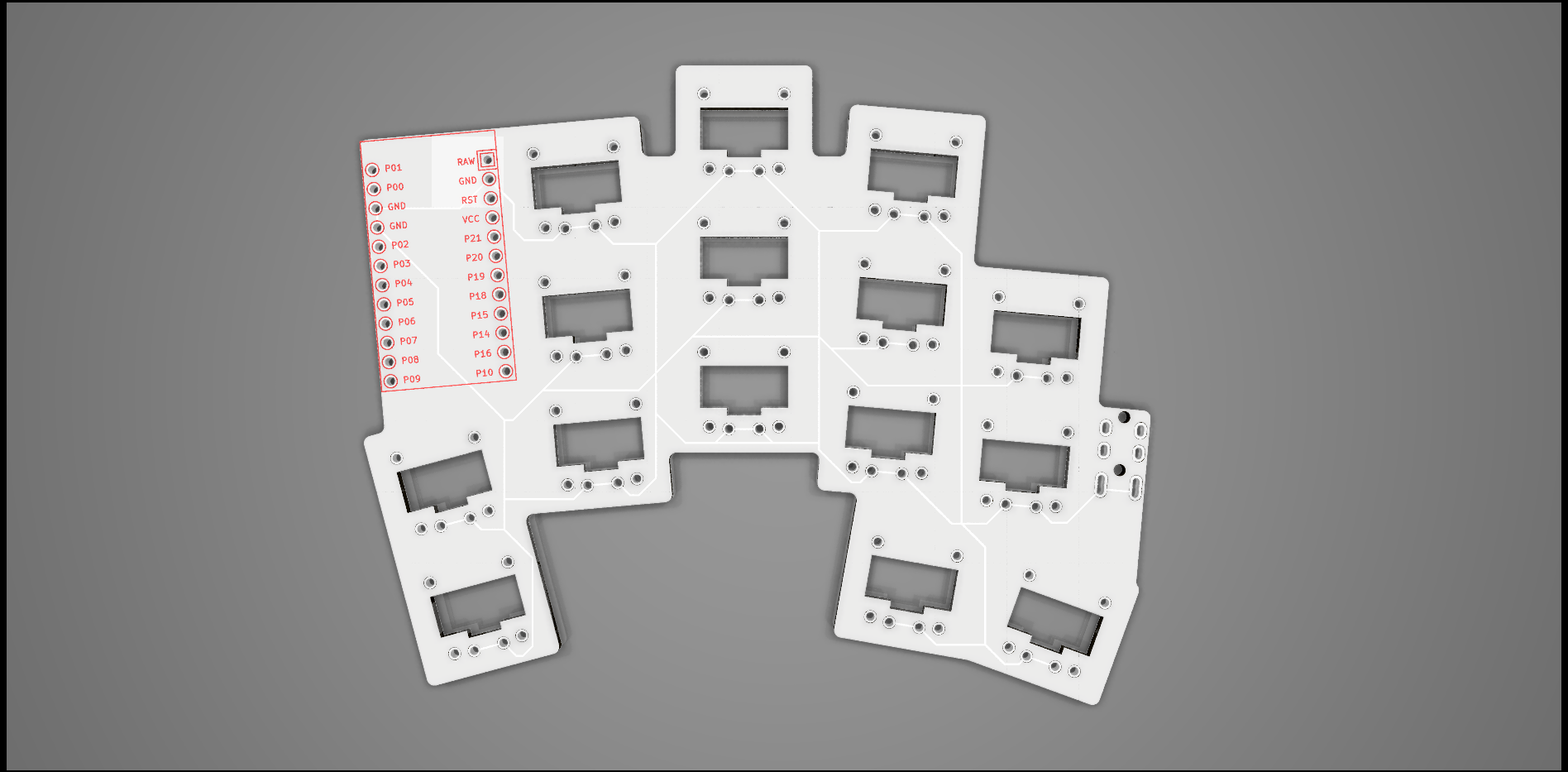 AKA T. pacificus, T.P., "The fourth one", "Japanese flying squid"
30 keys, 15, 5, 0, -5, -5 degree splay. My take on the Hummingbird layout.
| Qty | Value | Footprint | References |
|---|---|---|---|
| 17 | Kailh_socket_PG1350_optional | S1, S2, S3, S4, S5, S6, S7, S8, S10, S11, S12, S13, S14, S15, S16, S17 +1 | |
| 1 | Arduino Pro Micro | ArduinoProMicro-TopSide | |
| 1 | LOGO | Kicad:cuttle copper fmask | G*** |
| 1 | LOGO | Kicad:cuttle copper | G*** |
| 1 | LOGO | Kicad:cuttle copper_back | G*** |
| 1 | LOGO | Kicad:cuttle copper bmask | G*** |
The 22 most common of 57 parts.
tapioki/cephalopoda
Low profile split ergonomic mechanical keyboards

tapioki/cephalopoda
Low profile split ergonomic mechanical keyboards

tapioki/cephalopoda
Low profile split ergonomic mechanical keyboards

tapioki/cephalopoda
Low profile split ergonomic mechanical keyboards

tapioki/cephalopoda
Low profile split ergonomic mechanical keyboards

tapioki/cephalopoda
Low profile split ergonomic mechanical keyboards


rgoulter/keyboard-labs
Repo with my PCB designs and keyboard firmware

freeDSP/freeDSP-aurora
freeDSP ADAU1452 with 8 analog input, 8 analog outputs, S/P-DIF I/O, ADAT I/O, USB Audio Class2, WiFi, Bluetooth


It measures 121.1 × 104.7 mm and has 2 copper layers, 1.6 mm thick.
57 parts. The full list of its parts is on this page, with links to each part's symbol and footprint where PCBKit's library has them.
From the tapioki/cephalopoda repository on GitHub, at the commit this page was made from: the board is Sepia officinalis/sepia_officinalis.kicad_pcb. PCBKit opens the board in the browser, with nothing to install.
Its repository publishes it under the GPL-3.0 licence: you may reuse it on that licence's terms (keep the author's notice, and for a copyleft licence share your changes alike).