2 layers169.2 × 98.2 mm

 sonicavionics/4in-status
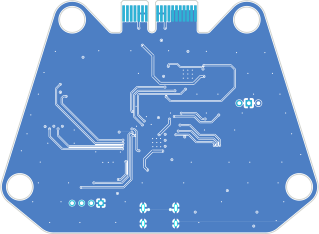
Status is an open-source printed circuit board by sonicavionics, from the sonicavionics/4in-status repository on GitHub, published under the MIT licence. It is a 4-layer board of 83.7 × 61.7 mm with 57 parts on 90 nets, routed with 564 tracks and 140 vias.
It is built around the RP2040, W25Q128JVPIQ and TS-1187A-B-A-B, with the ABM8-272-T3 and X322516MLB4SI among its other parts. Its parts include 20 resistors, 19 capacitors, 6 switches, 4 ICs and 4 connectors. It belongs with the RP2040 boards of this library.


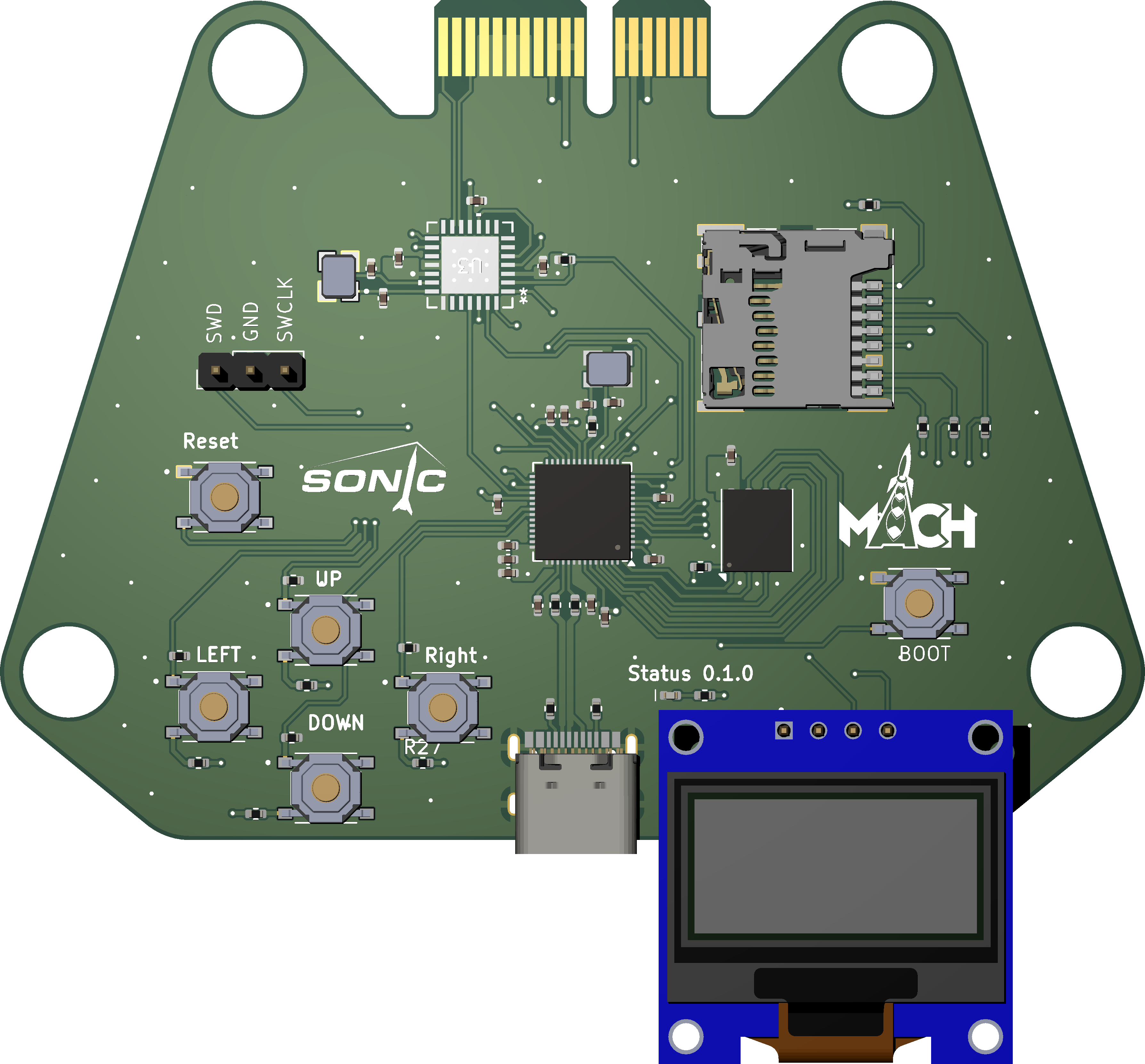
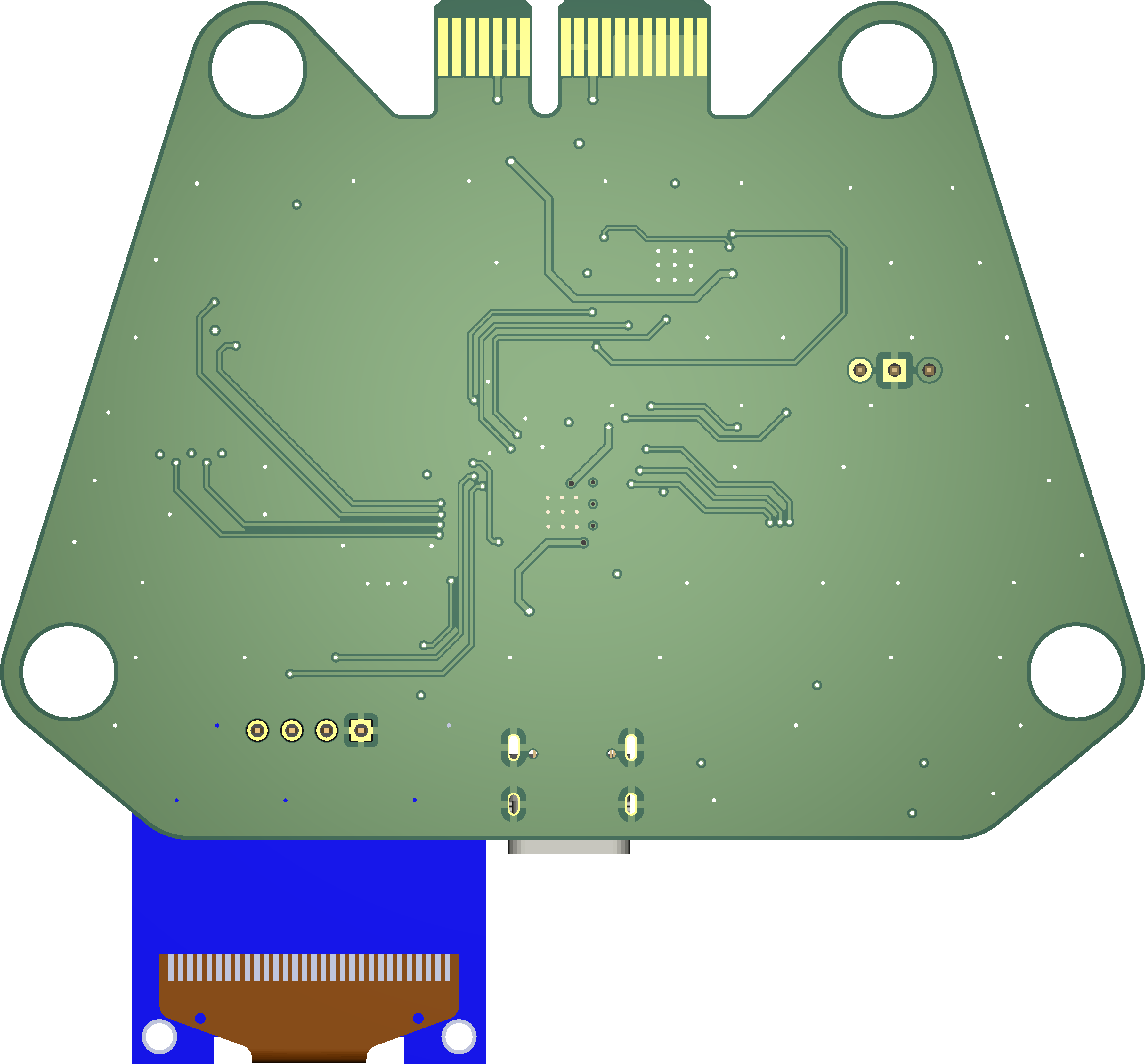
3D Render
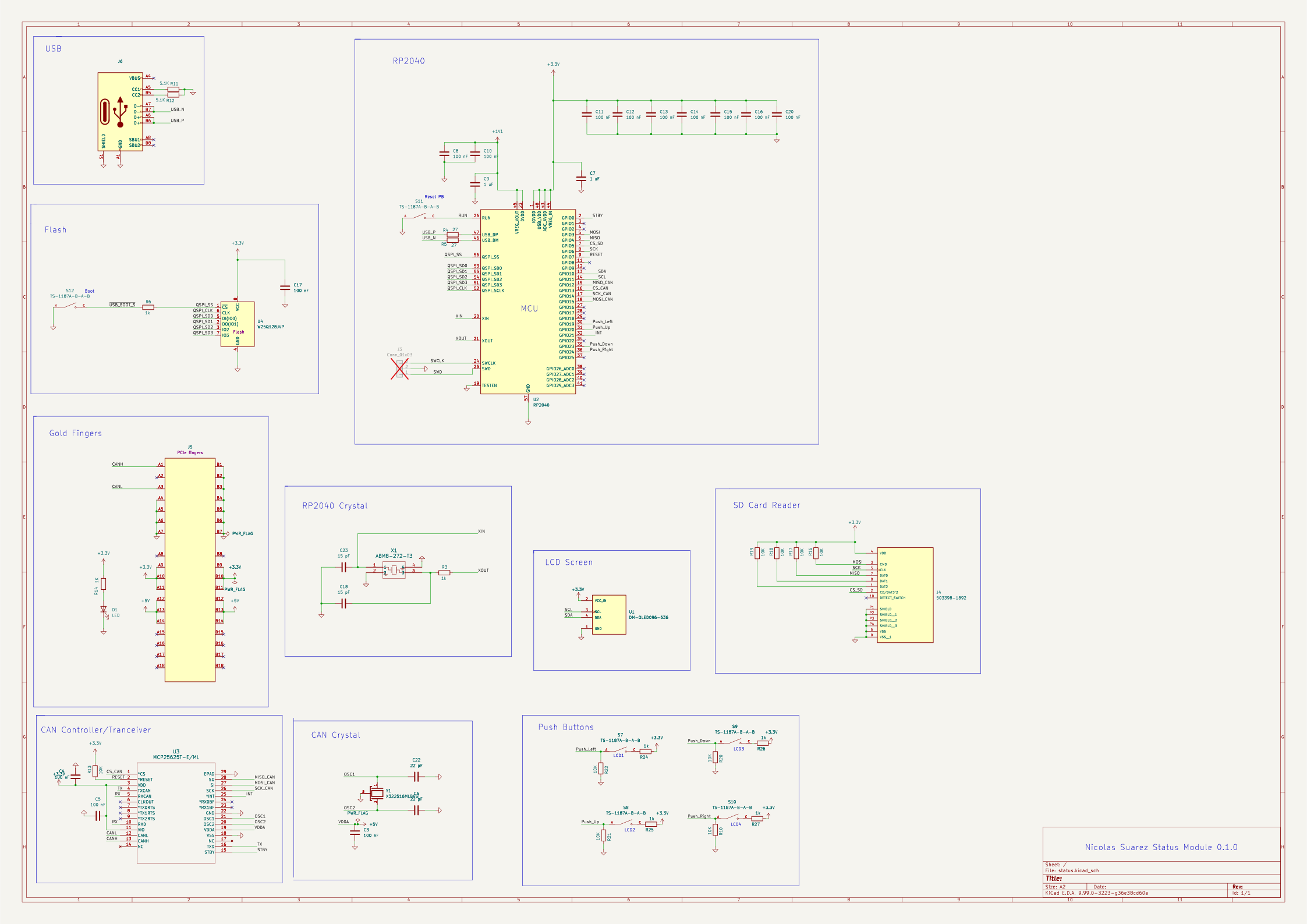
Schematic
| Qty | Value | Footprint | References |
|---|---|---|---|
| 13 | 100 nF | Capacitor_SMD:C_0402_1005Metric | C3, C4, C5, C8, C10, C11, C12, C13, C14, C15, C16, C17, C20 |
| 9 | 10K | Resistor_SMD:R_0402_1005Metric | R10, R13, R16, R17, R18, R19, R20, R21, R22 |
| 6 | 1k | Resistor_SMD:R_0402_1005Metric | R3, R6, R24, R25, R26, R27 |
| 6 | TS-1187A-B-A-B | Nicolas Library:SW_TS-1187A-B-A-B | S7, S8, S9, S10, S11, S12 |
| 2 | 1 uF | Capacitor_SMD:C_0402_1005Metric | C7, C9 |
| 2 | 15 pF | Capacitor_SMD:C_0402_1005Metric | C18, C23 |
| 2 | 22 pF | Capacitor_SMD:C_0402_1005Metric | C6, C22 |
| 2 | 27 | Resistor_SMD:R_0402_1005Metric | R4, R5 |
| 2 | 5.1K | Resistor_SMD:R_0402_1005Metric | R11, R12 |
| 1 | 1K | Resistor_SMD:R_0402_1005Metric | R14 |
| 1 | 503398-1892 | 503398-1892:MOLEX_503398-1892 | J4 |
| 1 | ABM8-272-T3 | challenge_template:ABM8-272-T3_ABR | X1 |
| 1 | Bus_PCI_Express_x1 | Connector_PCBEdge:BUS_PCIexpress_x1 | J5 |
| 1 | Conn_01x03 | challenge_template:PinHeader_1x03_P2.54mm_Vertical | J3 |
| 1 | DM-OLED096-636 | DM-OLED096-636:MODULE_DM-OLED096-636 | U1 |
| 1 | LED | LED_SMD:LED_0402_1005Metric | D1 |
| 1 | LOGO | LOGO | G*** |
| 1 | MCP25625T-E/ML | challenge_template:QFN28_6X6MC_MCH | U3 |
| 1 | RP2040 | Package_DFN_QFN:QFN-56-1EP_7x7mm_P0.4mm_EP3.2x3.2mm | U2 |
| 1 | USB_C_Receptacle_USB2.0_16P | Connector_USB:USB_C_Receptacle_Palconn_UTC16-G | J6 |
| 1 | W25Q128JVP | Package_SON:WSON-8-1EP_6x5mm_P1.27mm_EP3.4x4.3mm | U4 |
| 1 | X322516MLB4SI | challenge_template:OSC_X322516MLB4SI | Y1 |


PanosEconomou/open-keyboard
A 100% from scratch open source super cool awesome keyboard that will take years to make if ever
It measures 83.7 × 61.7 mm and has 4 copper layers, 1.6 mm thick.
57 parts, built around the RP2040, W25Q128JVPIQ, TS-1187A-B-A-B and ABM8-272-T3. The full list of its parts is on this page, with links to each part's symbol and footprint where PCBKit's library has them.
From the sonicavionics/4in-status repository on GitHub, at the commit this page was made from: the board is kicad/status.kicad_pcb and its schematic kicad/status.kicad_sch. PCBKit opens the board in the browser, with nothing to install.
Its repository publishes it under the MIT licence: you may reuse it on that licence's terms (keep the author's notice, and for a copyleft licence share your changes alike).