

2 layers40 × 51.5 mm

 rsheldiii/Keebcard112
Home of the KeebCard project - Kicad files, code, and more!
Keebcard is an open-source printed circuit board by rsheldiii, from the rsheldiii/Keebcard repository on GitHub. It is a 2-layer board of 61 × 36.8 mm with 15 parts on 8 nets, routed with 91 tracks and 19 vias.
It is built around the ATTINY85-20SU and CR2032. Its parts include 6 resistors, 3 switches, 1 capacitor, 1 IC and 1 connector. It belongs with the AVR (ATmega, ATtiny) boards of this library.
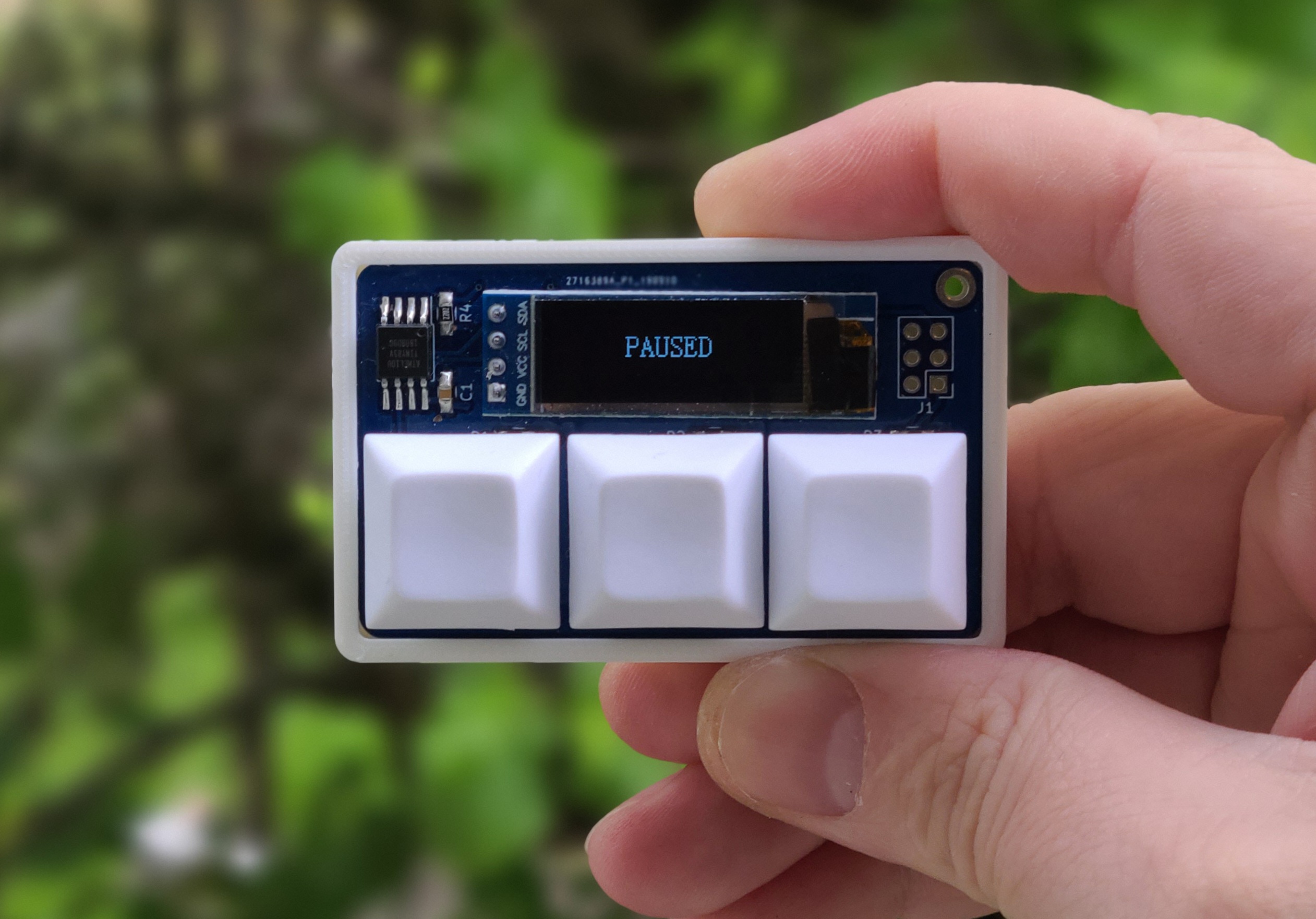
This is the home of the KeebCard project. Originally designed as a business card, people loved it so much I decided to release a version of it as open-source (TODO: add a license).
The KeebCard is centered around an SSD1306-powered 128x32 monochromatic display and an ATTINY85-10SU. The code uses the wonderful Tiny4kOLED library to communicate with the screen via i2c. With 8 kilobytes of program space and 512 bytes of RAM, it's a fun challenge getting anything to run on this thing!
OpenSauce attendees, thanks for supporting TheKeebProject! Check out the DIY assembly video below. The amount of components present in the bag indicates what they are; there is one capacitor, two i2c resistors (on the back) and four pull-up resistors. The assembly video should go over everything, if you have any trouble get in touch!
Head here for the current DIY assembly video.
Watch this quick video if you want to know how to use the cases! Especially important for button cases, they can be tricky
At the base of this project (currently) is the code that runs on the machine, you can git clone or download zip and open the KeebCard.ino file in Arduino. I don't normally program in C++, so it's a little rough. You can change what program is flashed by changing the define at the top of KeebCard.ino.
The KeebCard code is currently compiled and flashed with an ISP programmer via the Arduino suite. check out the flashing tutorial here
Currently, all dependencies can be installed via the Arduino library manager, check out the flashing tutorial.
There used to be a dependency on the Arduino Entropy Library that needed to be downloaded separately, but it was causing memory errors due to how the Arduino suite includes files. I'll be breaking programs out into separate folders eventually, after which we'll reinstate the entropy library.
I made a guide on how Conway's Game of Life works on the KeebCard, which will hopefully help you write your own programs! you can check that out here
Having successfully hand-soldered >30 of these now, I put the two most common problems people encounter in this video. If you're having issues take a look!
If you want to make your own run of KeebCard boards, check out the GERBERS directory. These are gerbers produced by the standard settings in Kicad. They are confirmed to work with JLCPCB, but probably work just fine at a bunch of other board shops.
All parts are available from Mouser save the screen
If you want to modify the design, check out the KeebCard directory, which houses the original Kicad project.
If you've seen the KeebCard elsewhere, please let me know!
| Qty | Value | Footprint | References |
|---|---|---|---|
| 4 | 22K | Resistors_SMD:R_0805_HandSoldering | R1, R2, R3, R4 |
| 3 | SW_Push | KeebCard:CHERRY_CHOC_PCB | SW1, SW2, SW3 |
| 2 | 4.7k | Resistors_SMD:R_0805_HandSoldering | R5, R6 |
| 1 | 100nF | Capacitors_SMD:C_0805_HandSoldering | C1 |
| 1 | ATTINY85-20SU | KeebCard:ATTINY85-20SU | U1 |
| 1 | CR2032 | KeebCard:SMTU2032 | BT1 |
| 1 | Conn_02x03_Odd_Even | Pin_Headers:Pin_Header_Straight_2x03_Pitch2.54mm | J1 |
| 1 | SSD1306-128x32 | KeebCard:SSD1306_OLED_Display_128x32 | DS1 |
The 14 most common of 15 parts.
It measures 61 × 36.8 mm and has 2 copper layers, 1.6 mm thick.
15 parts, built around the ATTINY85-20SU and CR2032. The full list of its parts is on this page, with links to each part's symbol and footprint where PCBKit's library has them.
From the rsheldiii/Keebcard repository on GitHub, at the commit this page was made from: the board is KeebCard/KeebCard.kicad_pcb. PCBKit opens the board in the browser, with nothing to install.
Its repository states no licence, so its author keeps all rights: ask rsheldiii before reusing the design.

zeti1223/Business-card
I built this interactive PCB business card as a fun way to stand out and show off my electronics skills. It's a custom 5x5 LED matrix powered by an ATtiny85 microcontroller, running off a single CR2032 coin cell battery.

SensorsIot/SuperPower
Here you should find the best power supplies for your low-power projects

KivApple/dell-charger-emulator
Emulator of original Dell charger using ATTINY85


bwack/C64-Saver-bwack
C64 Saver v1 and v2 - Overvoltage protection for the C64 and its power brick.

valerionew/very-good-uc-doggos
A special graduation present for a special friend. Six microcontrollers in one devboard
