2 layers53.4 × 68.6 mm
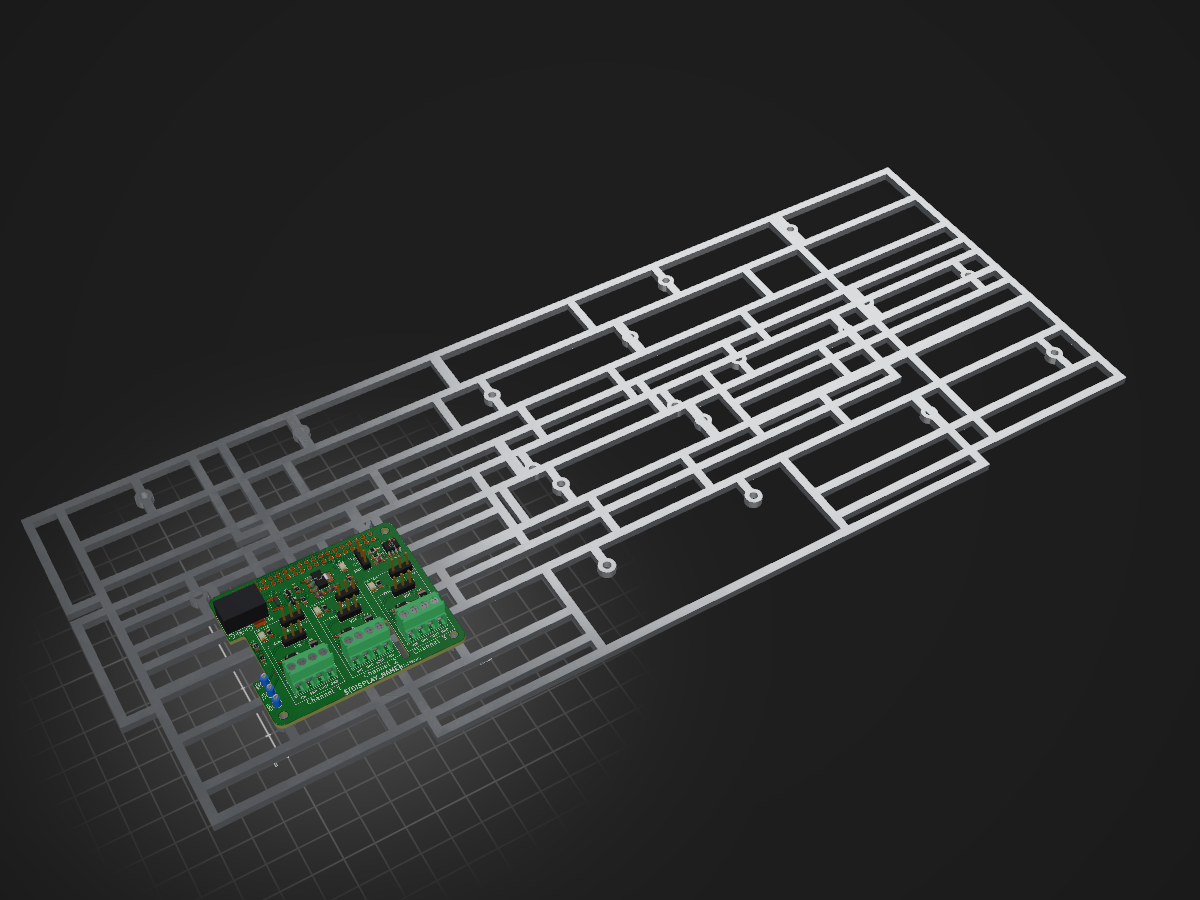
 rafw87/hardware-modules7
Set of DIY hardware modules.
Power monitor hat is an open-source printed circuit board by rafw87, from the rafw87/hardware-modules repository on GitHub, published under the CC-BY-SA-4.0 licence. It is a 2-layer board of 65 × 56 mm with 53 parts on 58 nets, routed with 307 tracks and 39 vias.
It is built around the CAT24C256LI, BC856BDW1 and MF-MSMF250/16X-2, with the SI2301CDS among its other parts. Its parts include 13 resistors, 6 capacitors, 6 connectors, 5 ICs and 4 diodes. It belongs with the ESP32 and ESP8266 boards of this library.


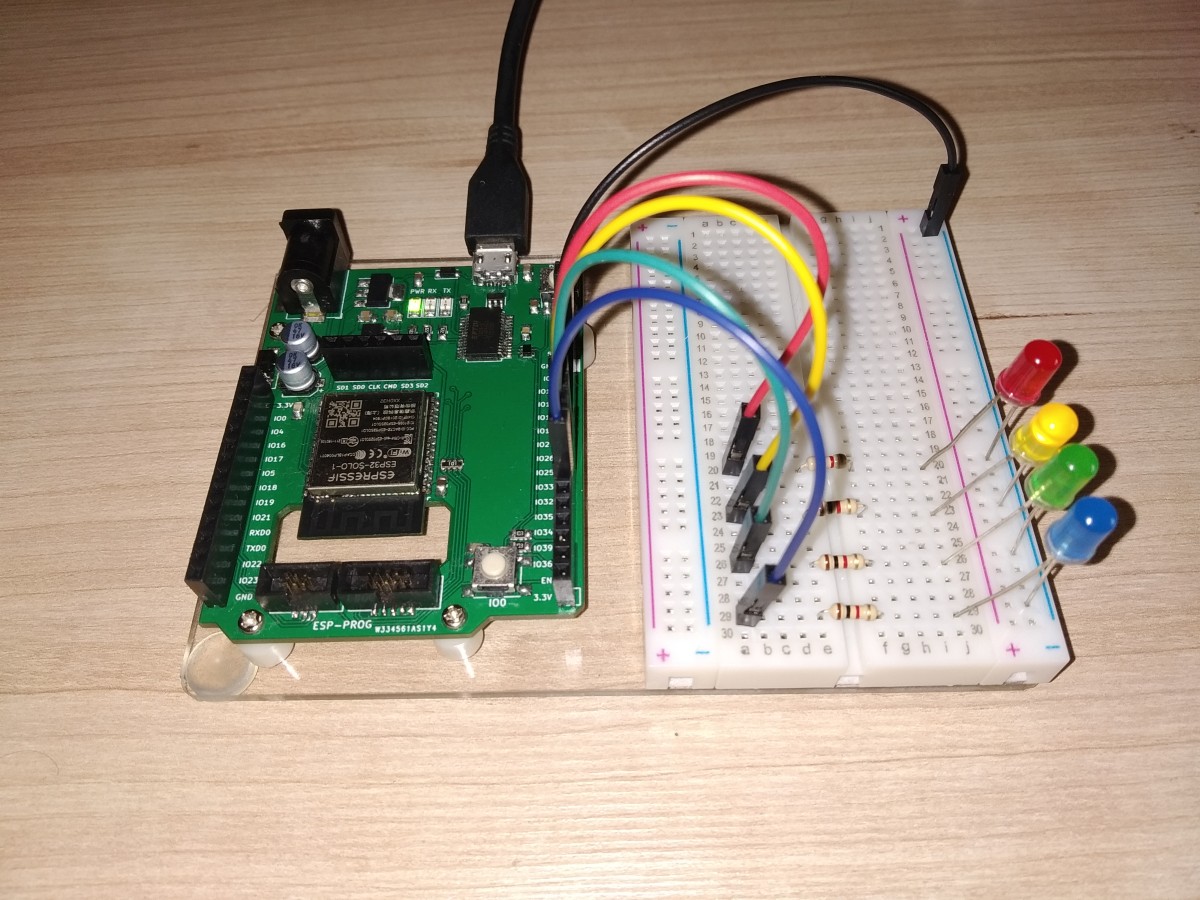
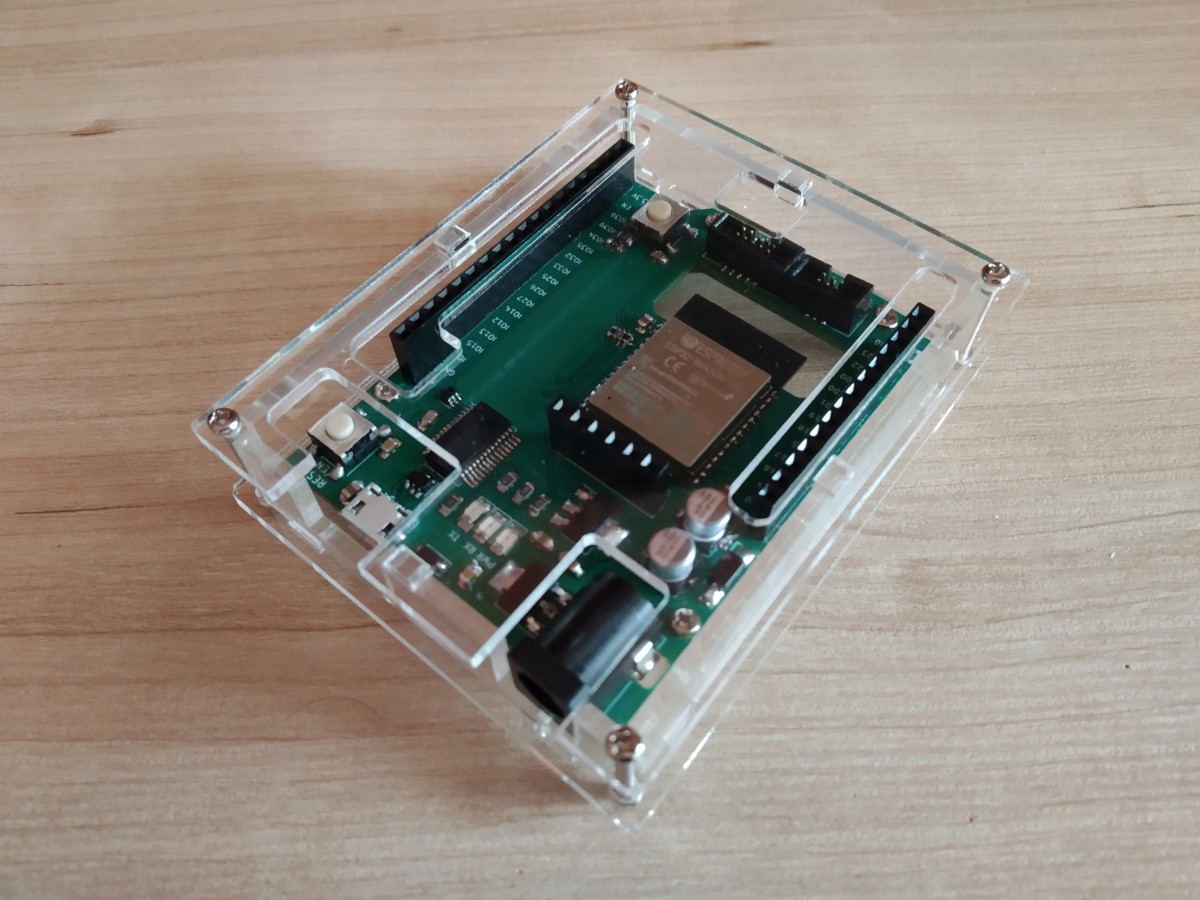
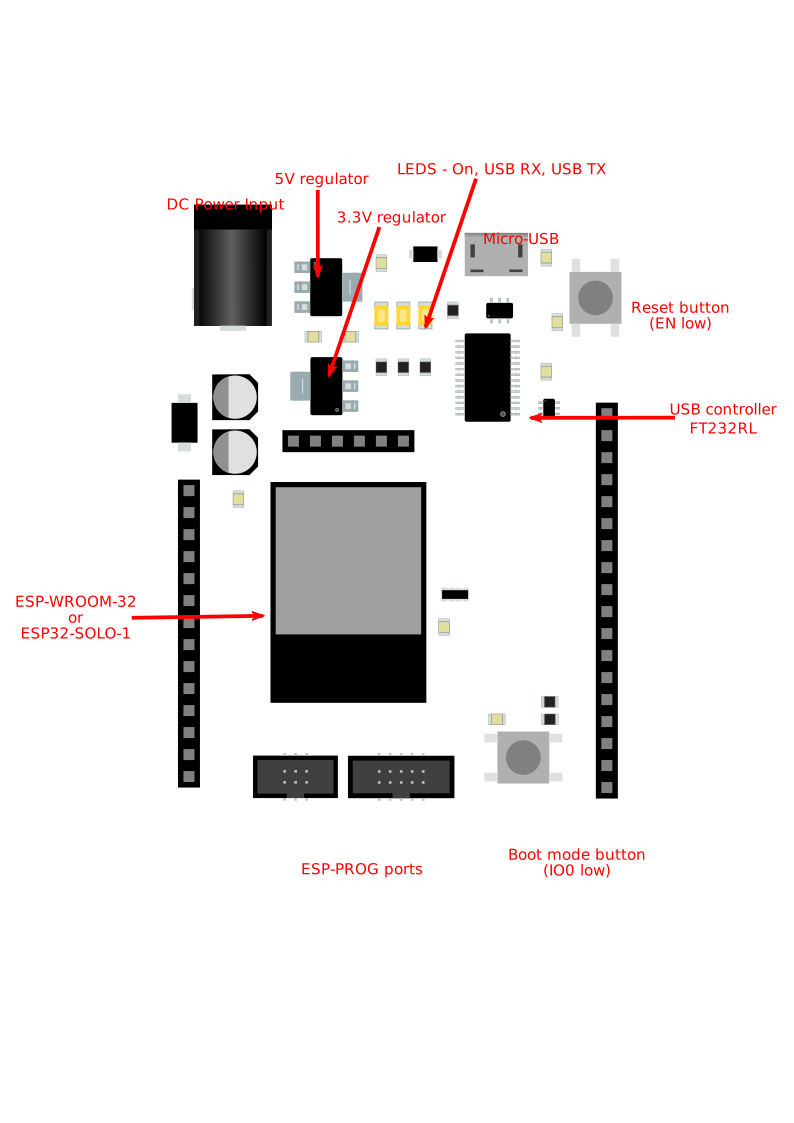
ESP-WROOM-32 (or ESP32-SOLO-1) development kit with Micro-USB port, DC Input and ESP-PROG interface.
Based on Arduino Uno/Leonardo footprint, so (apart from interesting appearance) allows to use stands and (partially) enclosures from original Arduino.
Note: It's not an Arduino clone, so it's not compatible (neither electrically nor physically) with Arduino shields. Functionally it's evaluation board like ESP32-DevKitC.


This work is licensed under a Creative Commons Attribution-ShareAlike 4.0 International License.
| Qty | Value | Footprint | References |
|---|---|---|---|
| 6 | Jumper | shared_components:PinHeader_1x03_P2.54mm_Vertical_NoFP | JP3, JP4, JP5, JP6, JP7, JP8 |
| 4 | 100n | Capacitor_SMD:C_0805_2012Metric_Pad1.18x1.45mm_HandSolder | C1, C4, C5, C6 |
| 4 | LED | LED_SMD:LED_1206_3216Metric | D1, D3, D4, D5 |
| 4 | MountingHole_2.7mm_M2.5 | MountingHole:MountingHole_2.7mm_M2.5 | MH1, MH2, MH3, MH4 |
| 3 | 0R5 | Resistor_SMD:R_2010_5025Metric_Pad1.40x2.65mm_HandSolder | R9, R11, R13 |
| 3 | 10k | Resistor_SMD:R_0805_2012Metric_Pad1.20x1.40mm_HandSolder | R1, R7, R8 |
| 3 | 2kR | Resistor_SMD:R_0805_2012Metric_Pad1.20x1.40mm_HandSolder | R10, R12, R14 |
| 3 | INA219AxD | Package_SO:SOIC-8_3.9x4.9mm_P1.27mm | U3, U4, U5 |
| 3 | OutputTerminal | TerminalBlock_Phoenix:TerminalBlock_Phoenix_PT-1,5-4-3.5-H_1x04_P3.50mm_Horizontal | J3, J4, J5 |
| 3 | TestPoint | TestPoint:TestPoint_Loop_D1.80mm_Drill1.0mm_Beaded | TP1, TP2, TP3 |
| 2 | 10u | Capacitor_SMD:C_0805_2012Metric_Pad1.18x1.45mm_HandSolder | C2, C3 |
| 2 | 3.9k | Resistor_SMD:R_0805_2012Metric_Pad1.20x1.40mm_HandSolder | R5, R6 |
| 1 | 470R | Resistor_SMD:R_0805_2012Metric_Pad1.20x1.40mm_HandSolder | R3 |
| 1 | 47k | Resistor_SMD:R_0805_2012Metric_Pad1.20x1.40mm_HandSolder | R2 |
| 1 | 5V_Bridge | Jumper:SolderJumper-2_P1.3mm_Open_TrianglePad1.0x1.5mm | JP1 |
| 1 | BC856BDW1 | Package_TO_SOT_SMD:SOT-363_SC-70-6 | Q1 |
| 1 | Barrel_Jack_Switch | shared_components:BarrelJack_CLIFF_FC68148_Horizontal | J1 |
| 1 | CAT24C256 | Package_SO:SOIC-8_3.9x4.9mm_P1.27mm | U2 |
| 1 | Conn_01x03 | Connector_PinHeader_2.54mm:PinHeader_1x03_P2.54mm_Vertical | J6 |
| 1 | GPIO | Connector_PinSocket_2.54mm:PinSocket_2x20_P2.54mm_Vertical | J2 |
| 1 | ID_WP | Jumper:SolderJumper-2_P1.3mm_Open_RoundedPad1.0x1.5mm | JP2 |
| 1 | MF-MSMF250/16X-2 | Fuse:Fuse_1812_4532Metric | F1 |
| 1 | NCP1117-3.3_SOT223 | Package_TO_SOT_SMD:SOT-223-3_TabPin2 | U1 |
| 1 | SI2301CDS | Package_TO_SOT_SMD:SOT-23 | Q2 |
| 1 | Symbol_Barrel_Polarity | Symbol:Symbol_Barrel_Polarity | SYM1 |


sittner/sl56660
The Fairchild SL56660 is one of the small set of logic building blocks the Cray-1 supercomputer (1976) was made of: a dual NAND gate (one 5-input, one 4-input) with complementary outputs, implemented in emitter-coupled…


Andreuxxx1977/esp32-p4
An open-hardware, actively cooled ESP32-P4 board for heavy multimedia work: a 2-lane MIPI camera, a 2-lane MIPI display, USB 2.0 High-Speed, 10/100 Ethernet, UHS-I microSD, 32 MB flash and 32 MB PSRAM.


HaoboGu/rmk-ble-keyboard
A fully open source BLE/USB dual-mode GH60 keyboard powered by rmk

islandcontroller/fiberaudio-108
A low-cost USB audio interface with S/PDIF optical output, based on the Cmedia CM108 ASIC.

It measures 65 × 56 mm and has 2 copper layers, 1.6 mm thick.
53 parts, built around the CAT24C256LI, BC856BDW1, MF-MSMF250/16X-2 and SI2301CDS. The full list of its parts is on this page, with links to each part's symbol and footprint where PCBKit's library has them.
From the rafw87/hardware-modules repository on GitHub, at the commit this page was made from: the board is modules/power-monitor-hat/power-monitor-hat.kicad_pcb and its schematic modules/power-monitor-hat/power-monitor-hat.kicad_sch. PCBKit opens the board in the browser, with nothing to install.
Its repository publishes it under the CC-BY-SA-4.0 licence: you may reuse it on that licence's terms (keep the author's notice, and for a copyleft licence share your changes alike).