4 layers110 × 65 mm
Hdmi ddc intermediary
raffcorreia/samsung-jog-api
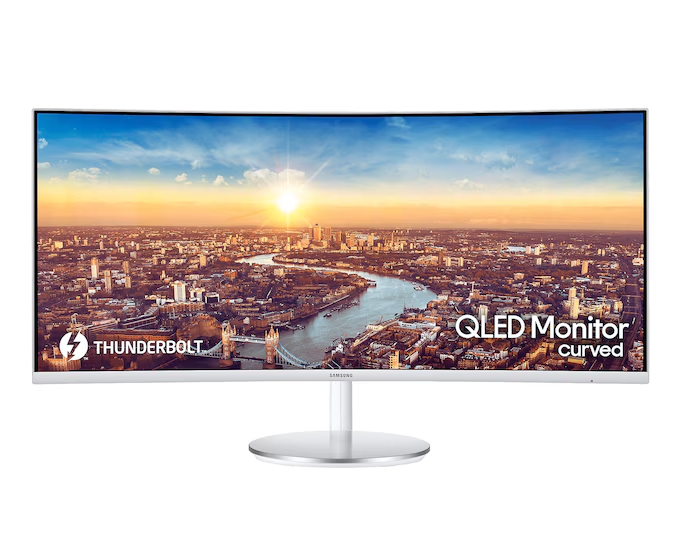
REST API and local touch UI for invasive control of Samsung CJ791 monitors by electrically emulating the front-panel JOG button.
23 partsMIT

 raffcorreia/samsung-jog-api
REST API and local touch UI for invasive control of Samsung CJ791 monitors by electrically emulating the front-panel JOG button. Uses an inline hardware mod on the JOG harness and DDC/CI for feedback, status, and supported monitor functions like input detection and power control.
Observation reva is an open-source printed circuit board by raffcorreia, from the raffcorreia/samsung-jog-api repository on GitHub, published under the MIT licence. It is a 2-layer board of 30 × 21 mm with 24 parts on 23 nets, routed with 122 tracks and 0 vias.
It is built around the 74LVC1G17GW, ADS1115IDGSR and TLV9064IDR-MS. Its parts include 8 capacitors, 7 resistors, 4 ICs and 3 connectors.


samsung-jog-api is a hardware-and-software project to make a Samsung CJ791 monitor locally programmable by electrically emulating its front-panel JOG control, exposing that behavior through a local REST API, and hosting a touch-first local control interface on a Raspberry Pi-based control deck.
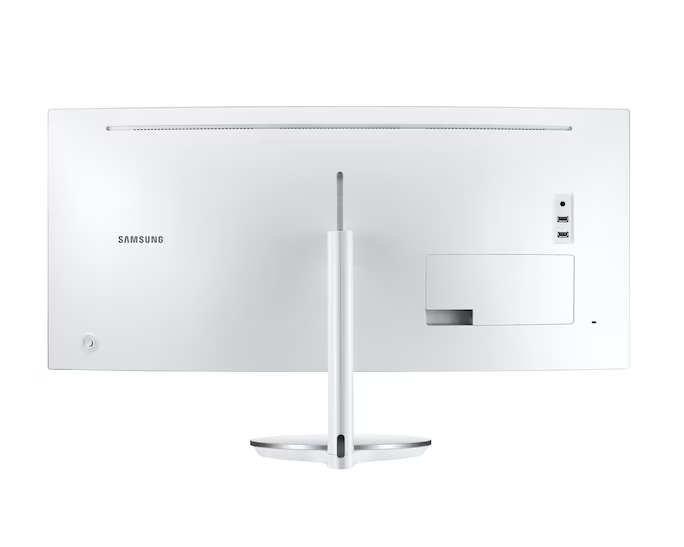
This repository is organized around the Samsung LC34J791WTNXZA / CJ791 hardware in my setup. Related Samsung monitors with a similar multi-jog front-panel board may be adaptable, but the measurements and assumptions here are specific to this unit unless noted otherwise.
Current state of the repository:
Phase 0: Documentation and Evidence CapturePhase 1: Host Preparation and Conservative OS CleanupPhase 2: Hardware ValidationPhase 3: Bus Observation Circuit DesignPhase 4: Analog Drive Circuit Design (design docs, KiCad schematic/PCB, BOM, and concept schematic)Phase 5: HDMI and DDC Communication DesignPhase 6: Discrete-Component Protoboard ValidationPhase 8: GPIO Assignment and Low-Level Control Prototype — execution recordPhase 9: Local Platform Bring-Up — execution record, runbook (systemd unit config/systemd/pi-deck.service, kiosk scripts under scripts/kiosk/)Phase 10: Local API — execution record (REST /api/v1, WebSocket /ws/events)Phase 11: Low-Level JOG Console UI — execution record (React JOG console in frontend/; live GPIO on the deck host verified — UI drives real JOG on the appliance)Phase 12: Deployment and Version Tracking — execution record (scripts/deploy.sh, deploy counter/version badge, kiosk reload workflow)Phase 13: Full-Screen UI Layout with Placeholders — execution record (1280×800 deck shell, real JOG/log, calendar and notes placeholders, settings route, popup template, seven-segment clock, LED/record stubs)Phase 14: Log Architecture Refactor — execution record (backend-owned live log buffer, WebSocket replay on connect, synced multi-client log stream)Phase 15: Observation Bus and Hardware Interface — execution record (interrupt-driven ADS1115 + GPIO observation bus, single websocket authority for holds/releases/LED)Phase 16: Recording and Replay Subsystem — recording workspace, sequence runner, upload/download/edit/replay UI complete; on-device validation is blocked until hardware access is availablePhase 17: Development Fixture — execution record (crude open support to hold monitor/control-deck hardware together for development)Phase 18: Display and Touch Validation — execution record (Waveshare DSI display/touch working; HDMI disabled as a display and retained for DDC/CI only; safe brightness ceiling 170/255)Phase 19: Display Usability and Power Hardening — execution record (display/Pi power menu, brightness API/UI cap, color/edge validation page, Xwayland/font readability pass, power measurements)Phase 20: Raspberry Pi 5 Rebuild and Display Performance Validation — execution record, GPIO schema (Pi 5 performance accepted; healthy-panel validation continues in Phase 26)Phase 21: Display Power Control Circuit — execution record (high-side 5V switch + RC soft-start to prevent Pi 5 shutdown on display reconnect; hardware design complete)Phase 22: Physical Display and Pi Power Button — execution record (physical display/Pi power button behavior, PowerMenu updates, and status LED path)Phase 23: Documentation Reorganization, Versioning, and Deploy Harness — execution record (artifact-based naming for all docs and KiCad projects, git-tag versioning, auto-tag on deploy, version panel in settings UI, deploy runbook)Phase 24: DDC Capability Investigation — execution record (validated usable DDC reads, documented unsupported state inference, and established the HDMI-disabled/DDC-active operating model; production write support remains deferred)Phase 25: Bidirectional Custom Monitor Communication and Control UI — execution record (hardware-confirmed KEY_LED receive and KEY_ADC1 command paths, typed responses and unsolicited messages, capture/replay/session tooling, state-aware deck controls, event-driven status recovery, and the large communication monitor)Phase 26: Replacement Display and Final Pi 5 Host Cutover — execution record (work has started; replacement panel image works, but its touch cable is physically damaged, so touch validation awaits repair or replacement)Phase 27: Monitor Power-State Characterization (the custom communication STATE model supersedes the planned LED-feedback characterization; remaining ON/IDLE/OFF/POWERED-OFF work is intentionally deferred)Phases 28–31 retain sequence cleanup, recording settings/editor, advanced productized features, and dashboard data-source planning for future reconsiderationPhase 50: Security, Authentication, and Presence-Aware Locking covers login/lock flows, authorization for sensitive capabilities, fingerprint-scanner preparation, and Shortwave/short-range presence-triggered lockingPhase 60: OSD Navigation Model and Monitor-Control Emulator is retained for future reconsideration, but accurate focus tracking requires a new firmware protocol response/pushed message and another firmware validation cycle because Menu reopens at its remembered last selectionPhase 7: Integrated Controller Board Design (KiCad / layout in progress)JOG board and DDC behaviorbackend/ (Python package pi_deck: api, services, hardware, … per Architecture), frontend/ (React/TypeScript UI; npm run build copies assets into backend/src/pi_deck/static/; npm run test:e2e in frontend/ builds the UI, runs Playwright against mock pi-deck on 8756, or set E2E_BASE_URL for a live Pi); protoboard GPIO helpers live under backend/src/pi_deck/hardware/. Bring-up script: scripts/pi-deck-gpio-probe (see runbook) — see Phase 8 Execution Record. Host metrics / Pi baseline: scripts/pi-deck-host-health.py (see Phase 9 execution and Host health gate).The CJ791 is a capable monitor, but it is frustrating to automate cleanly.
HDMI, DisplayPort, and Thunderbolt / USB-CJOG control that can navigate the on-screen display and trigger functions the normal software control path cannot, but it is inconvenient to use repeatedlyIn practice, this project uses a hybrid model:
JOG emulation for actions that need true front-panel behaviorDDC/CI for machine-readable feedback and the functions that already work reliablyLED observation for local feedback cues such as input-change blink patterns, idle state, and possible OSD boundary signalsThis matters especially for input switching. On this monitor, source selection is effectively a cycle through available inputs rather than a reliable direct jump to a named source, so current-state feedback is what tells the controller when to stop cycling.
High-level system shape:
JOG board and the monitor main boardKEY_ADC1 and KEY_ADC2LED state as an additional feedback signalThe system is expected to support three operating modes:
JOG mode for raw low-level control, investigation, and recoveryDDC mode, where the controller can read the current input and stop source-cycling or PIP navigation at the correct stateBlind mode, where the UI asks the user for current and desired input so the controller can perform blind source cycling from a known starting pointUse these section indexes to navigate the repository documentation:
Core project documents:
Hardware and reverse-engineering entry points:
Operational docs:
Recommended reading order:
This project intentionally modifies monitor hardware and is not warranty-safe.
JOG harness can permanently alter the monitorThe goal is not to preserve stock condition. The goal is to create a practical, local, programmable control interface for a monitor whose original user interface is difficult to automate cleanly.
| Qty | Value | Footprint | References |
|---|---|---|---|
| 4 | 100n | Capacitor_SMD:C_0402_1005Metric | C1, C2, C3, C4 |
| 3 | 10k 1% | Resistor_SMD:R_0402_1005Metric | R1, R2, R3 |
| 3 | 1n | Capacitor_SMD:C_0402_1005Metric | C6, C7, C8 |
| 2 | 0 | Resistor_SMD:R_0402_1005Metric | R6, R7 |
| 2 | 4.7k 1% | Resistor_SMD:R_0402_1005Metric | R4, R5 |
| 2 | 74LVC1G17GW | Package_TO_SOT_SMD:SOT-353_SC-70-5 | U3, U4 |
| 1 | 1u | Capacitor_SMD:C_0402_1005Metric | C5 |
| 1 | ADS1115IDGSR | Package_SO:MSOP-10_3x3mm_P0.5mm | U2 |
| 1 | HOST_IF | Connector_PinHeader_2.54mm:PinHeader_1x07_P2.54mm_Vertical | J2 |
| 1 | MONITOR_INPUT | Connector_PinHeader_2.54mm:PinHeader_1x04_P2.54mm_Vertical | J1 |
| 1 | SPARE_IF | Connector_PinHeader_2.54mm:PinHeader_1x02_P2.54mm_Vertical | J3 |
| 1 | TLV9064IDR | Package_SO:SOIC-14_3.9x8.7mm_P1.27mm | U1 |
| 1 | U1D_IN | TestPoint:TestPoint_Pad_D1.0mm | TP8 |
| 1 | U1D_OUT | TestPoint:TestPoint_Pad_D1.0mm | TP9 |
raffcorreia/samsung-jog-api
REST API and local touch UI for invasive control of Samsung CJ791 monitors by electrically emulating the front-panel JOG button.

raffcorreia/samsung-jog-api
REST API and local touch UI for invasive control of Samsung CJ791 monitors by electrically emulating the front-panel JOG button.


essensys-hub/essensys-i2c-etoile-0v
Carte qui relie le boîtier principal (BP, carte SC944D) aux boîtiers auxiliaires (BA1 SC940D, BA2 SC941C, BA3 SC942C) d'une installation Essensys en étoile autour d'un plan 0 V commun, à la place du chaînage d'origine.

olegantonov/skywave-sdr
Rádio portátil modular de baixo custo: ESP32-S3, OLED, PTT, HF SDR e expansão VHF/UHF. Em desenvolvimento.

AxelMcKenna/AFX-1000
RMX-1000-inspired effects processor for macOS, AU and VST3, built on a shared C++20 engine. Standalone Daisy Seed 3 hardware with two main PCBs and a custom housing is in development.

gustebeast/public-steel-guitar
A pedal steel guitar you can build yourself, from parts anyone can buy.

MotorDynamicsLab/Leviathan
Leviathan Main Controller for Voron 2 / Trident 3D Printers

garrettsworkshop/GW4302
Prototype RAM cartridge compatible with Commodore 1700/1750/1764 RAM Expansion Unit (REU)

znuh/usb2serial-autovtg
USB to serial converter with automatic target voltage detection, buffered IOs, 1.8V to 5V support and backflow current protection
It measures 30 × 21 mm and has 2 copper layers, 1.6 mm thick.
24 parts, built around the 74LVC1G17GW, ADS1115IDGSR and TLV9064IDR-MS. The full list of its parts is on this page, with links to each part's symbol and footprint where PCBKit's library has them.
From the raffcorreia/samsung-jog-api repository on GitHub, at the commit this page was made from: the board is hardware/kicad/observation-reva/observation-reva.kicad_pcb and its schematic hardware/kicad/analog-drive/analog-drive.kicad_sch. PCBKit opens the board in the browser, with nothing to install.
Its repository publishes it under the MIT licence: you may reuse it on that licence's terms (keep the author's notice, and for a copyleft licence share your changes alike).