6 layers80 × 60 mm
Ice core
enkhbold470/ice-core
iCE40UP5K FPGA board with 8 MB PSRAM and three Pmods, programmed over USB-C by an RP2040. 6-layer KiCad 10 board.
78 partsCERN-OHL-S-2.0

 puddletowntom/Wscales
The weight scales is a modern take on a kitchen scales with a more up to date display. It displays up to 3KG and the load can bear up to 5KG.
WeightingScales is an open-source printed circuit board by puddletowntom, from the puddletowntom/Wscales repository on GitHub, published under the Unlicense licence. It is a 2-layer board of 40 × 59.1 mm with 60 parts on 83 nets, routed with 698 tracks and 61 vias.
It is built around the ESP32-S3R8, CAT4004AHU2-GT3 and W25Q32JVSSIQ, with the AP2112K-3.3, PTS810SJM250SMTRLFS and AO3401A among its other parts. Its parts include 22 capacitors, 9 resistors, 6 ICs, 3 diodes and 3 connectors. It belongs with the ESP32 boards of this library.


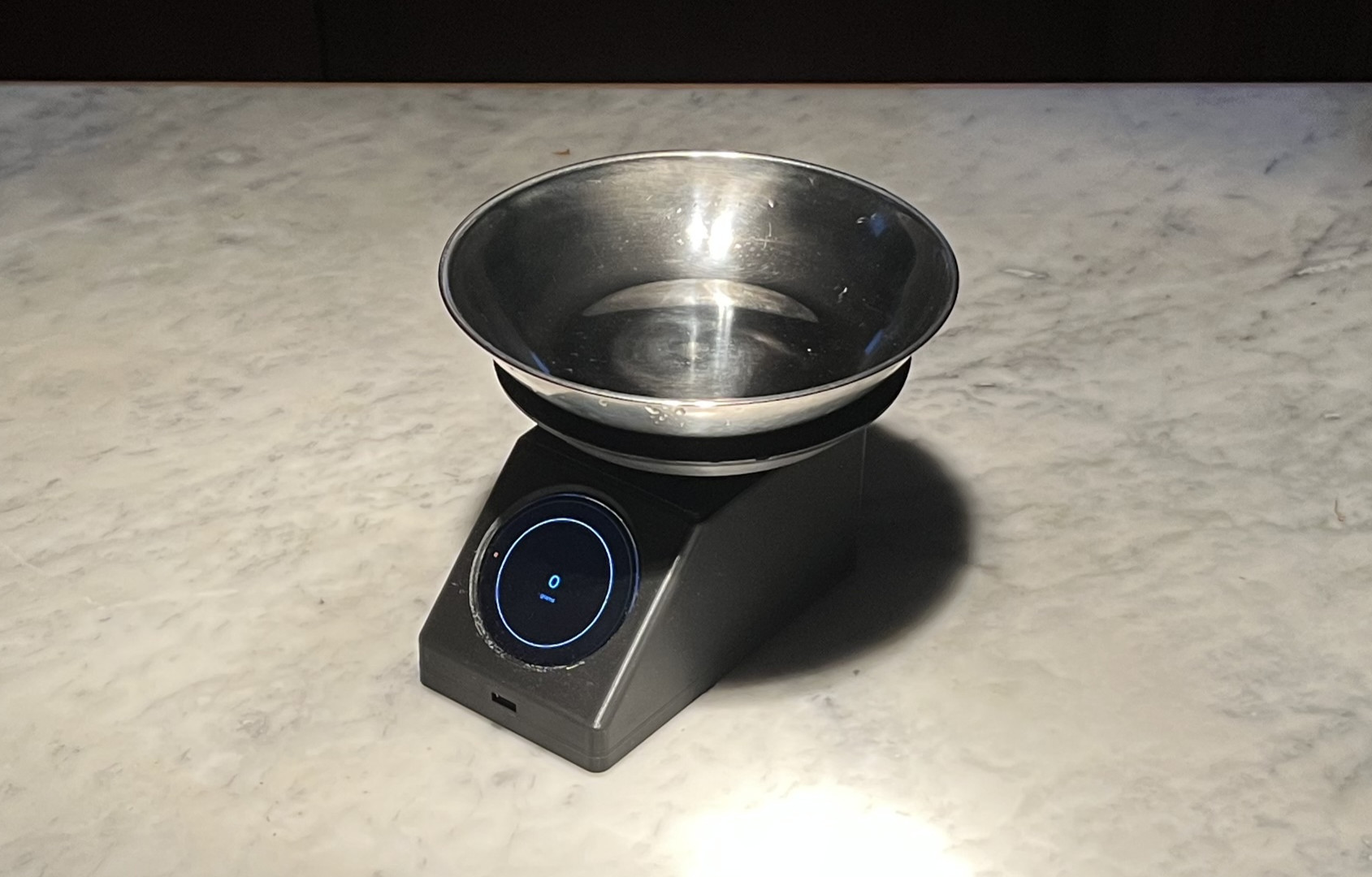
The weight scales is a modern take on a kitchen scales with a more up to date display. It displays up to 3KG and the load can bear up to 5KG. An animation also rotates around the circumference of the display with increasing weight for presentation. At the rear of the device is a power switch. The device contains a 1.8Ah rechargable battery. The front of the device contains a USB-C port for battery charging. You can turn the device on while charging if needs be. You can print the case with various parts to assemle this yourself. 3D print files are included in the 3mf folder.
For the 3D printed case I have included the 3mf files. This project includes the following,
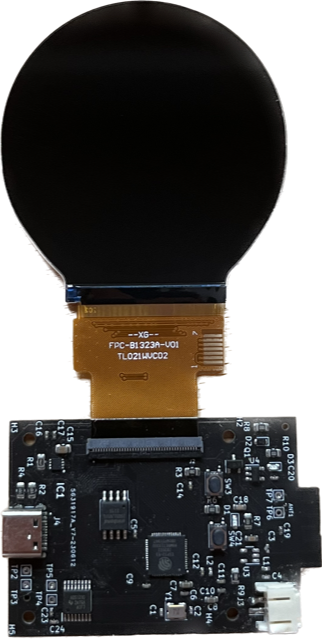
You can find the entire pinout with the schematic provided. But a brief overview is as follows,
Load Cell Pins
Buttons
Due to the sensitivity of the load cell, the screw tightness of the load cells and the potential subtle minor variations of every printed case, its necessary to do a calibration of each scales. This is done by using a known weight as a reference so that an offset can be used to compensate for small difference. I include the weight of the metal plate in the calibration. The metal plate weights 55 grams so the metal plate plus a fixed 1kg weight is used for getting the reference.
There are two modes for the ESP32-S3, download mode (upload program) and run mode (code running). To put the board in program mode press and hold the button SW4 (boot) and while this is still being held press the SW3 (reset) button. To put the board into run mode just press SW3 (reset) button once or alternatively just unplug the device.
There are inaccuracies occuring for small weight values. eg an item less than 10 grams might not register as a load. This could be to do with the plastic materials having a damping effect where load is not apparent on cantilever and is dampened into soft plastic. More rigid plastic for the base plate would be recommended instead of PLA. I purposefully put 1 end of cantilever in the middle of the base plate to minimise the edges of the plastic being pulled/bent upwards from the load applied. In addition, there seems to be around 2 grams difference for different charge levels of the battery. The ADC code is very surface level and could use more filtering/considerations for noise.
| Qty | Value | Footprint | References |
|---|---|---|---|
| 6 | TestPoint | Connector_Pin:Pin_D0.7mm_L6.5mm_W1.8mm_FlatFork | TP2, TP3, TP4, TP5, TP6, TP7 |
| 5 | 0.1uF | Capacitor_SMD:C_0402_1005Metric | C9, C12, C14, C23, C24 |
| 5 | 1uF | Capacitor_SMD:C_0402_1005Metric | C6, C10, C11, C17, C19 |
| 4 | MountingHole | MountingHole:MountingHole_2.2mm_M2 | H2, H3, H4, H5 |
| 3 | 10k | Resistor_SMD:R_0805_2012Metric | R3, R6, R8 |
| 2 | 100nF | Capacitor_SMD:C_0402_1005Metric | C5, C16 |
| 2 | 10uF | Capacitor_SMD:C_0603_1608Metric | C7, C8 |
| 2 | 1k | Resistor_SMD:R_0805_2012Metric | R7, R10 |
| 2 | 22pF | Capacitor_SMD:C_0402_1005Metric | C1, C2 |
| 2 | 3p3 | Capacitor_SMD:C_0402_1005Metric | C3, C4 |
| 2 | 4.7uF | Capacitor_SMD:C_0603_1608Metric | C18, C21 |
| 2 | 5.1k | Resistor_SMD:R_0805_2012Metric | R2, R4 |
| 2 | LED | LED_SMD:LED_0603_1608Metric | D1, D3 |
| 2 | PTS810_SJM_250_SMTR_LFS | PTS810_SJM_250_SMTR_LFS:SW_PTS810_SJM_250_SMTR_LFS | SW3, SW4 |
| 1 | 1uF | Capacitor_SMD:C_0805_2012Metric | C15 |
| 1 | 2.2uF | Capacitor_SMD:C_0402_1005Metric | C20 |
| 1 | 2k | Resistor_SMD:R_0805_2012Metric | R9 |
| 1 | 2n2 | Inductor_SMD:L_0402_1005Metric | L1 |
| 1 | 2nH | Inductor_SMD:L_0402_1005Metric | L2 |
| 1 | 3.74k | Resistor_SMD:R_0805_2012Metric | R1 |
| 1 | 40MHz | Crystal:Crystal_SMD_3225-4Pin_3.2x2.5mm | Y1 |
| 1 | ADS1230IPWR | ADS1230IPWR:SOP65P640X120-16N | IC2 |
| 1 | AO3401A | Package_TO_SOT_SMD:SOT-23 | Q1 |
| 1 | AP2112K-3.3 | Package_TO_SOT_SMD:SOT-23-5 | U4 |
| 1 | CAT4004AHU2-GT3 | CAT4004A-libraries:SON50P200X200X55-9N | IC1 |
| 1 | Conn_01x02 | Connector_JST:JST_PH_S2B-PH-SM4-TB_1x02-1MP_P2.00mm_Horizontal | J3 |
| 1 | D_Schottky | Diode_SMD:D_0603_1608Metric | D2 |
| 1 | ESP32-S3R8 | ESP32-S3R8:QFN40P700X700X90-57N-D | IC3 |
| 1 | FH34SRJ-40S-0.5SH(50) | FH34SRJ-40S-0.5SH_50_:HRS_FH34SRJ-40S-0.5SH(50) | J2 |
| 1 | MCP73831-3-OT | Package_TO_SOT_SMD:SOT-23-5 | U3 |
| 1 | PCB_ANT | Passives:PCB_Antenna_2_4_GHz_ESP32 | ANT1 |
| 1 | TYPE-C-31-M-12 | TYPE-C-31-M-12:HRO_TYPE-C-31-M-12 | J4 |
| 1 | W25Q32JVSS | Package_SO:SOIC-8_5.23x5.23mm_P1.27mm | U2 |
enkhbold470/ice-core
iCE40UP5K FPGA board with 8 MB PSRAM and three Pmods, programmed over USB-C by an RP2040. 6-layer KiCad 10 board.

nbtca/CABadge
CABadge 计协电子吧唧:基于 ESP32-S3 的开源圆屏互动徽章,支持动态壁纸、触摸交互、Wi-Fi/BLE 和趣味小应用,提供 PCB、3D 打印外壳、固件及配套工具。


thingino/teacup-neo
Universal Ingenic SoC development platform: one carrier + per-SoC interposer modules (T10 through A1, any package) on a DDR4 card edge, with an ESP32-S3 BMC for autonomous LLM-driven development.

Plastal-Bot-Builders/RoboCoreDocumentation
RoboCore is a classroom robot kit and coding platform, designed and built in Zambia by Plastal-Bot Builders (Lusaka).


g210101021/OpenStylophone-RP2040
Overview • Technical Summary • Architecture • Hardware Audit & Remediation • Schematic Subsystems • PCB Layout • Firmware Roadmap • Bill of Materials • Author

It measures 40 × 59.1 mm and has 2 copper layers, 1.6 mm thick.
60 parts, built around the ESP32-S3R8, CAT4004AHU2-GT3, W25Q32JVSSIQ and AP2112K-3.3. The full list of its parts is on this page, with links to each part's symbol and footprint where PCBKit's library has them.
From the puddletowntom/Wscales repository on GitHub, at the commit this page was made from: the board is Kicad/WeightingScales.kicad_pcb and its schematic Kicad/WeightingScales.kicad_sch. PCBKit opens the board in the browser, with nothing to install.
Its repository publishes it under the Unlicense licence: you may reuse it on that licence's terms (keep the author's notice, and for a copyleft licence share your changes alike).