2 layers214 × 187.9 mm
Line follower simple
alientanya/line-follower-PCB
A modular PCB platform for Fast Line Follower (FLF) robots, designed to prioritize sensor experimentation and component flexibility.
259 parts2MIT

 prusa3d/IR-MH-sensor-PCB3
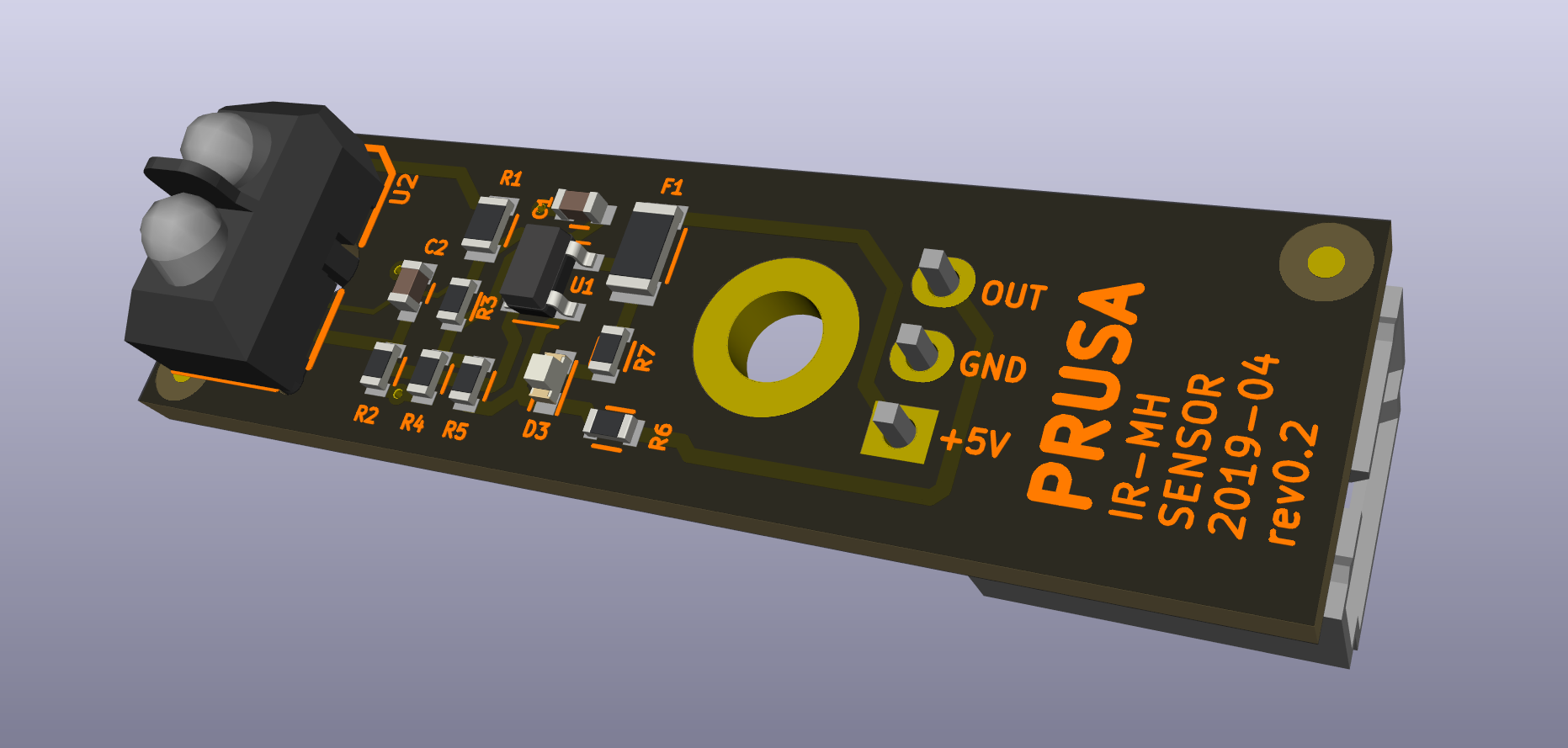
IR MH sensor-02 is an open-source printed circuit board by prusa3d, from the prusa3d/IR-MH-sensor-PCB repository on GitHub. It is a 2-layer board of 42 × 12 mm with 18 parts on 9 nets, routed with 79 tracks and 4 vias.
It is built around the LMV321 and TCRT5000L. Its parts include 7 resistors, 2 capacitors, 2 ICs, 2 connectors and 1 diode. It belongs with the sensors and measurement boards of this library.


| Qty | Value | Footprint | References |
|---|---|---|---|
| 2 | 100n | Capacitors_SMD:C_0603 | C1, C2 |
| 1 | 100R | Resistors_SMD:R_0603 | R6 |
| 1 | 100k | Resistors_SMD:R_0603 | R5 |
| 1 | 10k | Resistors_SMD:R_0603 | R2 |
| 1 | 12k | Resistors_SMD:R_0603 | R3 |
| 1 | 1k | Resistors_SMD:R_0603 | R7 |
| 1 | 220R | Resistors_SMD:R_0805 | R1 |
| 1 | 3,3k | Resistors_SMD:R_0603 | R4 |
| 1 | 50mA | Resistors_SMD:R_1206 | F1 |
| 1 | 70553-0002 | Pin_Headers:Pin_Header_Angled_1x03 | P1 |
| 1 | GRN | LEDs:LED_0603 | D3 |
| 1 | LMV321 | TO_SOT_Packages_SMD:SOT-23-5 | U1 |
| 1 | Mounting Hole | Mounting_Holes:MountingHole_3.2mm_M3_DIN965_Pad | P2 |
| 1 | TCRT5000L | ok1hra:TCRT5000 | U2 |
The 15 most common of 18 parts.
alientanya/line-follower-PCB
A modular PCB platform for Fast Line Follower (FLF) robots, designed to prioritize sensor experimentation and component flexibility.


CptEdward-MP/RM_Electronics_Central_Library
Over time, every team also writes the same firmware again.


quibot-dev/QuiBot-3DgesturesApp
🌐 Lloc web del projecte: [https://quibot.upc.edu]

It measures 42 × 12 mm and has 2 copper layers, 1.6 mm thick.
18 parts, built around the LMV321 and TCRT5000L. The full list of its parts is on this page, with links to each part's symbol and footprint where PCBKit's library has them.
From the prusa3d/IR-MH-sensor-PCB repository on GitHub, at the commit this page was made from: the board is rev.02/IR-MH-sensor-02.kicad_pcb. PCBKit opens the board in the browser, with nothing to install.
Its repository states no licence, so its author keeps all rights: ask prusa3d before reusing the design.