

2 layers162.9 × 178.9 mm

A minimal Gateron LP column staggered build
LP36 is an open-source printed circuit board by penk, from the penk/LoremIpsum36 repository on GitHub, published under the MIT licence. It is a 2-layer board of 236.4 × 110.9 mm with 81 parts on 59 nets, routed with 291 tracks and 18 vias.
Its parts include 36 diodes, 36 switches and 1 IC. It belongs with the RP2040 boards of this library.
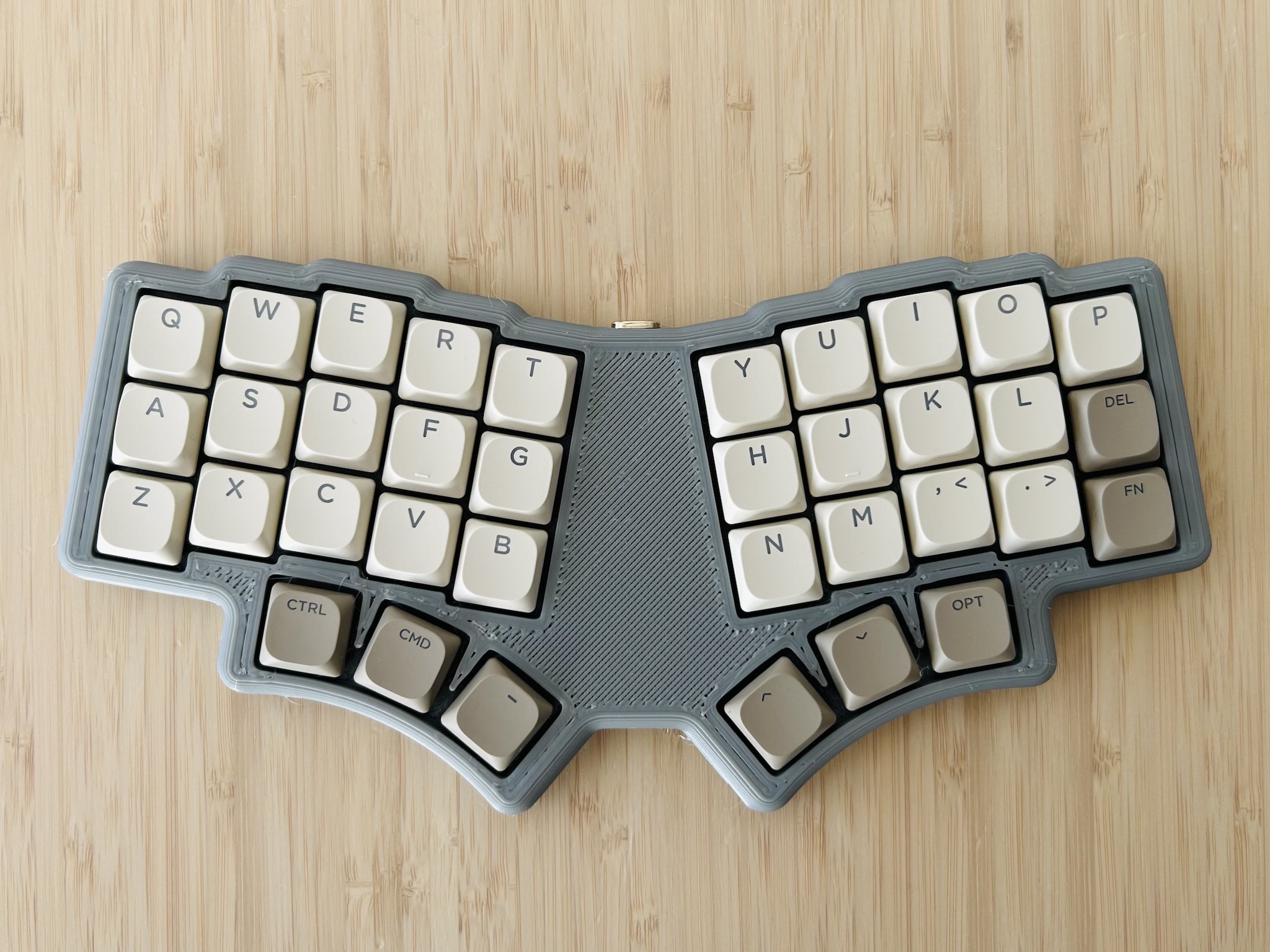
| Quantity | Item |
|---|---|
| 1 | RP2040-Zero |
| 1 | LoremIpsum36 PCB |
| 36 | Gateron LP switches and keycaps |
| 36 | KS-33 sockets |
| 36 | 1N4148SOD-123 diodes |
| 1 | LoremIpsum36 case |
| 10 | M2×3 heat-set threaded inserts |
| 10 | M2×12 countersunk screws |
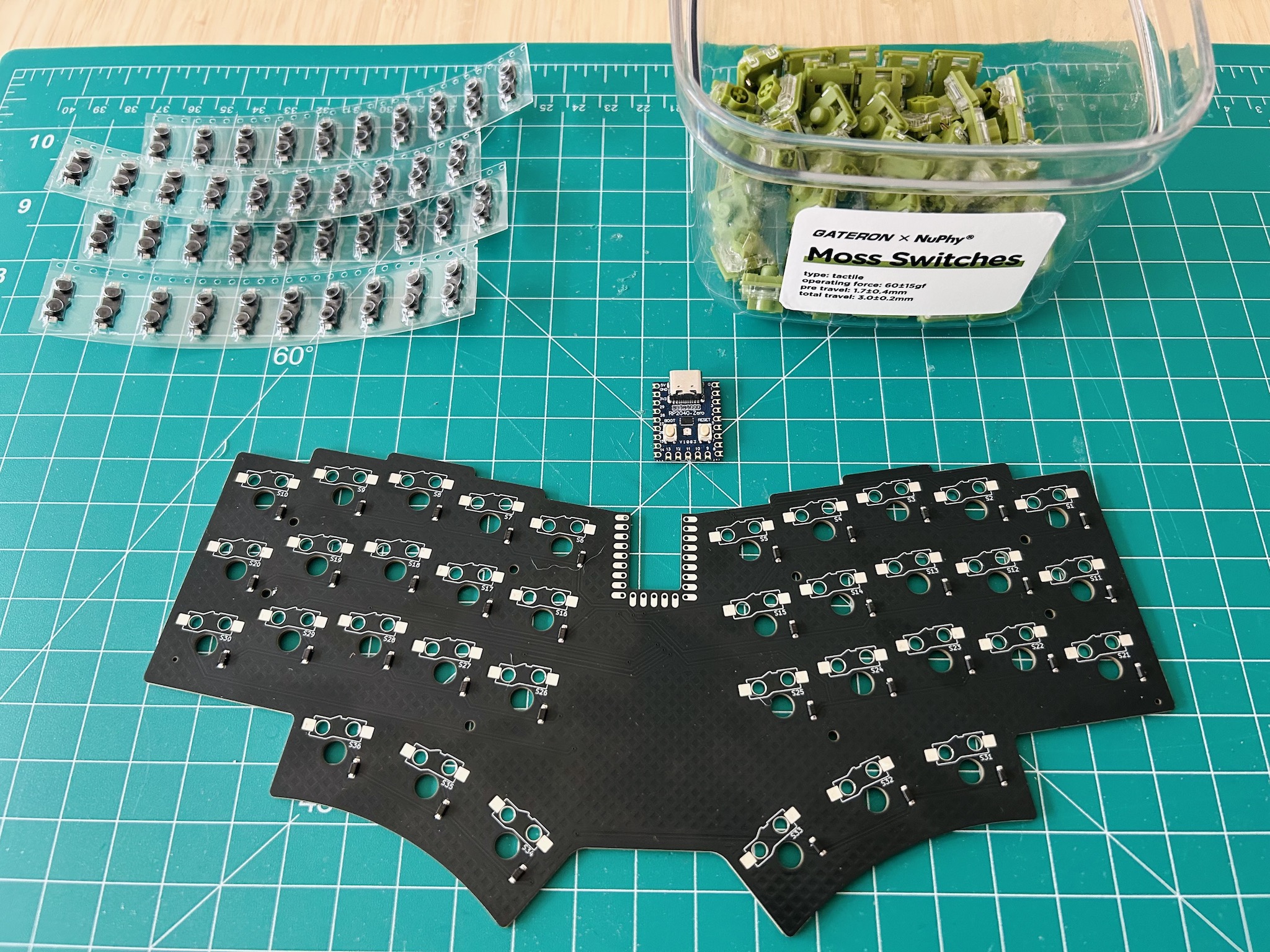
To place an order for the LoremIpsum36 PCB:
All components (except the MCU) are soldered to the back (bottom) side of the board.
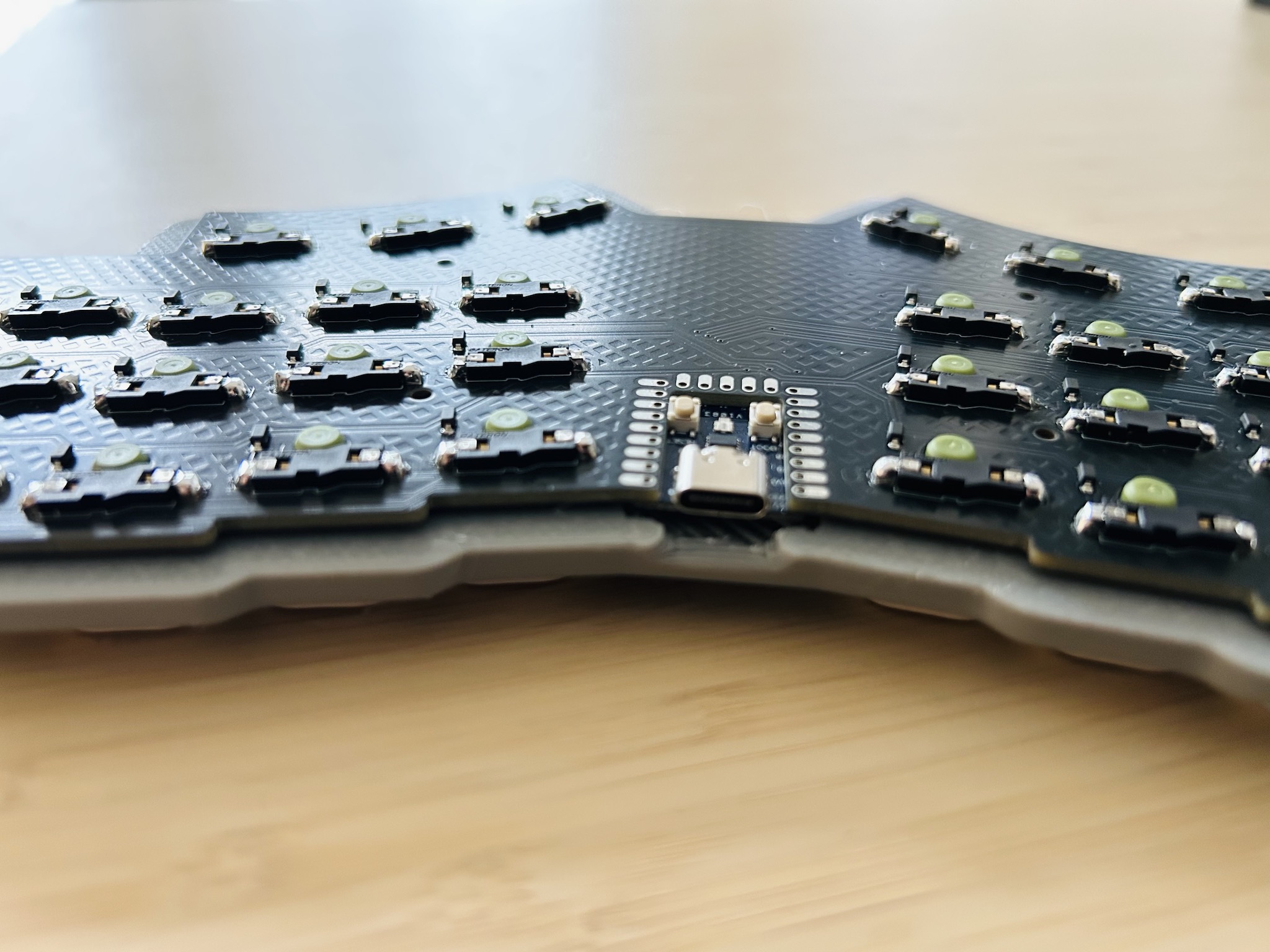
[!CAUTION] To maintain the low profile of the board, the MCU (RP2040-Zero) must be soldered on the front (top) side of the PCB, with its components facing downwards.
The boot/reset button should face the bottom side of the keyboard. Double-check alignment before soldering to avoid incorrect placement:
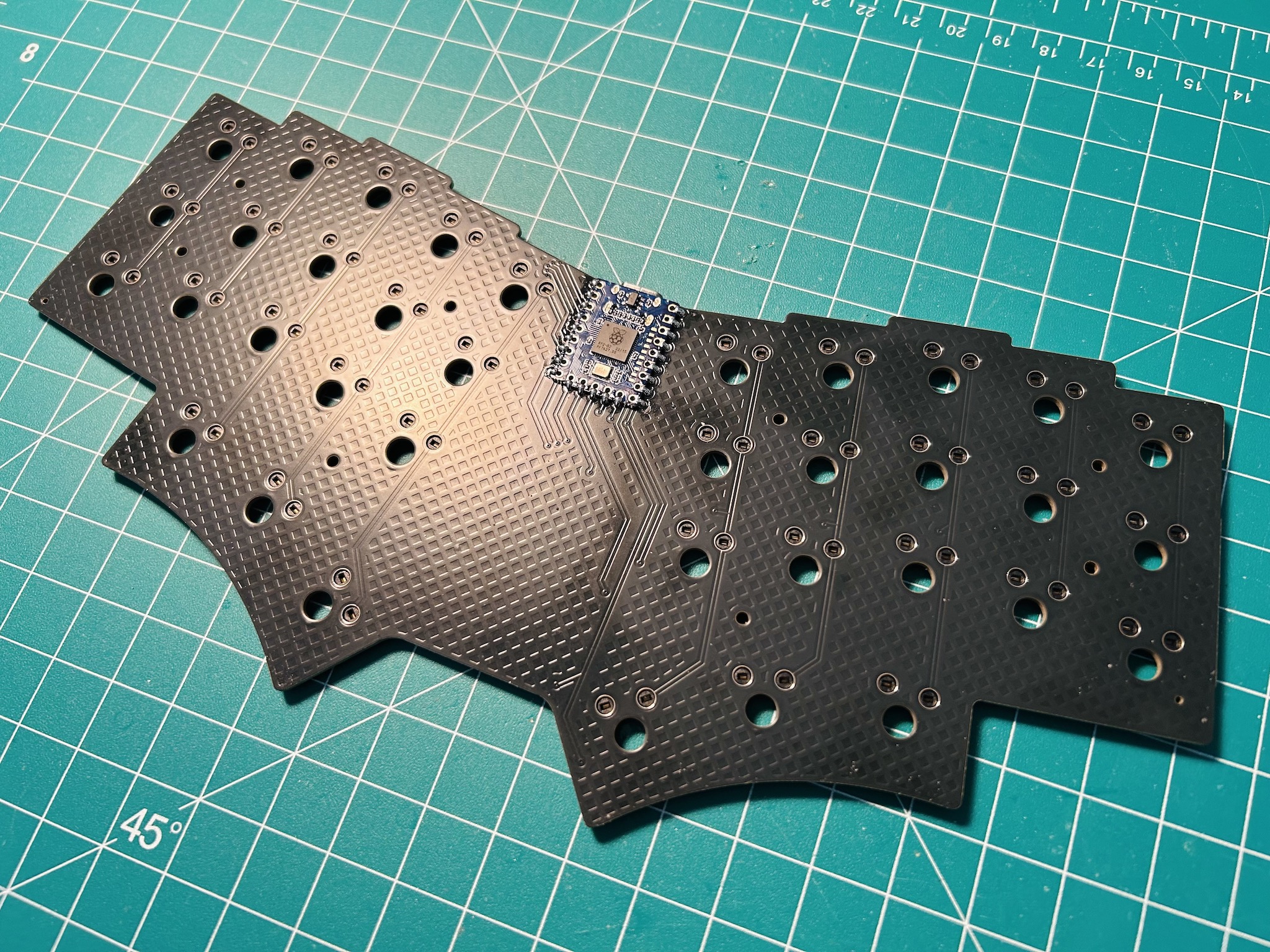
The complete PCB design project is available in the kicad/ folder.
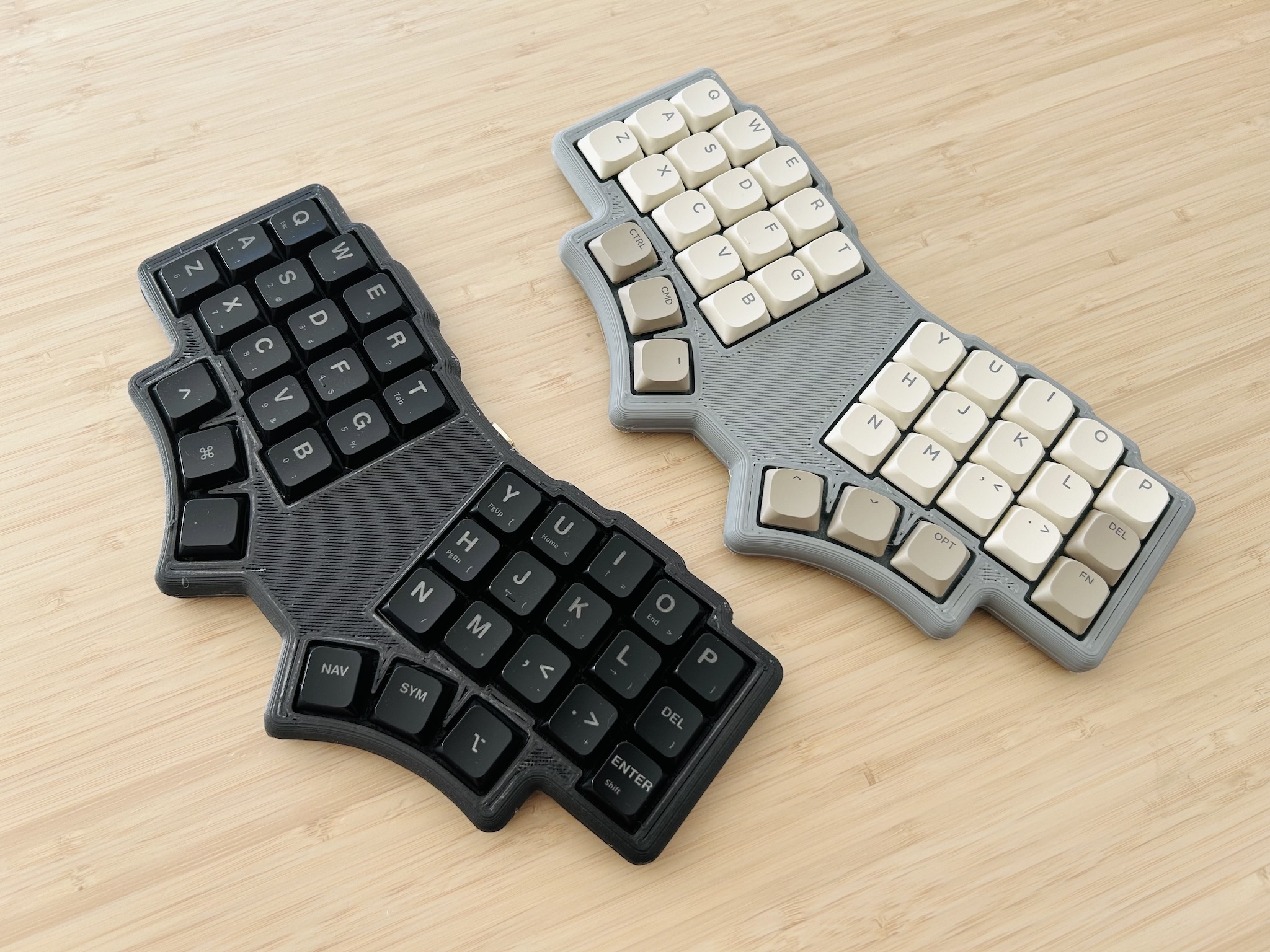
Print the loremipsum36-top and loremipsum36-bottom case using the provided STL files, along with the threaded inserts and M2 screws.
If you prefer to use the keyboard without a case, you will need to print the plate loremipsum36-plate, or laser cut a plate using the provided DXF file.
Precompiled VIA-enabled firmware:
penk_loremipsum36_default.uf2 under firmware/ to the RP2040 MCU.Design tab for VIA configuration.The QMK source is available under firmware/QMK/keyboards/penk/loremipsum36.
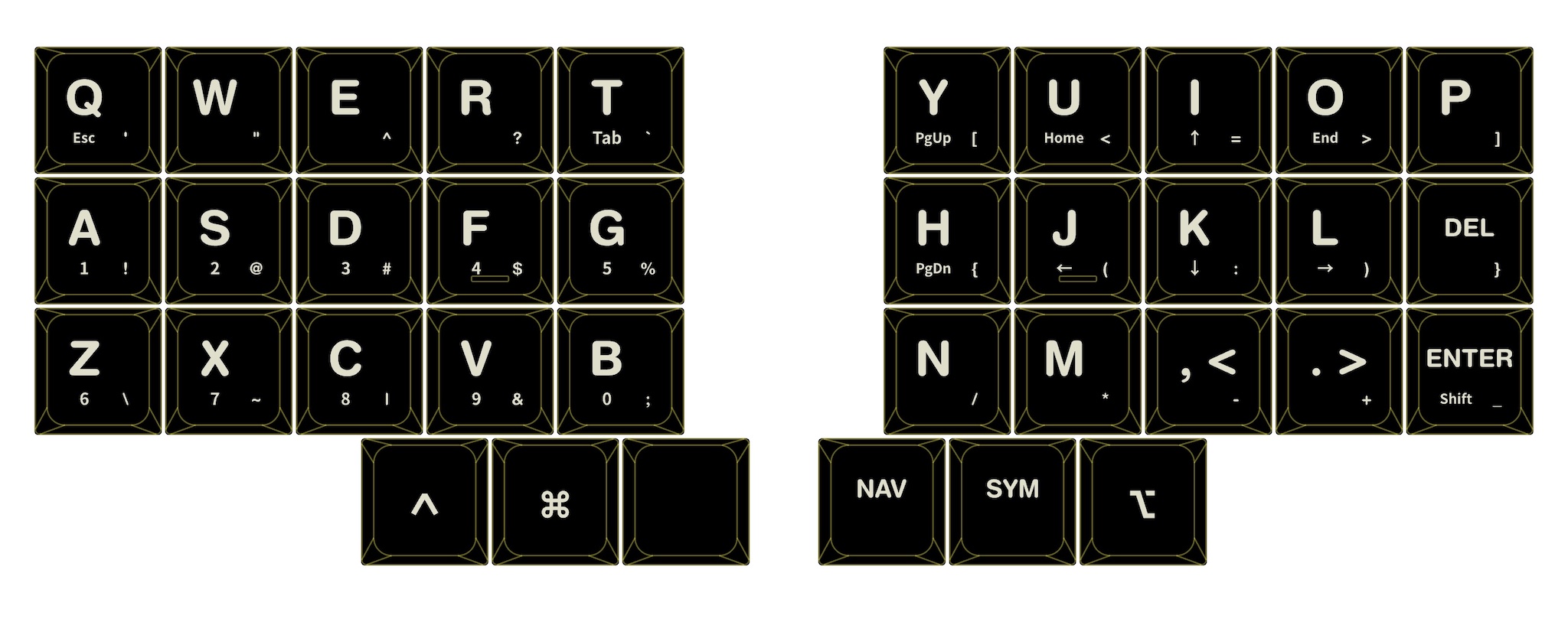
The keymap is based on Rico's rsta layout, and the custom keycaps are made by FK Keycaps.
You can order the same keycap set or customize yours at https://fkcaps.com/custom/D7829J.
Copyright (c) 2025 Penk Chen. All rights reserved.
All files are licensed under the MIT license. For more information, see the LICENSE.
| Qty | Value | Footprint | References |
|---|---|---|---|
| 36 | Diode | ScottoKeebs_Components:Diode_SOD-123 | D1, D2, D10, D11, D12, D13, D14, D15, D16, D17, D18, D19, D20, D21, D22, D23 +20 |
| 36 | Keyswitch | PCM_marbastlib-xp-gateron_lp:SW_KS33_HS_KS-2P02B01-02_HS_1u | S1, S2, S10, S11, S12, S13, S14, S15, S16, S17, S18, S19, S20, S21, S22, S23 +20 |
| 8 | MountingHole | MountingHole:MountingHole_2.2mm_M2 | H1, H2, H3, H4, H5, H6, H7, H8 |
| 1 | RP2040_Zero | ScottoKeebs_MCU:RP2040_Zero_holes | U1 |
It measures 236.4 × 110.9 mm and has 2 copper layers, 1.6 mm thick.
81 parts. The full list of its parts is on this page, with links to each part's symbol and footprint where PCBKit's library has them.
From the penk/LoremIpsum36 repository on GitHub, at the commit this page was made from: the board is kicad/LP36.kicad_pcb and its schematic kicad/LP36.kicad_sch. PCBKit opens the board in the browser, with nothing to install.
Its repository publishes it under the MIT licence: you may reuse it on that licence's terms (keep the author's notice, and for a copyleft licence share your changes alike).

slu4coder/Minimal-UART-Computer-1-2
Legacy: Version 1 and 2 of my TTL-only CPU featuring UART I/O, an expansion port, 512KB SSD at up to 10MHz clock speed


zynthian/zynthian-hw
Zynthian hardware stuff: PCBs, schemes, parts specifications, pin assignment, ...


BerkeleyHCI/PolymorphicBlocks
A Python-based hardware description language for PCBs for higher-level (block-diagram / system-architecture level) PCB design through libraries of directly reusable subcircuit generators.

ChrisChrisLoLo/idawgz32
A full 32 key mechanical keyboard that can be made for only $5