4 layers45 × 29.2 mm
Pocket 2.66
quintenluyten2/Pocket_2.66_E-reader_PCB
PCB for 2.13" and 2.66" E-ink displays with ESP32-C3, micro-SD card, battery management, and 3 user buttons
88 parts3

 paltus23/impact_meter_pcb
Device with accelerometer on ESP32-C3
Impact measure is an open-source printed circuit board by paltus23, from the paltus23/impact_meter_pcb repository on GitHub. It is a 4-layer board of 30.6 × 20.5 mm with 63 parts on 50 nets, routed with 432 tracks and 143 vias.
It is built around the ESP32-C3FH4, ADXL375BCCZ and GS2019-33TR5, with the RB521BS-40 and SP2002KNC among its other parts. Its parts include 21 capacitors, 17 resistors, 3 ICs, 3 inductors and 2 diodes. It belongs with the ESP32 and RISC-V boards of this library.


There is few photos of ready device
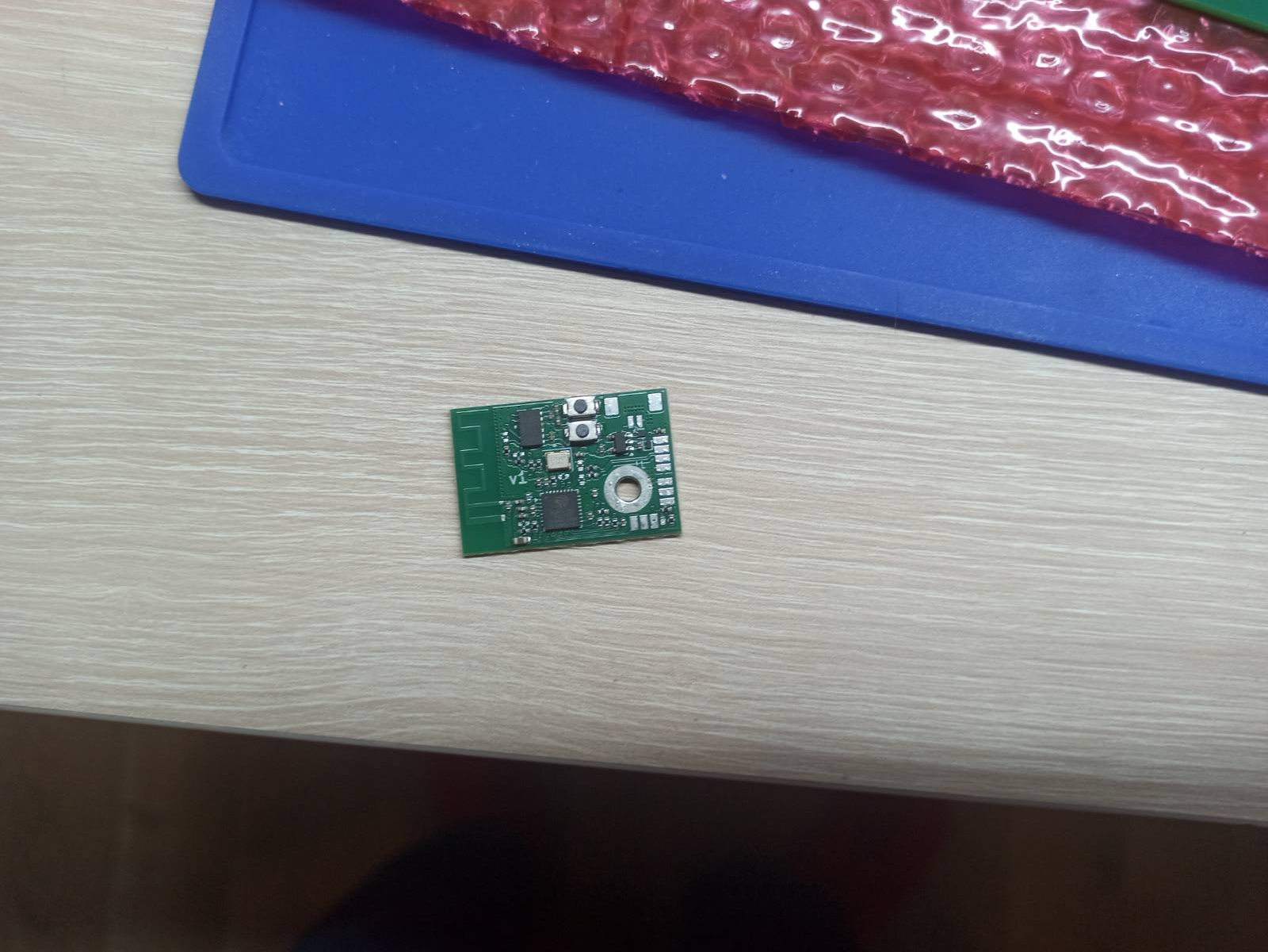
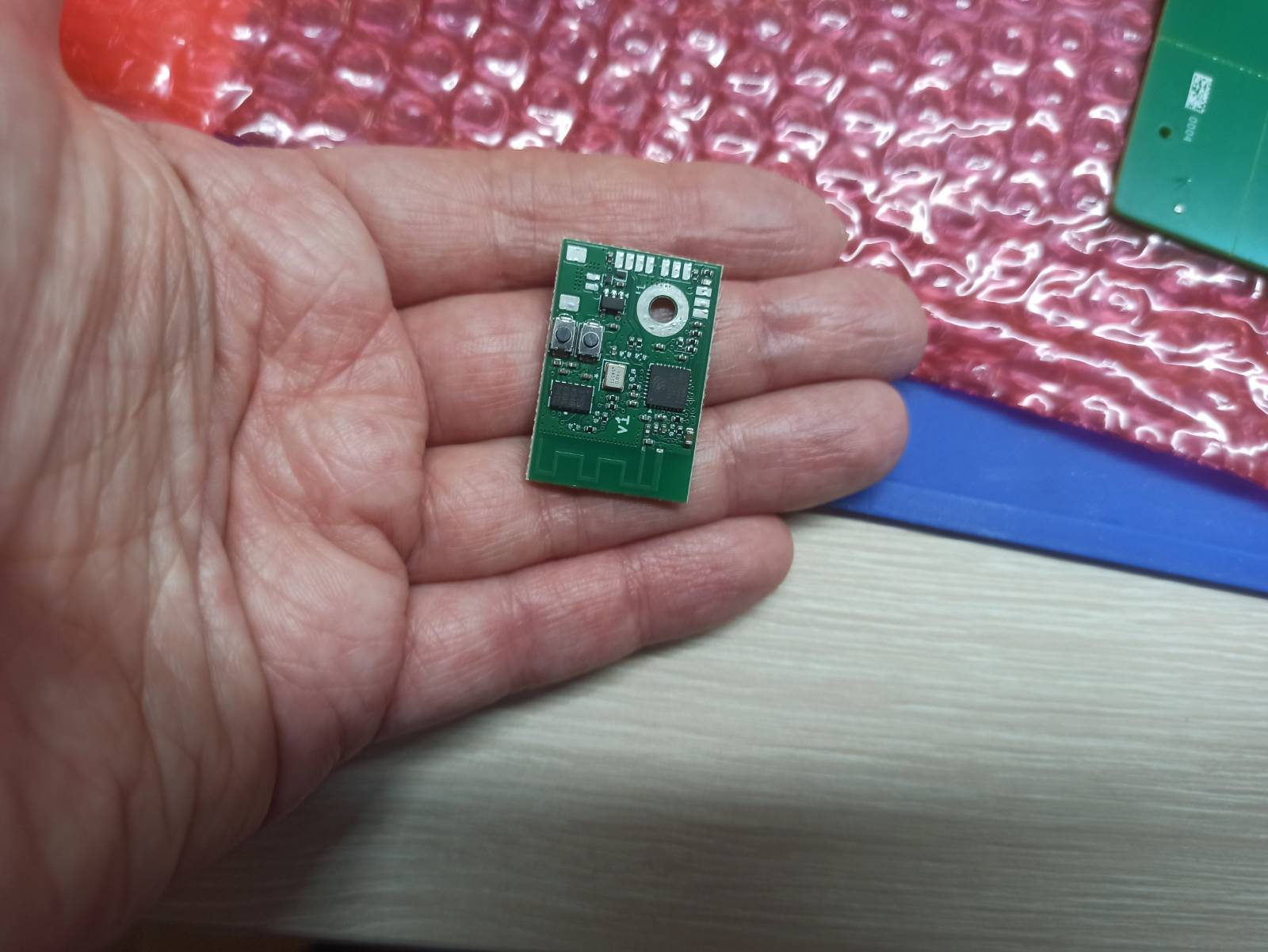
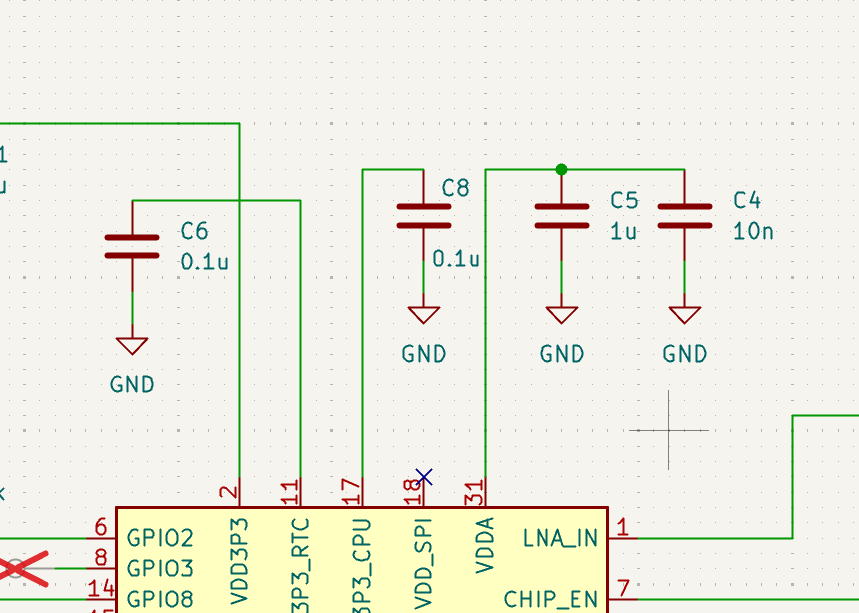
3.3 V power supply do not connected to ESP32
| Qty | Value | Footprint | References |
|---|---|---|---|
| 10 | TestPoint | Local:TP_1x2mm | TP1, TP2, TP3, TP4, TP5, TP6, TP7, TP8, TP9, TP10 |
| 9 | 10k | Resistor_SMD:R_0402_1005Metric | R2, R3, R4, R5, R9, R13, R14, R15, R16 |
| 6 | 1u | Capacitor_SMD:C_0402_1005Metric | C1, C5, C14, C15, C18, C21 |
| 5 | 0 | Resistor_SMD:R_0402_1005Metric | R6, R7, R10, R11, R12 |
| 5 | 0.1u | Capacitor_SMD:C_0402_1005Metric | C3, C6, C8, C19, C20 |
| 5 | 22p | Capacitor_SMD:C_0402_1005Metric | C9, C10, C11, C12, C13 |
| 3 | 1.8nH | Inductor_SMD:L_0402_1005Metric | L1, L2, L3 |
| 2 | 10 | Resistor_SMD:R_0402_1005Metric | R1, R17 |
| 2 | 10n | Capacitor_SMD:C_0402_1005Metric | C4, C7 |
| 2 | SW_Push | Button_Switch_SMD:SW_Push_SPST_NO_Alps_SKRK | SW1, SW2 |
| 1 | 10u | Capacitor_SMD:C_0603_1608Metric | C2 |
| 1 | 4.7p | Capacitor_SMD:C_0402_1005Metric | C16 |
| 1 | 40MHz | Oscillator:Oscillator_SMD_Abracon_ASE-4Pin_3.2x2.5mm | Y1 |
| 1 | 499 | Resistor_SMD:R_0402_1005Metric | R8 |
| 1 | 4p | Capacitor_SMD:C_0402_1005Metric | C17 |
| 1 | ADXL375BCCZ | Local:LGA_CC-14-1_ADXL375 | U4 |
| 1 | Bossie BX-MX1.25-2PWT | Local:mx1.25 | J1 |
| 1 | ESP32-C3FH4 | Package_DFN_QFN:QFN-32-1EP_5x5mm_P0.5mm_EP3.7x3.7mm | U2 |
| 1 | GS2019-33TR5 | Package_TO_SOT_SMD:SOT-23-5 | U3 |
| 1 | LED | LED_SMD:LED_0402_1005Metric | D1 |
| 1 | MountingHole | MountingHole:MountingHole_3.2mm_M3 | H1 |
| 1 | RB521BS-40 | Diode_SMD:D_SOD-882 | D3 |
| 1 | SP2002KNC | Package_DFN_QFN:Diodes_DFN1006-3 | Q2 |
| 1 | ~ | Local:2_4GHz_AN043 | ANT1 |
It measures 30.6 × 20.5 mm and has 4 copper layers, 1.6 mm thick.
63 parts, built around the ESP32-C3FH4, ADXL375BCCZ, GS2019-33TR5 and RB521BS-40. The full list of its parts is on this page, with links to each part's symbol and footprint where PCBKit's library has them.
From the paltus23/impact_meter_pcb repository on GitHub, at the commit this page was made from: the board is v1/impact_measure.kicad_pcb and its schematic v1/impact_measure.kicad_sch. PCBKit opens the board in the browser, with nothing to install.
Its repository states no licence, so its author keeps all rights: ask paltus23 before reusing the design.
quintenluyten2/Pocket_2.66_E-reader_PCB
PCB for 2.13" and 2.66" E-ink displays with ESP32-C3, micro-SD card, battery management, and 3 user buttons

RocketryVT/active-drag-system
Eigen Library, cmake, and arm-none-eabi-gcc tooling required for successful build.

shorlee/TeleSTERN
The TeleSTERN Project is an Open Source Rocketry Flight Computer based on the TeleMega by Altus Metrum.

daedalus-ind/icarus-hardware
Hardware of the onboard flight computer for the Icarus rocket.

IlyaasAitSimmou/krakenbane_one_pcb
This GitHub Repository contains all kiCad files related to the SRAD data aqcuisition flight computer, KRAKENBANE I which was flown at Launch Canada on the Goldeneye rocket by the Turner Fenton Rocketry Association…


itsTasos/InvictusOne-Flight-Computer
KiCad hardware design for an STM32G474-based flight-data computer for high-power model rockets, with inertial and pressure sensors, CAN-FD, and onboard flash storage.