
2 layers76 × 56 mm
Ai sdr mini
HaohanHe/MBDSDR
AI-driven SDR & VNA system: LLM-callable tools over MCP with human-approval gates (C++/Qt6 + Python + Flutter)
62 partsMIT
 OpenDrone-hw/OpenRemoteID7
Open hardware concept for a standalone Remote ID module: ESP32-C3 plus GNSS receiver. Incomplete, not a compliant product.
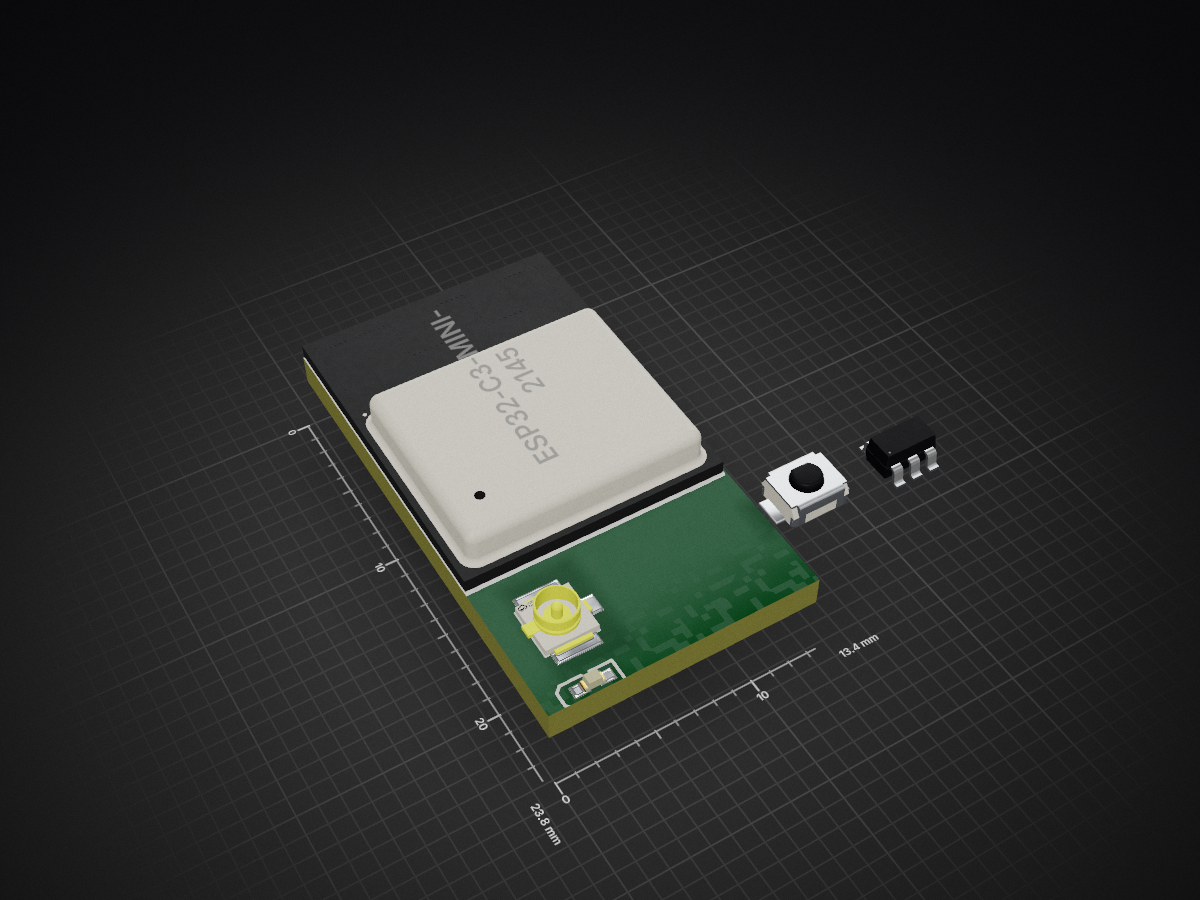
OpenRemoteID is an open-source printed circuit board by OpenDrone-hw, from the OpenDrone-hw/OpenRemoteID repository on GitHub, published under the CERN-OHL-S-2.0 licence. It is a 2-layer board of 13.4 × 23.8 mm with 6 parts on 83 nets.
It is built around the ATGM336H-5NR32-G, ESP32-C3-MINI-1-N4 and 16-213/GHC-YR1S1/3T, with the B3U-1000P, CONUFL001-SMD-T and ME6211C33M5G-N among its other parts. Its parts include 2 ICs, 1 diode and 1 switch. It belongs with the radio and wireless boards and the ESP32 and RISC-V boards of this library.


Open hardware for a standalone broadcast Remote ID module built around an ESP32-C3-MINI-1 radio module and an ATGM336H GNSS receiver.
This repository is an incomplete hardware concept, not a compliant or released product. The KiCad schematic contains six placed devices and does not pass ERC; run it for the current findings. The two-layer PCB contains the same six footprints and no routed tracks, vias or copper zones. No firmware is present.
The intended interfaces are 5 V power, ground, UART RX/TX, a GNSS antenna on U.FL, a status LED and a push button. See hardware/DESIGN.md for the boundary between checked-in design facts and design intent.
hardware/OpenRemoteID.kicad_sch: incomplete schematichardware/OpenRemoteID.kicad_pcb: incomplete two-layer placementhardware/lib.kicad_sym, hardware/lib.pretty/, hardware/lib.3dshapes/:
project-local librarieshardware/DESIGN.md: design boundary, design intent and datasheet linksASTM F3411 and EN 4709-002 are design targets only. This repository contains no completed firmware, conformity assessment, declaration, radio test report or authority acceptance for this product. Certification or modular approval of a component does not by itself certify the finished product.
Hardware is licensed under CERN-OHL-S-2.0.
| Qty | Value | Footprint | References |
|---|---|---|---|
| 1 | 16-213/GHC-YR1S1/3T | lib:LED0402-R-RD | LED2 |
| 1 | ATGM336H-5NR-32 | lib:GPS-SMD_18P-L10.1-W9.7-P1.10-TL | U3 |
| 1 | B3U-1000P | lib:KEY-SMD_B3U-1000PM | SW2 |
| 1 | CONUFL001-SMD-T | lib:IPEX-SMD_3P-L2.6-W2.6-LS3.0 | RF2 |
| 1 | ESP32-C3-MINI-1-N4 | lib:WIFIM-SMD_ESP32-C3-MINI-1 | U2 |
| 1 | ME6211C33M5G-N | lib:SOT-23-5_L3.0-W1.7-P0.95-LS2.8-BL | LDO2 |
HaohanHe/MBDSDR
AI-driven SDR & VNA system: LLM-callable tools over MCP with human-approval gates (C++/Qt6 + Python + Flutter)


ulyssecrn/PCBGolf
comma.ai PCBGolf entry: 4-port CAN-FD dev board on a 35 × 43 mm, 4-layer PCBA. KiCad 10.


RileyMcCarthy/pcb-space
Zener-style compiler for PCB placement and routing: AI writes Place/NetReq, geometry is compiled, KiCad is the backend.


It measures 13.4 × 23.8 mm and has 2 copper layers, 1.6 mm thick.
6 parts, built around the ATGM336H-5NR32-G, ESP32-C3-MINI-1-N4, 16-213/GHC-YR1S1/3T and B3U-1000P. The full list of its parts is on this page, with links to each part's symbol and footprint where PCBKit's library has them.
From the OpenDrone-hw/OpenRemoteID repository on GitHub, at the commit this page was made from: the board is hardware/OpenRemoteID.kicad_pcb and its schematic hardware/OpenRemoteID.kicad_sch. PCBKit opens the board in the browser, with nothing to install.
Its repository publishes it under the CERN-OHL-S-2.0 licence: you may reuse it on that licence's terms (keep the author's notice, and for a copyleft licence share your changes alike).