
2 layers52.5 × 36.6 mm
ESP8266-WebRadio
karawin/Ka-Radio
A wifi webradio with only low cost boards ESP8266 and VS1053 by Jp Cocatrix
52 parts453

 naufalboys/Mic-Preamp6
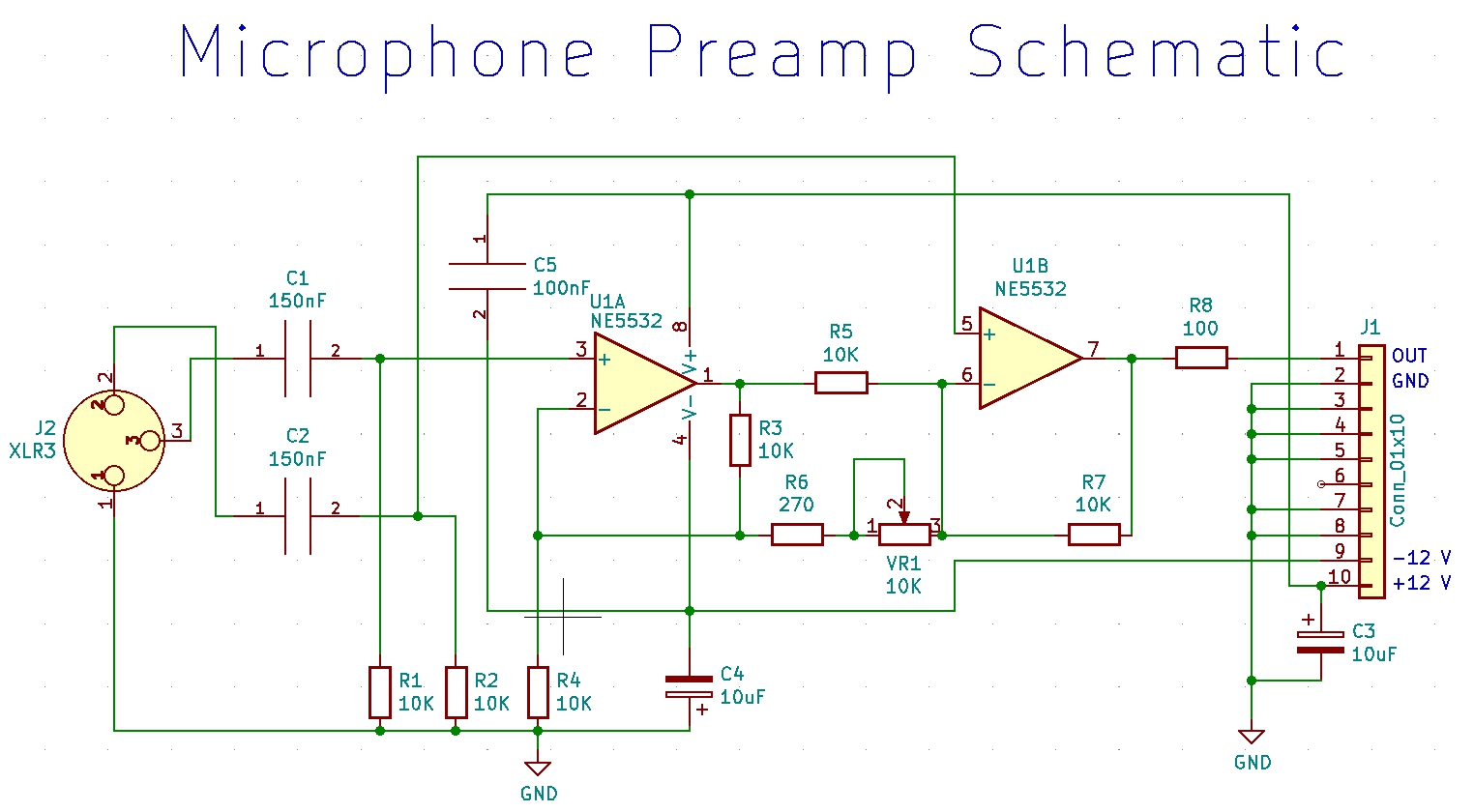
A simple mic preamp for interfacing a balanced microphone (3-Pin using XLR Connector) with PC Sound Card or other gear. This PCB Design is double sided. If you have any question, feel free to ask :)
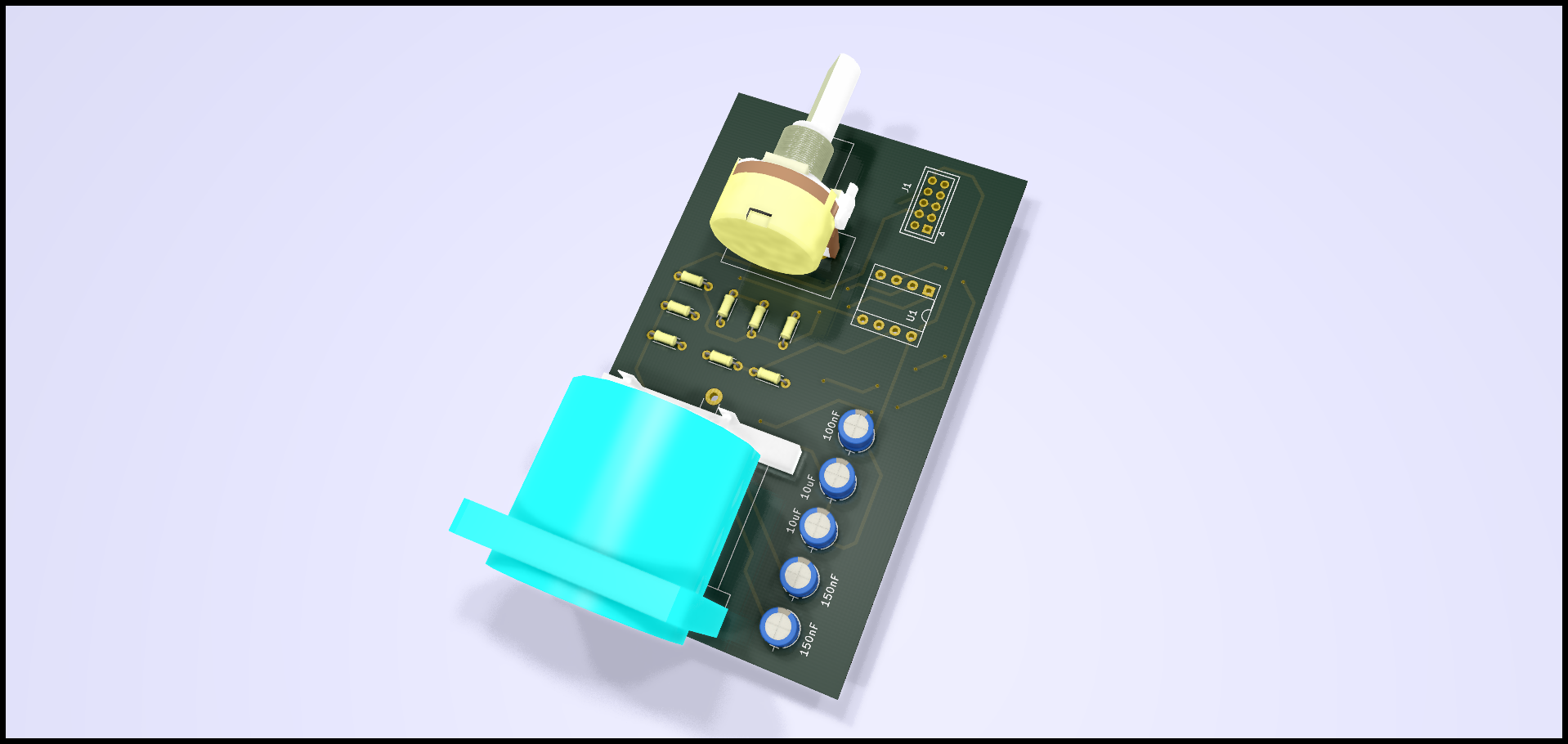
Microphone PreAmp is an open-source printed circuit board by naufalboys, from the naufalboys/Mic-Preamp repository on GitHub, published under the GPL-3.0 licence. It is a 2-layer board of 48.3 × 81.3 mm with 17 parts on 13 nets, routed with 157 tracks and 13 vias.
It is built around the NE5532. Its parts include 2 connectors and 1 IC. It belongs with the audio and music and interfaces and adapters boards of this library.
A simple mic preamp for interfacing a balanced microphone (3-Pin using XLR Connector) with PC Sound Card or other gear. This PCB Design is double sided. If you have any question, feel free to ask :)
| Qty | Value | Footprint | References |
|---|---|---|---|
| 6 | 10K | Resistors_THT:R_Axial_DIN0204_L3.6mm_D1.6mm_P5.08mm_Horizontal | 10K, 10K, 10K, 10K, 10K, 10K |
| 2 | 10uF | Capacitors_THT:CP_Radial_D5.0mm_P2.00mm | 10uF, 10uF |
| 2 | 150nF | Capacitors_THT:CP_Radial_D5.0mm_P2.00mm | 150nF, 150nF |
| 1 | 100 | Resistors_THT:R_Axial_DIN0204_L3.6mm_D1.6mm_P5.08mm_Horizontal | 100 |
| 1 | 100nF | Capacitors_THT:CP_Radial_D5.0mm_P2.00mm | 100nF |
| 1 | 10K | Potentiometers:Potentiometer_Alps_RK163_Single_Vertical | VR1 |
| 1 | 270 | Resistors_THT:R_Axial_DIN0204_L3.6mm_D1.6mm_P5.08mm_Horizontal | 270 |
| 1 | Conn_01x10 | Connectors_JAE:JAE_LY20-10P-2T_2x05x2.00mm_Straight | J1 |
| 1 | NE5532 | Housings_DIP:DIP-8_W7.62mm_Socket | U1 |
| 1 | XLR3 | Connectors:XLR3MC | J2 |
karawin/Ka-Radio
A wifi webradio with only low cost boards ESP8266 and VS1053 by Jp Cocatrix


QuinnFreedman/modular
A collection of free & open source DIY synthesizer module designs for Eurorack

EleonoreMizo/pedalevite
Pédale Vite — DIY multi-FX pedalboard for guitar/bass/etc.


AidanHockey5/MegaBlaster2
The latest iteration of my hardware Sega Genesis/Megadrive Video Game Music Player

It measures 48.3 × 81.3 mm and has 2 copper layers, 1.6 mm thick.
17 parts, built around the NE5532. The full list of its parts is on this page, with links to each part's symbol and footprint where PCBKit's library has them.
From the naufalboys/Mic-Preamp repository on GitHub, at the commit this page was made from: the board is Microphone-PreAmp.kicad_pcb. PCBKit opens the board in the browser, with nothing to install.
Its repository publishes it under the GPL-3.0 licence: you may reuse it on that licence's terms (keep the author's notice, and for a copyleft licence share your changes alike).