2 layers75 × 40 mm
Pulse shaping extension v1.1
MKesenheimer/fault-injection-library
Python library to perform fault-injection attacks on microcontrollers
86 parts218GPL-3.0

 mattdibi/redox-keyboard2k
Ergonomic split mechanical keyboard
Redox rev1 is an open-source printed circuit board by mattdibi, from the mattdibi/redox-keyboard repository on GitHub, published under the MIT licence. It is a 2-layer board of 162.2 × 126.5 mm with 86 parts on 57 nets, routed with 563 tracks and 7 vias.
Its parts include 35 diodes, 35 switches, 2 resistors and 1 IC. It belongs with the keyboards and input boards and the AVR (ATmega, ATtiny) boards of this library.


 [blocked]


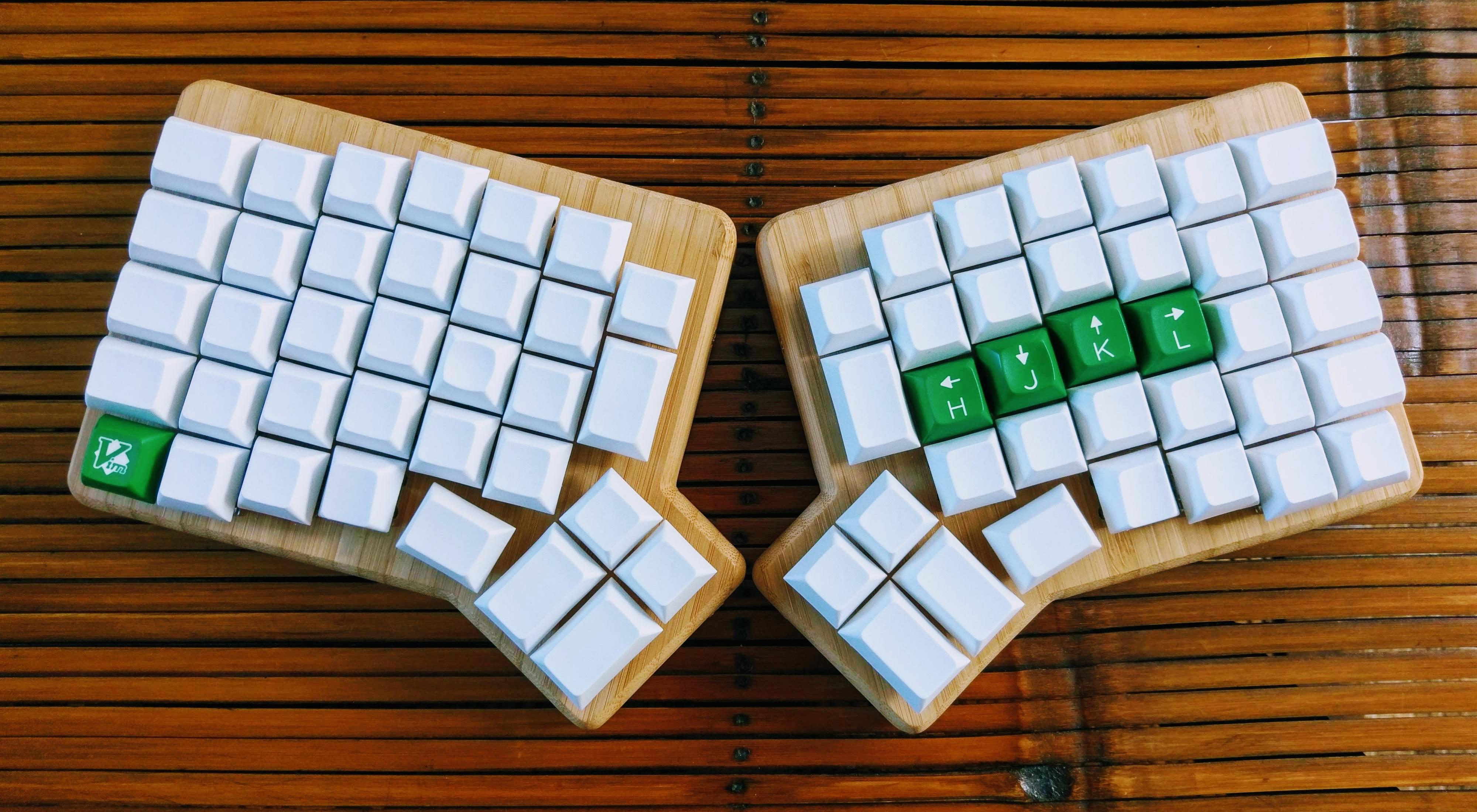
The Redox project is an open-source, QMK (Quantum Mechanical Keyboard Firmware) powered, ergonomic split mechanical keyboard. This repository will be used to share information about the project and instruction on how to use and assemble the Redox keyboard.
Designer's bio: Mattia Dal Ben (aka u/TiaMaT102) obtained a master's degree in Electrical Engineering with a specialization in Computer Science at the University of Udine. Currently works as a Software Engineer in R&D department for a big IoT and Embedded Computers company. Mechanical keyboard enthusiast and maker, the Redox keyboard is the result of all of his passions.
The Redox is a keyboard project designed with ergonomics in mind. It uses Cherry MX style mechanical switches laid out in a 7x5 columnar stagger layout with components that can easily be sourced.
The design was heavily inspired by the Ergodox keyboard, and its main goal is to reduce the size without sacrificing too many keys, hence the name Reduced Ergodox.
As an Ergodox user I couldn't ignore the few flaws of the original design and in a moment of arrogance I tried to fix them, thus the Redox features:
Tilted Redox case: tilted case for the Redox prototype by jschloer.
couscous-kbd: Redox-inspired parametric OpenSCAD keyboard design.
Redox tenting kit: modified base to support tenting, mini-USB for the interconnect, and a hole for microswitch for reset needed when uploading new firmware by Lenbok.
Iris-inspired Redox case: a case inspired both by the Redox rev1.0 and the Iris designed with OpenSCAD by Lenbok.
Redodactyl keyboard: handwired 3D printed Dactyl-inspired Redox variant by u/darknao.
The Redox keyboard uses three different wireless implementations, differentiated by firmware:
boards/redox/main.py. Combined with a compatible wireless controller completes wireless configuration. Would advice adding Bluetooth keycodes in keymap; keyboard.keymap element in main.py.The notable differences for the three implementations are as follows:
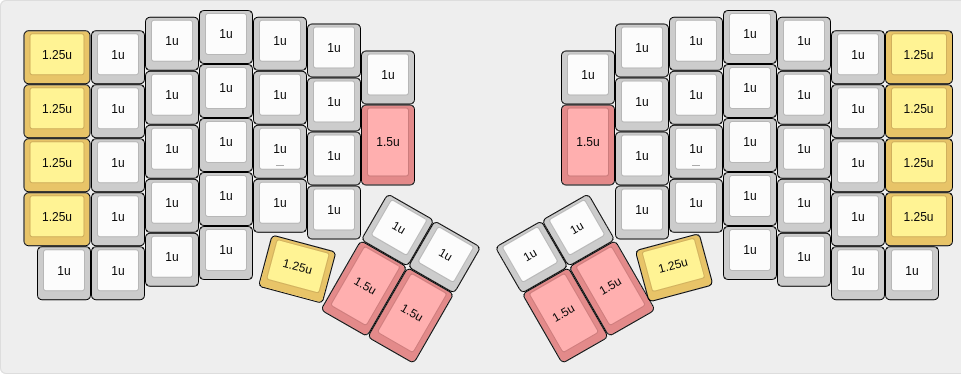
| Size | Qty | Notes |
|---|---|---|
| 1.5u | 6 | |
| 1.25u | 10 | You can get away with 8 if you use two 1u keycaps for the 1.25u rotated keys |
| 1u | 54 |
:information_source: On pimpmykeyboard.com site you can find a SA 1976 keyset kit specifically made for the Redox keyboard: the "Ergo Redox kit (12 keys)".
In partnership with Falbatech you can now use the code "mattdibi05" on Falbatech's store for a 5% OFF special discount.
| Qty | Value | Footprint | References |
|---|---|---|---|
| 35 | D | Keebio-Parts:Diode-dual | D0, D1, D2, D10, D11, D12, D13, D14, D15, D16, D20, D21, D22, D23, D24, D25 +19 |
| 27 | KEYSW | canadian_footprints:Mx_Alps_100-dualside | K1, K2, K3, K11, K12, K13, K14, K15, K21, K22, K23, K24, K25, K26, K31, K32 +11 |
| 5 | KEYSW | myparts:Mx_Alps_125-dualside | K0, K10, K20, K30, K44 |
| 4 | VAL** | keyboard_parts:HOLE_M3 | HOLE_M3, HOLE_M3, HOLE_M3, HOLE_M3 |
| 3 | KEYSW | canadian_footprints:Mx_Alps_150-dualsided | K16, K45, K46 |
| 2 | 4.7k | Keebio-Parts:Resistor-Compact | R1, R2 |
| 2 | LOGO | myparts:qmk-badge | G***, G*** |
| 2 | LOGO | myparts:redox-logo | G***, G*** |
| 1 | Audio-Jack-4 | Keebio-Parts:TRRS-PJ-320A-dual | TRRS1 |
| 1 | Conn_01x03 | Pin_Headers:Pin_Header_Straight_1x03_Pitch2.54mm | RGB_STRIP1 |
| 1 | ProMicro | Keebio-Parts:ArduinoProMicro | U1 |
| 1 | SW_PUSH | Buttons_Switches_ThroughHole:SW_PUSH_6mm_h4.3mm | RST_SW1 |
The 84 most common of 86 parts.
MKesenheimer/fault-injection-library
Python library to perform fault-injection attacks on microcontrollers


cnlohr/cnhardware
My dumping grounds for all my kicad projects and random hardware bringup.

AudioMorphology/Europi
Opensource sequencer software for Raspberry Pi equipped with Eurorack-compatible hardware


It measures 162.2 × 126.5 mm and has 2 copper layers, 1.6 mm thick.
86 parts. The full list of its parts is on this page, with links to each part's symbol and footprint where PCBKit's library has them.
From the mattdibi/redox-keyboard repository on GitHub, at the commit this page was made from: the board is redox/pcb/rev1.0/kicad_files/redox_rev1.kicad_pcb. PCBKit opens the board in the browser, with nothing to install.
Its repository publishes it under the MIT licence: you may reuse it on that licence's terms (keep the author's notice, and for a copyleft licence share your changes alike).