
2 layers70 × 56 mm
 MatkoKardum/Chronos
Digital wristwatch based on PIC18F microcontroller with DS3232 RTC and SSD1306 OLED display
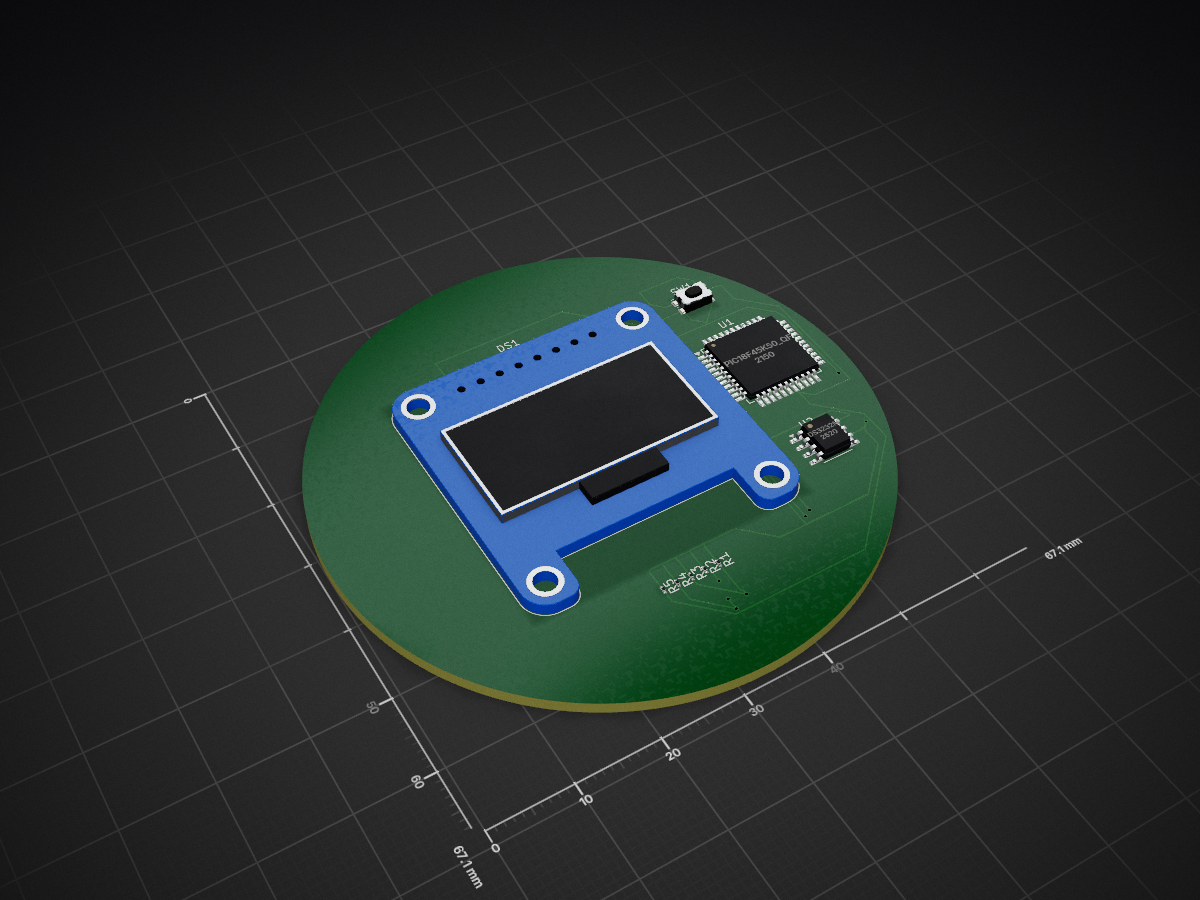
Chronos is an open-source printed circuit board by MatkoKardum, from the MatkoKardum/Chronos repository on GitHub. It is a 2-layer board of 33.5 × 1.5 mm with 9 parts on 54 nets, routed with 109 tracks and 8 vias.
It is built around the DS3232MZ+. Its parts include 5 resistors, 2 ICs and 1 switch. It belongs with the lEDs and displays boards and the PIC boards of this library.
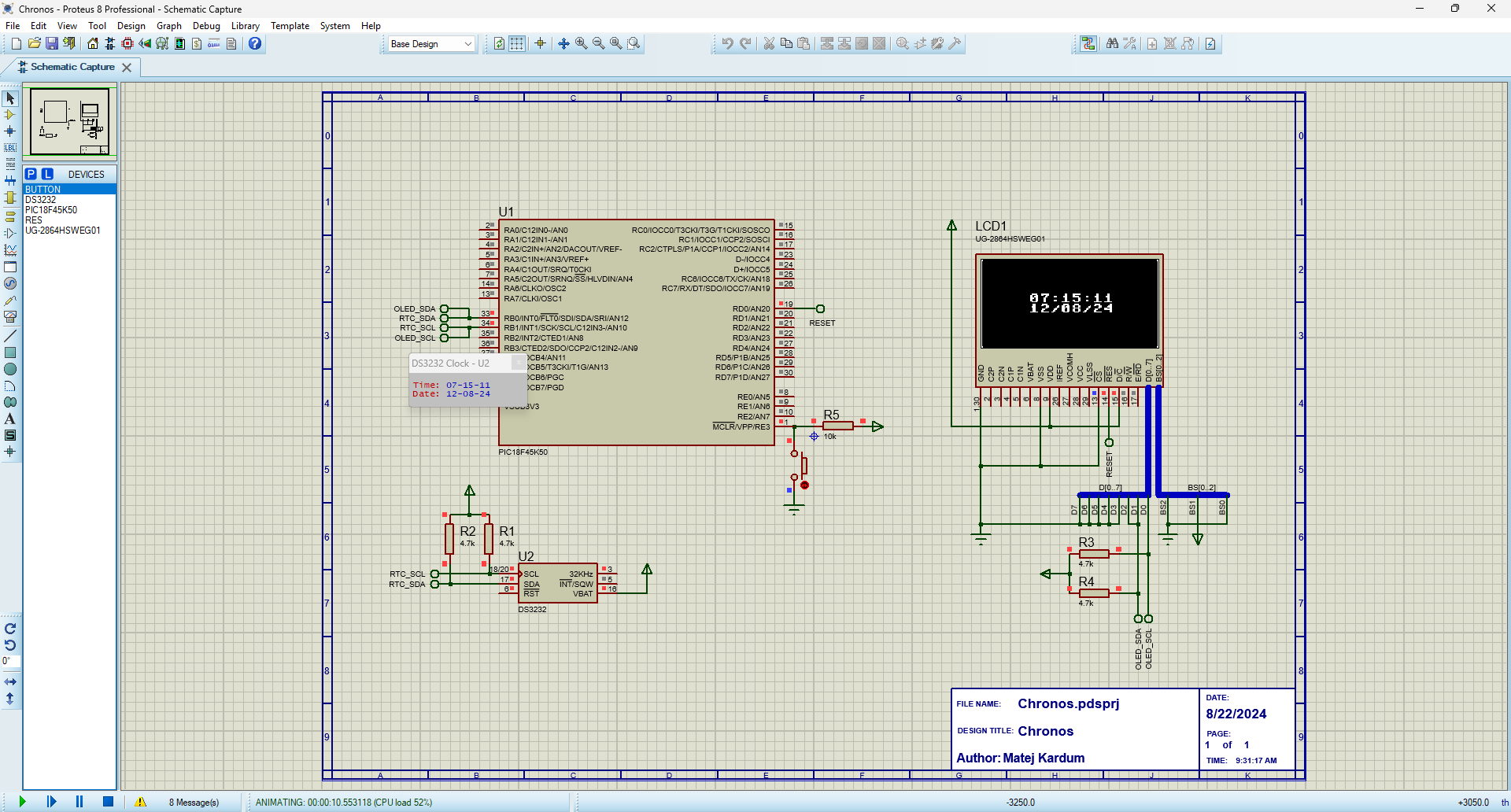
A digital wristwatch built around the PIC18F microcontroller, featuring a real-time clock and OLED display. Developed in C using MPLAB X IDE, with full schematic, PCB layout, and Proteus simulation.
| Component | Part |
|---|---|
| Microcontroller | PIC18F (MPLAB X / XC8) |
| Real-Time Clock | DS3232 |
| Display | SSD1306 128×64 OLED |
| Communication | I2C (custom driver) |
| PCB Design | KiCad |
| Simulation | Proteus |
Chronos/
├── Code/Chronos.X/       # MPLAB X project (C source)
│   ├── main.c            # Main loop – reads RTC, drives display
│   ├── i2c.c / i2c.h     # Custom I2C driver
│   ├── rtc.c / rtc.h     # DS3232 RTC driver
│   ├── oled.c / oled.h   # SSD1306 OLED driver
│   ├── font.h            # Character font bitmap data
│   └── config_bits.h     # PIC18F configuration bits
├── Pcb/Chronos/          # KiCad schematic & PCB layout
├── Simulation/           # Proteus simulation project (.pdsprj)
└── Datasheets/ # DS3232 and SSD1306 datasheetsThe PIC18F reads time and date registers from the DS3232 RTC chip over I2C every 2 seconds. The BCD-encoded values are decoded and printed character-by-character to the SSD1306 OLED display using a custom font renderer.
PIC18F  ──I2C──►  DS3232 (RTC)   reads: hours, minutes, seconds, date, month, year
PIC18F ──I2C──► SSD1306 (OLED) writes: formatted time and date strings✅ Firmware complete
✅ Schematic complete
✅ PCB layout complete
⚠️ Physical prototype not yet built (simulation only)
Developed by Matej Kardum – August 2024
| Qty | Value | Footprint | References |
|---|---|---|---|
| 5 | 4.7k | Resistor_SMD:R_0201_0603Metric | R1, R2, R3, R4, R5 |
| 1 | CK_KMS2xxG | Button_Switch_SMD:SW_SPST_CK_KMS2xxGP | SW1 |
| 1 | DS3232M | Package_SO:SOIC-8_3.9x4.9mm_P1.27mm | U2 |
| 1 | OLED-128O064D | Display:Adafruit_SSD1306_No_Mounting_Holes | DS1 |
| 1 | PIC18F45K50_QFP | Package_QFP:TQFP-44_10x10mm_P0.8mm | U1 |

thorpej/pg68k
The 68k Playground, a 680x0-based home-brew computer with multiple CPU options


It measures 33.5 × 1.5 mm and has 2 copper layers, 1.6 mm thick.
9 parts, built around the DS3232MZ+. The full list of its parts is on this page, with links to each part's symbol and footprint where PCBKit's library has them.
From the MatkoKardum/Chronos repository on GitHub, at the commit this page was made from: the board is Pcb/Chronos/Chronos.kicad_pcb and its schematic Pcb/Chronos/Chronos.kicad_sch. PCBKit opens the board in the browser, with nothing to install.
Its repository states no licence, so its author keeps all rights: ask MatkoKardum before reusing the design.