2 layers76 × 63.5 mm
PicoTracker
xiphonics/picoTracker-pcb
Buy the official kit at xiphonics store # Trademark Notice
98 parts36CC0-1.0
 macphyter/bitaxe-ESP-OLED
bitaxe OLED display board based on ESP32
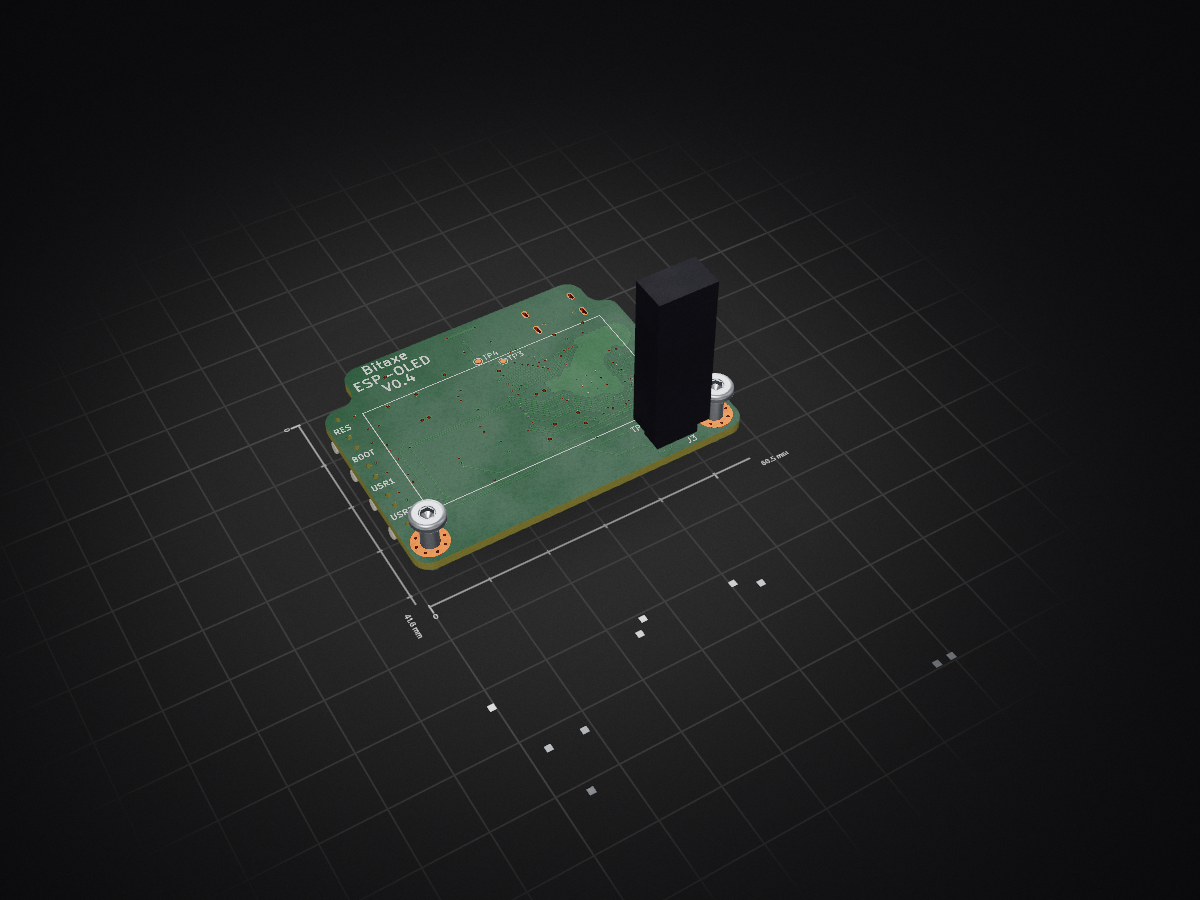
Bitaxe ESP OLED is an open-source printed circuit board by macphyter, from the macphyter/bitaxe-ESP-OLED repository on GitHub, published under the MIT licence. It is a 4-layer board of 56.6 × 41.6 mm with 58 parts on 66 nets, routed with 750 tracks and 112 vias.
It is built around the ESP32-S3(R8V), AP2502KTR-G1 and W25Q128JVSIQ, with the RT9080-33GJ5, SFV30R-4STE1HLF and SI2307 among its other parts. Its parts include 20 capacitors, 10 resistors, 4 ICs, 4 connectors and 4 switches. It belongs with the lEDs and displays boards and the ESP32 boards of this library.


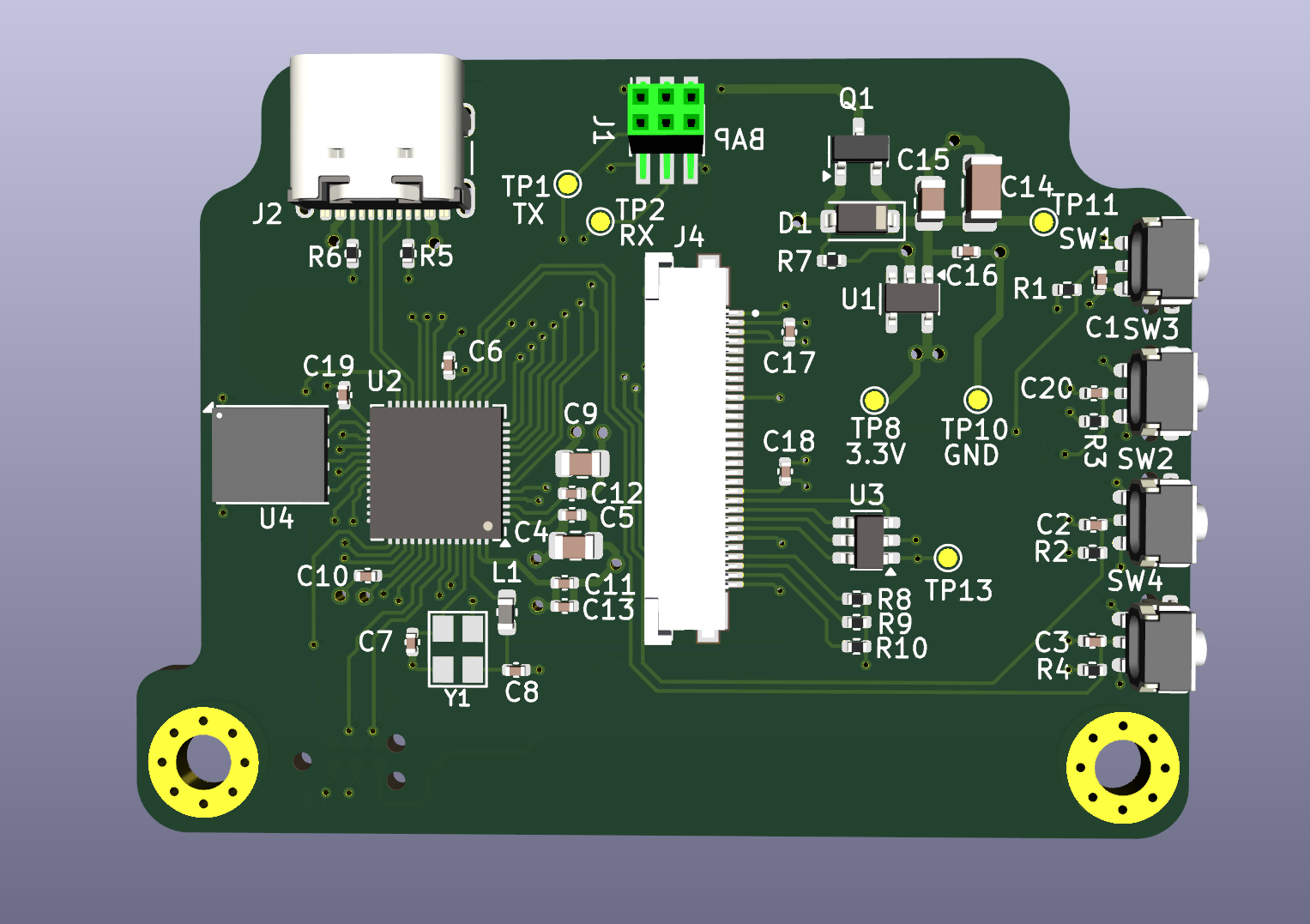
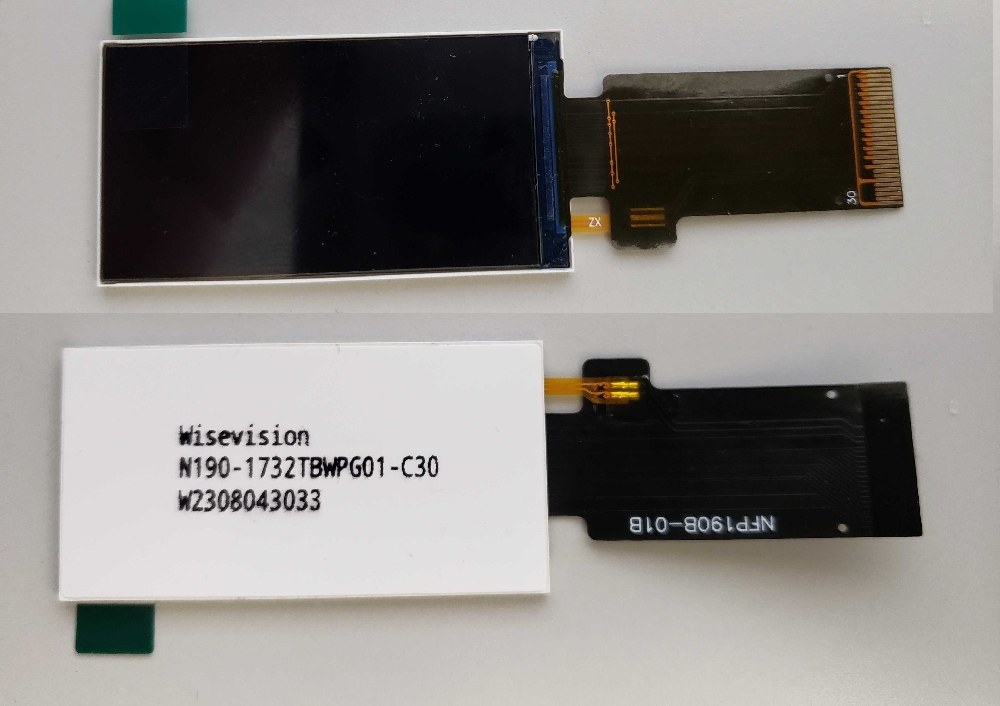
bitaxe-ESP-OLED is a carrier board for a specific 1.9 inch 170x320 OLED which is intended to connect to a bitaxe device via the BAP (Bitaxe Accessory Port) The carrier board contains an ESP32-S3 MCU that drives the display and receives status info via UART using the BAP (Bitaxe Accessory Port)
Here is the OLED display
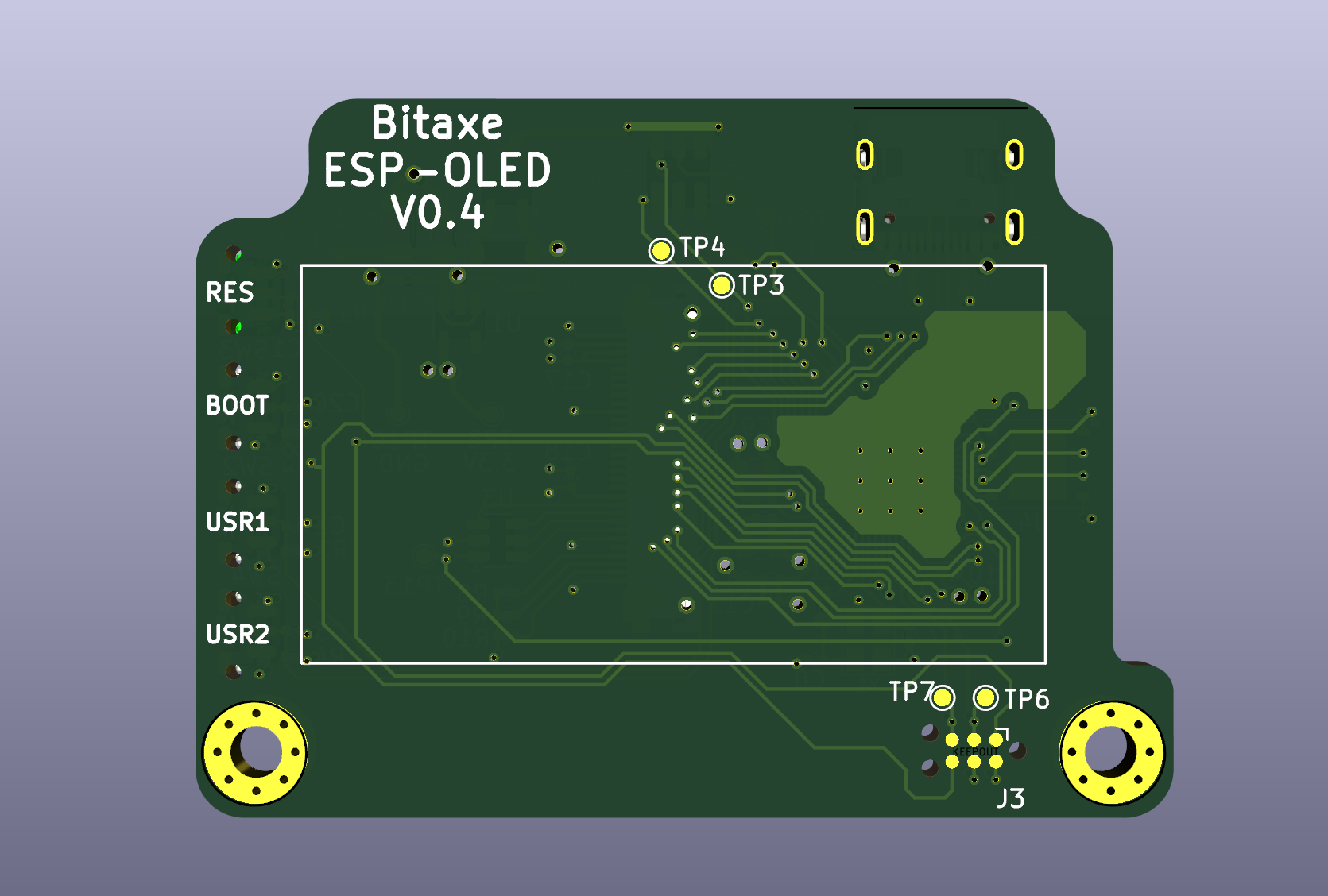
The display attaches to the front of the carrier board using double sided foam tape, and the connector wraps around through the notch and attaches to the 30-pin connector on the back.
This OLED display uses a ST7789 controller operates in parallel mode through its 30-pin connector.
The carrier board uses an ESP32-S3 MCU to drive the OLED.
On the side of the board there is a Reset button, a bootmode button, and two user buttons used for navigating the GUI.
The MCU firmware will display various GUI pages, and the data for these pages will be supplied by the bitaxe through the UART.
| Qty | Value | Footprint | References |
|---|---|---|---|
| 10 | TestPoint | TestPoint:TestPoint_Pad_D1.0mm | TP1, TP2, TP3, TP4, TP6, TP7, TP8, TP10, TP11, TP13 |
| 7 | 100n | Capacitor_SMD:C_0402_1005Metric | C5, C6, C10, C11, C12, C16, C19 |
| 7 | 1uF | Capacitor_SMD:C_0402_1005Metric | C1, C2, C3, C13, C17, C18, C20 |
| 6 | 100K | Resistor_SMD:R_0402_1005Metric | R1, R2, R3, R4, R7, R10 |
| 4 | SWITCH-SPST | bitaxe:TL3340-switch | SW1, SW2, SW3, SW4 |
| 3 | 22uF | Capacitor_SMD:C_0805_2012Metric | C4, C9, C15 |
| 2 | 10K | Resistor_SMD:R_0402_1005Metric | R8, R9 |
| 2 | 12pF | Capacitor_SMD:C_0402_1005Metric | C7, C8 |
| 2 | 5.1K | Resistor_SMD:R_0402_1005Metric | R5, R6 |
| 2 | MountingHole | MountingHole:MountingHole_3mm_Pad_Via | H3, H4 |
| 1 | 1N5819 | Diode_SMD:D_SOD-123 | D1 |
| 1 | 22 nH | Inductor_SMD:L_0603_1608Metric | L1 |
| 1 | 40MHz | bitaxe:RH100-oscillator | Y1 |
| 1 | 47uF | Capacitor_SMD:C_1206_3216Metric | C14 |
| 1 | AP2502KTR-G1 | bitaxe:SOT-23-6 | U3 |
| 1 | Conn_01x06 | Connector_PinSocket_1.27mm:PinSocket_2x03_P1.27mm_Vertical_SMD | J1 |
| 1 | ESP32_S3R8 | bitaxe:QFN-56-1EP_7x7mm_P0.4mm_EP4x4mm_ThermalVias | U2 |
| 1 | RT9080-33GJ5 | Package_TO_SOT_SMD:TSOT-23-5 | U1 |
| 1 | SFV30R-4STE1HLF | bitaxe:AMPHENOL_SFV30R-4STE1HLF | J4 |
| 1 | SI2307 | Package_TO_SOT_SMD:SOT-23-3 | Q1 |
| 1 | TC2030-IDC | Connector:Tag-Connect_TC2030-IDC-NL_2x03_P1.27mm_Vertical | J3 |
| 1 | USB_C_Receptacle_USB2.0_16P | Connector_USB:USB_C_Receptacle_GCT_USB4105-xx-A_16P_TopMnt_Horizontal | J2 |
| 1 | W25Q128JV | Package_SON:WSON-8-1EP_6x5mm_P1.27mm_EP3.4x4.3mm | U4 |
It measures 56.6 × 41.6 mm and has 4 copper layers, 1.6 mm thick.
58 parts, built around the ESP32-S3(R8V), AP2502KTR-G1, W25Q128JVSIQ and RT9080-33GJ5. The full list of its parts is on this page, with links to each part's symbol and footprint where PCBKit's library has them.
From the macphyter/bitaxe-ESP-OLED repository on GitHub, at the commit this page was made from: the board is bitaxe-ESP-OLED.kicad_pcb and its schematic bitaxe-ESP-OLED.kicad_sch. PCBKit opens the board in the browser, with nothing to install.
Its repository publishes it under the MIT licence: you may reuse it on that licence's terms (keep the author's notice, and for a copyleft licence share your changes alike).
xiphonics/picoTracker-pcb
Buy the official kit at xiphonics store # Trademark Notice


yetanothercarbot/the-ruby-node
The Ruby Node is an untested higher-powered node designed for Meshtastic


bitaxeorg/bitaxeGamma
Bitaxe based on the BM1370 from the S21 Pro


bitaxeorg/bitaxeMax
bitaxe based on the BM1397 ASIC from the Antminer S17