2 layers65.7 × 44.8 mm

 mackieks/Kawaii374
Tiny, beautiful metal Wii keychain
KawaiiSD is an open-source printed circuit board by mackieks, from the mackieks/Kawaii repository on GitHub. It is a 2-layer board of 27 × 24.7 mm with 56 parts on 34 nets, routed with 220 tracks and 96 vias.
It is built around the GG0402052R542P, CONMHF4-SMD-G-T and BZT52C12T-TP, with the FCC20202ADTP and SQS401EN-T1_BE3 among its other parts. Its parts include 10 capacitors, 10 diodes, 7 connectors, 1 resistor and 1 IC.


Kawaii is a functional metal Nintendo Wii keychain created by YveltalGriffin, Wesk and Ding.
It's a technical tour de force that prioritizes aesthetics over practicality, and fully utilizes the OMEGA trim.
Kawaii may be the zenith of Wii portablizing as an artform.
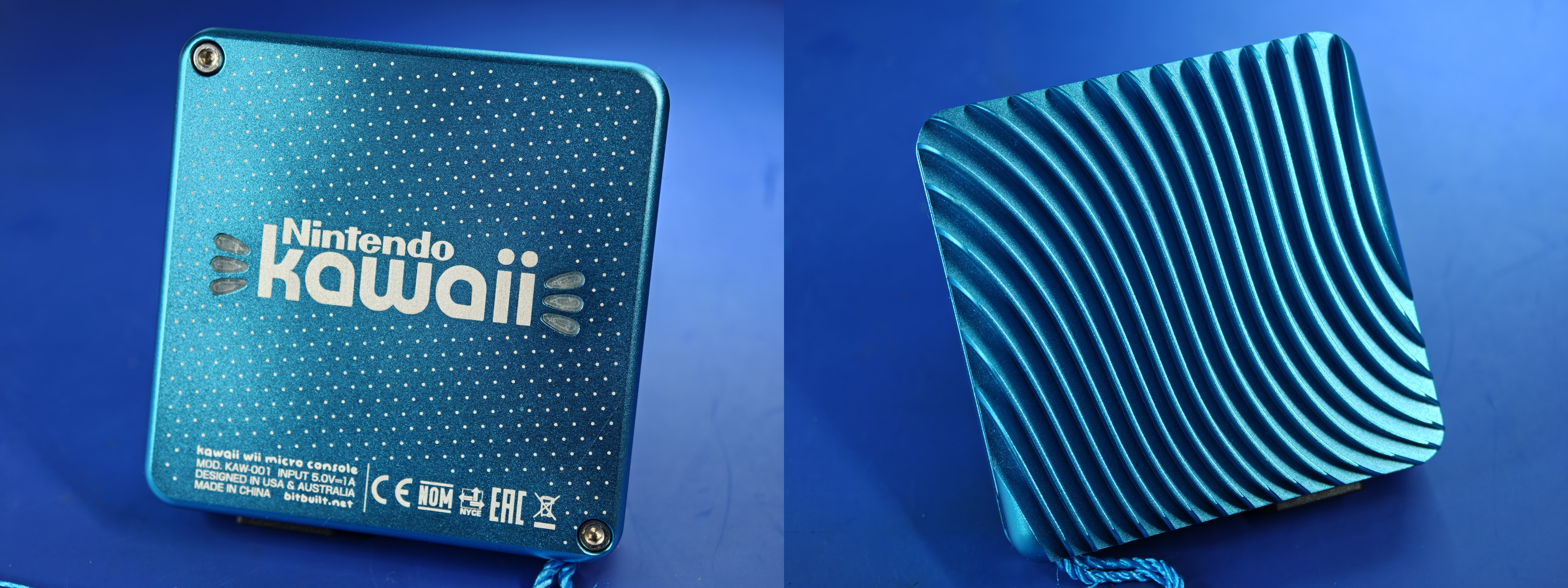
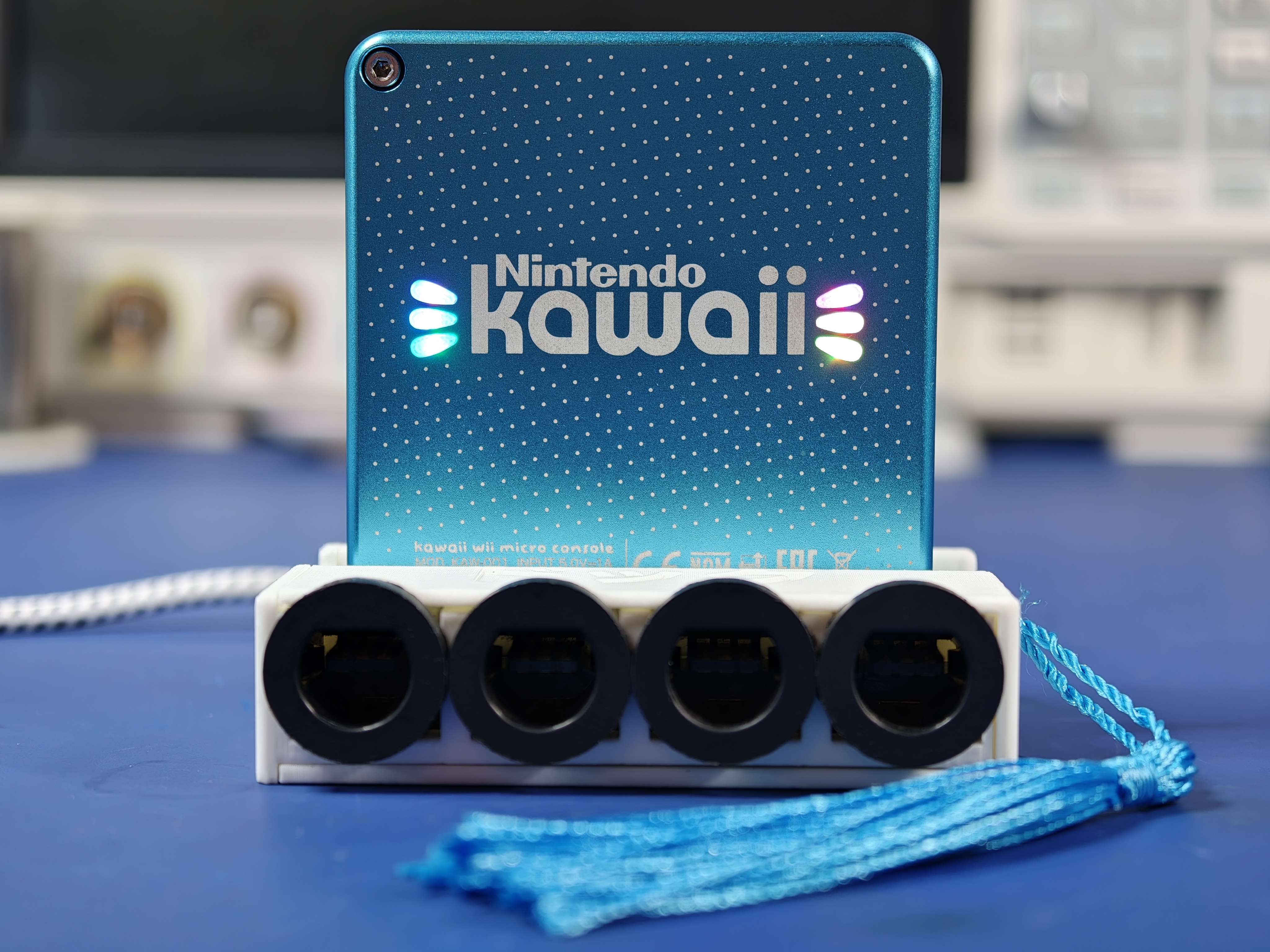
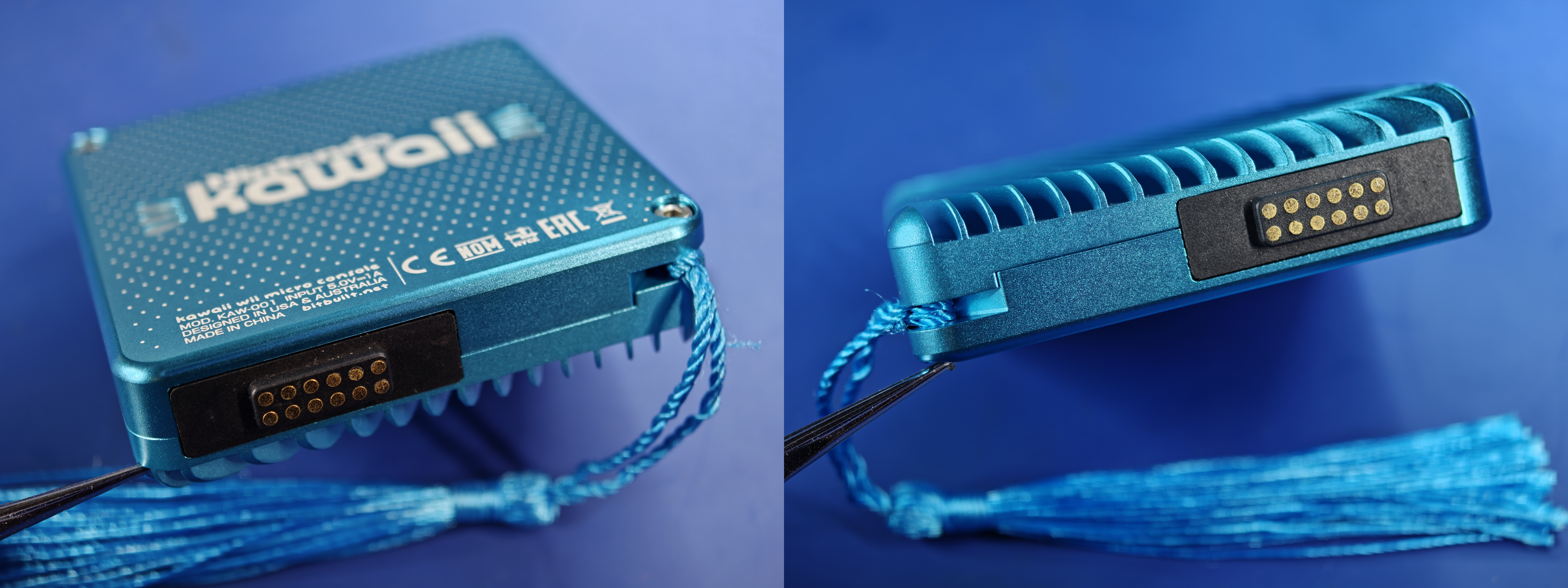
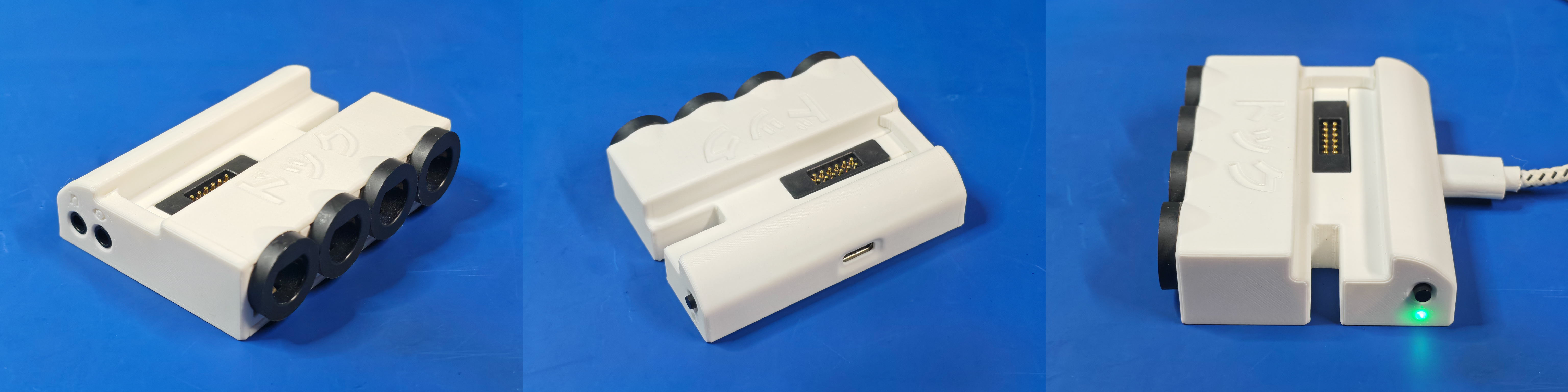
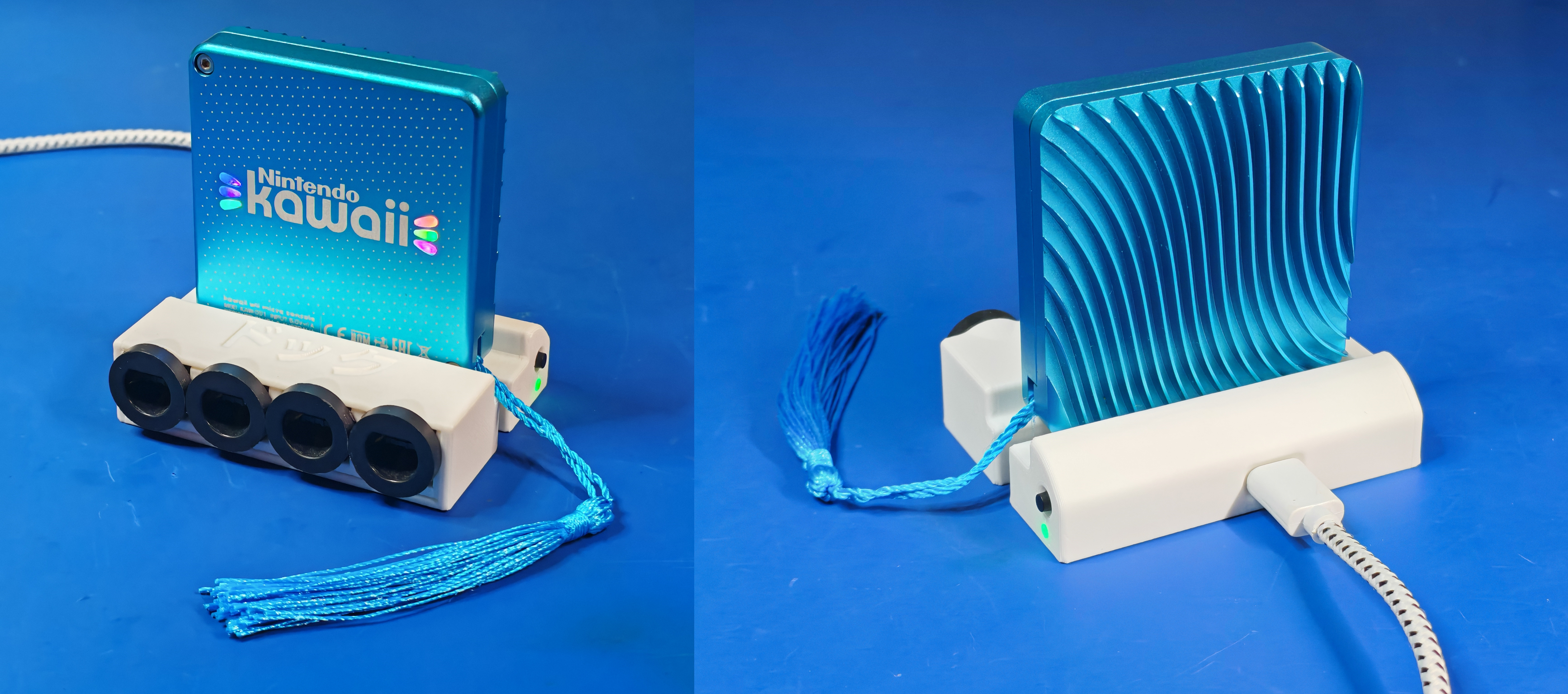
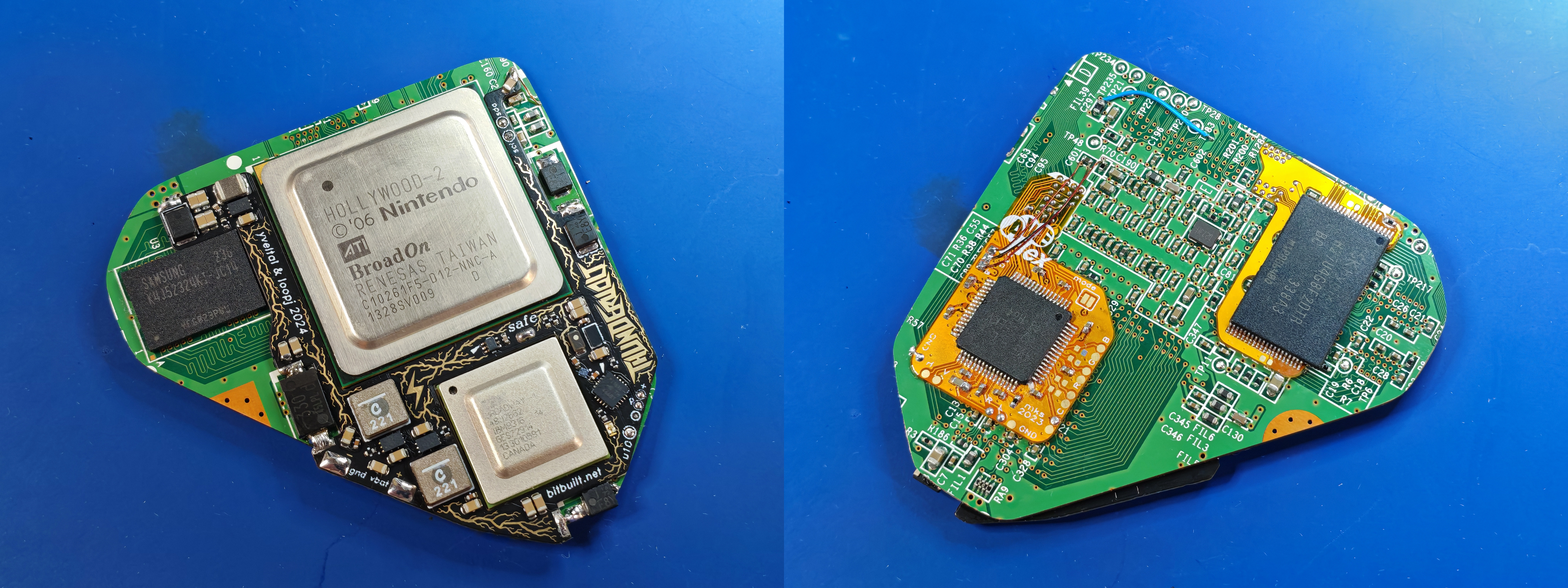
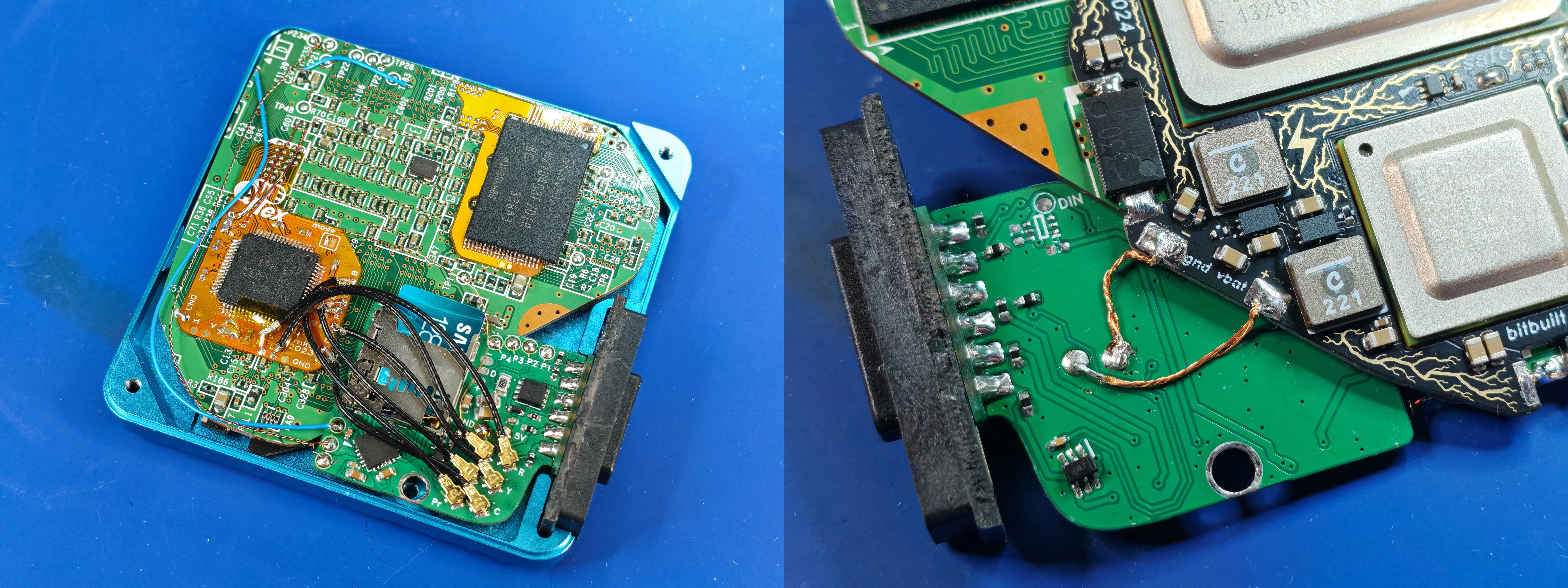
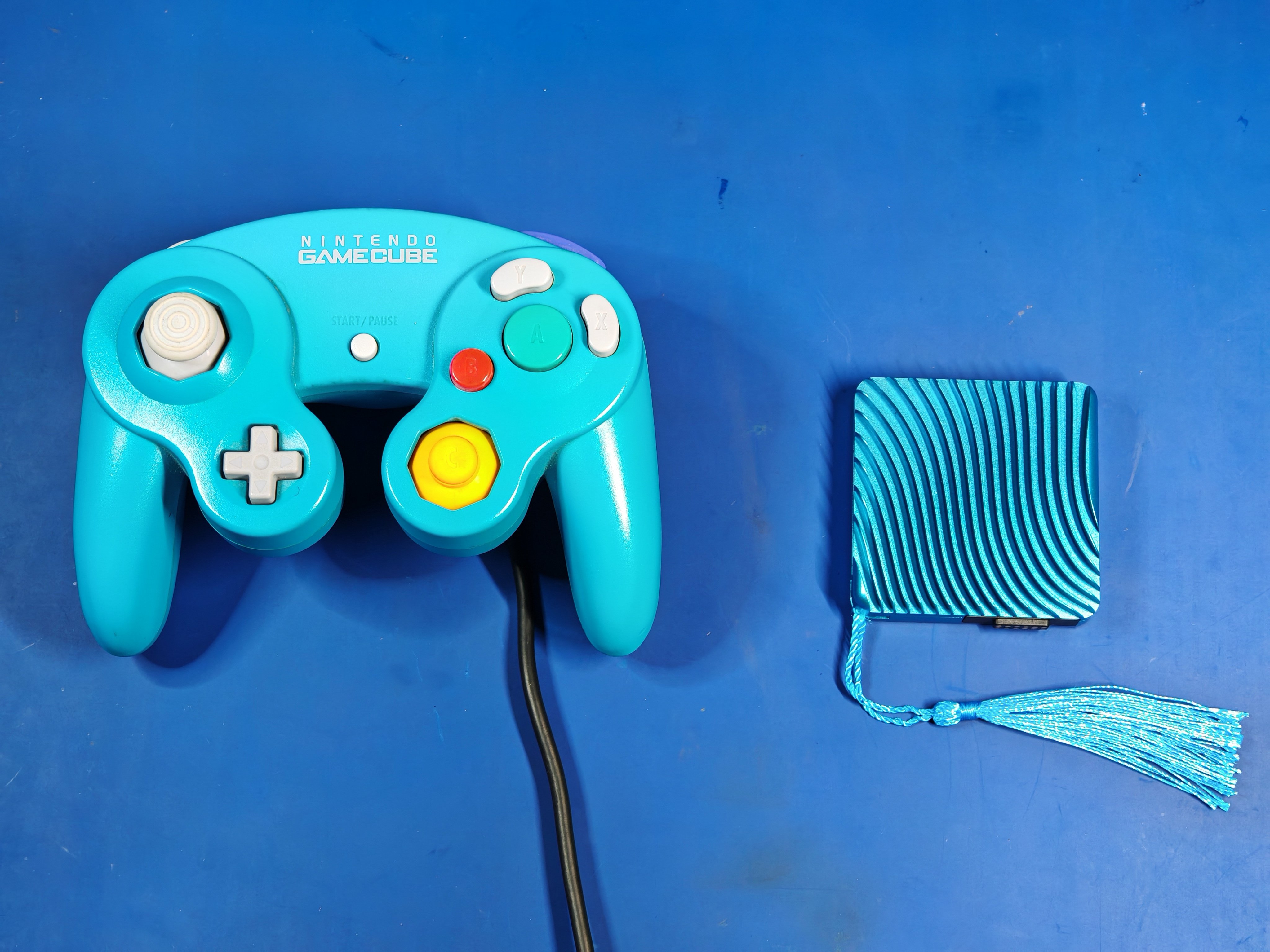
Kawaii is 100% open source, but due to the extremely challenging nature of the build, no assembly guide or build tutorial is provided. Keep in mind that this project is portablizer jewelry (it's literally a keychain) and NOT a console you want to daily drive.
Check out the hardware folder for all of the MCAD, ECAD, and BOM files. A full MCAD assembly is provided in both F3D and STEP format, which shows how everything fits together. The BitBuilt thread has lots of pictures from the assembly process of two Kawaiis and is a valuable resource.
Whether the Kawaii is the world's smallest functioning Wii is up for debate. Since it requires a dock or bundle of adapter cables to play games on a TV, it's certainly not the world's smallest fully self-contained Wii— that's still loopj's Short Stack. Kawaii also requires an external fan to stay cool enough to touch during extended use.
Still, the Kawaii does contain a complete Wii. Its only inputs are power and GameCube controllers, and its only outputs are analog audio and video. So it may be the smallest functional Wii build, but not the smallest functional Wii console. The distinction is semantic and largely irrelevant to the project's goal, which was to create something beautiful, not to claim a title. 😄
| Qty | Value | Footprint | References |
|---|---|---|---|
| 10 | GG0402052R542P | SamacSys_Parts:DIONC1006X55N | D1, D2, D3, D4, D5, D6, D7, D8, D9, D10 |
| 6 | CONMHF4-SMD-G-T | SamacSys_Parts:CONMHF4SMDGT | J2, J3, J4, J5, J6, J7 |
| 3 | 0.1μF | Capacitor_SMD:C_0402_1005Metric | C3, C7, C9 |
| 3 | 4.7μF | Capacitor_SMD:C_0603_1608Metric | C2, C4, C6 |
| 2 | 10uF | Capacitor_SMD:C_0805_2012Metric | C8, C14 |
| 2 | 1μF | Capacitor_SMD:C_0402_1005Metric | C1, C5 |
| 2 | GND | SamacSys_Parts:pogopad | TP14, VIN1 |
| 1 | 1k | Resistor_SMD:R_0402_1005Metric | R1 |
| 1 | 3V3 | TestPoint:TestPoint_Pad_D1.5mm | TP3 |
| 1 | 503398-1892 | SamacSys_Parts:503398-1892 | J1 |
| 1 | 5V | TestPoint:TestPoint_Pad_D1.5mm | TP5 |
| 1 | 750 or 1k | Resistor_SMD:R_Array_Convex_4x0402 | RN1 |
| 1 | AUDIO_L | SamacSys_Parts:pogopad | TP21 |
| 1 | AUDIO_R | SamacSys_Parts:pogopad | TP22 |
| 1 | BZT52C12T-TP | SamacSys_Parts:BZT52C12TTP | Z1 |
| 1 | D+ | TestPoint:TestPoint_Pad_D1.5mm | TP1 |
| 1 | D- | TestPoint:TestPoint_Pad_D1.5mm | TP2 |
| 1 | FCC20202ADTP | Fuse:Fuse_0805_2012Metric | F1 |
| 1 | GND | TestPoint:TestPoint_Pad_D1.5mm | TP4 |
| 1 | MODE | SamacSys_Parts:pogopad | TP20 |
| 1 | P1 | TestPoint:TestPoint_Pad_D1.5mm | TP19 |
| 1 | P1 | SamacSys_Parts:pogopad | TP16 |
| 1 | P2 | SamacSys_Parts:pogopad | TP15 |
| 1 | P2 | TestPoint:TestPoint_Pad_D1.5mm | TP23 |
| 1 | P3 | SamacSys_Parts:pogopad | TP17 |
| 1 | P3 | TestPoint:TestPoint_Pad_D1.5mm | TP24 |
| 1 | P4 | SamacSys_Parts:pogopad | TP18 |
| 1 | P4 | TestPoint:TestPoint_Pad_D1.5mm | TP25 |
| 1 | Pb | SamacSys_Parts:pogopad | TP11 |
| 1 | Pr | SamacSys_Parts:pogopad | TP12 |
| 1 | SQS401EN-T1_BE3 | SamacSys_Parts:SQS401ENT1_BE3 | Q1 |
| 1 | TS5A4624DCKR | SamacSys_Parts:SOT65P210X110-6N | S1 |
| 1 | Y/CVBS | SamacSys_Parts:pogopad | TP13 |
| 1 | ~ | Package_DFN_QFN:HVQFN-24-1EP_4x4mm_P0.5mm_EP2.5x2.5mm | U1 |
| 1 | ~ | TestPoint:TestPoint_Pad_D1.5mm | TP6 |

antmicro/snapdragon-845-baseboard
https://antmicro.com/blog/2022/04/open-source-snapdragon-845-baseboard/

antmicro/cm4-baseboard
Experimental baseboard supporting System on Modules with Raspberry Pi CM4/CM5 pinout

antmicro/oculink-pcie-adapter
PCB design which converts an OCuLink connector into x16 PCIe slot


Volkov997/pen-card
RF Pentesting tool, but small enough for your wallet. Features: Wifi & Bluetooth, NFC, IR, (Sub Ghz, Planned)

DevKiDCosmo/SATELLITE-EDGE-MODULE
A satellite edge module ready for competition

maheshkulalb/ESP32-C3FH4-
This repository contains the complete open-source hardware design for a custom development board based on the Espressif **ESP32-C3FH4** SoC (RISC-V 32-bit single-core, integrated 4MB Flash).

It measures 27 × 24.7 mm and has 2 copper layers, 0.6 mm thick.
56 parts, built around the GG0402052R542P, CONMHF4-SMD-G-T, BZT52C12T-TP and FCC20202ADTP. The full list of its parts is on this page, with links to each part's symbol and footprint where PCBKit's library has them.
From the mackieks/Kawaii repository on GitHub, at the commit this page was made from: the board is hardware/PCBs/kawaii/kawaiiSD/kawaiiSD.kicad_pcb and its schematic hardware/PCBs/dock/dock.kicad_sch. PCBKit opens the board in the browser, with nothing to install.
Its repository states no licence, so its author keeps all rights: ask mackieks before reusing the design.