


2 layers316 × 119 mm
Teensy Grovebox
jerry20091103/Teensy_Grovebox
A portable synth and music multi-tool made with Teensy 4.1
142 parts150MIT
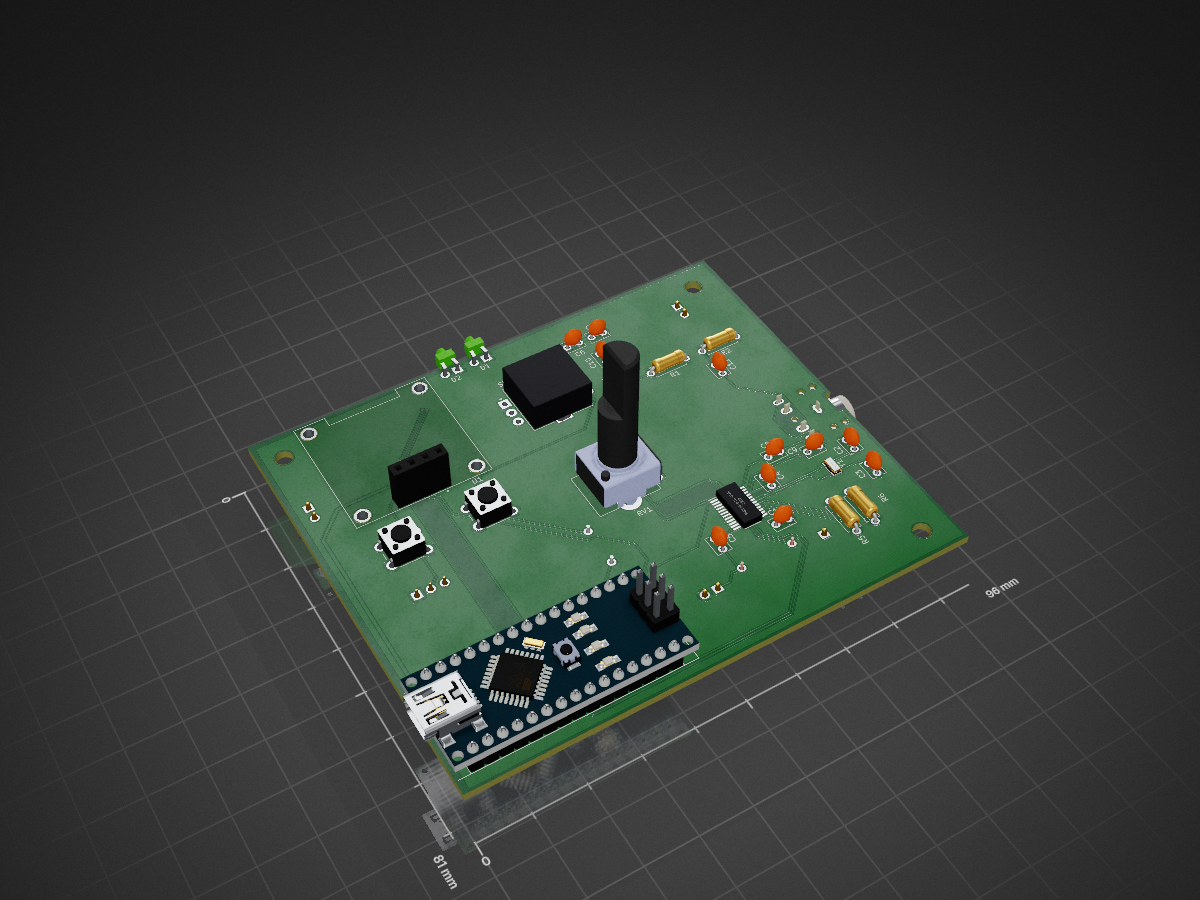
A radio station with a storage unit for walkie talkies
Sqwuak is an open-source printed circuit board by LinuxDinoGitHub, from the LinuxDinoGitHub/Squawk-2.0 repository on GitHub. It is a 2-layer board of 96 × 81 mm with 38 parts on 57 nets, routed with 312 tracks and 5 vias.
It is built around the SI4844-B20-GUR and PAM8403DR. Its parts include 12 capacitors, 5 resistors, 4 switches, 3 ICs and 2 diodes. It belongs with the AVR (ATmega, ATtiny) boards of this library.
A radio station with a storage unit for walkie-talkies, w/ OLED screen & 3.5mm headphone jack connector SI4844 powered with Arduino Nano, PAM8403 amplifier with the pu2clr library.
The name "Squawk 2.0" originates from the popular TV show - Stranger Things (Season 5), where they had a master radio station for duplex transmission. Though this station cannot transmit any radio signals for walkie-talkies to pick up (due to legal reasons), it listens to the Citizens Band (CB) with 20 channels and a range of 2-3km. This is designed as a retro tabletop AM/FM/SW radio with the SI4844 chip, and also a handy storage device for the user. Planning to create walkie-talkies in the future that can connect to this station.
Well, I needed a storage compartment for my walkie talkies and also wanted the container to be a bit more exciting than just a regular tin box.
It's pretty simple, here is a layout of all the functions of the buttons you can press:
A simple, 4-layer PCB. 96mm x 81mm PCB with 3 mounting holes for M3 screws.
Front
Back
After assembling your PCB, use the firmware.ino file in the repository to flash your Arduino Nano. You can customise messages and timings by editing the code with the Arduino IDE.
The BOM without specific values is linked here (GitHub directory or Google Sheets. The total cost for the project should not exceed 13USD (after averaging costs out by dividing by the bulk bought quantity).
The BOM with specific values is here (Github directory or Google Sheets)
Use a slicer to print the following file. The 3D printed case is not accounted for in the BOM due to the variation between suppliers. The expected filament cost is around 10$ USD.
Huge thanks to Ricardo for his amazing library and intuitive example code for the SI4844, which genuinely saved me so much time. Link to his repo and library. Thanks to the amazing community from Hack Club fallout for helping out my design as well, I couldn't have done it without them.
| Qty | Value | Footprint | References |
|---|---|---|---|
| 4 | 1u | Capacitor_THT:C_Disc_D3.8mm_W2.6mm_P2.50mm | C6, C7, C8, C9 |
| 3 | 0.47u | Capacitor_THT:C_Disc_D3.8mm_W2.6mm_P2.50mm | C5, C11, C12 |
| 2 | 0.1u | Capacitor_THT:C_Disc_D3.8mm_W2.6mm_P2.50mm | C1, C10 |
| 2 | 22p | Capacitor_THT:C_Disc_D3.8mm_W2.6mm_P2.50mm | C2, C3 |
| 2 | 4.7k | Resistor_THT:R_Axial_DIN0207_L6.3mm_D2.5mm_P7.62mm_Horizontal | R5, R6 |
| 2 | LED | LED_THT:LED_D1.8mm_W1.8mm_H2.4mm_Horizontal_O1.27mm_Z1.6mm | D1, D2 |
| 2 | R | Resistor_THT:R_Axial_DIN0207_L6.3mm_D2.5mm_P7.62mm_Horizontal | R1, R2 |
| 2 | SW_Push | Button_Switch_THT:SW_PUSH_6mm | SW2, SW5 |
| 2 | Speaker | Connector_PinHeader_2.54mm:PinHeader_1x02_P2.54mm_Vertical | LS1, LS2 |
| 1 | 100k | Potentiometer_THT:Potentiometer_Bourns_PTV09A-1_Single_Vertical | RV1 |
| 1 | 100n | Capacitor_THT:C_Disc_D3.8mm_W2.6mm_P2.50mm | C4 |
| 1 | 2.5k/100M | Inductor_THT:L_Axial_L7.0mm_D3.3mm_P10.16mm_Horizontal_Fastron_MICC | L1 |
| 1 | 220 | Resistor_THT:R_Axial_DIN0207_L6.3mm_D2.5mm_P7.62mm_Horizontal | R8 |
| 1 | 32.768kHz | Crystal:Crystal_SMD_3215-2Pin_3.2x1.5mm | Y1 |
| 1 | 470uH | Connector_PinHeader_2.54mm:PinHeader_1x02_P2.54mm_Horizontal | AE1 |
| 1 | Antenna | Connector_PinHeader_2.54mm:PinHeader_1x01_P2.54mm_Horizontal | AE2 |
| 1 | Arduino_Nano_v3.x | Module:Arduino_Nano | A1 |
| 1 | AudioJack3_SwitchTR | Connector_Audio:Jack_3.5mm_CUI_SJ1-3525N_Horizontal | J1 |
| 1 | DM-OLED096-636 | DM-OLED096-636:MODULE_DM-OLED096-636 | U1 |
| 1 | PAM8403D | Package_SO:SOIC-16_3.9x9.9mm_P1.27mm | U3 |
| 1 | RotaryEncoder_Switch | Rotary_Encoder:RotaryEncoder_Alps_EC11E-Switch_Vertical_H20mm | SW4 |
| 1 | SI4844-B20-GUR | KiCad2:SOP64P600X175-24N | IC1 |
| 1 | SW_SPDT | Connector_PinHeader_2.54mm:PinHeader_1x03_P2.54mm_Horizontal | SW3 |
The 35 most common of 38 parts.
It measures 96 × 81 mm and has 2 copper layers, 1.6 mm thick.
38 parts, built around the SI4844-B20-GUR and PAM8403DR. The full list of its parts is on this page, with links to each part's symbol and footprint where PCBKit's library has them.
From the LinuxDinoGitHub/Squawk-2.0 repository on GitHub, at the commit this page was made from: the board is pcb/Sqwuak.kicad_pcb and its schematic pcb/Sqwuak.kicad_sch. PCBKit opens the board in the browser, with nothing to install.
Its repository states no licence, so its author keeps all rights: ask LinuxDinoGitHub before reusing the design.
jerry20091103/Teensy_Grovebox
A portable synth and music multi-tool made with Teensy 4.1


zyyan20h/DissolvPCB
This Github repository contains the Python macro component used during the DissolvPCB fabrication process. The macro enables users to design custom PCB assemblies using standard practices, then automatically convert the…


Crem2y/pico-console-v2-pcb
pico console v2 board (firmware : https://github.com/Crem2y/pico-console-v2)