2 layers323.8 × 91.1 mm
XPL-32-rounded
liaminventions/XPL-32
All of the code and experiments for the XPL-32 Homebrew 6502 Laptop. Licensed under GNU GPL V3.
81 parts4GPL-3.0

 liaminventions/XPL-324
All of the code and experiments for the XPL-32 Homebrew 6502 Laptop. Licensed under GNU GPL V3.
Memory card is an open-source printed circuit board by liaminventions, from the liaminventions/XPL-32 repository on GitHub, published under the GPL-3.0 licence. It is a 2-layer board of 48.3 × 34.6 mm with 3 parts on 22 nets, routed with 98 tracks and 5 vias.
It belongs with the retro computing and games and computers and single-board computers boards of this library.
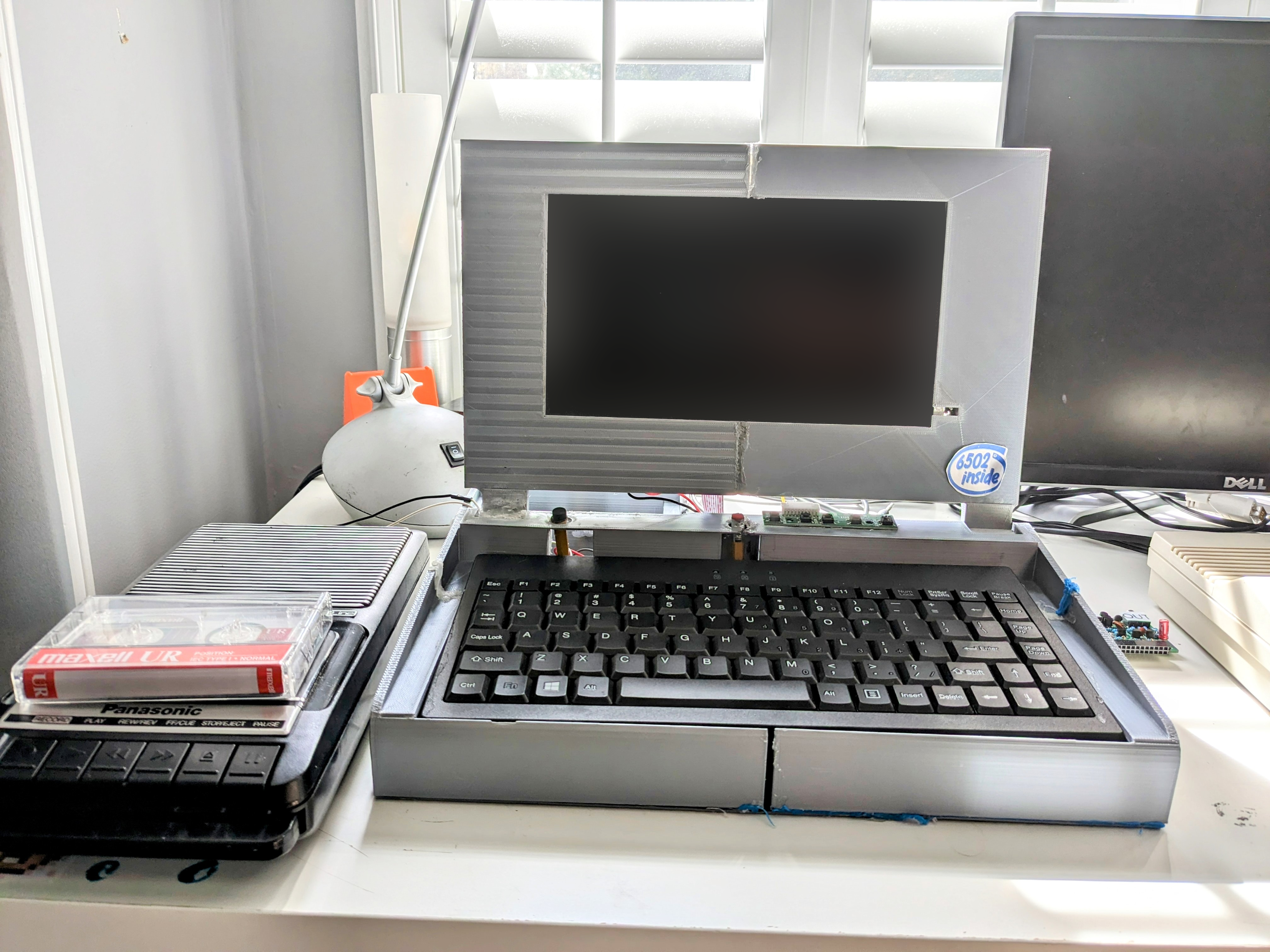

The XPL-32 is a homebrew 8-bit 6502 laptop, with four 48-pin expansion slots, and a 22-pin I/O port.
eXpandable Personal Laptop with 32k ram
Here I will post hardware updates to the XPL and more.
Also, be sure to check info.txt to know if there are any issues when i code.
A 6502, of course. A W65C02 to be exact.
For the I/O, I've got a W65C22 VIA. Port A, Port B and the handshake bits connect to the I/O slot. However CA2 is connected to the Video Switch Relay (VSR) W65C22 Datasheet
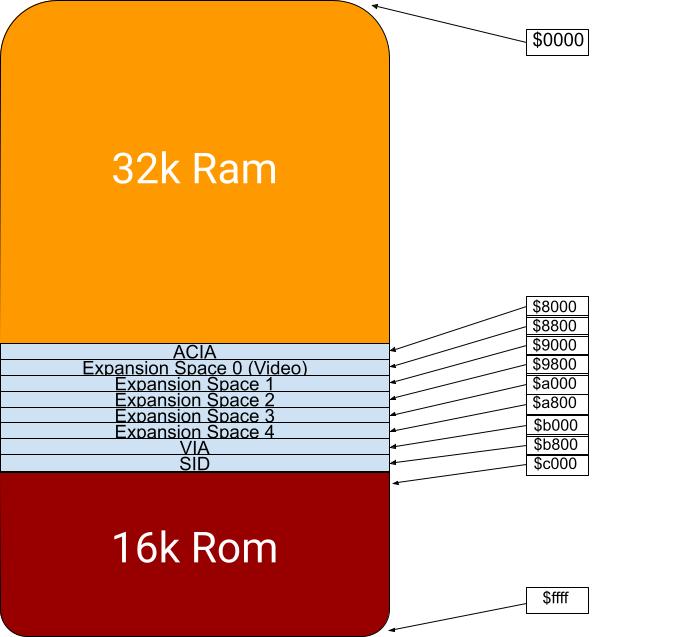
The XPL-32 has an expandable monochrome terminal display that uses a 6551 ACIA at $8000 and two arduinos. This is the video and keyboard processer. (not made by me) The video can be switched to the composite input EXTVID (on the expansion port) by toggling the VSR. (a relay that switches beetween native video and EXTVID.)
So far, for Video expansions, I've made a TMS9918a one. (the same video processer used in the TI-99/4a and the MSX)
There is a 6581 SID at $B800 ($D400 in the c64) onboard with its potentiometer (POTX and POTY) and external sound (EXTSND) inputs on the expansion port. I programmed support to convert most SID files, as well.
I currently use EAGLE
VIM, NVIM/LunarVIM or vscode for code editing. xa, ca65 (from cc65), and vasm for assembly.
I have "xa 6502 cross assembler" syntax highlighting in vim, and the "vasm" extension in vscode.
most source files are .s, but some are .a65 or .asm
I use Pulseview with this logic analyzer (the 2018 variant)
It was an absolute pain to set up...
Also, the SDcard-SPI decoder in libsigrokdecode was completly broken for me. (it always expected a CRC...) My fix was to make my own custom version of the decoder
The custom version is still slightly broken, but I am working on it.
I also use decode6502 by hoglet
| Qty | Value | Footprint | References |
|---|---|---|---|
| 2 | memory card:2X11_90_325 | JP1, JP3 | |
| 1 | memory card:1X06_420 | JP2 |
liaminventions/XPL-32
All of the code and experiments for the XPL-32 Homebrew 6502 Laptop. Licensed under GNU GPL V3.

liaminventions/XPL-32
All of the code and experiments for the XPL-32 Homebrew 6502 Laptop. Licensed under GNU GPL V3.

liaminventions/XPL-32
All of the code and experiments for the XPL-32 Homebrew 6502 Laptop. Licensed under GNU GPL V3.

liaminventions/XPL-32
All of the code and experiments for the XPL-32 Homebrew 6502 Laptop. Licensed under GNU GPL V3.


hzeller/rpi-rgb-led-matrix
Controlling up to three chains of 64x64, 32x32, 16x32 or similar RGB LED displays using Raspberry Pi GPIO


atopile/atopile
Design circuit boards with code! ✨ Get software-like design reuse 🚀, validation, version control and collaboration in hardware; starting with electronics ⚡️


hackclub/sprig
🍃 Learn to code by making games in a JavaScript web-based game editor.
It measures 48.3 × 34.6 mm and has 2 copper layers, 1.6 mm thick.
3 parts. The full list of its parts is on this page, with links to each part's symbol and footprint where PCBKit's library has them.
From the liaminventions/XPL-32 repository on GitHub, at the commit this page was made from: the board is PCB/kicad/sd/memory card.kicad_pcb and its schematic PCB/kicad/sd/memory card.kicad_sch. PCBKit opens the board in the browser, with nothing to install.
Its repository publishes it under the GPL-3.0 licence: you may reuse it on that licence's terms (keep the author's notice, and for a copyleft licence share your changes alike).