
2 layers17 × 15.7 mm
MP Power
ghent360/PrntrBoardV2
32-bit 3D Printer controller board using STM32F407 and replaceable TMC2660/2209 stepper drivers.
12 parts45

 koko69420/Bluetooth-Speaker-Mic
Portable Bluetooth 4.1 audio system with TPA3118 Class-D amplifier, CSR8635 module, and hands-free microphone in KiCad
Speaker w mic is an open-source printed circuit board by koko69420, from the koko69420/Bluetooth-Speaker-Mic repository on GitHub. It is a 2-layer board of 160.6 × 64.4 mm with 54 parts on 59 nets, routed with 500 tracks and 0 vias.
It is built around the MP1584EN and SS34. Its parts include 11 capacitors, 10 resistors, 7 connectors, 4 ICs and 1 diode. It belongs with the audio and music and radio and wireless boards of this library.
A compact, high-efficiency portable Bluetooth 4.1 stereo audio receiver and loudspeaker system with integrated hands-free microphone input, designed around the Qualcomm CSR8635 SoC module and Texas Instruments TPA3118 Class-D power amplifier in KiCad.
MIC_BIAS, MIC_AP, MIC_AN).| Function | Component | Part Number / Description |
|---|---|---|
| Bluetooth Module | U1 | Qualcomm CSR8635 (Bluetooth 4.1 Audio ROM) |
| Audio Power Amp | U2 | Texas Instruments TPA3118 Class-D Stereo Amplifier |
| Microphone | MK1 | Low-noise electret condenser microphone |
| AUX Input Jack | J1 | 3.5mm PJ-324 / PJ-324M panel/out-of-board socket |
| Power Input | J2 | USB Type-C 16-Pin Receptacle |
| Diode Protection | D1 | SS34 (3A, 40V Surface Mount Schottky) |
| Switches | SW1-SW4 | SPST momentary tactile pushbuttons (Vol+, Vol-, Play/Pause, Power) |
| TPA3118 Class-D Power Amplifier & AUX Input Stage | CSR8635 Bluetooth Audio & Microphone Interface |
|---|---|
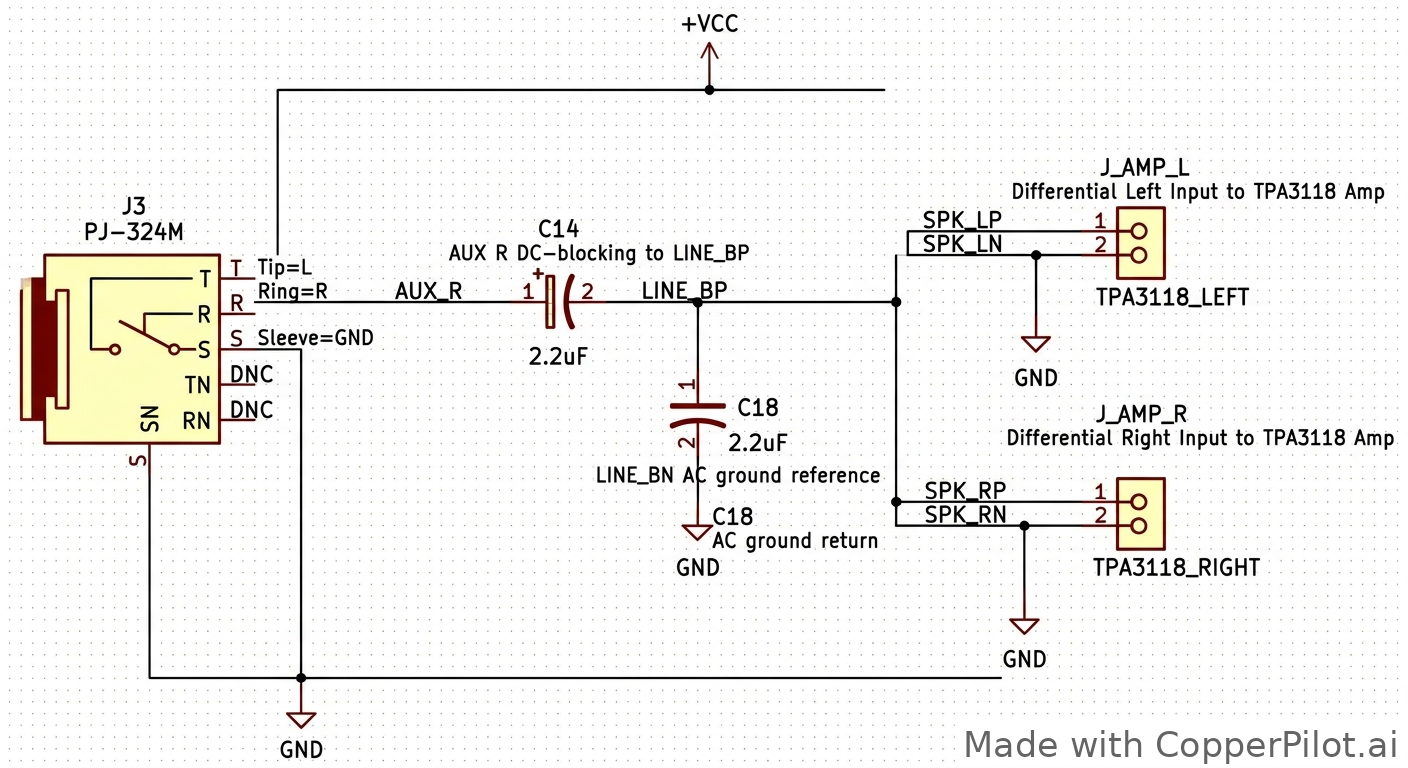 | 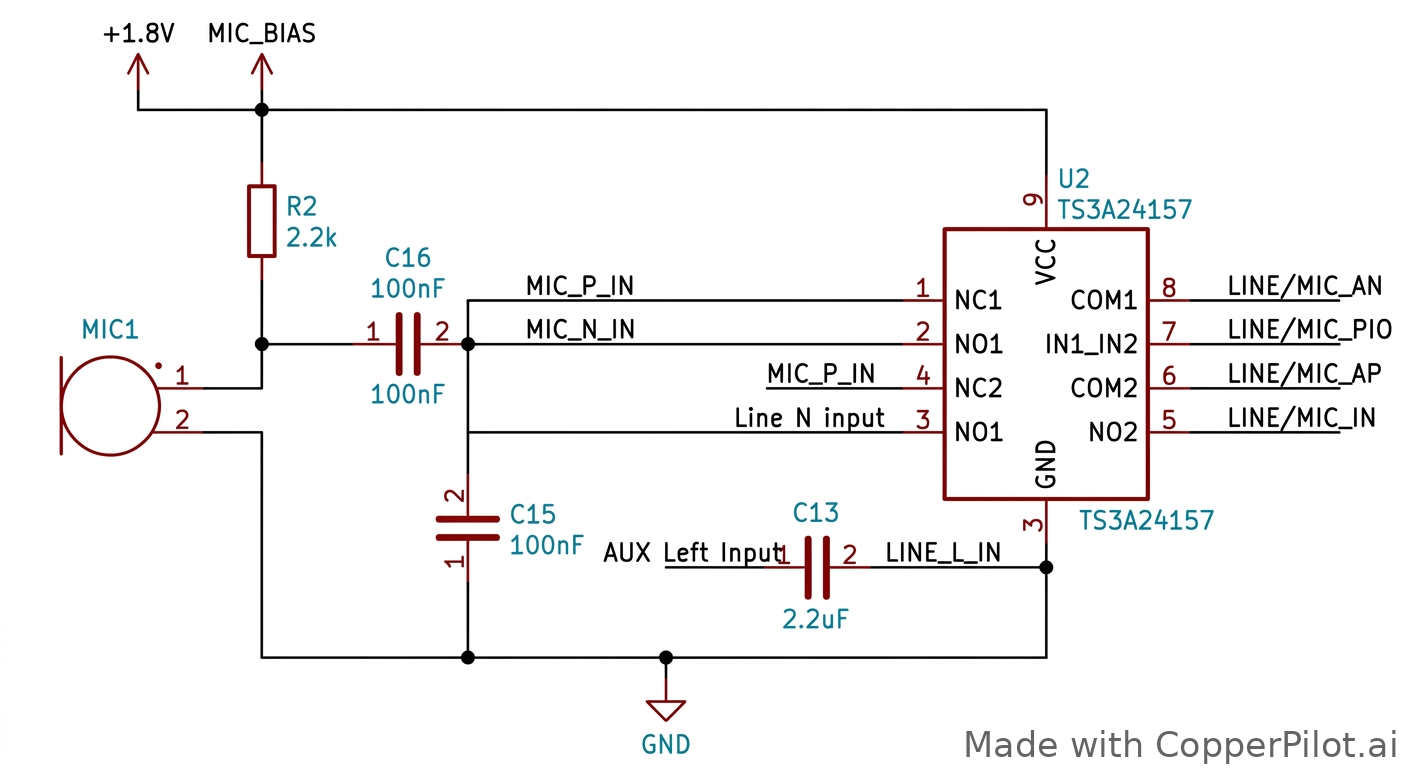 |
Top Copper Layer (F_Cu) | Bottom Copper Layer (B_Cu) |
|---|---|
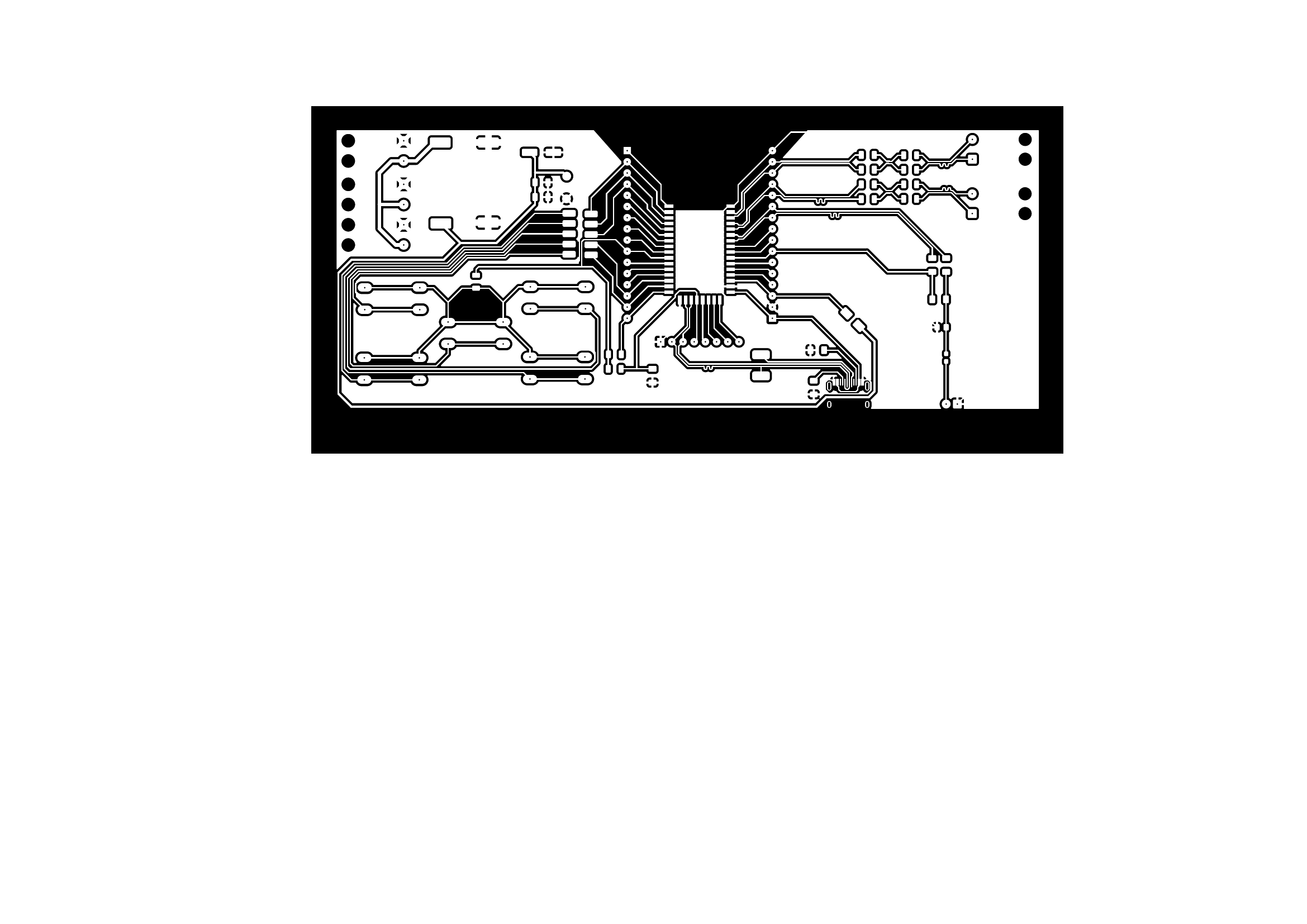 | 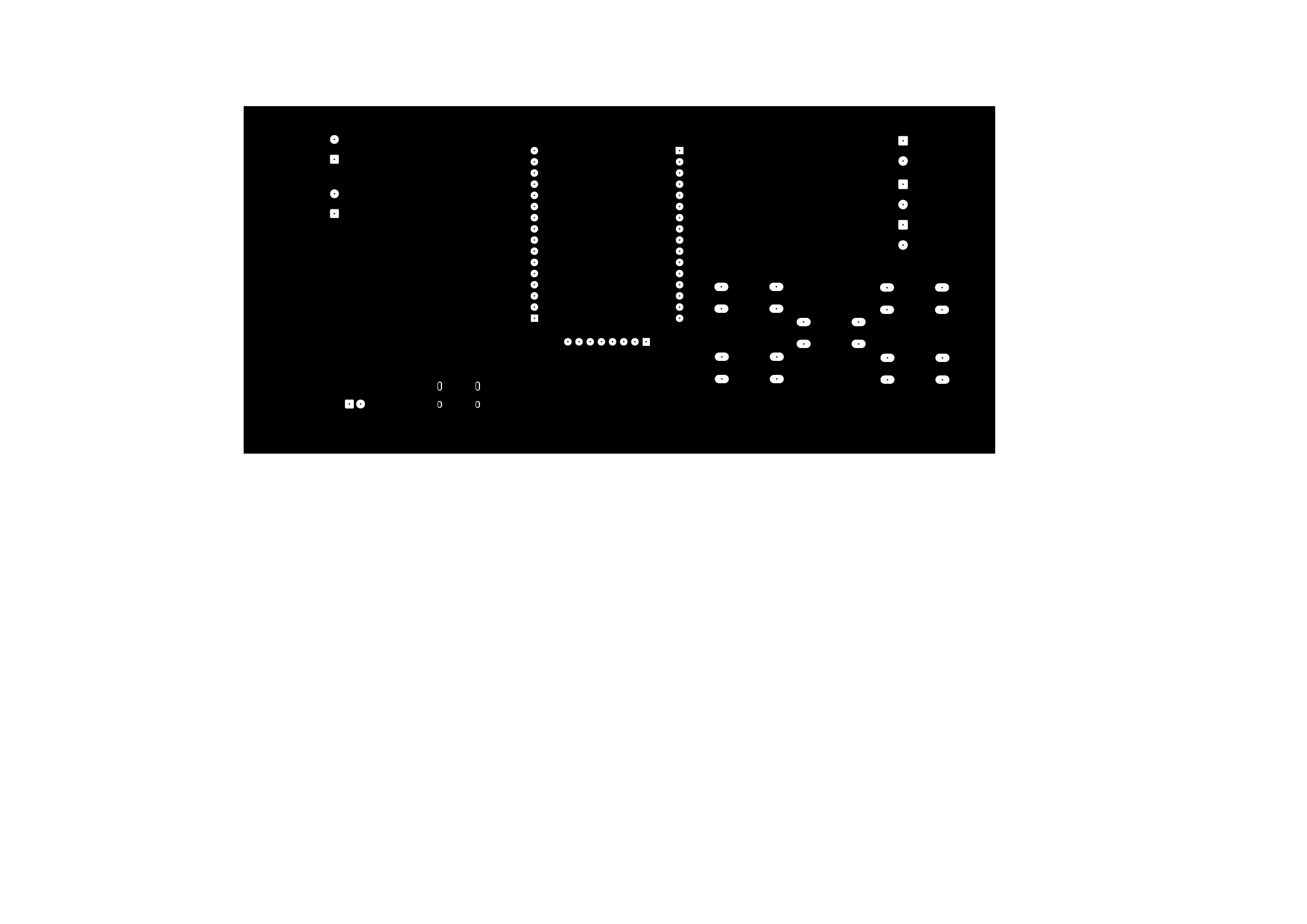 |
Bluetooth-Speaker-Mic/
├── Speaker_w_mic.kicad_sch           # Main KiCad schematic
├── Speaker_w_mic.kicad_pcb           # Main KiCad PCB layout
├── Speaker_w_mic.kicad_pro           # KiCad project file
├── CSR8635_Module.kicad_sym          # Custom CSR8635 schematic symbol
├── Jack_3.5mm_Yizhijia_PJ-324M_Panel.kicad_mod # 3.5mm panel-mount jack footprint
├── Jack_3.5mm_Yizhijia_PJ-324_Horizontal_Out-of-board.kicad_mod # Horizontal 3.5mm footprint
├── Speaker_w_mic-F_Cu.pdf            # Front copper layer verification plot
├── Speaker_w_mic-B_Cu.pdf            # Back copper layer verification plot
├── .gitignore                        # Git ignore rules
└── README.md # Project documentationDesigned in KiCad 7 / 8:
Speaker_w_mic.kicad_pro to view the comprehensive schematic and routing.Hardware design. All rights reserved by the author.
| Qty | Value | Footprint | References |
|---|---|---|---|
| 5 | 1 kΩ | Resistor_SMD:R_1206_3216Metric | R1, R2, R3, R4, R7 |
| 5 | 10 µF | Capacitor_SMD:C_1206_3216Metric | C1, C2, C3, C4, C6 |
| 3 | 100 nF | Capacitor_SMD:C_1206_3216Metric_Pad1.33x1.80mm_HandSolder | C9, C10, C11 |
| 3 | Conn_01x02 | Connector_Wire:SolderWire-0.5sqmm_1x02_P4.6mm_D0.9mm_OD2.1mm_Relief | J5, J5, J5 |
| 2 | 10 kΩ | Resistor_SMD:R_1206_3216Metric | R9, R10 |
| 2 | 5.1 kΩ | Resistor_SMD:R_1206_3216Metric_Pad1.30x1.75mm_HandSolder | R5, R6 |
| 2 | Conn_01x16_Pin | Connector_PinHeader_2.54mm:PinHeader_1x16_P2.54mm_Vertical | J1, J3 |
| 2 | TPA3118 | Connector_Wire:SolderWire-0.25sqmm_1x02_P4.5mm_D0.65mm_OD2mm_Relief | U2, U4 |
| 1 | 100 nF | Capacitor_SMD:C_1206_3216Metric | C7 |
| 1 | 15 nH | Inductor_SMD:L_0603_1608Metric_Pad1.05x0.95mm_HandSolder | L1 |
| 1 | 15 pF | Capacitor_SMD:C_0805_2012Metric_Pad1.18x1.45mm_HandSolder | C8 |
| 1 | 2 kΩ | Resistor_SMD:R_1206_3216Metric_Pad1.30x1.75mm_HandSolder | R8 |
| 1 | 220 µF | Capacitor_SMD:CP_Elec_6.3x7.7 | C5 |
| 1 | CSR8635_MODULE | CSR8635_Module:CSR8635_MODULE_V1.3 | U3 |
| 1 | CSR_VBAT_TestPoint | TestPoint:TestPoint_Pad_D2.0mm | TP2 |
| 1 | Conn_01x08_Pin | Connector_PinHeader_2.54mm:PinHeader_1x08_P2.54mm_Vertical | J4 |
| 1 | GND_TestPoint | TestPoint:TestPoint_Pad_D2.0mm | TP1 |
| 1 | MP1584 | HomeBus:MP1584 Module | U1 |
| 1 | Microphone | TerminalBlock:TerminalBlock_Xinya_XY308-2.54-2P_1x02_P2.54mm_Horizontal | MK1 |
| 1 | SS34 | Diode_SMD:D_SMA | D1 |
| 1 | USB_C_Receptacle_USB2.0_16P | Connector_USB:USB_C_Receptacle_HRO_TYPE-C-31-M-12 | J2 |
The 37 most common of 54 parts.
ghent360/PrntrBoardV2
32-bit 3D Printer controller board using STM32F407 and replaceable TMC2660/2209 stepper drivers.

4rynv/Eklavya_Gantry
an attempt to automate screwing out and in of screw holes arranged in a matrix formation


enwi/PiSupply
Uninterruptable power supply for Raspberry Pi's, which can also power external HDDs

shazmeenShz/ESP32-Flight-Controller
Custom 4-layer IoT-Ready ESP32 Flight Controller PCB designed in KiCad 8 featuring USB Type-C, CH340C, MP1584 power management, MPU6050 interface, and manufacturing-ready Gerber files.

12romis/esp32-elrs-rover
Ровер 4WD із танковим приводом на ESP32-S3: керування через ExpressLRS 2.4 ГГц, антизіткнення на ToF-далекомірах, замкнутий контур по енкодерах та аналоговий FPV-відеоканал 5.8 ГГц.


Iam-Madman/stm32-falling-sticks
A DIY reaction-based "falling sticks" game controller built around an STM32 Bluepill.
It measures 160.6 × 64.4 mm and has 2 copper layers, 1.6 mm thick.
54 parts, built around the MP1584EN and SS34. The full list of its parts is on this page, with links to each part's symbol and footprint where PCBKit's library has them.
From the koko69420/Bluetooth-Speaker-Mic repository on GitHub, at the commit this page was made from: the board is Speaker_w_mic.kicad_pcb and its schematic Speaker_w_mic.kicad_sch. PCBKit opens the board in the browser, with nothing to install.
Its repository states no licence, so its author keeps all rights: ask koko69420 before reusing the design.