
2 layers59.9 × 49.3 mm
 klaplain/RotaryPhoneExchangeEmulator1
This system simulates a telephone exchange connected to a rotary phone. It provides the dial tone and ring tone. When the user dials a number, it plays back an MP3 file stored on the SD card. A call can also be initiated from an IR remote control. This causes the phone to ring and when the user picks up, plays the requested sound file.
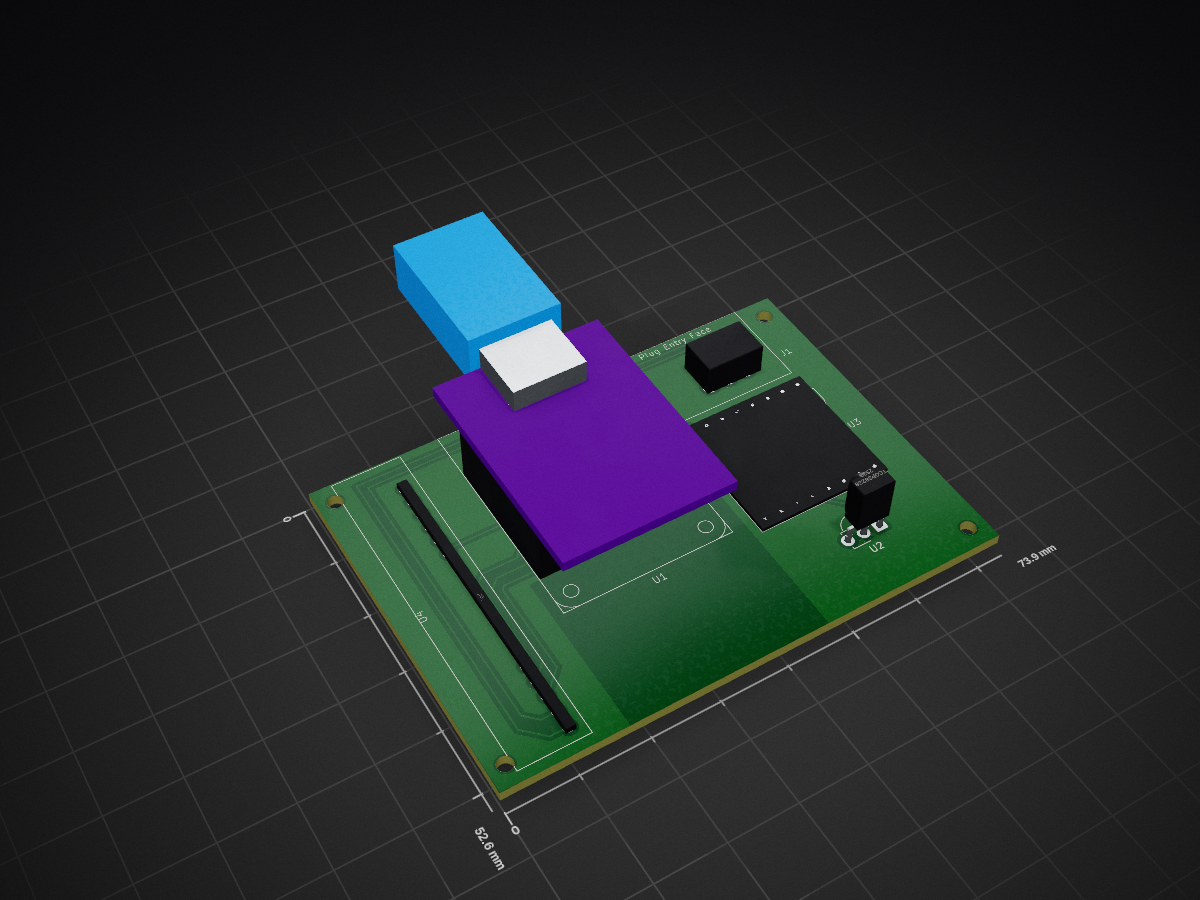
Rotary Telephone System is an open-source printed circuit board by klaplain, from the klaplain/RotaryPhoneExchangeEmulator repository on GitHub. It is a 2-layer board of 73.9 × 52.6 mm with 9 parts on 50 nets, routed with 61 tracks and 0 vias.
It is built around the TSOP38238. Its parts include 4 ICs and 1 connector.
This system simulates a telephone exchange connected to a rotary phone. It provides the dial tone and ring tone. When the user dials a number, it plays back an MP3 file stored on the SD card. A call can also be initiated from an IR remote control. This causes the phone to ring and when the user picks up, plays the requested sound file.
| Qty | Value | Footprint | References |
|---|---|---|---|
| 1 | 605A RH BT Female Socket | BT Telephony Library:605A BT Female PCB Socket | J1 |
| 1 | KS0835F | Telephony:KS0835F | U4 |
| 1 | TSOP38238 | OptoDevice:Vishay_MINICAST-3Pin | U2 |
| 1 | ~ | Lolin S2 Mini:Lolin S2 Mini | U1 |
| 1 | ~ | DFRobot:DFR0768-mp3-player | U3 |
The 5 most common of 9 parts.


ajvizganapathy-pixel/FlipperZero-DIY-STM32WB55-NucleusDark
DIY Flipper Zero clone using STM32WB55CGU6 — KiCad PCB, Momentum firmware, 200+ apps, BadUSB scripts, wiring diagrams

CmdrZin/chips_avr_examples
AVR assembly and C code for robotics and other projects.


keener2u/CoinPCB
Simple ESP8266 breakout board shaped like a challenge coin. Built to be a hackable extendable board for IOT projects and given out for recognition and to spark staff's imagination.

Accessible-AAC/AAC-Devices
Augmentative and alternative communications device design files based on inexpensive and open source technologies.

perja12/sonos_magic_hub
Circuit for using the LG OLED C9 TV remote (LG Magic Remote) with the Sonos Playbar.
It measures 73.9 × 52.6 mm and has 2 copper layers, 1.6 mm thick.
9 parts, built around the TSOP38238. The full list of its parts is on this page, with links to each part's symbol and footprint where PCBKit's library has them.
From the klaplain/RotaryPhoneExchangeEmulator repository on GitHub, at the commit this page was made from: the board is hardware/PCB/Rotary Telephone System.kicad_pcb and its schematic hardware/PCB/Rotary Telephone System.kicad_sch. PCBKit opens the board in the browser, with nothing to install.
Its repository states no licence, so its author keeps all rights: ask klaplain before reusing the design.