2 layers74 × 72 mm

 idt12312/MIZUHO28
マイクロマウス2016の機体データ
Micromouse2016 is an open-source printed circuit board by idt12312, from the idt12312/MIZUHO repository on GitHub. It is a 2-layer board of 75.1 × 85.2 mm with 106 parts on 77 nets, routed with 2,094 tracks and 720 vias.
It is built around the DRV8835DSS, AD8604AR and SFH 213 FA, with the VSLY5850 and IRFML8244TR among its other parts. Its parts include 44 capacitors, 26 resistors, 14 diodes, 9 ICs and 7 connectors. It belongs with the STM32 boards of this library.


マイクロマウスの機体です。
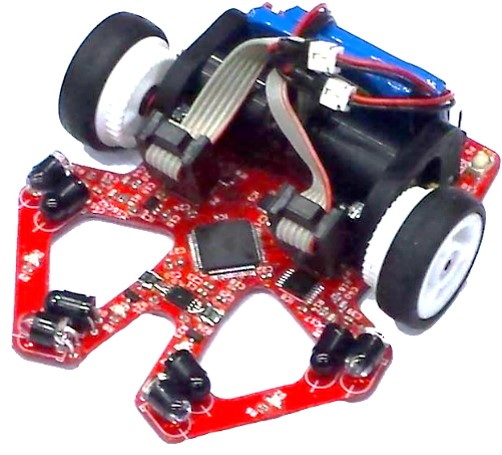
第37回全日本マイクロマウス大会のクラッシック競技フレッシュマンクラスに出場しました。
予選を通過し、決勝では11位のタイムで完走しました。
| マイコン | STM32F405RGT |
| 6軸センサ | MPU6500 |
| モータドライバ | DRV8835 |
| フォトダイオード | SFH213FA |
| 赤外線LED | VSLY5850 |
| モーター | Faulhaber 1717+IEH2-1024 |
| バッテリー | Hyperion 1cel 120mA × 2 |
↓の画像のような構成になっています。
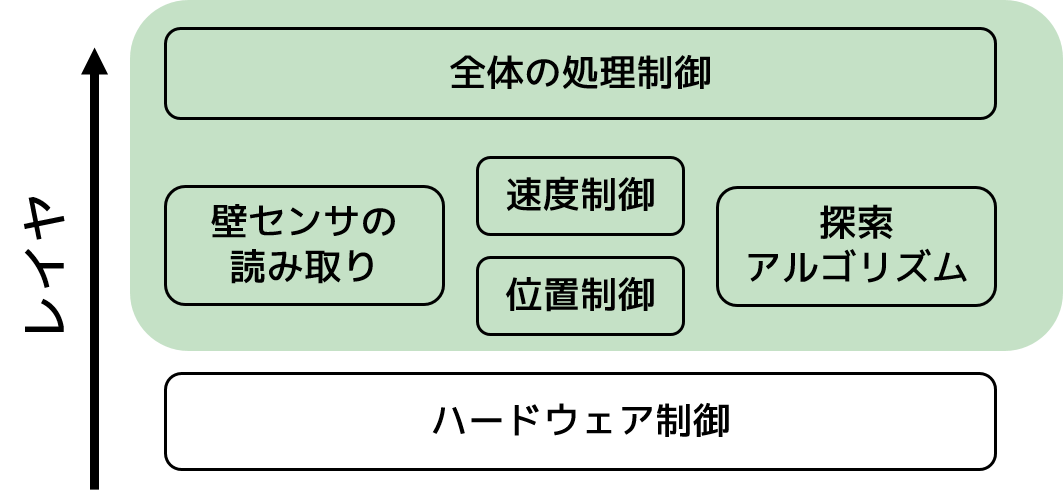
FreeRTOSを利用しています。
上の画像の緑の色のついている部分がFreeRTOSのタスクになっています。
だいたいこんな感じです。

以前作ったものを使用しています。
壁センサは少し工夫したので説明しておきます。
ロ技研内での技術交流のために作成したまとめ文章も置いておくので、よかったら見てください
研究報告書
外乱を防ぐために赤外線LEDを変調して使っています。
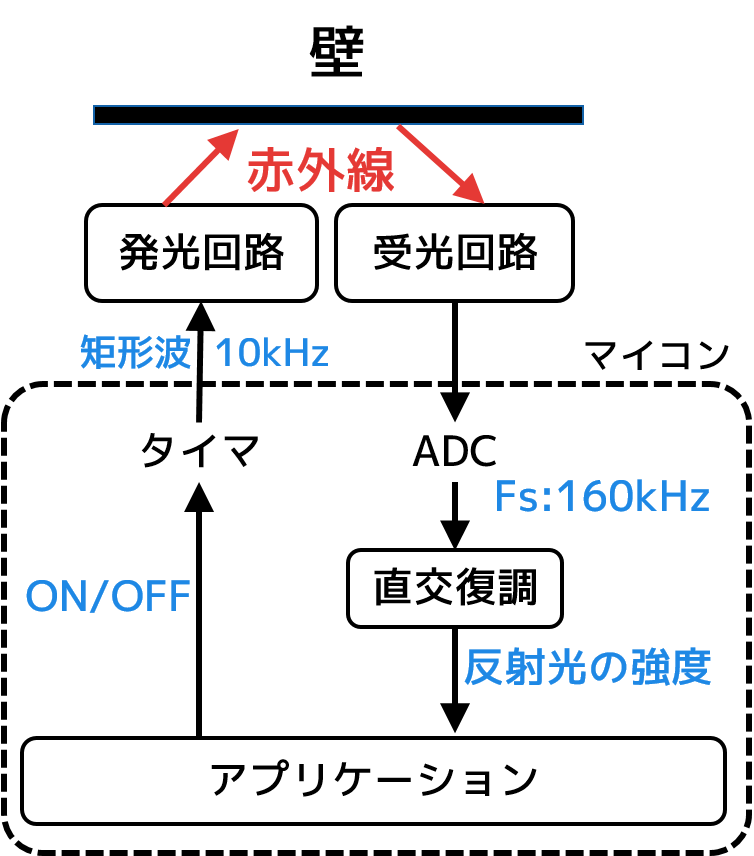
受光した信号は直交復調に基づいて復調しています。
計算自体はDFTをとある周波数についてだけ計算することと同じです。
受光した信号を
、サンプリング周波数を
とします。
ここでは
から周波数
成分の強度を計算するとします。
まず
を計算します。
次に
の絶対値を計算することで
に含まれる周波数
の振幅を得ることができます。
| Qty | Value | Footprint | References |
|---|---|---|---|
| 20 | 0.1u | Capacitors_SMD:C_0603 | C1, C10, C11, C14, C17, C21, C22, C23, C24, C27, C28, C29, C31, C32, C34, C35 +4 |
| 5 | 0.01u | Capacitors_SMD:C_0603 | C30, C37, C39, C41, C43 |
| 4 | 100k | Resistors_SMD:R_0603 | R13, R15, R17, R19 |
| 4 | 10u | Capacitors_SMD:C_0603 | C2, C3, C15, C16 |
| 4 | 180 | Resistors_SMD:R_0603 | R6, R7, R8, R9 |
| 4 | 220k | Resistors_SMD:R_0603 | R14, R16, R18, R20 |
| 4 | 22p | Capacitors_SMD:C_0603 | C38, C40, C42, C44 |
| 4 | 47u | Capacitors_SMD:C_1206 | C12, C13, C33, C36 |
| 4 | SFH213FA | micromouse2016:LED_5mm_angle | D7, D8, D9, D10 |
| 4 | VSLY5850 | micromouse2016:LED_5mm_angle | D11, D12, D13, D14 |
| 3 | 10k | Resistors_SMD:R_0603 | R12, R25, R26 |
| 2 | 10 | Resistors_SMD:R_0603 | R21, R23 |
| 2 | 15 1/4W | Resistors_SMD:R_1206 | R22, R24 |
| 2 | 1u | Capacitors_SMD:C_0603 | C20, C26 |
| 2 | 2.2u | Capacitors_SMD:C_0603 | C18, C19 |
| 2 | 33p | Capacitors_SMD:C_0603 | C8, C9 |
| 2 | DRV8835 | micromouse2016:DRV8835 | IC6, IC7 |
| 2 | IRFML8244 | TO_SOT_Packages_SMD:SOT-23 | Q1, Q2 |
| 2 | MOTOR | Pin_Headers:Pin_Header_Straight_2x03 | P6, P7 |
| 2 | RT7285/A | TO_SOT_Packages_SMD:SOT-23-6 | IC1, IC2 |
| 2 | SW_PUSH | micromouse2016:SKRPACE010 | SW1, SW2 |
| 1 | 10u | Resistors_SMD:R_0805 | L1 |
| 1 | 110k 1% | Resistors_SMD:R_0603 | R2 |
| 1 | 115k1% | Resistors_SMD:R_0603 | R4 |
| 1 | 15k 1% | Resistors_SMD:R_0603 | R3 |
| 1 | 1k | Resistors_SMD:R_0603 | R1 |
| 1 | 220 | Resistors_SMD:R_0603 | R10 |
| 1 | 22k | Resistors_SMD:R_0603 | R11 |
| 1 | 25.5k1% | Resistors_SMD:R_0603 | R5 |
| 1 | 4.7u | Capacitors_SMD:C_0603 | C25 |
| 1 | 6.8u | Resistors_SMD:R_0805 | L2 |
| 1 | AD8604 | Housings_SSOP:TSSOP-14_4.4x5mm_Pitch0.65mm | IC8 |
| 1 | ARM_DEBUG | Pin_Headers:Pin_Header_Straight_1x04 | P5 |
| 1 | BATT1 | Connectors_JST:JST_PH_B2B-PH-K_02x2.00mm_Straight | P1 |
| 1 | BATT2 | Connectors_JST:JST_PH_B2B-PH-K_02x2.00mm_Straight | P2 |
| 1 | DEBUG_UART | Pin_Headers:Pin_Header_Straight_1x03 | P4 |
| 1 | GREEN1 | LEDs:LED_0805 | D2 |
| 1 | GREEN2 | LEDs:LED_0805 | D3 |
| 1 | GREEN3 | LEDs:LED_0805 | D4 |
| 1 | GREEN4 | LEDs:LED_0805 | D5 |
| 1 | MPU6500 | micromouse2016:QFN-24-1EP_3x3mm_Pitch0.4mm_HandSolder | IC5 |
| 1 | NJM2746 | Housings_SSOP:TSSOP-8_4.4x3mm_Pitch0.65mm | IC9 |
| 1 | POWER_SW | Pin_Headers:Pin_Header_Straight_1x02 | P3 |
| 1 | PWR_BLUE | LEDs:LED_0805 | D1 |
| 1 | RED | LEDs:LED_0805 | D6 |
| 1 | REF1933 | TO_SOT_Packages_SMD:SOT-23-5 | IC3 |
| 1 | STM32F405RGTx | Housings_QFP:LQFP-64_10x10mm_Pitch0.5mm | IC4 |


ssr-cheese/cheese-intro-board
Cheese introduction board data for Micromouse using Stepper motor with STM32F405RG


HarveyBates/Open-JIP
An open-source Arduino based chlorophyll fluorometer for quantifying photosynthesis in photosynthetic organisms.
It measures 75.1 × 85.2 mm and has 2 copper layers, 1.6 mm thick.
106 parts, built around the DRV8835DSS, AD8604AR, SFH 213 FA and VSLY5850. The full list of its parts is on this page, with links to each part's symbol and footprint where PCBKit's library has them.
From the idt12312/MIZUHO repository on GitHub, at the commit this page was made from: the board is pcb/micromouse2016.kicad_pcb. PCBKit opens the board in the browser, with nothing to install.
Its repository states no licence, so its author keeps all rights: ask idt12312 before reusing the design.