2 layers213 × 54 mm
Nixie board
Hardware7253/OperationUrd
A nixie tube clock inspired by the divergence meter from Steins;Gate.
99 parts1MIT
 Hardware7253/OperationUrd1
A nixie tube clock inspired by the divergence meter from Steins;Gate.
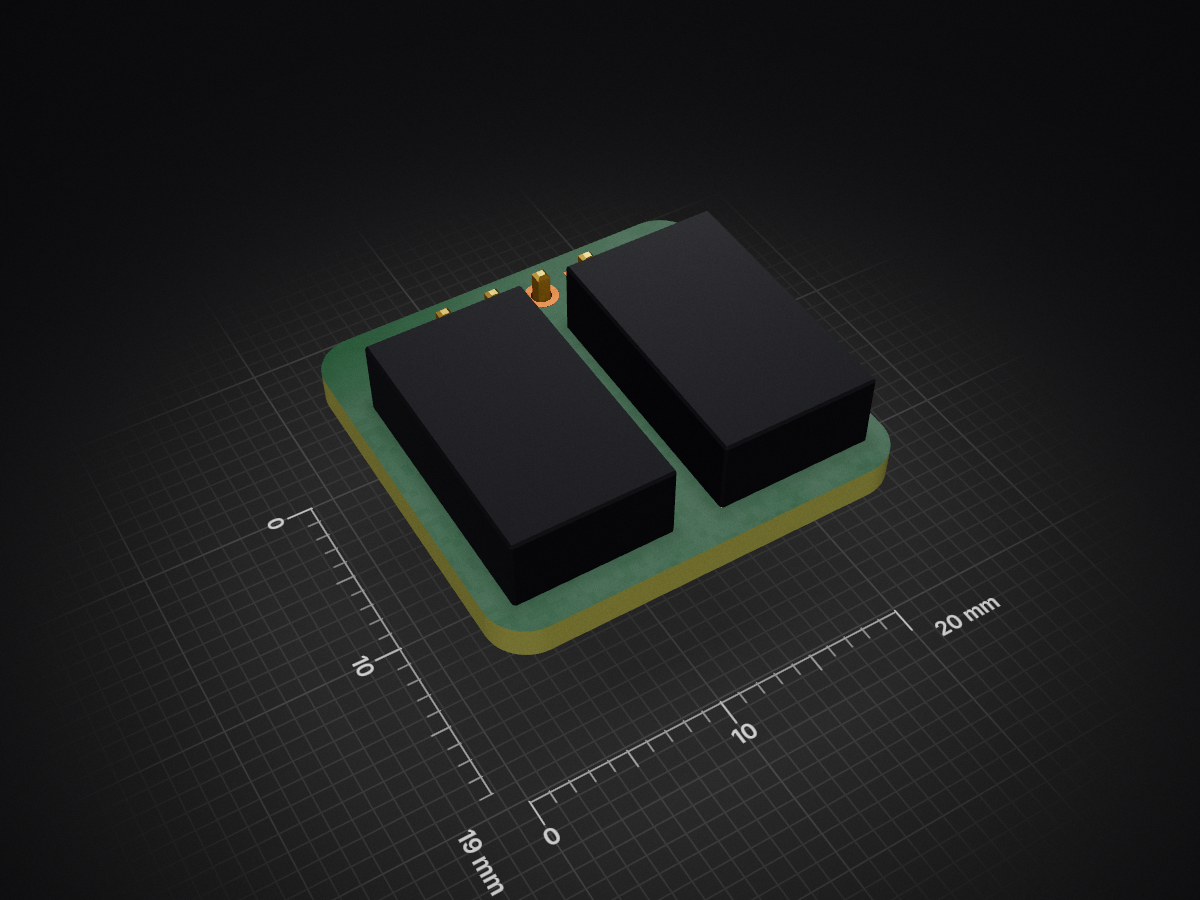
Toggle switch breakout is an open-source printed circuit board by Hardware7253, from the Hardware7253/OperationUrd repository on GitHub, published under the MIT licence. It is a 2-layer board of 20 × 19 mm with 3 parts on 4 nets, routed with 7 tracks and 0 vias.
Its parts include 2 switches and 1 connector. It belongs with the lEDs and displays and interfaces and adapters boards of this library.
A nixie tube clock inspired by the divergence meter from Steins;Gate.
Designed in KiCad and Onshape, programmed in Rust.
| Qty | Value | Footprint | References |
|---|---|---|---|
| 2 | SW_SPST | Custom:MTS-101 | SW1, SW2 |
| 1 | Conn_01x04_Pin | Connector_PinHeader_2.54mm:PinHeader_1x04_P2.54mm_Vertical | J1 |
It measures 20 × 19 mm and has 2 copper layers, 1.6 mm thick.
3 parts. The full list of its parts is on this page, with links to each part's symbol and footprint where PCBKit's library has them.
From the Hardware7253/OperationUrd repository on GitHub, at the commit this page was made from: the board is cad/PCBs/toggle_switch_breakout/toggle_switch_breakout.kicad_pcb and its schematic cad/PCBs/mechanical_switch_breakout/mechanical_switch_breakout.kicad_sch. PCBKit opens the board in the browser, with nothing to install.
Its repository publishes it under the MIT licence: you may reuse it on that licence's terms (keep the author's notice, and for a copyleft licence share your changes alike).
Hardware7253/OperationUrd
A nixie tube clock inspired by the divergence meter from Steins;Gate.

Hardware7253/OperationUrd
A nixie tube clock inspired by the divergence meter from Steins;Gate.

Hardware7253/OperationUrd
A nixie tube clock inspired by the divergence meter from Steins;Gate.

Hardware7253/OperationUrd
A nixie tube clock inspired by the divergence meter from Steins;Gate.


hzeller/rpi-rgb-led-matrix
Controlling up to three chains of 64x64, 32x32, 16x32 or similar RGB LED displays using Raspberry Pi GPIO


atopile/atopile
Design circuit boards with code! ✨ Get software-like design reuse 🚀, validation, version control and collaboration in hardware; starting with electronics ⚡️


hackclub/sprig
🍃 Learn to code by making games in a JavaScript web-based game editor.