Skip to the content
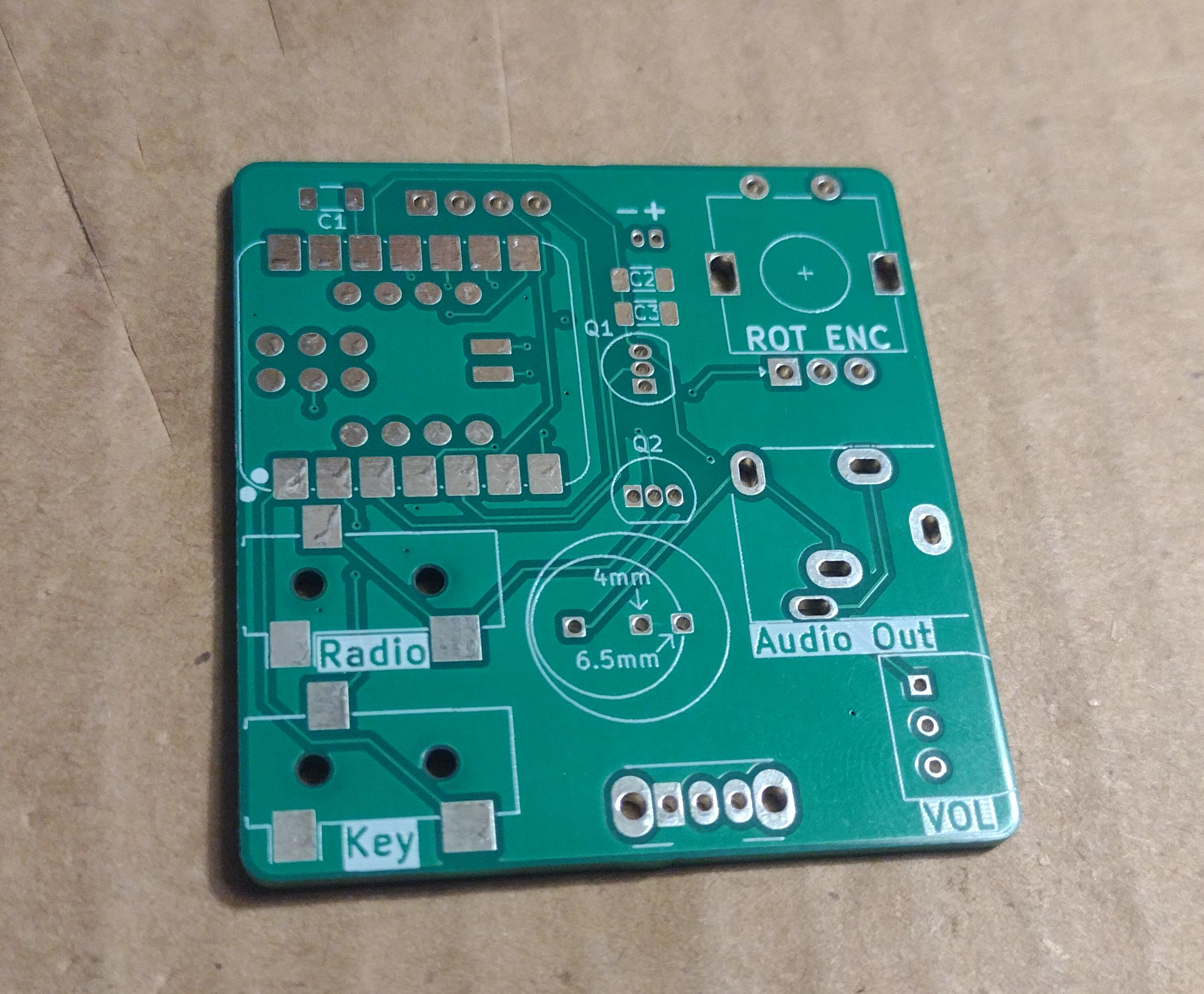
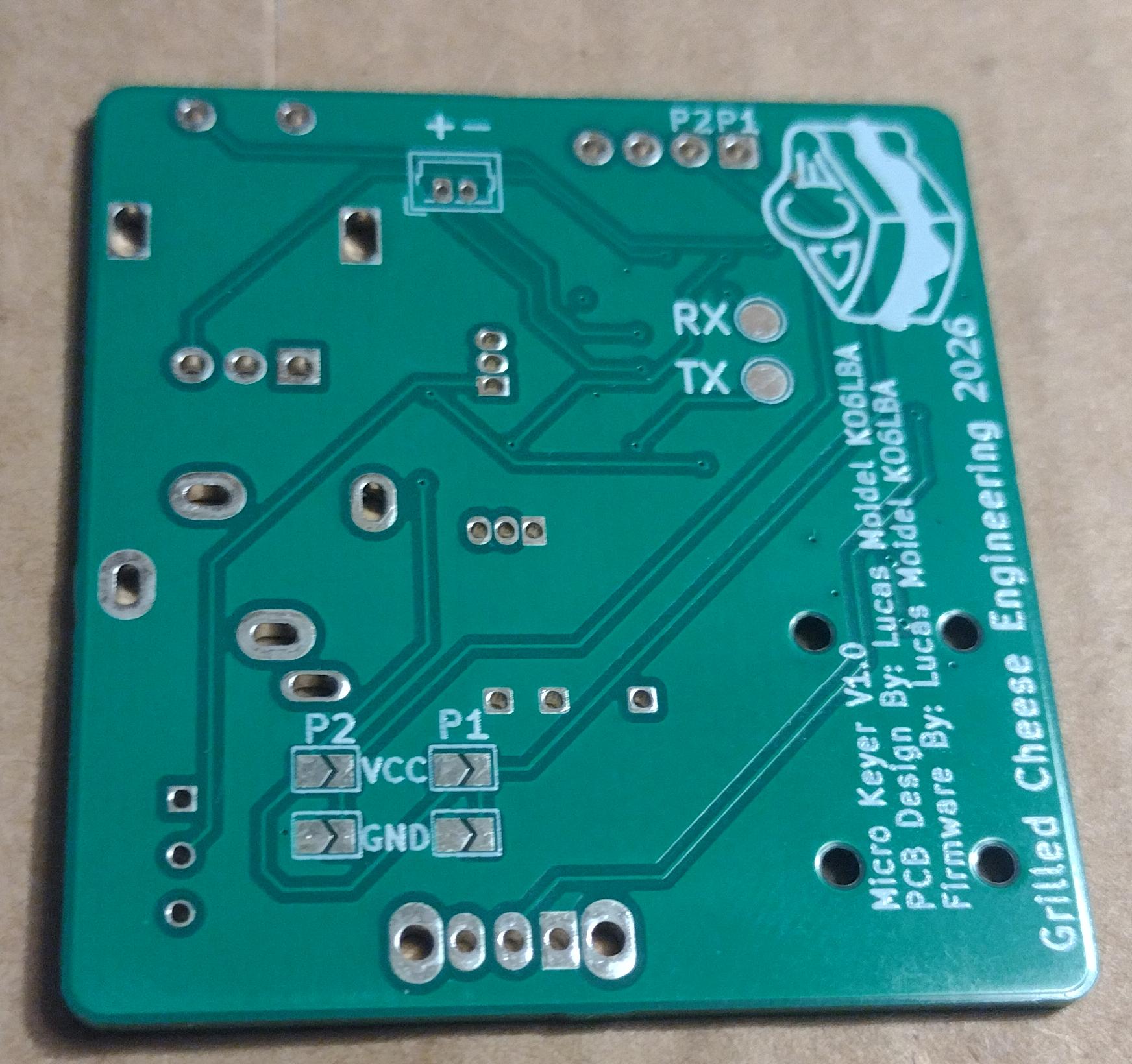
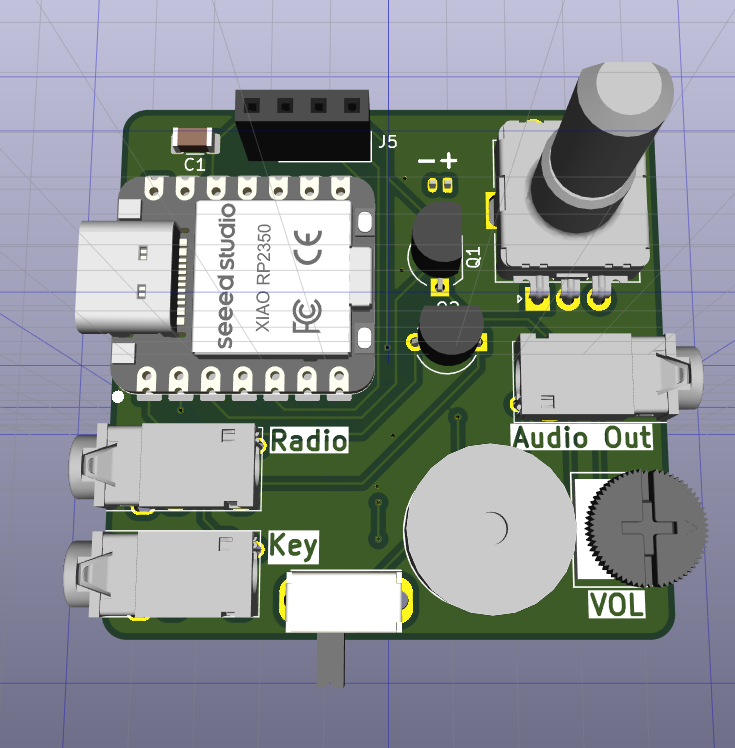
2 layers44 × 44.6 mmMicro keyer, the printed circuit board in 3D

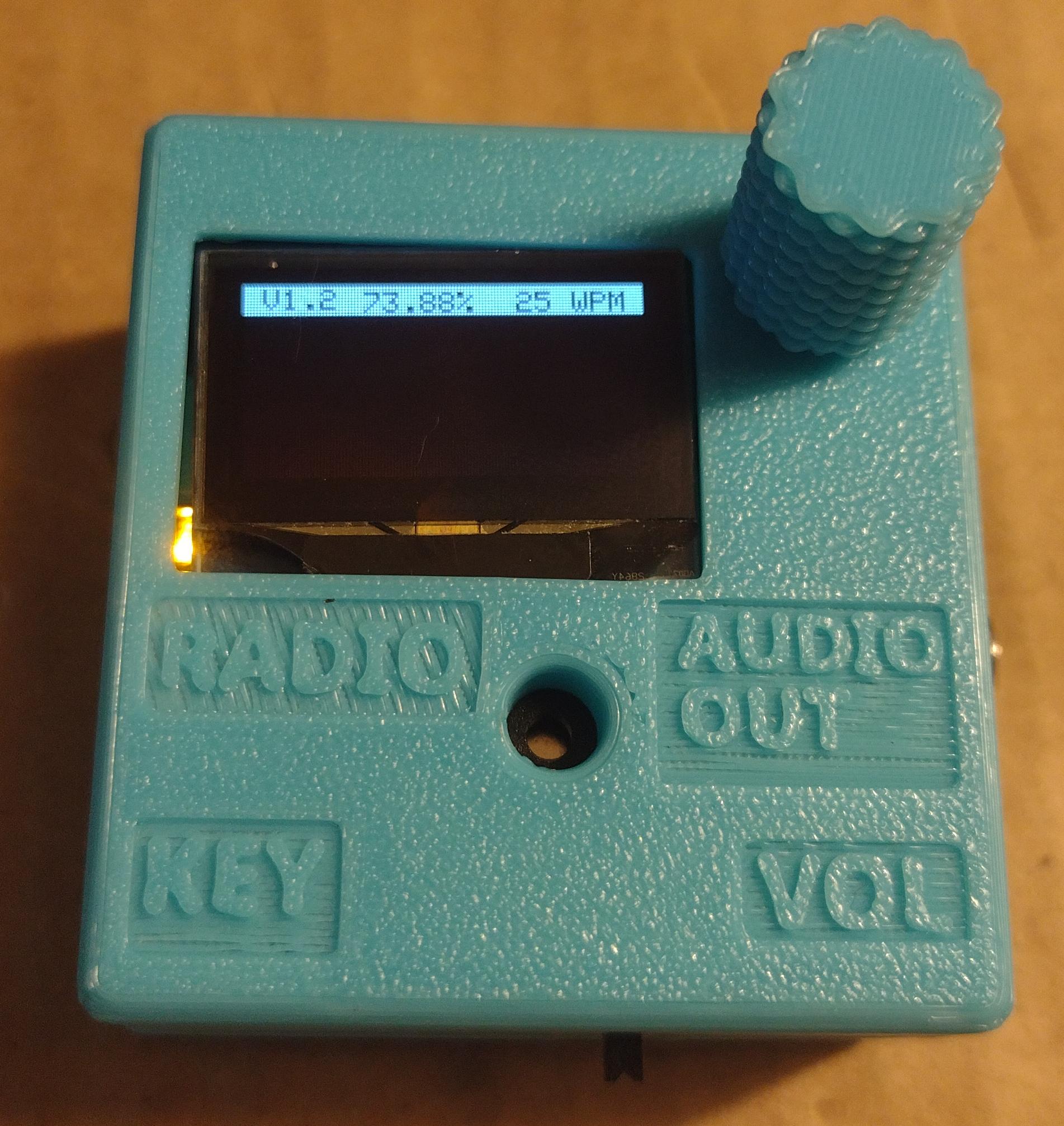
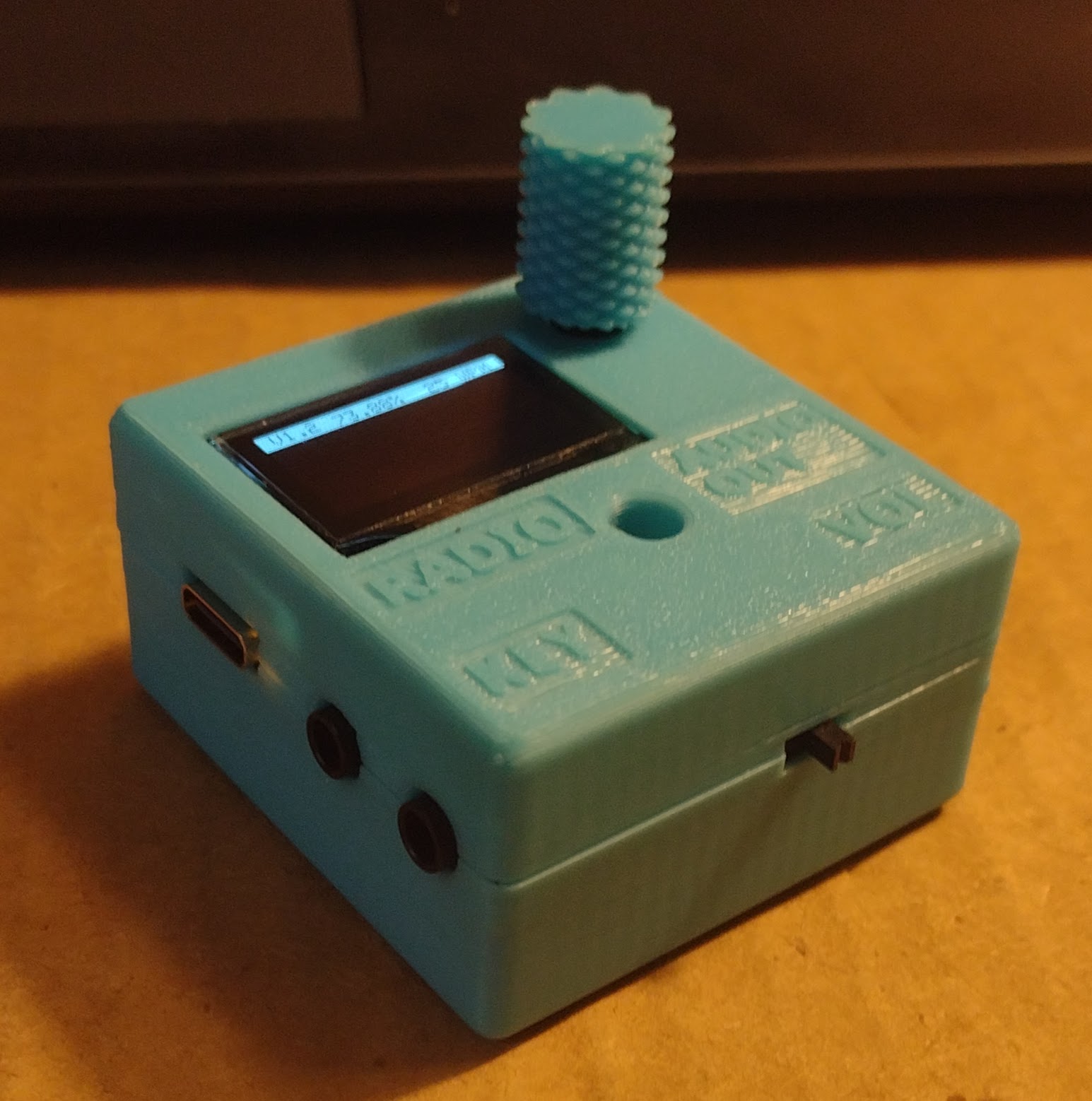
The Micro Keyer is a small morse code keyer that can be used as a practice oscillator and computer keyer.

Size
44 × 44.6 mm
Copper layers
2
Thickness
1.6 mm
Parts
13
Nets
36
Pads
69
Tracks, vias
89, 16
Pours
1
Routed
Yes
KiCad
KiCad 10.0 (file 20260206)
Created
8 Aug 2026
Updated
7 Nov 2026

Overview

Micro keyer is an open-source printed circuit board by Grilled-Cheese-Engineering, from the Grilled-Cheese-Engineering/micro-keyer repository on GitHub, published under the GPL-3.0 licence. It is a 2-layer board of 44 × 44.6 mm with 13 parts on 36 nets, routed with 89 tracks and 16 vias.

Its parts include 3 connectors, 2 switches, 1 IC and 1 transistor. It belongs with the RP2350 boards of this library.

README

README.md

Micro Keyer

Alt text Alt text
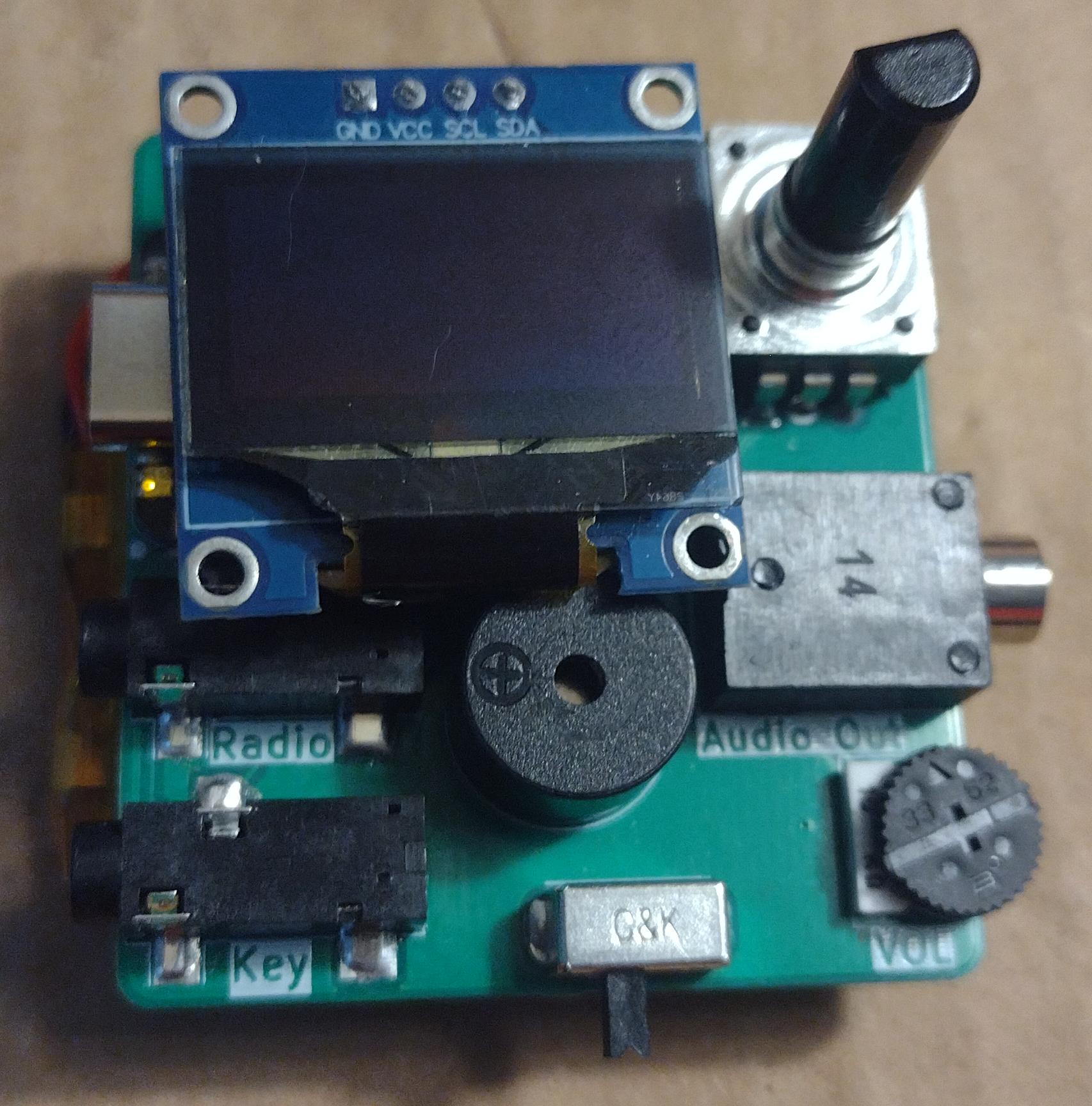
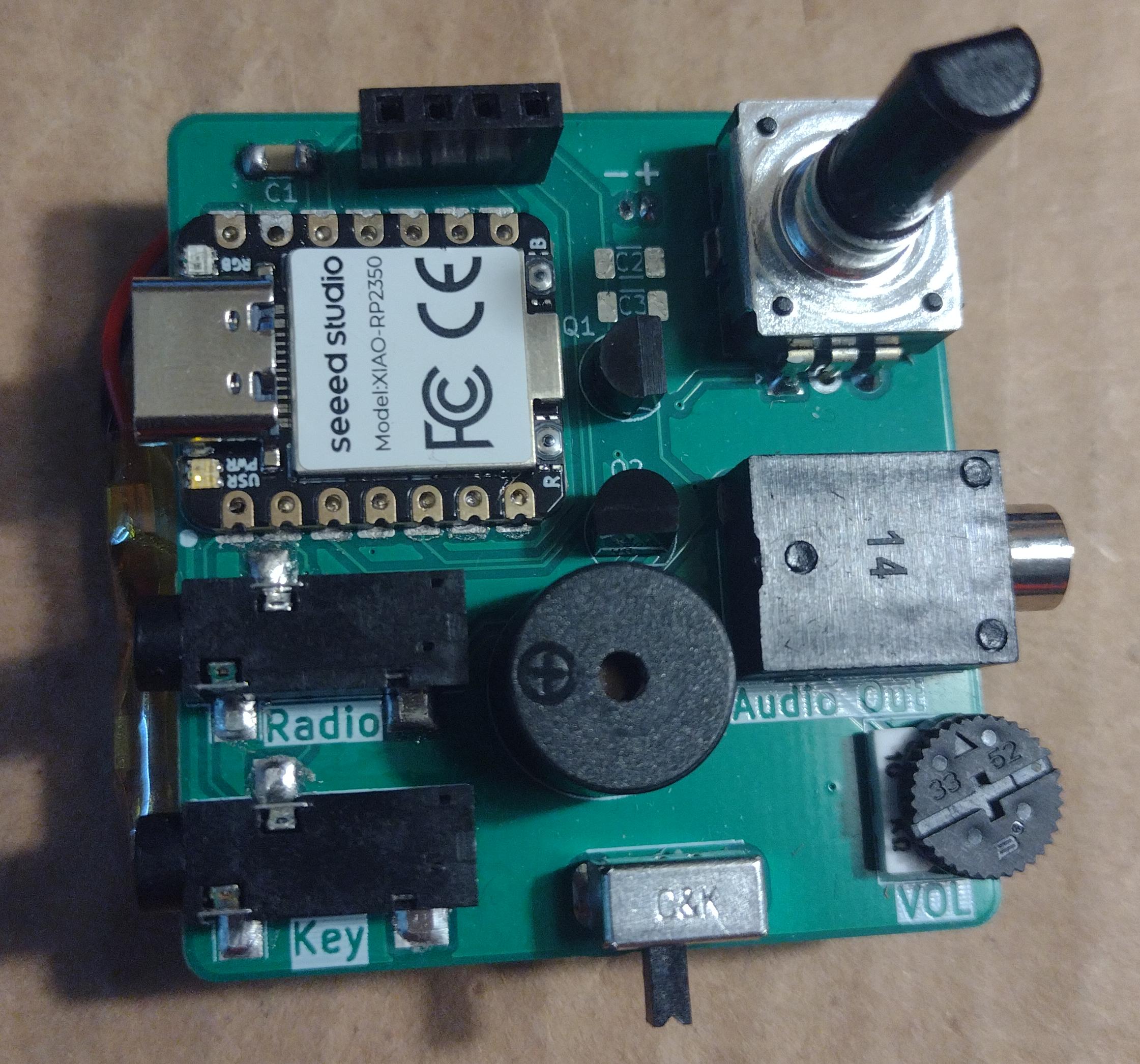
Alt text Alt text Alt text Alt text Alt text


The Micro Keyer is a small morse code keyer that can be used as a practice oscillator and computer keyer. It supports Iambic A, Iambic B, bug emulation, and straight key keying modes.

We will start selling the Micro Keyer on grilled-cheese-engineering.com soon. We will probably offer both a kit version and a pre-assembled version.

If you want to build it yourself then you can get the parts from DigiKey. You can also view the bill of materials here


Usage:


  • You can clear the decoded text by holding the knob down for 2 seconds.
  • You can put the micro keyer in to firmware flashing mode my holding down the knob while turning it on. (V1.1 Board only)

  • Menu:

    • Speed: Sending speed in words per minute.
    • Tone: Audio tone for sending in hetrz. (It may not sound exactly right on the built in buzzer compared to a real speaker.)
    • Mode:
      1. Iambic A: This is for a morse code paddle and it sends exactly what you are holding once the current element finishes being sent.
      2. Iambic B: This is for a morse code paddle and it has a memory for what has been pressed so for if you press the dit side during a dah and let go of the paddle then it will send a dit once it finishes the dah.
      3. Stright Key: This can be used with a straight key/bug or it can be used with a paddle to emulate a cootie. It sends only when the key is being pressed.
      4. Bug Emu: This is for using a paddle as a bug. It will automaticaly send dits at the set speed but the dah side will act as a straight key
    • Reverse: This reverses which side of the paddle is dit and which is dah.
    • Mute: This will mute the audio from both the built in buzzer and the head phone jack.
    • Serial: This will enable the ability to do computer keying over serial.
    • HID: This will enable the ability to use it as a USB keyboard.
    • MIDI: This will enable the ability to use it as a USB MIDI device.
    • Dumb MIDI: This disables some features and only puts out the paddle state over midi. (Experimental)
    • Flash Firmware: This puts the device into boot mode to allow for firmware flashing. It will appear on a computer as a USB mass storage device. To flash the firmware just copy the .UF2 firmware file onto it.

Version Notes:

  • V1.0 Board:
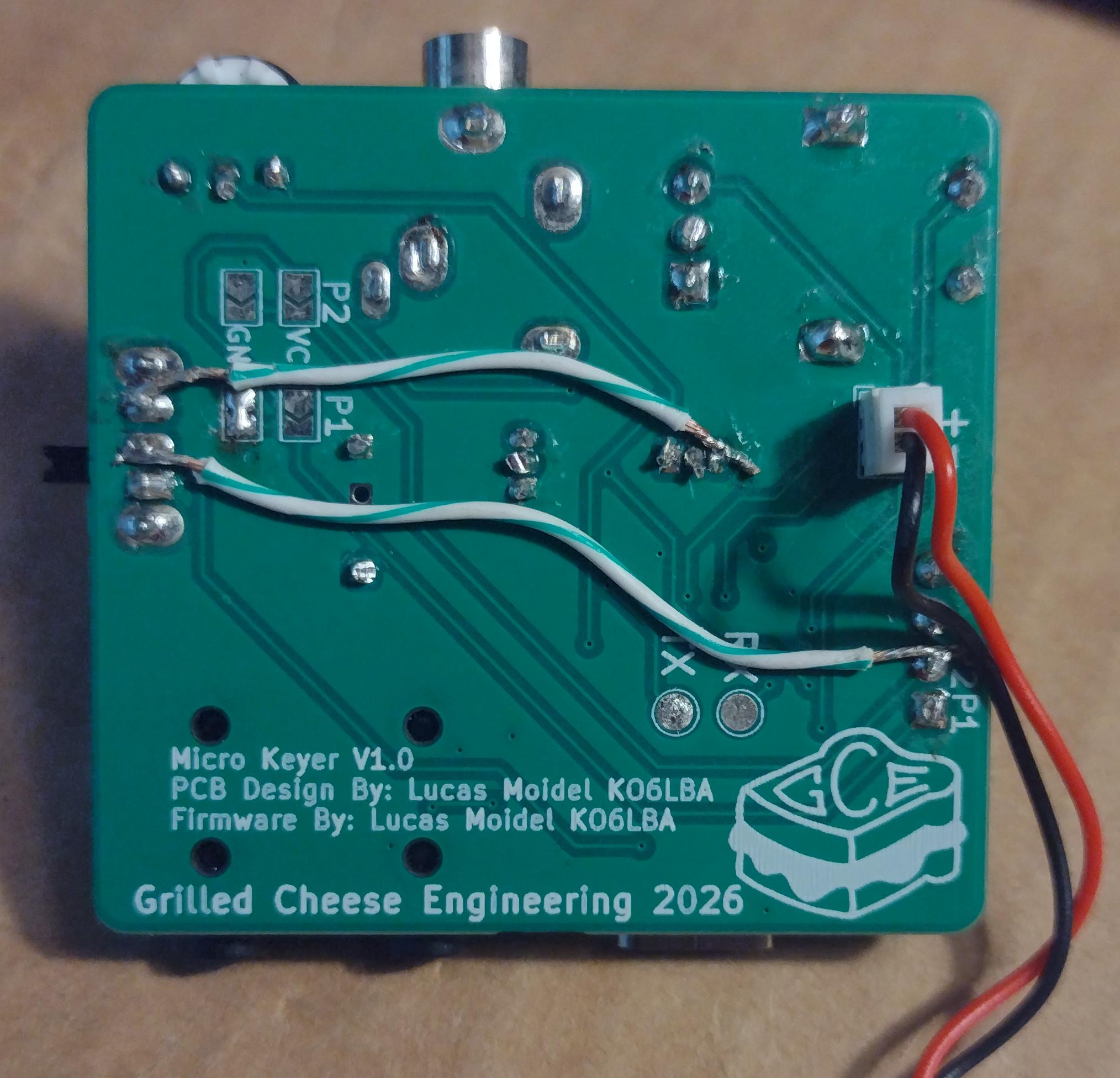
    There is a problem with the V1.0 board where the display does not turn off when the device is turned off with the power switch.
    Fix:
    1. Do not solder the jumper pad that connects the display to power.
    2. Connect a jumper wire between top leg of Q1 (3V) to the left side of the power switch.
    3. Solder a wire from the center pin of the switch to the power pin on the display.
    (Note: the two side pins on the switch are not connected to anything so it is okay if the jumper wire is making contact with them.)

    Alt text
  • V1.1 Board:
    This version has not been ordered yet but it will have the following improvements:
    • Slightly shorter board.
    • More sturdy 3.5mm jacks for the radio and keyer ports.
    • Have the ability to put it into flashing mode by holding down the knob while turning it on.

    Alt text

Parts

13
QtyValueFootprintReferences
12N3904Package_TO_SOT_THT:TO-92_InlineQ1
1Audio Jackaudio_connector:Jack_3.5mm_CUI_SJ1-3515N_Horizontal_RENAMEJ2
1BOOT PTTestPoint:TestPoint_Pad_D2.0mmBT1
1BuzzerBuzzer_Beeper:Buzzer_TDK_PS1240P02BT_D12.2mm_H6.5mmBZ1
1Conn_01x02connector_battery:Molex_PicoBlade_53047-0210_1x02_P1.25mm_VerticalJ1
1EN PTTestPoint:TestPoint_Pad_D2.0mmEN1
1GND PTTestPoint:TestPoint_Pad_D2.0mmGND1
1Keyer Jackaudio_connector:Jack_3.5mm_CUI_SJ1-3515N_Horizontal_RENAMEJ3
1SW_PushButton_Switch_THT:SW_PUSH_6mmSW1
1SW_SP3Tsk-13D08-G-5-E:sk-13D08-G-5-ESW2
1Vol Knobpot:Potentiometer_Alps_RK09K_Single_Horizontal_MODELRV1
1XIAO-RP2350-SMDSeeed_Studio_XIAO_Series:XIAO-RP2350-SMD-MODELU1
1~ssd1306:ssd1306_i2c_displaySSD1

More from Grilled-Cheese-Engineering/micro-keyer

3
  • 2 layers44.5 × 43.3 mmMicro keyer, the printed circuit board in 3D

    Micro keyer

    Grilled-Cheese-Engineering/micro-keyer

    The Micro Keyer is a small morse code keyer that can be used as a practice oscillator and computer keyer.

    20 parts2GPL-3.0
  • 2 layers44 × 48 mmMicro keyer, the printed circuit board in 3D

    Micro keyer

    Grilled-Cheese-Engineering/micro-keyer

    The Micro Keyer is a small morse code keyer that can be used as a practice oscillator and computer keyer.

    16 parts2GPL-3.0
  • 2 layersMicro keyer, the printed circuit board in 3D

    Micro keyer

    Grilled-Cheese-Engineering/micro-keyer

    The Micro Keyer is a small morse code keyer that can be used as a practice oscillator and computer keyer.

    7 parts2GPL-3.0

Similar boards

  • 2 layers40 × 20 mmUsb uart, the printed circuit board in 3D

    Usb uart

    earthtojake/text-to-cad

    Design physical products with AI

    13 parts26kMIT
  • 2 layers35 × 29 mmMagSpoofTC, the printed circuit board in 3D

    MagSpoofTC

    samyk/magspoof

    A portable device that can spoof/emulate any magnetic stripe, credit card or hotel card "wirelessly", even on standard magstripe (non-NFC/RFID) readers.

    13 parts4.2k
  • 2 layers20.6 × 23.6 mmAO-03 signal amplifier, the printed circuit board in 3D

    AO-03 signal amplifier

    fossasia/pslab-scripts

    Pocket Science Lab - Scripts for Sensor Experiments

    13 parts1.6kApache-2.0
  • 2 layers47 × 35.6 mmMX7-C-35PL C11, the printed circuit board in 3D

    MX7-C-35PL C11

    rusefi/rusefi

    rusefi - GPL internal combustion engine control unit

    13 parts1.2k
  • 2 layers95 × 95 mmCube batteryboard, the printed circuit board in 3D

    Cube batteryboard

    willem-pennings/balancing-cube

    A cube that balances itself in a corner or edge using reaction wheels

    13 parts1.1kGPL-3.0
  • 2 layers15.2 × 20.3 mmPt100stick, the printed circuit board in 3D

    Pt100stick

    VoronDesign/Voron-Hardware

    Cool Hardware designed by the Voron Design group

    13 parts1.1kGPL-3.0
  • 2 layers53.9 × 23.2 mmBuffer, the printed circuit board in 3D

    Buffer

    hoglet67/RGBtoHDMI

    Bare-metal Raspberry Pi project that provides pixel-perfect sampling of Retro Computer RGB/YUV video and conversion to HDMI

    13 parts1kGPL-3.0

Questions

How big is the Micro keyer PCB?

It measures 44 × 44.6 mm and has 2 copper layers, 1.6 mm thick.

What parts does the Micro keyer use?

13 parts. The full list of its parts is on this page, with links to each part's symbol and footprint where PCBKit's library has them.

Where can I download the Micro keyer KiCad files?

From the Grilled-Cheese-Engineering/micro-keyer repository on GitHub, at the commit this page was made from: the board is pcb/_restore_backup_2026-08-08T14-41-55-076/micro-keyer.kicad_pcb and its schematic pcb/_restore_backup_2026-08-08T10-38-05-555/micro-keyer.kicad_sch. PCBKit opens the board in the browser, with nothing to install.

Can I use the Micro keyer design in my own project?

Its repository publishes it under the GPL-3.0 licence: you may reuse it on that licence's terms (keep the author's notice, and for a copyleft licence share your changes alike).