Skip to the content
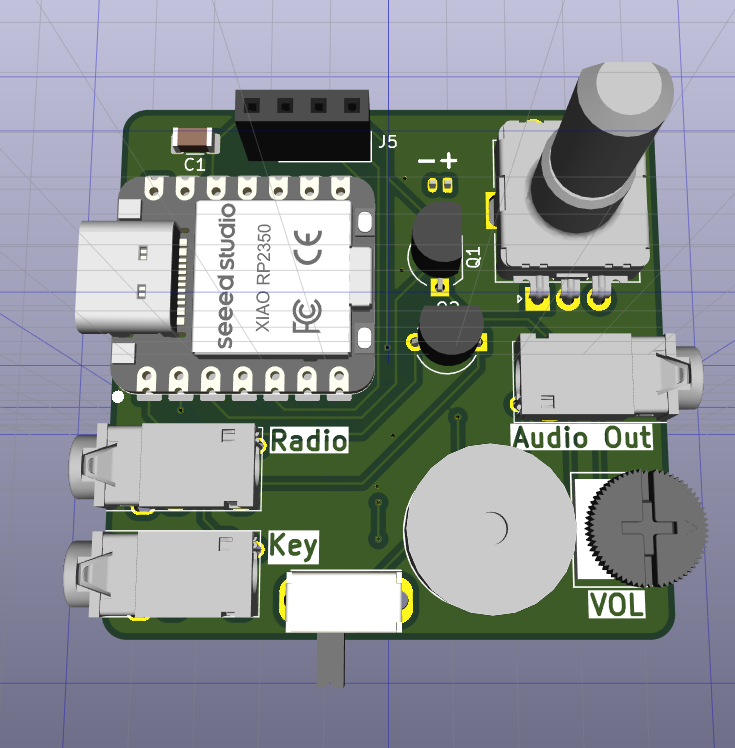
2 layersMicro keyer, the printed circuit board in 3D

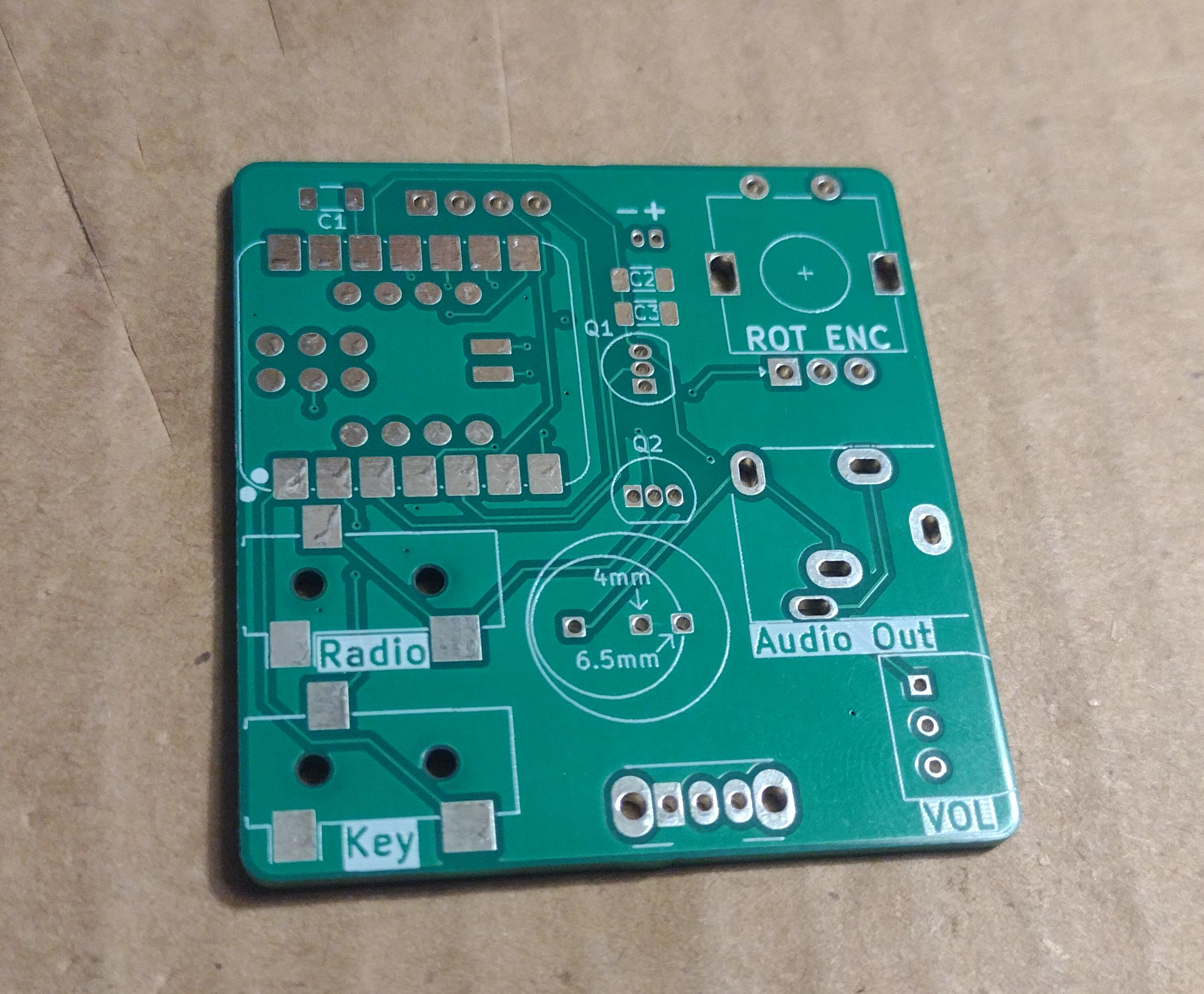
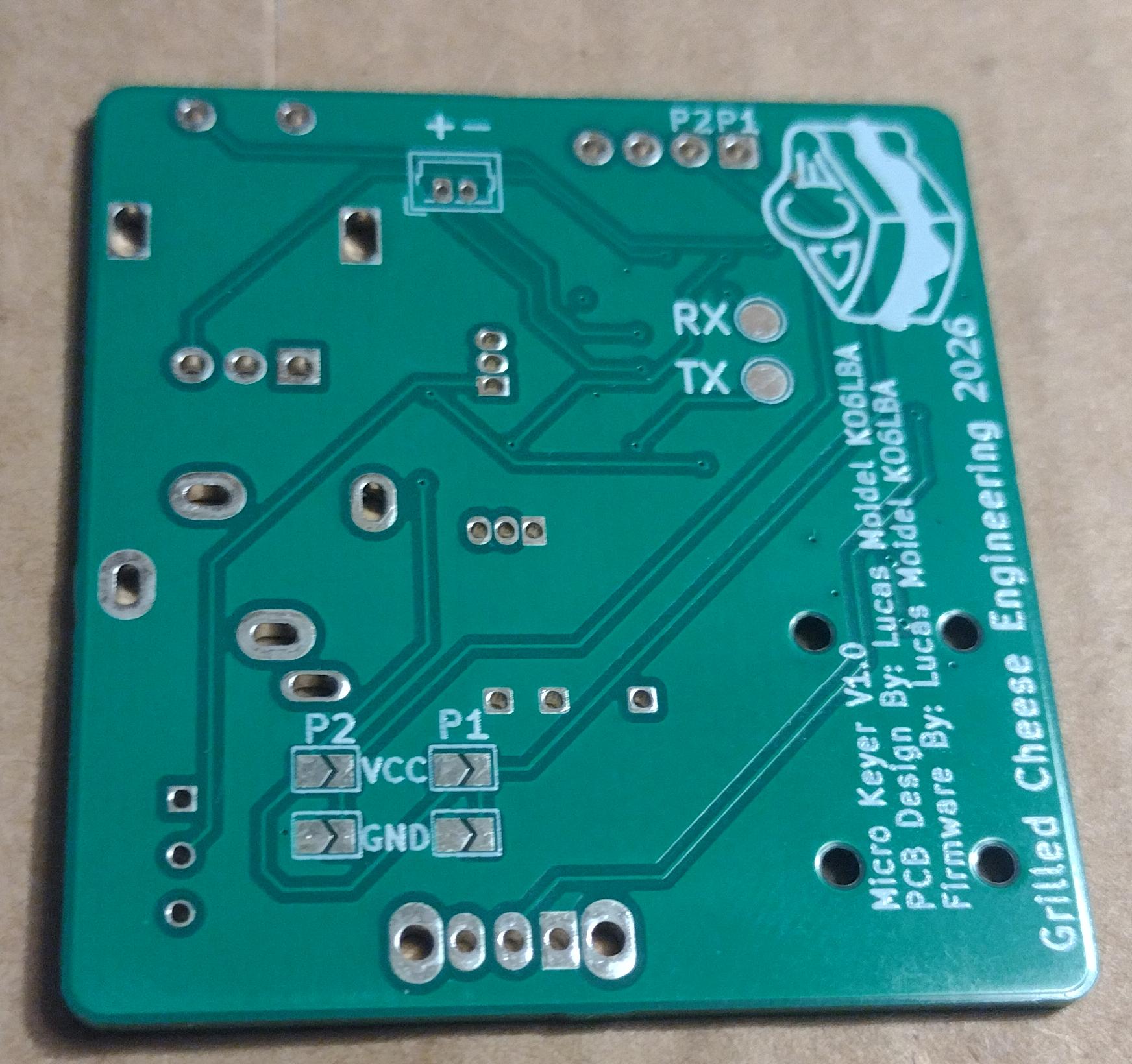
The Micro Keyer is a small morse code keyer that can be used as a practice oscillator and computer keyer.

Copper layers
2
Thickness
1.6 mm
Parts
7
Nets
34
Pads
51
Tracks, vias
0, 0
Routed
Not yet
KiCad
KiCad 10.0 (file 20260206)
Created
8 Aug 2026
Updated
7 Nov 2026

Overview

Micro keyer is an open-source printed circuit board by Grilled-Cheese-Engineering, from the Grilled-Cheese-Engineering/micro-keyer repository on GitHub, published under the GPL-3.0 licence. It is a 2-layer board with 7 parts on 34 nets.

Its parts include 3 connectors, 1 IC and 1 transistor. It belongs with the RP2350 boards of this library.

README

README.md

Micro Keyer

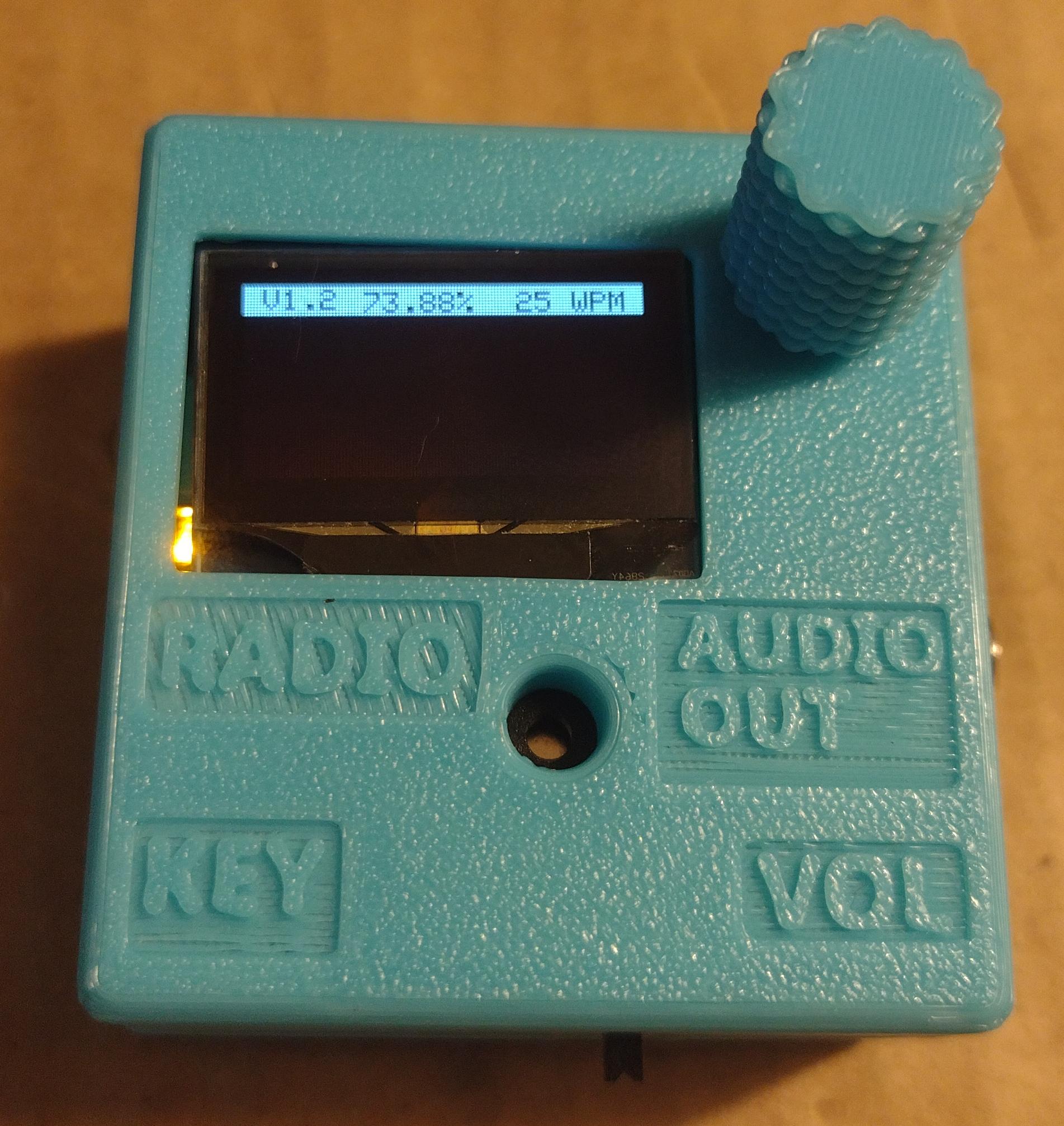
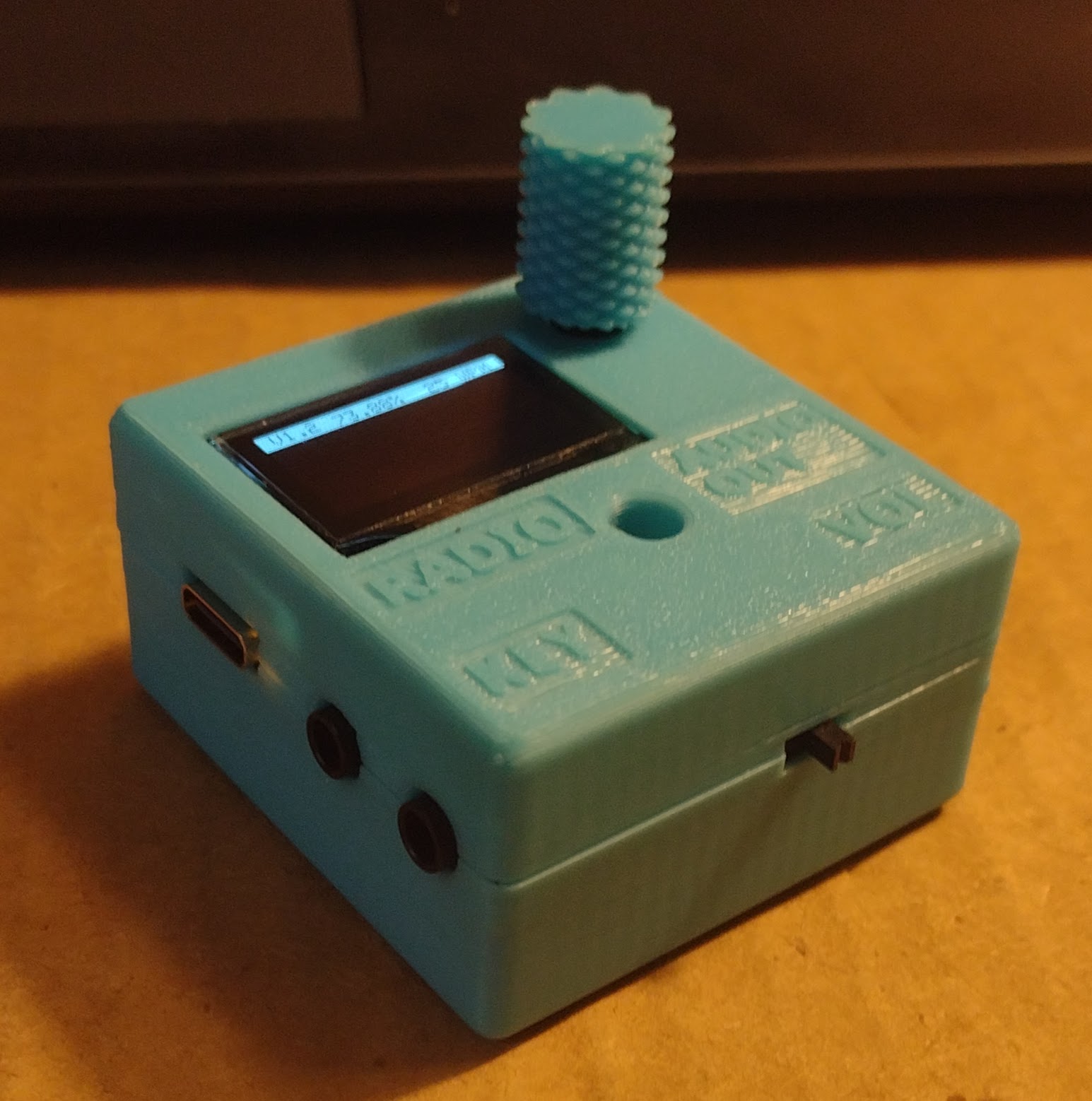
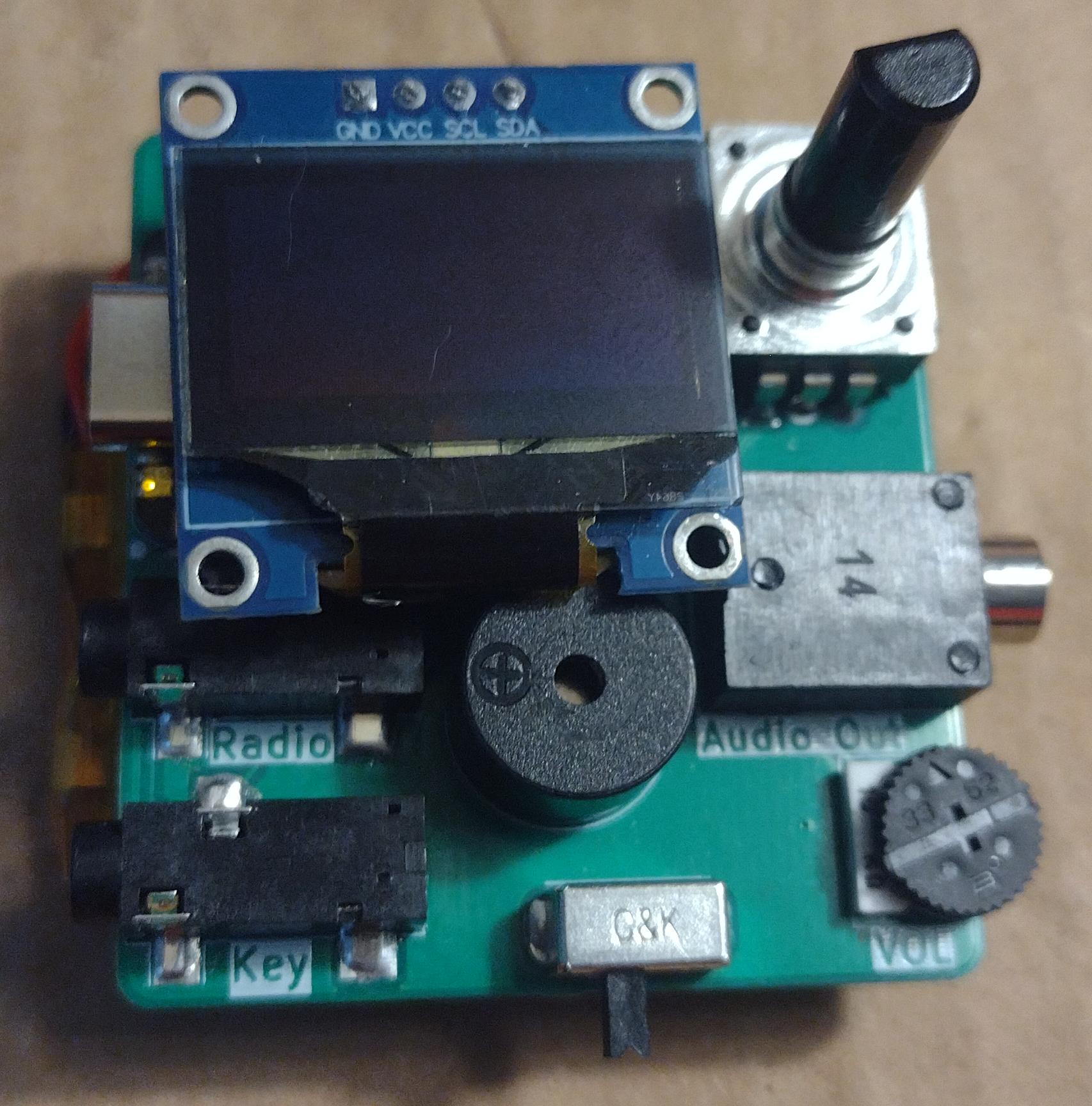
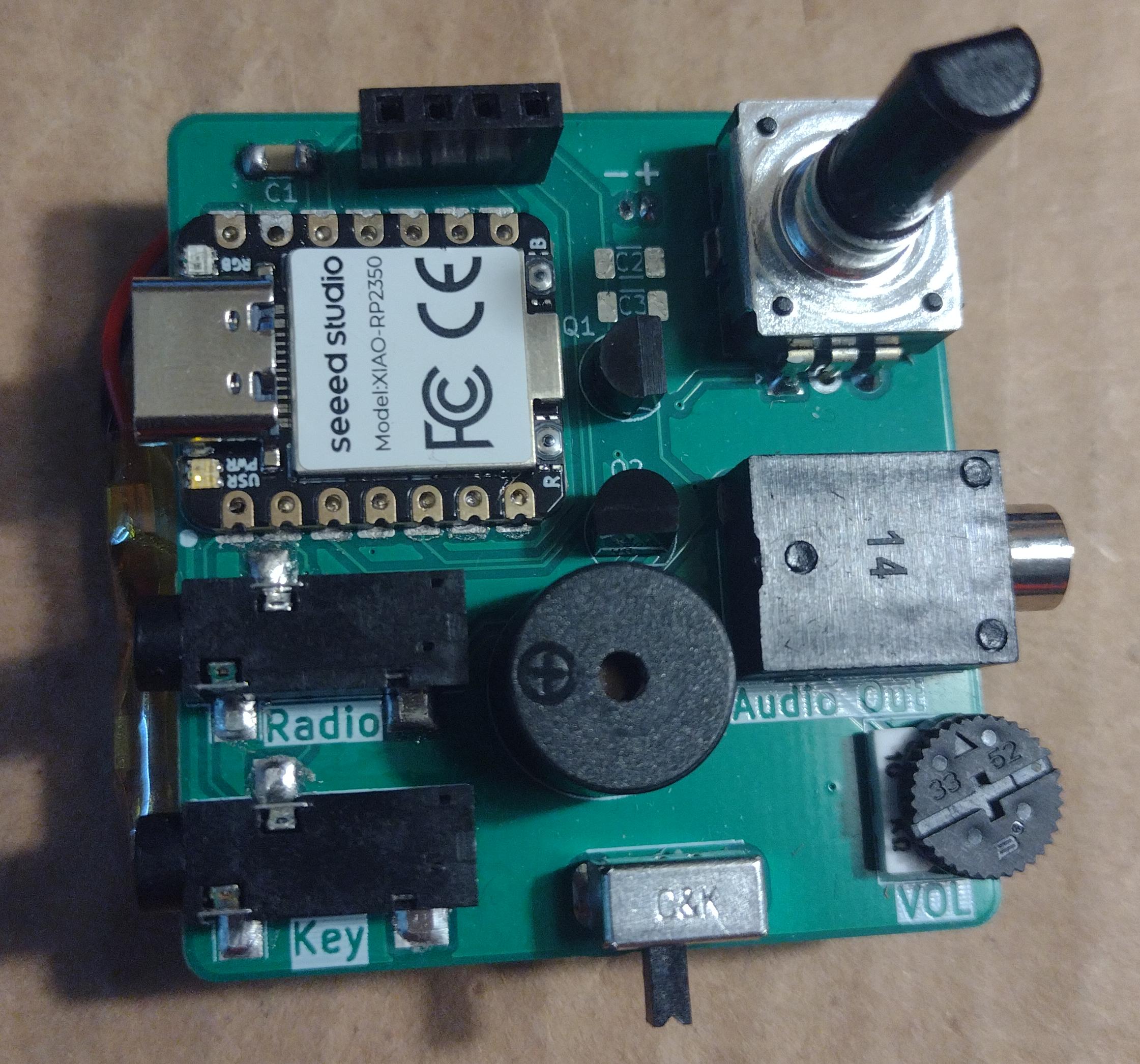
Alt text Alt text
Alt text Alt text Alt text Alt text Alt text


The Micro Keyer is a small morse code keyer that can be used as a practice oscillator and computer keyer. It supports Iambic A, Iambic B, bug emulation, and straight key keying modes.

We will start selling the Micro Keyer on grilled-cheese-engineering.com soon. We will probably offer both a kit version and a pre-assembled version.

If you want to build it yourself then you can get the parts from DigiKey. You can also view the bill of materials here


Usage:


  • You can clear the decoded text by holding the knob down for 2 seconds.
  • You can put the micro keyer in to firmware flashing mode my holding down the knob while turning it on. (V1.1 Board only)

  • Menu:

    • Speed: Sending speed in words per minute.
    • Tone: Audio tone for sending in hetrz. (It may not sound exactly right on the built in buzzer compared to a real speaker.)
    • Mode:
      1. Iambic A: This is for a morse code paddle and it sends exactly what you are holding once the current element finishes being sent.
      2. Iambic B: This is for a morse code paddle and it has a memory for what has been pressed so for if you press the dit side during a dah and let go of the paddle then it will send a dit once it finishes the dah.
      3. Stright Key: This can be used with a straight key/bug or it can be used with a paddle to emulate a cootie. It sends only when the key is being pressed.
      4. Bug Emu: This is for using a paddle as a bug. It will automaticaly send dits at the set speed but the dah side will act as a straight key
    • Reverse: This reverses which side of the paddle is dit and which is dah.
    • Mute: This will mute the audio from both the built in buzzer and the head phone jack.
    • Serial: This will enable the ability to do computer keying over serial.
    • HID: This will enable the ability to use it as a USB keyboard.
    • MIDI: This will enable the ability to use it as a USB MIDI device.
    • Dumb MIDI: This disables some features and only puts out the paddle state over midi. (Experimental)
    • Flash Firmware: This puts the device into boot mode to allow for firmware flashing. It will appear on a computer as a USB mass storage device. To flash the firmware just copy the .UF2 firmware file onto it.

Version Notes:

  • V1.0 Board:
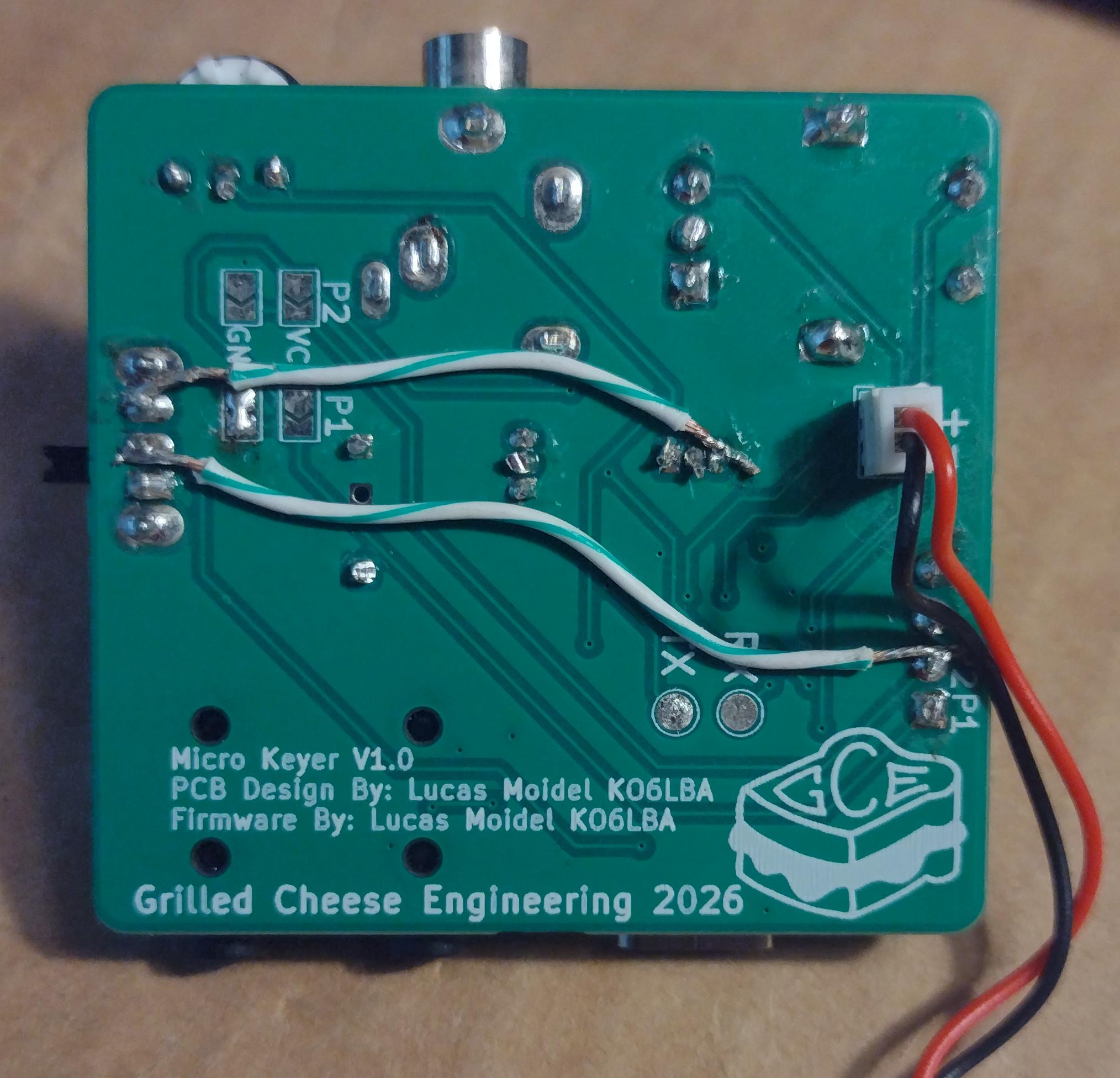
    There is a problem with the V1.0 board where the display does not turn off when the device is turned off with the power switch.
    Fix:
    1. Do not solder the jumper pad that connects the display to power.
    2. Connect a jumper wire between top leg of Q1 (3V) to the left side of the power switch.
    3. Solder a wire from the center pin of the switch to the power pin on the display.
    (Note: the two side pins on the switch are not connected to anything so it is okay if the jumper wire is making contact with them.)

    Alt text
  • V1.1 Board:
    This version has not been ordered yet but it will have the following improvements:
    • Slightly shorter board.
    • More sturdy 3.5mm jacks for the radio and keyer ports.
    • Have the ability to put it into flashing mode by holding down the knob while turning it on.

    Alt text

Parts

7
QtyValueFootprintReferences
12N3904Package_TO_SOT_THT:TO-92_InlineQ1
1Audio Jackaudio_connector:Jack_3.5mm_CUI_SJ1-3515N_Horizontal_RENAMEJ2
1BuzzerBuzzer_Beeper:Buzzer_TDK_PS1240P02BT_D12.2mm_H6.5mmBZ1
1Conn_01x02Connector_Molex:Molex_PicoBlade_53047-0210_1x02_P1.25mm_VerticalJ1
1Keyer Jackaudio_connector:Jack_3.5mm_CUI_SJ1-3515N_Horizontal_RENAMEJ3
1XIAO-RP2350-SMDSeeed_Studio_XIAO_Series:XIAO-RP2350-SMD-MODELU1
1~ssd1306:ssd1306_i2c_displaySSD1

More from Grilled-Cheese-Engineering/micro-keyer

3
  • 2 layers44.5 × 43.3 mmMicro keyer, the printed circuit board in 3D

    Micro keyer

    Grilled-Cheese-Engineering/micro-keyer

    The Micro Keyer is a small morse code keyer that can be used as a practice oscillator and computer keyer.

    20 parts2GPL-3.0
  • 2 layers44 × 48 mmMicro keyer, the printed circuit board in 3D

    Micro keyer

    Grilled-Cheese-Engineering/micro-keyer

    The Micro Keyer is a small morse code keyer that can be used as a practice oscillator and computer keyer.

    16 parts2GPL-3.0
  • 2 layers44 × 44.6 mmMicro keyer, the printed circuit board in 3D

    Micro keyer

    Grilled-Cheese-Engineering/micro-keyer

    The Micro Keyer is a small morse code keyer that can be used as a practice oscillator and computer keyer.

    13 parts2GPL-3.0

Similar boards

  • 2 layersEncoder, the printed circuit board in 3D

    Encoder

    byrantech/laptop

    anyon_e, a highly integrated, high end, open source laptop. Attempt the impossible.

    7 parts4.3kMIT
  • 2 layers40 × 20 mmSensor smd, the printed circuit board in 3D

    Sensor smd

    scottbez1/splitflap

    DIY split-flap display

    7 parts4.2k
  • 2 layers19.8 × 30 mmZ limit, the printed circuit board in 3D

    Z limit

    opulo-inc/lumenpnp

    The LumenPnP is an open source pick and place machine.

    7 parts3.7k
  • 2 layers35.6 × 58.2 mmDisplay Carrier, the printed circuit board in 3D

    Display Carrier

    AxxAxx/AxxSolder

    STM32 Based soldering station for JBC cartridges, 9-24 VDC and USB-PD power

    7 parts1.7kGPL-3.0
  • 2 layers20.3 × 16.3 mmMap MPX, the printed circuit board in 3D

    Map MPX

    rusefi/rusefi

    rusefi - GPL internal combustion engine control unit

    7 parts1.2k
  • 2 layers26 × 44 mmCompact carrier board, the printed circuit board in 3D

    Compact carrier board

    jamro/tiny-engineer

    A small desktop robot that brings an AI coding assistant to life, physically acting out when it reads files, thinks, writes code, and finishes work.

    7 parts1.1k
  • 2 layers26.4 × 53.8 mmAtari pickup, the printed circuit board in 3D

    Atari pickup

    hoglet67/RGBtoHDMI

    Bare-metal Raspberry Pi project that provides pixel-perfect sampling of Retro Computer RGB/YUV video and conversion to HDMI

    7 parts1kGPL-3.0
  • 2 layersRj45 breakout, the printed circuit board in 3D

    Rj45 breakout

    rene-dev/stmbl

    AC Servo Driver for STM32F4

    7 parts990GPL-3.0

Questions

What parts does the Micro keyer use?

7 parts. The full list of its parts is on this page, with links to each part's symbol and footprint where PCBKit's library has them.

Where can I download the Micro keyer KiCad files?

From the Grilled-Cheese-Engineering/micro-keyer repository on GitHub, at the commit this page was made from: the board is pcb/_restore_backup_2026-08-08T10-38-05-555/micro-keyer.kicad_pcb and its schematic pcb/_restore_backup_2026-08-08T10-38-05-555/micro-keyer.kicad_sch. PCBKit opens the board in the browser, with nothing to install.

Can I use the Micro keyer design in my own project?

Its repository publishes it under the GPL-3.0 licence: you may reuse it on that licence's terms (keep the author's notice, and for a copyleft licence share your changes alike).