2 layers50 × 50 mm

 fgervais/detergent-dispenser1
Dispense a specific amount of detergent
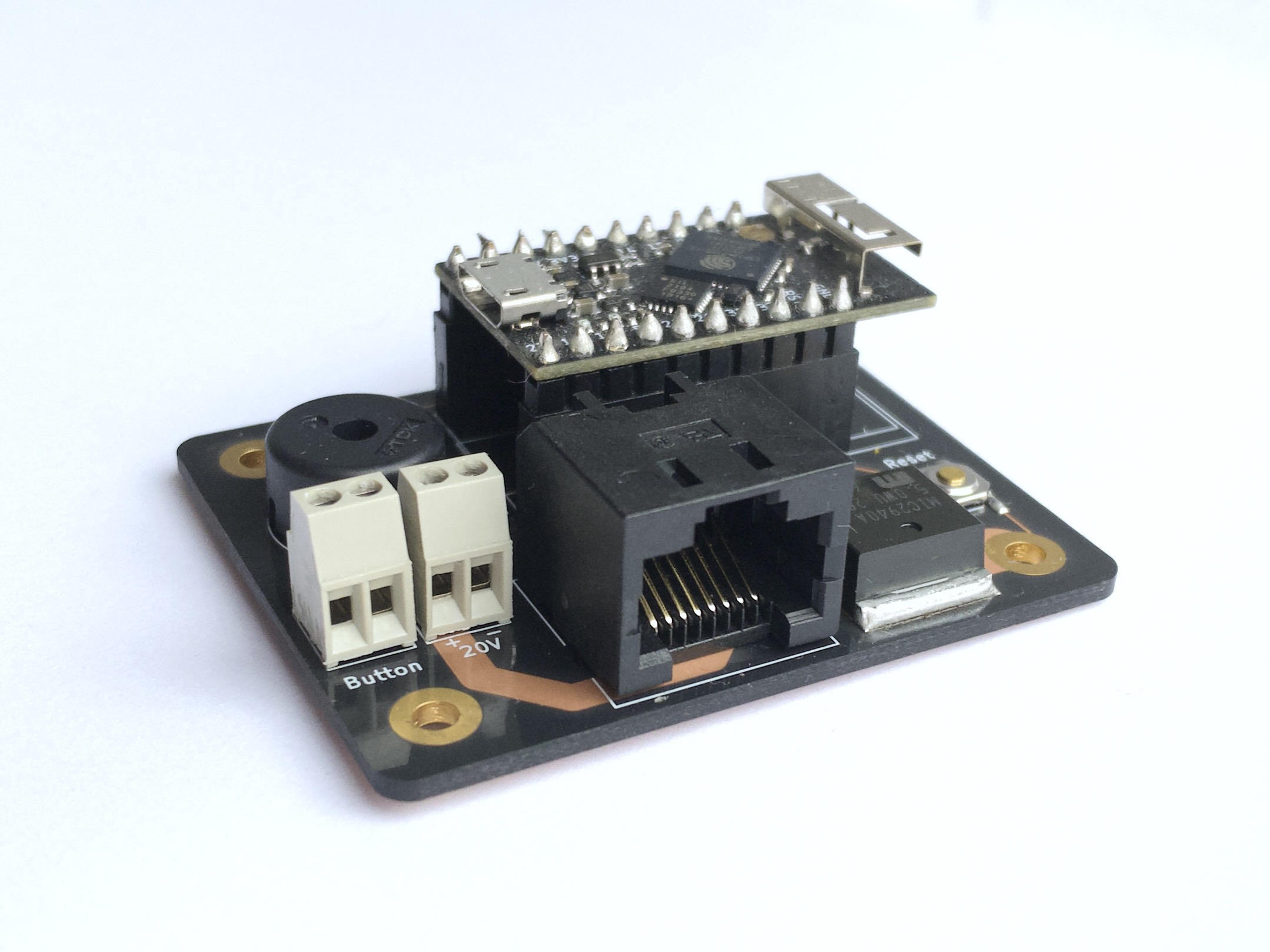
Detergent dispenser is an open-source printed circuit board by fgervais, from the fgervais/detergent-dispenser repository on GitHub. It is a 2-layer board of 53.3 × 43.2 mm with 12 parts on 21 nets, routed with 56 tracks and 2 vias.
It is built around the MIC2940A-5.0WU and PS1240P02BT. Its parts include 3 connectors, 1 resistor, 1 IC and 1 switch.

HE laundry detergent is quite concentrated and front loading washing machines use really little water. With those two factors put together, it's really easy to put too much detergent and so soap will be left even after the rinse cycle.
This project aim to automate the dispensing of a precise amount of detergent.
After holding the button for 1 seconds, the pump will dispense 7.5ml of detergent. This has been empirically determined to be the required amount for a small load on our dishwasher using our usual soap.
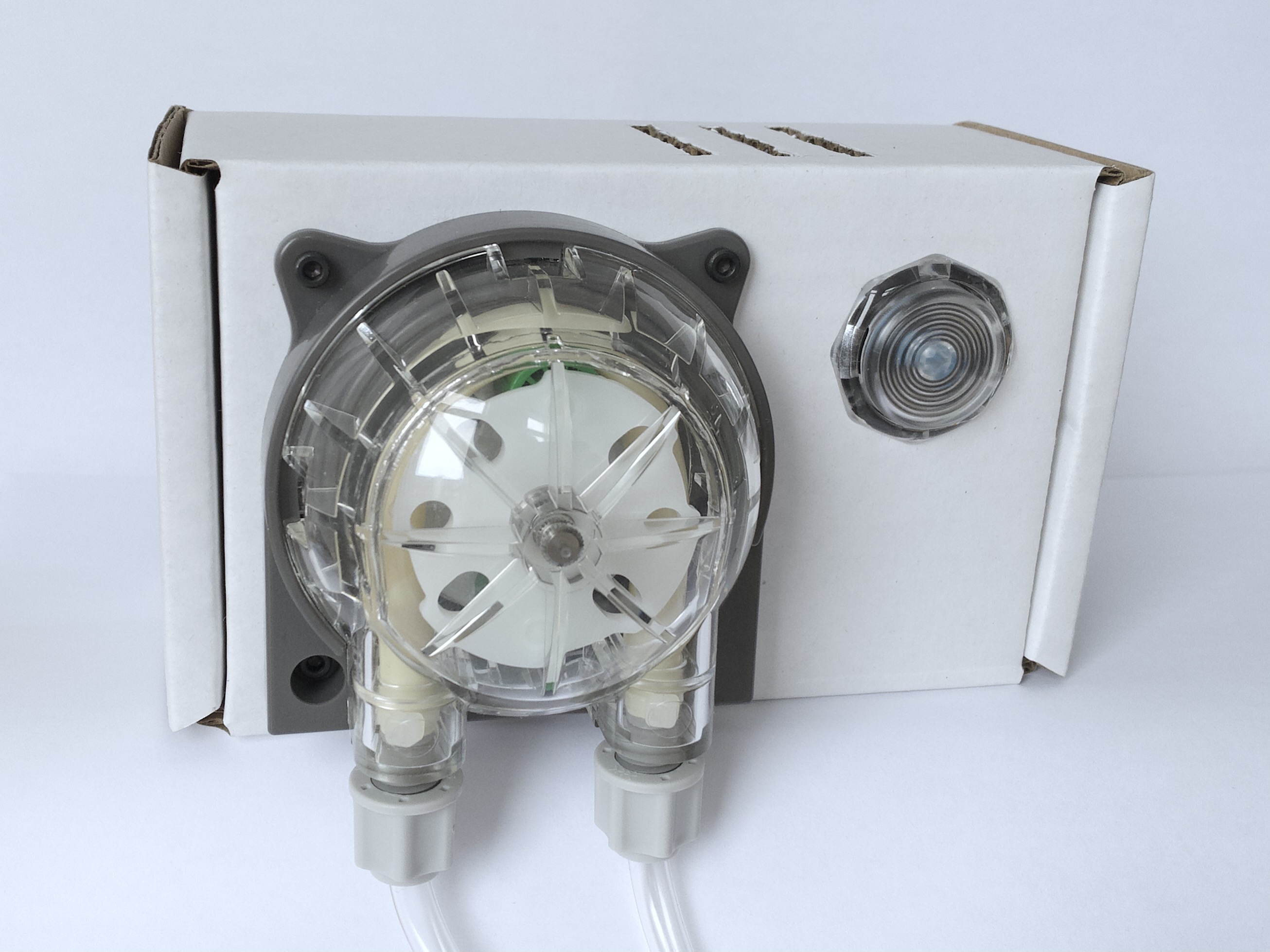
The pump feeds directly from the bottle.
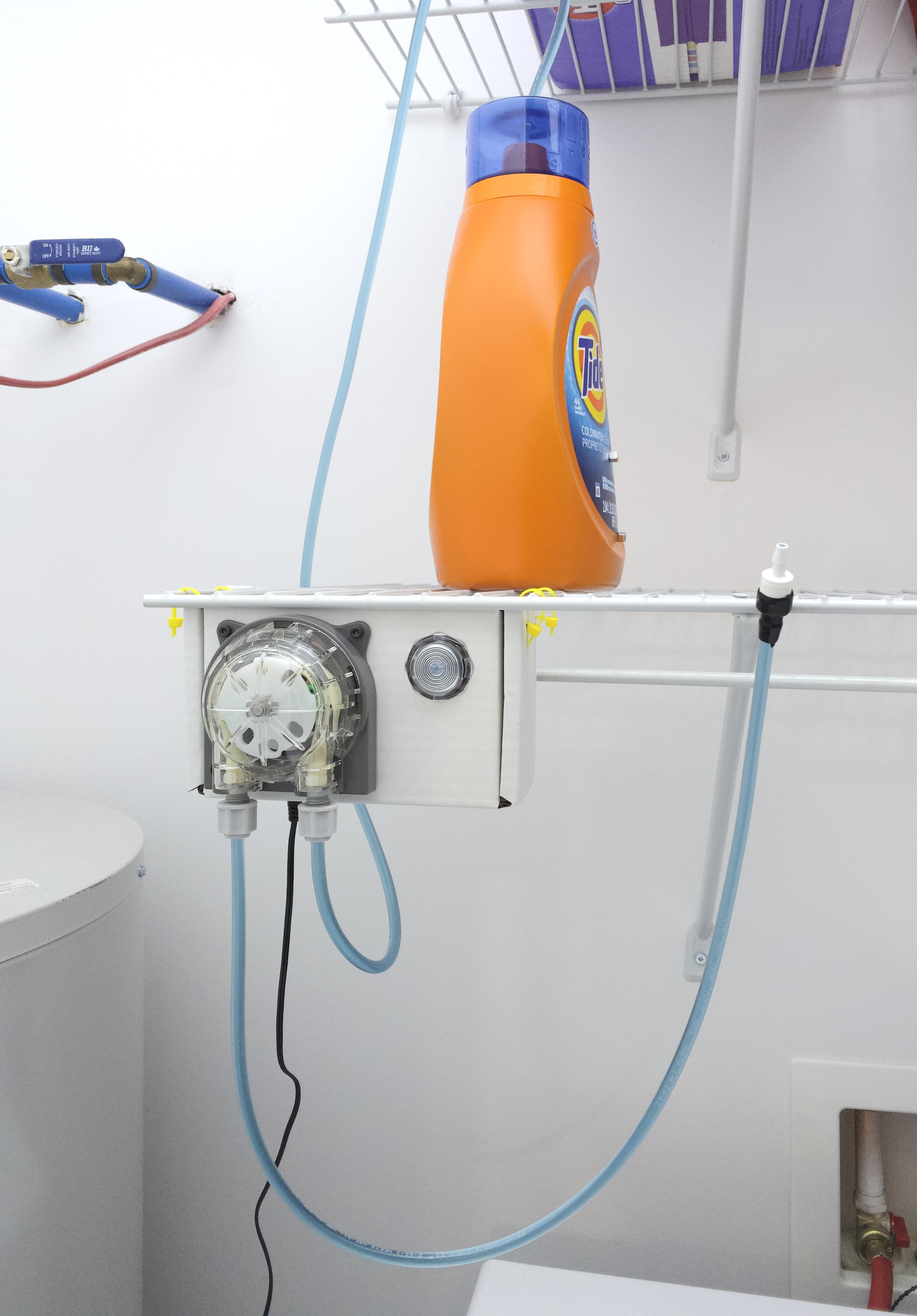
The bottle in this picture is rated for 44 loads but with the proper quantity determined for our specific case along with precise dispensing, we will get over 250 loads from this bottle.
(272 small loads of 7.5ml)
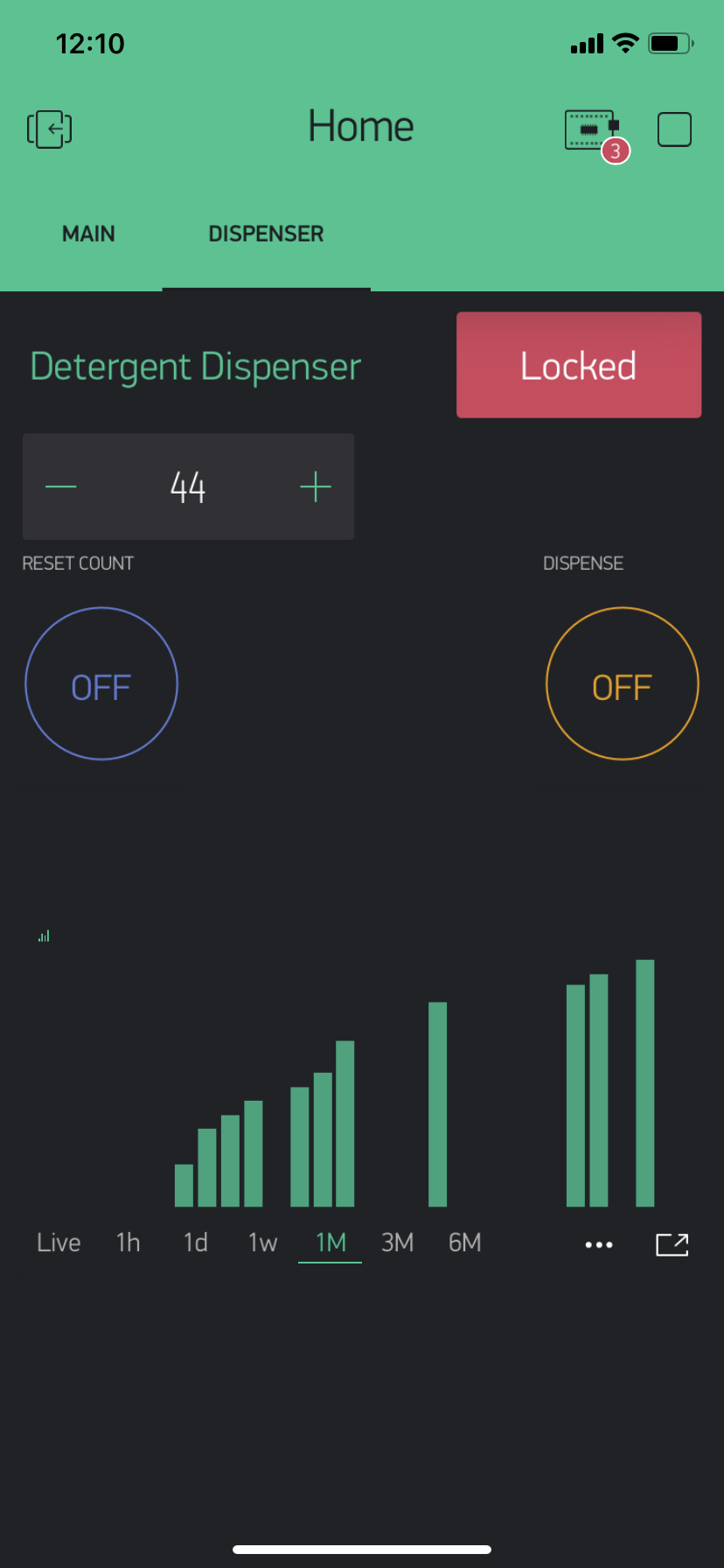
The app shows when a dispense occurred and keep a global count since last manual reset. It is also possible to start a dispense from the app.
All controls are locked by default and need to get unlocked through the lock/unlock button. Once unlocked, only a single action is allowed before controls are locked again automatically. This is to prevent unwanted counter reset or dispense.
A couple improvements could be done to this project.
The output of the dispenser could be permanently mounted to the washing machine soap compartment.
In normal mode, the esp32 uses quite a lot of power and this translates to a power regulator hovering just under 70C in normal operation. As the device does nothing most of the time, power management could be added so the regulator doesn't have to dissipate that much power.
The ground/power doesn't seem to be so stable on the board as touching the pins can sometime trigger a button press or a glitch on the pump sync signal. This doesn't seem to be too much of an issue when the device is assembled in the case.
| Qty | Value | Footprint | References |
|---|---|---|---|
| 4 | MountingHole_Pad | MountingHole:MountingHole_2.7mm_M2.5_Pad | H1, H2, H3, H4 |
| 1 | 10k | Capacitor_SMD:C_0603_1608Metric_Pad1.05x0.95mm_HandSolder | R1 |
| 1 | 20v Input | 1546215-2:TE_1546215-2 | J3 |
| 1 | MIC2940A-5.0WU | Package_TO_SOT_SMD:TO-263-3_TabPin2 | U1 |
| 1 | PS1240P02BT | PS1240P02BT:XDCR_PS1240P02BT | LS1 |
| 1 | RJ45 (Bartendro) | RJHSE-5080:AMPHENOL_RJHSE-5080 | J1 |
| 1 | Reset | Button_Switch_SMD:SW_SPST_TL3342 | SW1 |
| 1 | TINYPICO | tinypico-kicad-footprint:TINYPICO | XA1 |
| 1 | User Button | 1546215-2:TE_1546215-2 | J2 |

brown-studios/minuet
Minuet upgrades your MAXXAIR Maxxfan with a brushless DC motor, home automation features, and accessories.


walclu/smartReflow
Repository for STM32WB55 based reflow toaster oven controller.

PubInv/general-purpose-alarm-device
A general purpose alarm device (with software) as a module for medical devices (and others)

UBIEEE/FrankenMouse
FrankenMouse is a MicroMouse robot that was designed, built, and programmed from scratch by members of the University at Buffalo's IEEE Student Branch.

FOSSEE/FLOSS-Arduino-Book
Book on Microcontroller Programming with Arduino and FLOSS

Queens-Rocket-Engineering-Team/Avionics-23-26
QRET Avionics hardware, firmware, and documentation for 2023 to 2025.
It measures 53.3 × 43.2 mm and has 2 copper layers, 1.6 mm thick.
12 parts, built around the MIC2940A-5.0WU and PS1240P02BT. The full list of its parts is on this page, with links to each part's symbol and footprint where PCBKit's library has them.
From the fgervais/detergent-dispenser repository on GitHub, at the commit this page was made from: the board is hardware/pcb/detergent-dispenser.kicad_pcb. PCBKit opens the board in the browser, with nothing to install.
Its repository states no licence, so its author keeps all rights: ask fgervais before reusing the design.