

2 layers113.8 × 89.3 mm
Filo36-left
eduarbo/flan
Flan — a slim, modular wireless split keyboard family. Flan 36 is the first: 36 Piantor-derived keys. Open hardware prototype.
46 parts1GPL-3.0

 eduarbo/flan1
Flan — a slim, modular wireless split keyboard family. Flan 36 is the first: 36 Piantor-derived keys. Open hardware prototype.
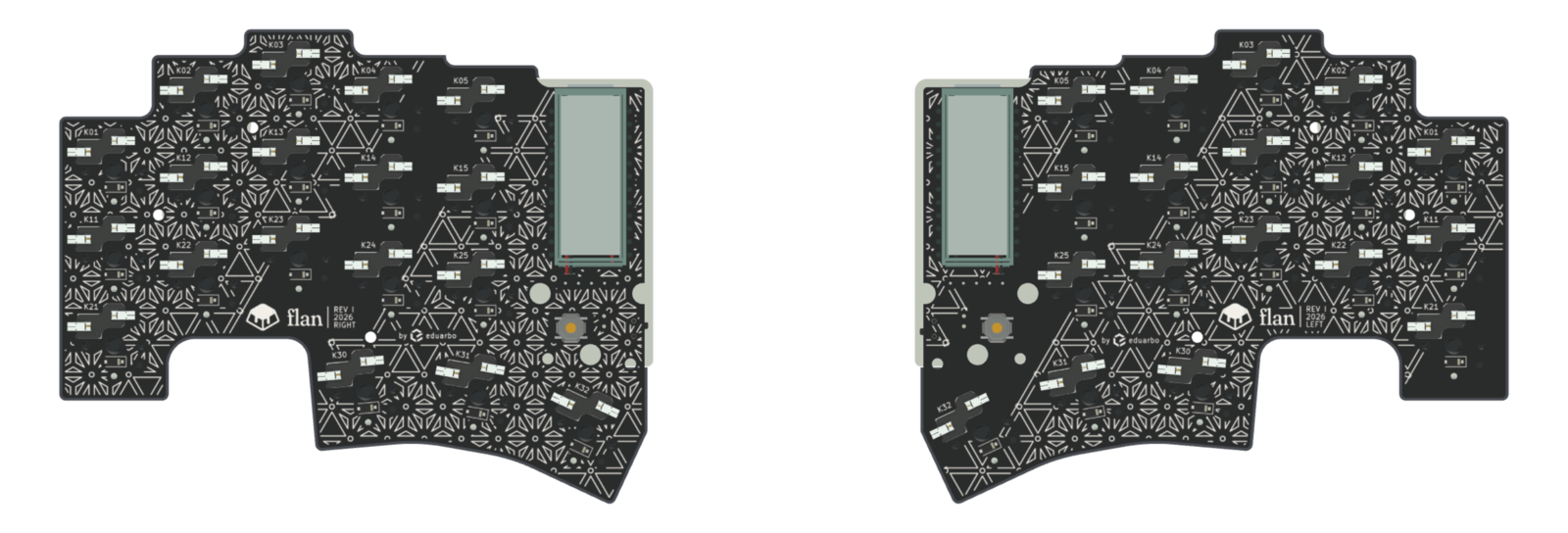
Flan46-left is an open-source printed circuit board by eduarbo, from the eduarbo/flan repository on GitHub, published under the GPL-3.0 licence. It is a 2-layer board of 113.4 × 108.3 mm with 57 parts on 48 nets, routed with 647 tracks and 45 vias.
It is built around the 1N4148W and PCM12SMTR. Its parts include 25 switches, 23 diodes, 2 connectors and 1 IC. It belongs with the keyboards and input boards and the nRF52 and nRF5x boards of this library.
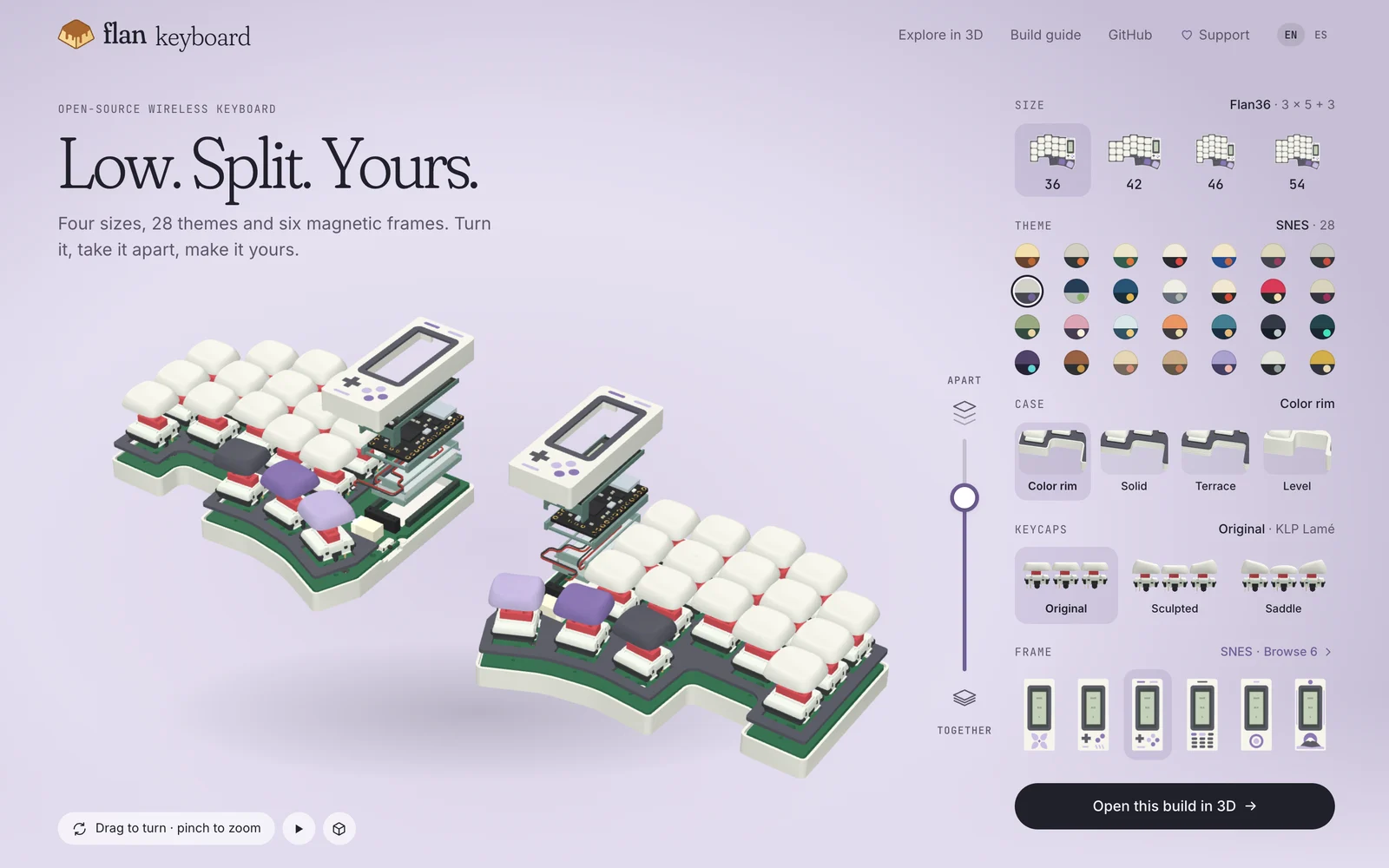
Low. Split. Yours. An open-source wireless split keyboard in four sizes, with interchangeable cases, magnetic display frames, 28 themes and your own keycap colors.
flankbd.com → · Explore and customize in 3D → · Parts and buying links → · Order PCBs → · Build guide → · Edit in FreeCAD →
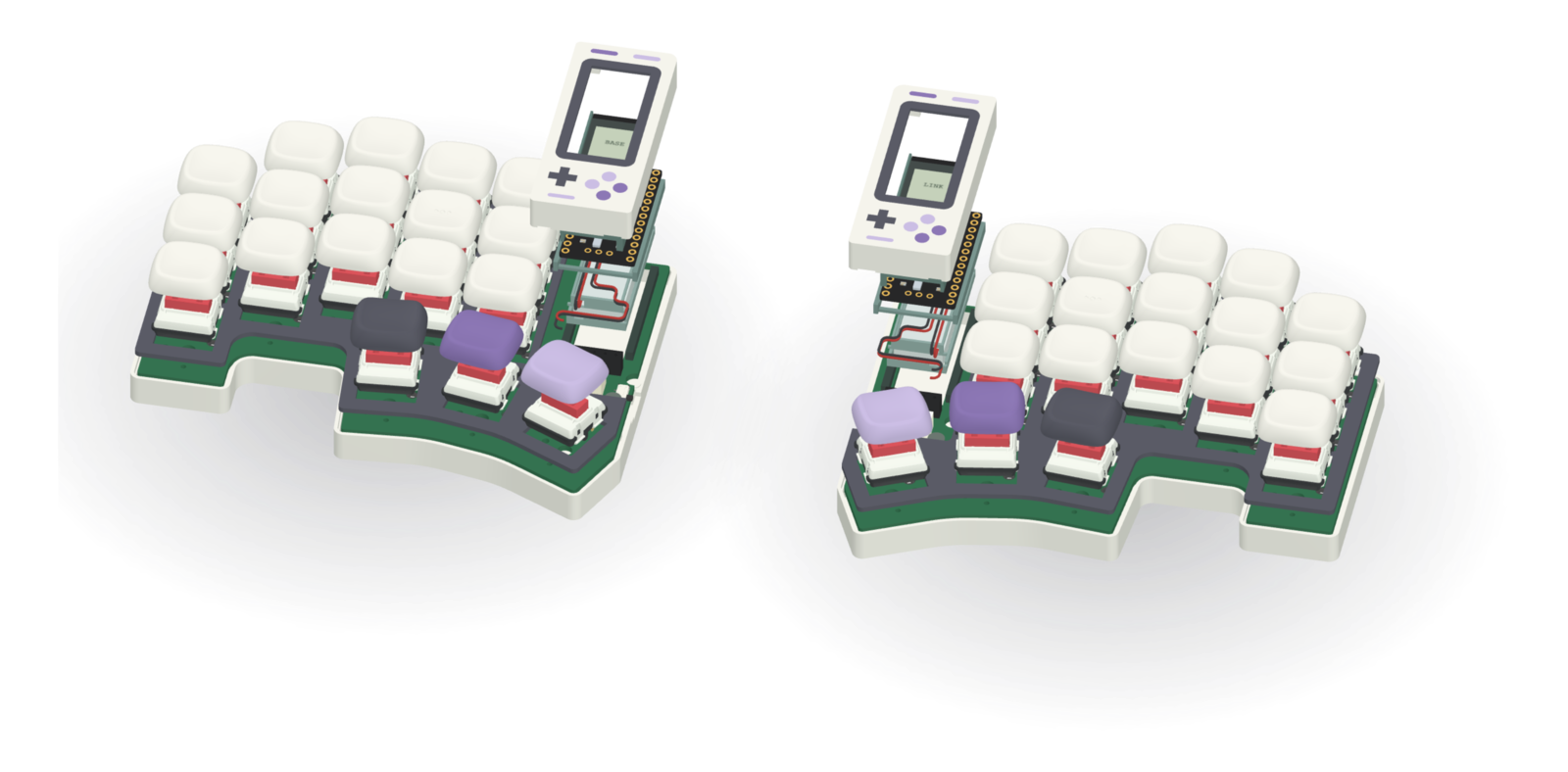
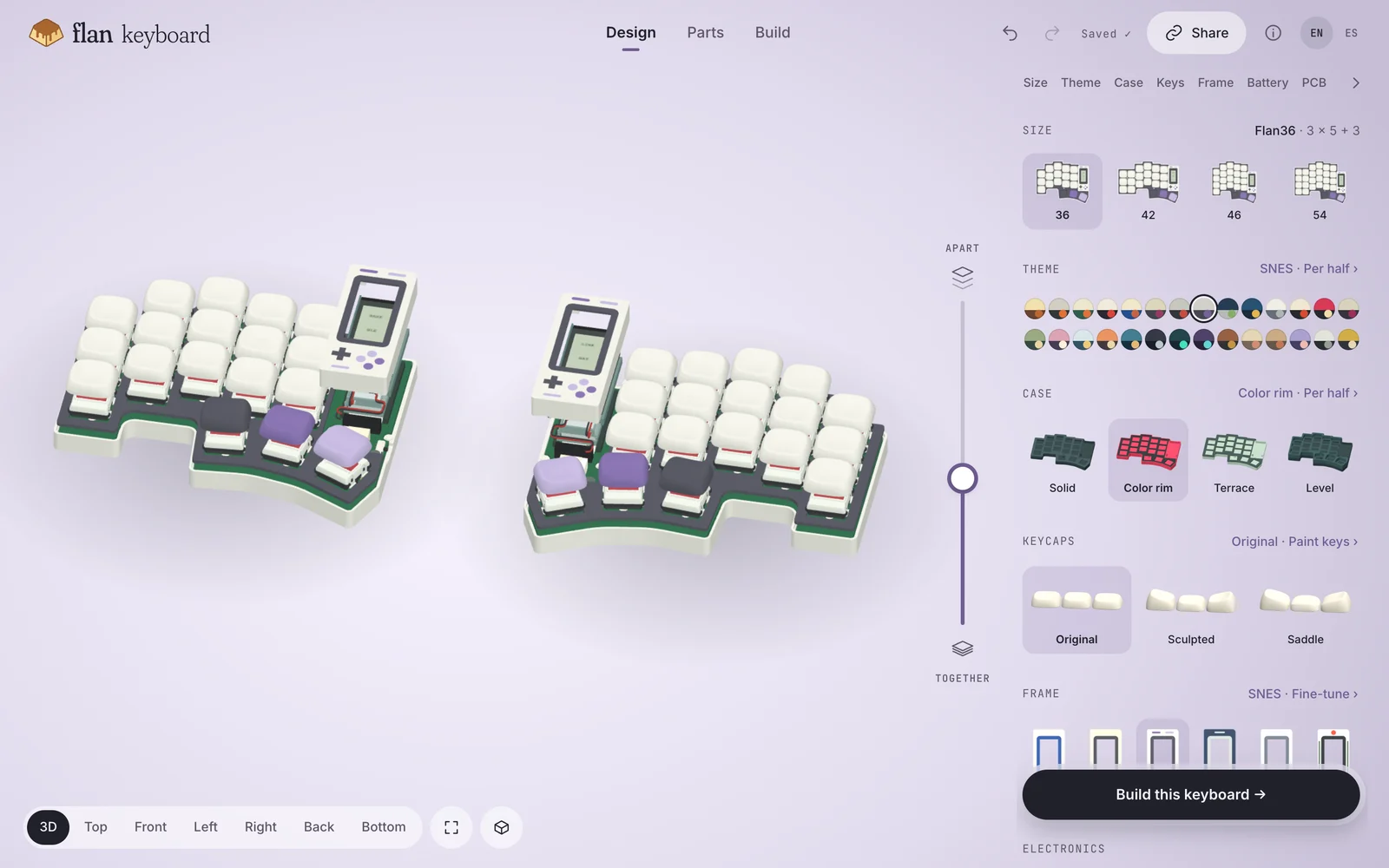
Four sizes — Flan36 (3 × 5 + 3 per half) is the reference. Flan42 adds the outer pinky column, Flan46 a number row and Flan54 both. Every size keeps the thumbs and the bay, and has routed PCBs, six silkscreen editions, the four case styles and ZMK firmware. Pick one in the explorer under Design → Size.
Silkscreen editions — Asanoha, Kikkō, Sayagata, Seigaiha, Meandro and Vías: six all-over back patterns around the Flan signature, one Gerber package each. Preview them with JLCPCB's seven solder-mask colors under Design → PCB, which links the matching ZIPs.
Themes and print kits — Twenty-eight coordinated themes, personal keycap palettes, linked rim/frame colors and selected STL/3MF parts.
Lower, level stack — The frame and removable switch-covering shell reach 14.50 mm; the glass sits 0.20 mm below them. The display uses its supplied 5 mm socket + 2 mm header; physical assembly remains to be tested.
Case styles — Level, Solid, Color rim and Terrace; actual meshes in the explorer.
Using the explorer — Design, Parts and Build beside the model (Build lists every part, PCB, print file and firmware for your design), a phone sheet with the home page's tabs, share links that open your exact keyboard, English and Spanish. Port refinement and verification documents the restored frame wall around USB and power access, including the retained cable and switch clearances.
Flan is a low-profile wireless split keyboard in development by Eduardo Ruiz. Its original CAD is designed by Eduardo; Flan36 has five columns and three thumb keys per half.
Status: routed prototype; physical qualification pending. Both Flan36 PCBs pass DRC, schematic parity and ERC with no unconnected items. Three ZMK firmware builds cover two displays or a left-only display. Prototype fabrication files and verification are included. Exact connectors, printed retention, BLE, charging and measured power still need hardware tests.
First build: Flan36 purchase sequence and test record. Introducing Flan: copy, images and verified claim boundaries.
| Level | Solid | Color rim | Terrace |
|---|---|---|---|
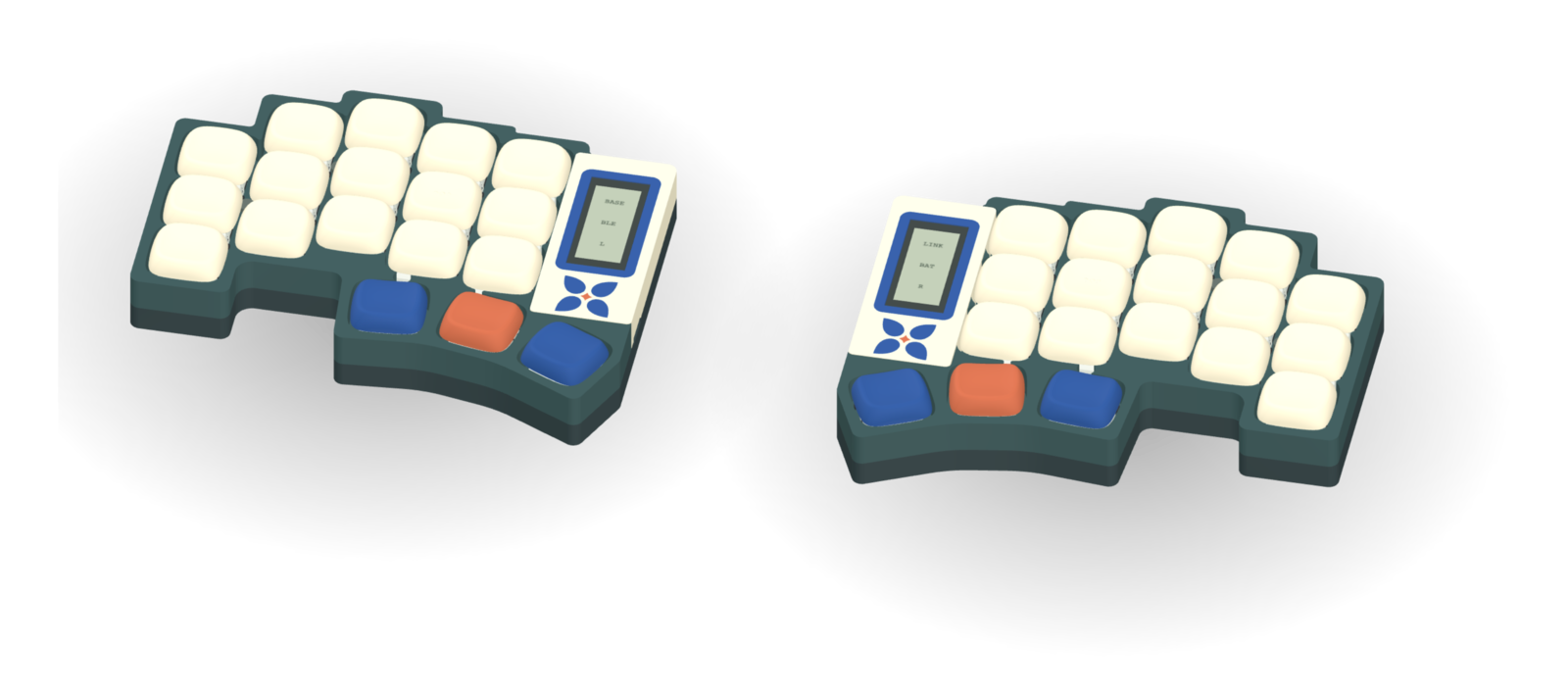 | 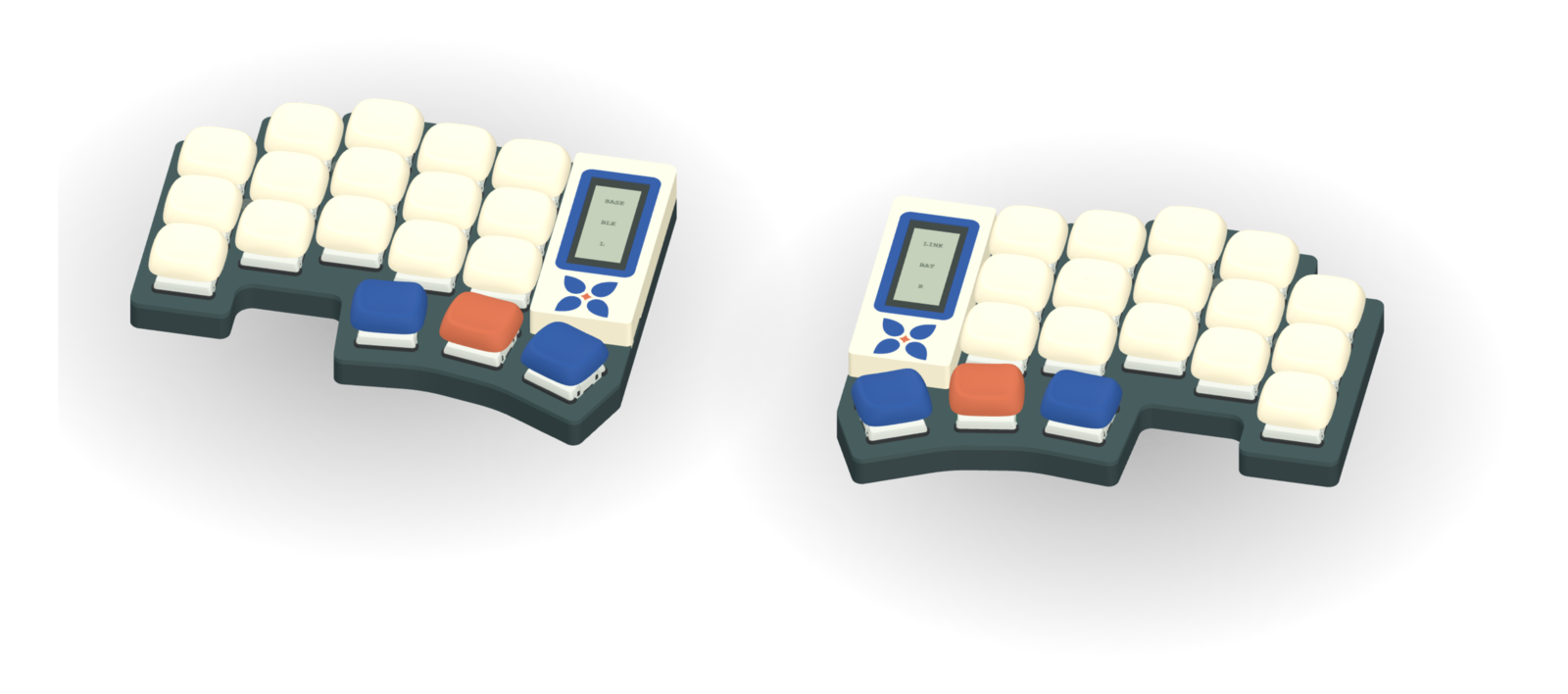 | 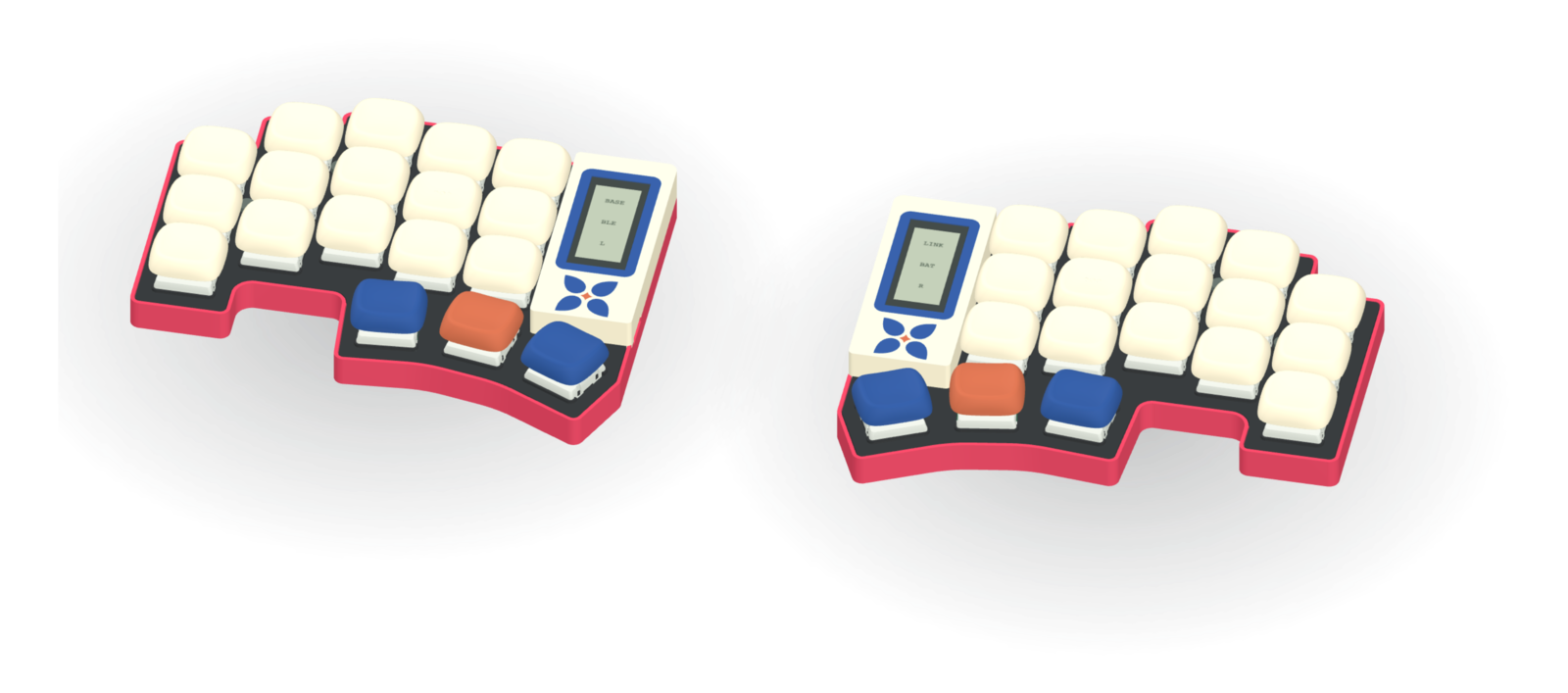 | 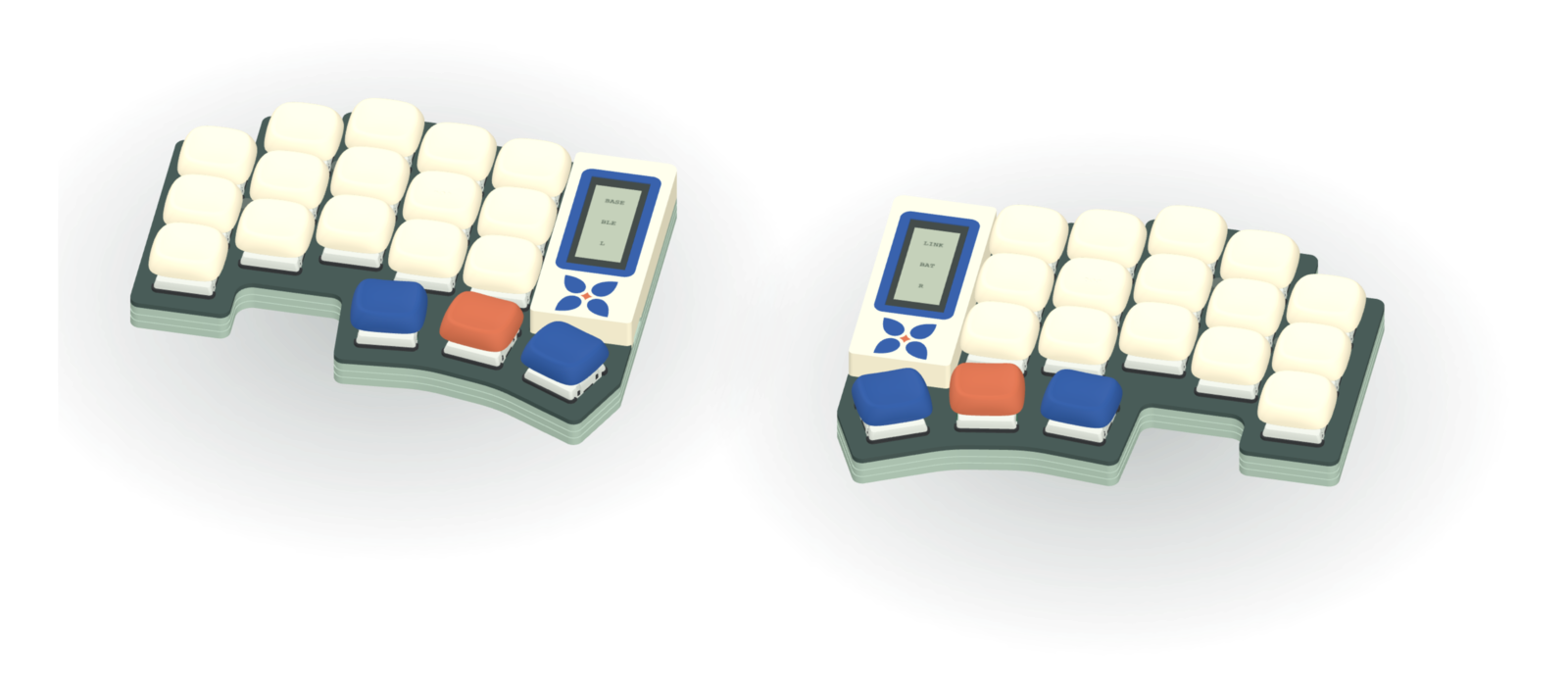 |
Keycaps and frames · Design · Build · CAD files · Explorer · Progress
Flan36 is inspired by Piantor by beekeeb and keeps its 36 key positions and angles; the wireless PCBs, case outline, cases, frames and firmware are original. The viewer uses KLP Lamé by braindefender. Credits and licenses. Contributing.
Flan is free to build. If it is useful to you, support it on Ko-fi: it funds prototypes, test boards and new sizes.
Build, modify, share and sell Flan under GPL-3.0-or-later, with the third-party terms listed in ATTRIBUTION.md. The license covers the files, not the Flan name and logos: products sold under the Flan name or carrying its marks need permission. Official kits come only from Eduardo or licensed sellers. Trademark policy and official kits →
| Qty | Value | Footprint | References |
|---|---|---|---|
| 23 | 1N4148W | Diode_SMD:D_SOD-123 | D01, D02, D03, D04, D05, D11, D12, D13, D14, D15, D21, D22, D23, D24, D25, D30 +7 |
| 23 | CHOC v1 | keyswitches:Kailh_socket_PG1350_optional | K01, K02, K03, K04, K05, K11, K12, K13, K14, K15, K21, K22, K23, K24, K25, K30 +7 |
| 6 | MountingHole_2.2mm_M2 | MountingHole:MountingHole_2.2mm_M2 | H1, H2, H3, H4, H5, H7 |
| 1 | JST_PH_S2B-PH-K-S | PiantorSlim:JST_PH_S2B-PH-K_1x02_P2.00mm_Horizontal | J1 |
| 1 | PCM12SMTR | Button_Switch_SMD:SW_SPDT_PCM12 | SW1 |
| 1 | TL3342 | Button_Switch_SMD:SW_SPST_TL3342 | SW2 |
| 1 | nice!nano v2 | PiantorSlim:nice_nano_v2_standard_edge | U1 |
| 1 | nice!view | PiantorSlim:nice_view_5pin | J2 |
eduarbo/flan
Flan — a slim, modular wireless split keyboard family. Flan 36 is the first: 36 Piantor-derived keys. Open hardware prototype.

klouderone/SeagullMacropad
The Seagull Macropad is based off the Rhino Pad, that supports both MX and Choc switches. The Macropad features an aesthetic but functional diode layout, an encoder, and pads for a battery and battery switch for…

klouderone/therhinopad
The Rhino Pad is a compact Macro Pad tailored for Computer-Aided Drawing, with 13 keys and an encoder that can be programmed for any macro in your program.


jemmec/legshark
An open source 60% (15 by 5) ortholinear keyboard designed with both flexability and familiarity in mind.


klouderone/CorneV4ProMicroEdition
The Corne V4 with Pro Micro Micocontrollers, made specifically for beginners and support for wireless microcontrollers

Goga64/ULK
Low profile split keyboard with Corne 42 Layout and Cerry ULP switches. (6mm height)

tedraykov/spliteo
Ergonomic split keyboard with a 3x6 matrix layout and a 4 key thumb cluster.
It measures 113.4 × 108.3 mm and has 2 copper layers, 1.6 mm thick.
57 parts, built around the 1N4148W and PCM12SMTR. The full list of its parts is on this page, with links to each part's symbol and footprint where PCBKit's library has them.
From the eduarbo/flan repository on GitHub, at the commit this page was made from: the board is hardware/flan46/flan46-left.kicad_pcb and its schematic hardware/flan42/flan42-left.kicad_sch. PCBKit opens the board in the browser, with nothing to install.
Its repository publishes it under the GPL-3.0 licence: you may reuse it on that licence's terms (keep the author's notice, and for a copyleft licence share your changes alike).