
2 layers130 × 24 mm
EspressoSensorBoard
jcohenadad/espresso-pimpup
DIY project to pimp up my espresso machine to display various measures
16 parts1MIT

 Dom-Taing/Hydration-Tracker
The goal of this product is to track how much water a user drink in a day. The sensor device would be a sleeve that can be worn onto a water bottle, it'll detect the water level in the bottle and convert that into…
Hydration Tracker is an open-source printed circuit board by Dom-Taing, from the Dom-Taing/Hydration-Tracker repository on GitHub. It is a 2-layer board of 59 × 35.5 mm with 16 parts on 20 nets, routed with 60 tracks and 0 vias.
It is built around the FDC1004DGSR. Its parts include 6 ICs, 2 capacitors, 2 resistors and 1 connector.
The goal of this product is to track how much water a user drink in a day. The sensor device would be a sleeve that can be worn onto a water bottle, it'll detect the water level in the bottle and convert that into volume of water. The display device would be a box where the gauge will measure if the user reach daily hydration goal.
Overall form factor (concept sketch):
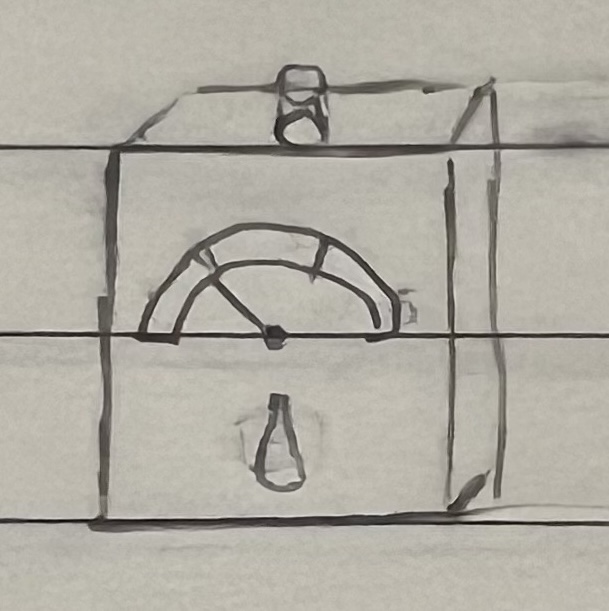
The look and form factor of the product
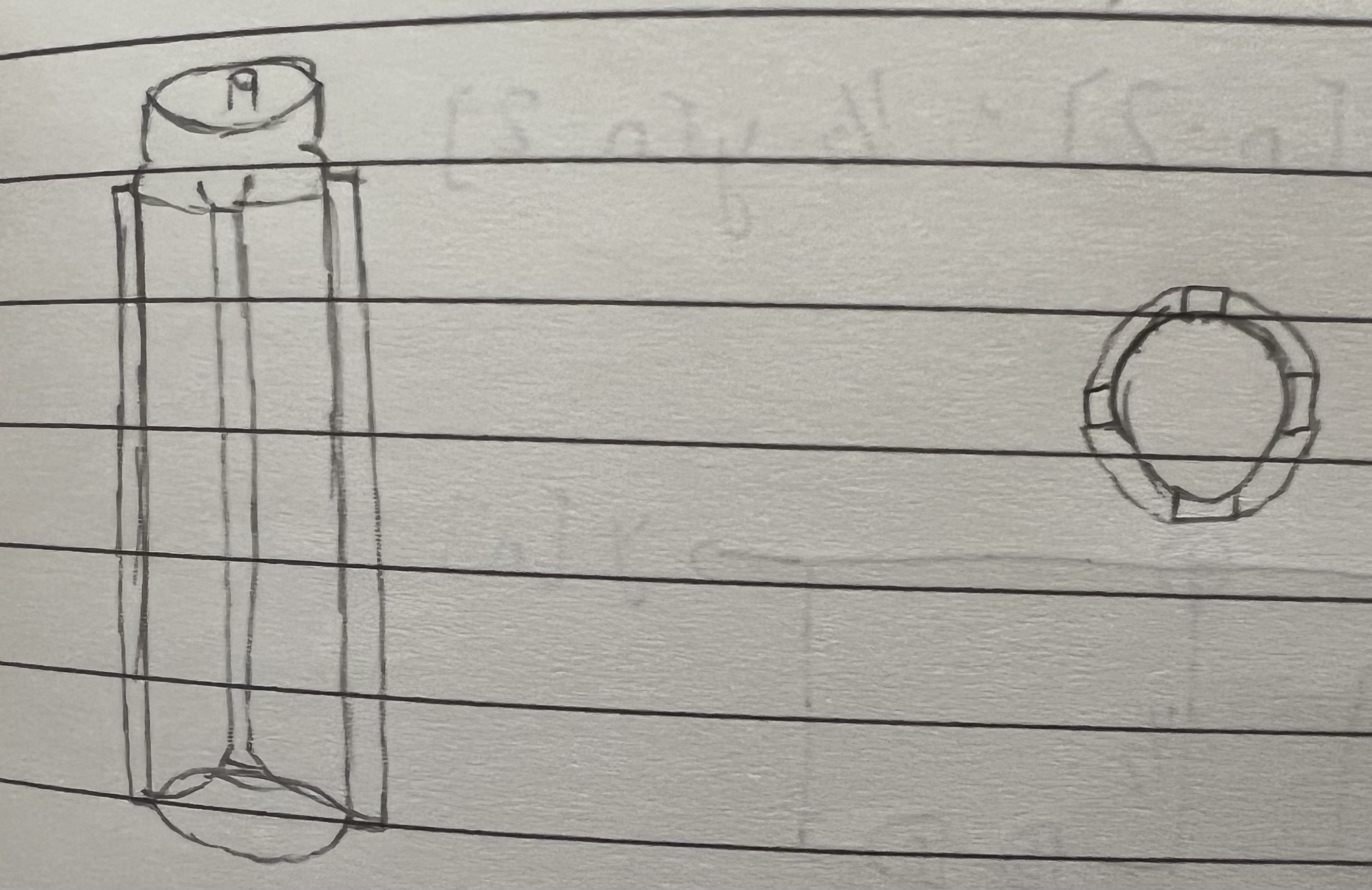
The look and form factor of the Sensor device
It's 4 rod containing the capacitive water level sensor connected with a stretchy fabric to wrap around the bottle.
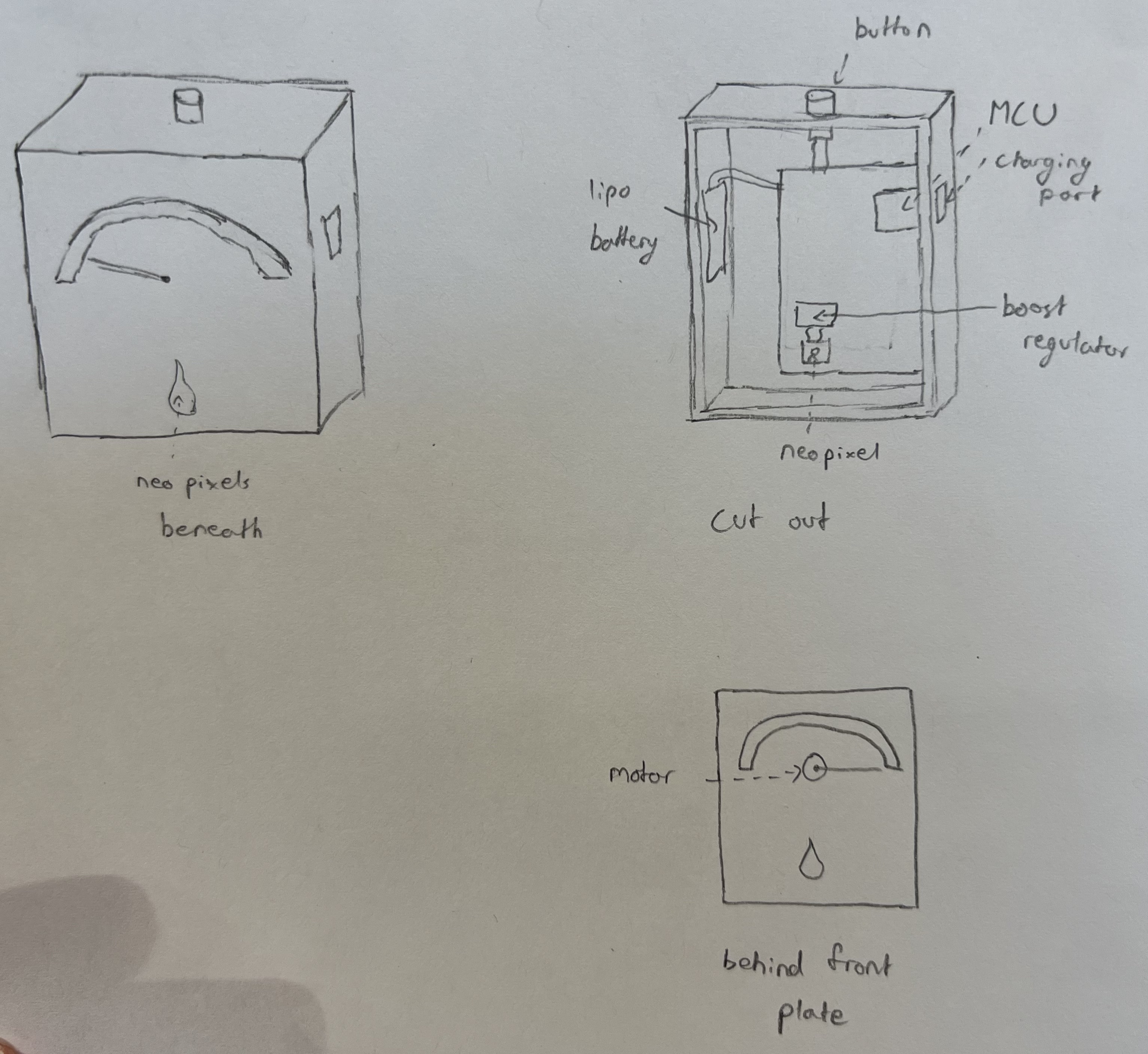
The look and form factor of the display device
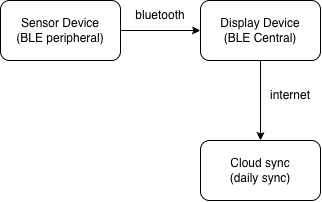
Diagram displaying how the device communicates

Diagram displaying how the data flows in the system
README.mdimages/datasheets/
| Qty | Value | Footprint | References |
|---|---|---|---|
| 4 | ~ | TestPoint:TestPoint_Pad_D1.0mm | U3, U4, U5, U6 |
| 2 | 4.7K | Resistor_SMD:R_0805_2012Metric_Pad1.20x1.40mm_HandSolder | R1, R2 |
| 1 | 0.1uF | Capacitor_SMD:C_0805_2012Metric_Pad1.18x1.45mm_HandSolder | C1 |
| 1 | 1uF | Capacitor_SMD:C_0805_2012Metric_Pad1.18x1.45mm_HandSolder | C2 |
| 1 | Battery | Connector_JST:JST_PH_S2B-PH-K_1x02_P2.00mm_Horizontal | BT1 |
| 1 | FDC1004DGSR | footprints_FDC1004:DGS0010A_M | U7 |
| 1 | RFShield_OnePiece | TestPoint:TestPoint_Pad_D1.0mm | J1 |
| 1 | ~ | GIX_ESP32:XIAO_ESP32 | U1 |
The 12 most common of 16 parts.
It measures 59 × 35.5 mm and has 2 copper layers, 1.6 mm thick.
16 parts, built around the FDC1004DGSR. The full list of its parts is on this page, with links to each part's symbol and footprint where PCBKit's library has them.
From the Dom-Taing/Hydration-Tracker repository on GitHub, at the commit this page was made from: the board is Kicad/hydration_tracker/hydration_tracker.kicad_pcb and its schematic Kicad/hydration_tracker/hydration_tracker.kicad_sch. PCBKit opens the board in the browser, with nothing to install.
Its repository states no licence, so its author keeps all rights: ask Dom-Taing before reusing the design.
jcohenadad/espresso-pimpup
DIY project to pimp up my espresso machine to display various measures

alxgmpr/moisture-sensor
Indoor capacitive soil moisture sensor - nRF54L15 + nPM1300 + FDC1004, BTHome v2 over BLE

dfieschko/Breakouts
A repository for breakout boards designed with KiCAD.


micthiesen/crystal-shim
Aquarium skimmer controller: capacitive sensing, ESP32-C6 firmware, and separated mains switching

google/mozc-devices
Circuit diagrams and firmware source code for Gboard DIY keyboards

conorpp/u2f-zero
U2F USB token optimized for physical security, affordability, and style

rusefi/rusefi
rusefi - GPL internal combustion engine control unit