2 layers87.9 × 98.7 mm
Bitdoglab smd
BitDogLab/BitDogLab
Open-source educational hardware for embedded systems, programming, electronics, and physical computing.
138 parts203

 dgomes/pico_w_water_meter24
Water Meter using Raspberry Pico W
Water Meter PCB is an open-source printed circuit board by dgomes, from the dgomes/pico_w_water_meter repository on GitHub. It is a 2-layer board of 41 × 82.1 mm with 6 parts on 44 nets, routed with 68 tracks and 0 vias.
It is built around the TL-W5MC15 and SC0918. Its parts include 1 IC and 1 diode.
Monitor your water usage through an energy-efficient IoT device attached to your water provider meter (which happens to have a metal "butterfly wheel) like the JANZ JT400:
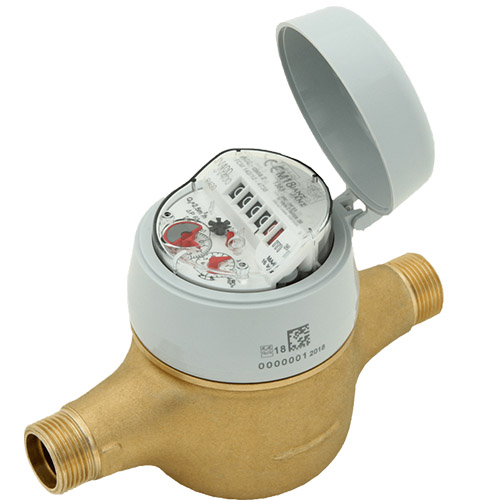
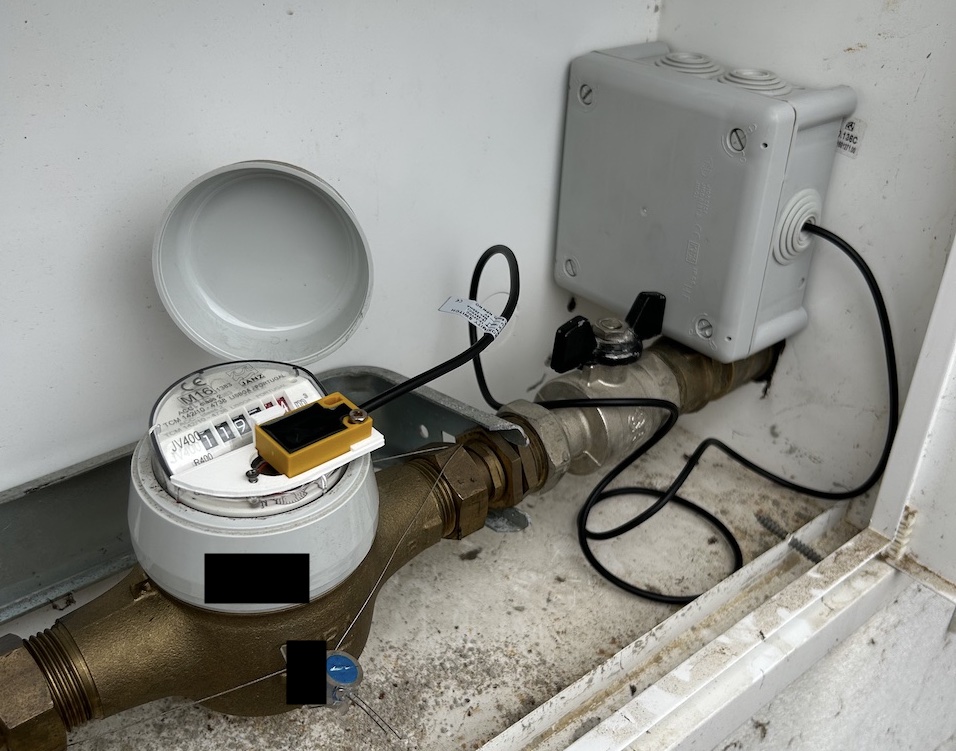
This project enables you to monitor the water usage of your household water usage through the use of a DIY water meter sensor built using:
The RPI Pico W is very flexible in terms of power requirements, but in my case, I use:
Just assemble everything :)
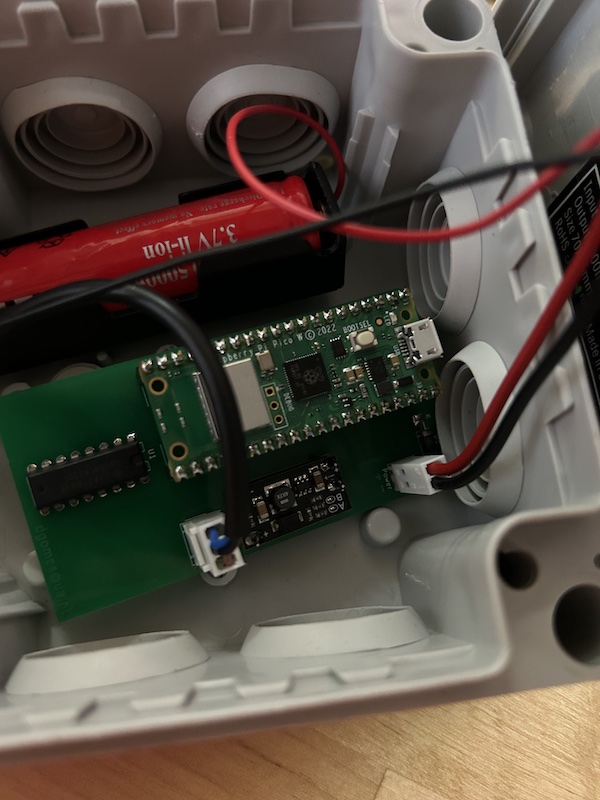
You can find the PCB source files (KiCAD) in the respective directory. (PCB files)
I designed a 3D-printed adapter for the Inductive Proximity Sensor to fit the JANZ JT400. (3Dadapter)
The RPi Pico W is flashed with a micropython firmware and then you upload the project available in src
You must have an MQTT broker (e.g. Mosquitto)
The project automatically integrates with Home Assistant
You will need to create an additional file called config.py that must include the variables:
SSID = "myhome_network"
WIFI_PASSWORD = "blablabla"

SERVER = "192.168.1.1"  #this is your MQTT Broker Address
USER = None #change this to your MQTT username, else leave None
PASSWORD = None #change this to your MQTT password, else leave None| Qty | Value | Footprint | References |
|---|---|---|---|
| 1 | 1N5819 | Diode_THT:D_DO-41_SOD81_P10.16mm_Horizontal | D1 |
| 1 | 4020 | Package_DIP:DIP-16_W7.62mm | U1 |
| 1 | SC0918 | Water Meter PCB:MODULE_SC0918 | A1 |
| 1 | TL-W5MC1 | Connector_Molex:Molex_KK-254_AE-6410-03A_1x03_P2.54mm_Vertical | blu blk brn |
| 1 | pos | Connector_Molex:Molex_KK-254_AE-6410-02A_1x02_P2.54mm_Vertical | Power |
| 1 | ~ | Water Meter PCB:BS01+ | BS01+1 |
BitDogLab/BitDogLab
Open-source educational hardware for embedded systems, programming, electronics, and physical computing.

c0de111/tinta
Battery-powered e-paper sign: room signage, sensor graphs, home automation, or anything over Wi-Fi. Wakes by real-time clock, NFC tap, or button. Raspberry Pi Pico W firmware, custom PCB, and 3D-printed case included.

gatasConspicuity/gatas
eConspicuity with support for ADS-L, OGN, FLARM, FANET for General Aviation

N1UGK/PCUI_Public
Collection of Programs and Utilities for the Pocket Computer Universal Interface


thestumbler/supercon24-badge-kicad-redrawn
Redrawing the Hackaday Supercon 2024 Badge in KiCad

ECE-492-SALE/SALE_ECE491-02
Smart Assistive Living Environment (SALE) Senior Design project at Lafayette College
It measures 41 × 82.1 mm and has 2 copper layers, 1.6 mm thick.
6 parts, built around the TL-W5MC15 and SC0918. The full list of its parts is on this page, with links to each part's symbol and footprint where PCBKit's library has them.
From the dgomes/pico_w_water_meter repository on GitHub, at the commit this page was made from: the board is Water Meter PCB/Water Meter PCB.kicad_pcb and its schematic Water Meter PCB/Water Meter PCB.kicad_sch. PCBKit opens the board in the browser, with nothing to install.
Its repository states no licence, so its author keeps all rights: ask dgomes before reusing the design.