4 layers26 × 35 mm

 cr1tbit/lichtenprog2
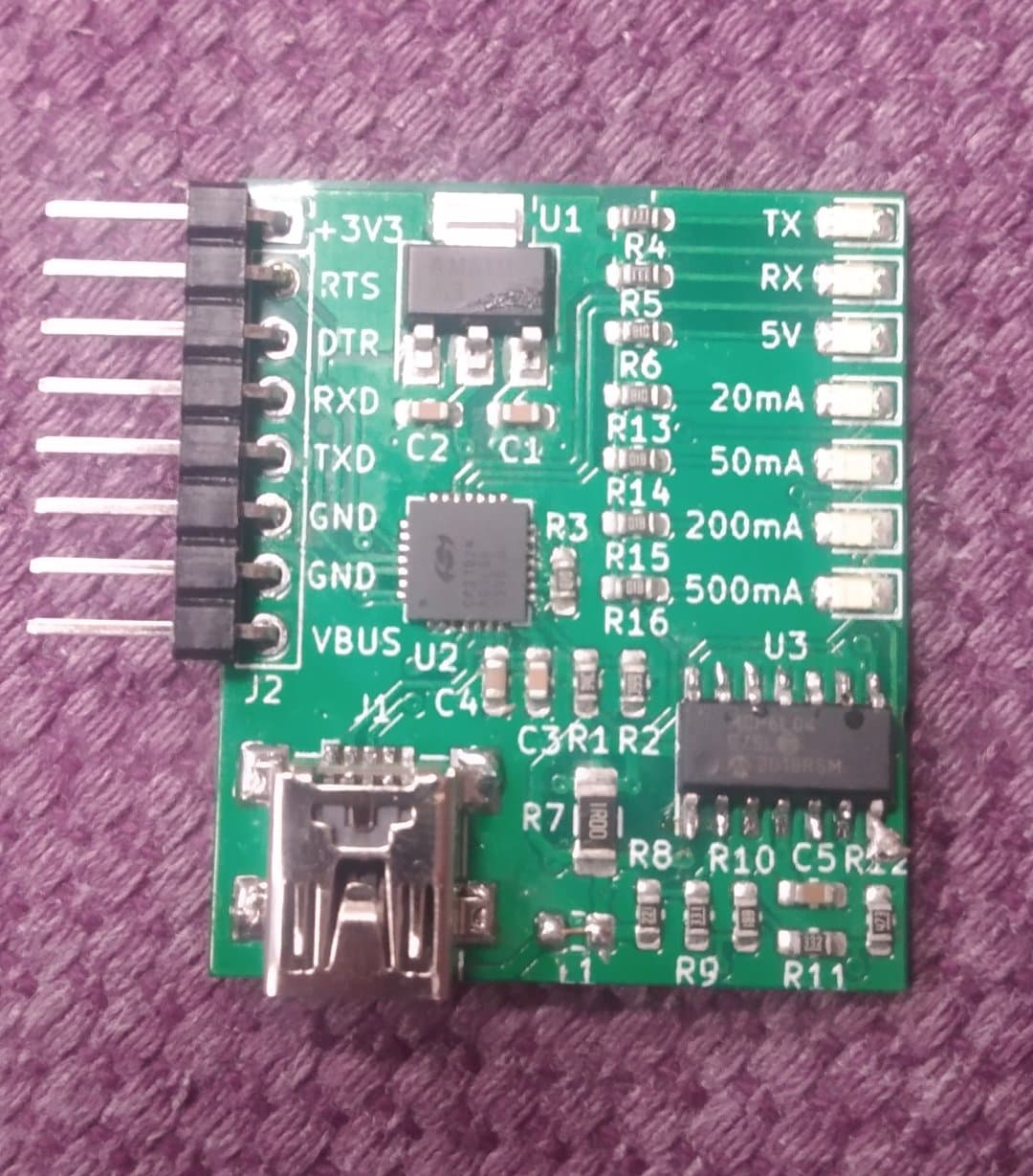
USB-to-UART / (esp8266 / esp32) programmer with 3.3v supply
Lichtenprog is an open-source printed circuit board by cr1tbit, from the cr1tbit/lichtenprog repository on GitHub, published under the CERN-OHL-P-2.0 licence. It is a 4-layer board of 28 × 28 mm with 76 parts on 90 nets, routed with 943 tracks and 134 vias.
It is built around the TLV62568DRLR, MT9700 and USBLC6-4SC6, with the CH334F and XL-1606UGC among its other parts. Its parts include 31 resistors, 11 capacitors, 11 diodes, 9 ICs and 5 connectors. It belongs with the interfaces and adapters boards of this library.


The device is based on CP2102n - meaning it should work properly on any OS without messy drivers from unknown sources. It's also cheaper than legit FT232 chips.
Why can't I power my stuff from basic USB-to-UART bridges? Some of those serial adapters out there have basic 3.3V-out bulitin, coming usually from main IC's LDO output. Being able to supply like 100 miliamps. I want my full 500mA from the USB! Seriously, throwing that external LDO costs like 10 cents.
I also added an simple circut for estimating the connected device's current draw. You may left it unpopulated, to save like another 70c.
Honestly, I've found myself using this board to supply my 3v3 devices from wallplugs, it's just convenient to have like 10 of those.
After soldering your device, you may want to reprogram the CP2102n a little bit, in order to set:
Please, just do not modify PID and VID, or els you risk effectively bricking your brand new 3$ device.
To modify these values, you may use official "xpressconfigurator" from SiLabs
I couldn't make this tool to work on linux though - take a look at this CLI-based project, which should allow setting up basic stuff.
https://github.com/cr1tbit/cp210x-cfg
The hardware design files, including schematics and PCB layout, are licensed under the CERN Open Hardware Licence v2 CERN-OHL-P.
All documentation is released under CC BY-SA 4.0
| Qty | Value | Footprint | References |
|---|---|---|---|
| 11 | XL-1606UGC | easyeda2kicad:LED-SMD_L1.7-W1.1-R-RD_GREEN | LED1, LED2, LED3, LED4, LED5, LED6, LED7, LED8, LED9, LED10, LED11 |
| 7 | 22k | Resistor_SMD:R_0402_1005Metric | R2, R14, R20, R22, R23, R30, R31 |
| 7 | 3k | Resistor_SMD:R_0402_1005Metric | R5, R6, R7, R21, R24, R25, R26 |
| 5 | 100n | Capacitor_SMD:C_0402_1005Metric | C4, C7, C8, C12, C13 |
| 5 | 5.1k | Resistor_SMD:R_0402_1005Metric | R1, R3, R4, R27, R28 |
| 4 | 1k | Resistor_SMD:R_0402_1005Metric | R9, R10, R11, R29 |
| 4 | 2.2u | Capacitor_SMD:C_0603_1608Metric | C5, C6, C9, C11 |
| 4 | 47k | Resistor_SMD:R_0402_1005Metric | R8, R13, R17, R19 |
| 4 | TestPoint | TestPoint:TestPoint_Pad_D1.0mm | TP1, TP2, TP3, TP4 |
| 3 | 50mR/1206 | Resistor_SMD:R_1206_3216Metric_Pad1.30x1.75mm_HandSolder | R12, R15, R16 |
| 2 | 10u | Capacitor_SMD:C_0603_1608Metric | C1, C10 |
| 2 | MT9700 | easyeda2kicad:SOT-23-5_L3.0-W1.7-P0.95-LS2.8-BR | U9, U11 |
| 2 | SCRHOLE | MountingHole:MountingHole_2.2mm_M2_ISO7380_Pad | H1, H2 |
| 2 | USBLC6-4SC6 | Package_TO_SOT_SMD:SOT-23-6 | U1, U15 |
| 2 | USB_C_Receptacle_USB2.0 | Connector_USB:USB_C_Receptacle_HRO_TYPE-C-31-M-12 | J1, J3 |
| 1 | 10k | Resistor_SMD:R_0402_1005Metric | R18 |
| 1 | 1V8_ENA | Jumper:SolderJumper-2_P1.3mm_Open_RoundedPad1.0x1.5mm | JP1 |
| 1 | 2.2uH | Inductor_SMD:L_Sunlord_MWSA0412S | L2 |
| 1 | CH334F | easyeda2kicad:QFN-24_L4.0-W4.0-P0.50-BL-EP2.8 | U2 |
| 1 | CP2102N-Axx-xQFN24 | Package_DFN_QFN:QFN-24-1EP_4x4mm_P0.5mm_EP2.6x2.6mm | U5 |
| 1 | Conn_01x02 | Connector_PinHeader_2.54mm:PinHeader_1x02_P2.54mm_Vertical | J5 |
| 1 | Conn_02x08_Odd_Even | Connector_PinSocket_1.27mm:PinSocket_2x08_P1.27mm_Vertical_SMD | J4 |
| 1 | Crystal_GND24 | Crystal:Crystal_SMD_3225-4Pin_3.2x2.5mm | Y1 |
| 1 | INA3221 | Package_DFN_QFN:Texas_RGV0016A_VQFN-16-1EP_4x4mm_P0.65mm_EP2.1x2.1mm | U13 |
| 1 | IO_OUT | Connector_PinHeader_2.54mm:PinHeader_1x08_P2.54mm_Vertical | J2 |
| 1 | TLV62568DRL | Package_TO_SOT_SMD:SOT-563 | U8 |
| 1 | ~ | Critbit_lib:OLED_4Pin_128x64_new | U3 |
It measures 28 × 28 mm and has 4 copper layers, 1.6 mm thick.
76 parts, built around the TLV62568DRLR, MT9700, USBLC6-4SC6 and CH334F. The full list of its parts is on this page, with links to each part's symbol and footprint where PCBKit's library has them.
From the cr1tbit/lichtenprog repository on GitHub, at the commit this page was made from: the board is lichtenprog.kicad_pcb and its schematic lichtenprog.kicad_sch. PCBKit opens the board in the browser, with nothing to install.
Its repository publishes it under the CERN-OHL-P-2.0 licence: you may reuse it on that licence's terms (keep the author's notice, and for a copyleft licence share your changes alike).


sumit123hub/Mobile-PCB-Files-
I always dreamed of building my own mobile system. This repo documents my journey designing a custom ESP32 PCB featuring a GSM module, display interface, and complete Battery Management System (BMS).

ymhtwe/SGW01
ESP-IDF based IoT gateway for solar pump monitoring and control using SIM7600 4G modem and Modbus RTU.


mikelawrence/esphome-indoor-multi-sensor-hardware
ESPHome Indoor Multi-Sensor hardware. This design supports Radar/PIR Presence, Temperature, Humidity, Pressure, Light, CO2, CO, VOC, NOX and PM sensors.