2 layers43.5 × 65.4 mm

 ChaseDurand/Pool-Pi14
Hardware+software solution for controlling a Goldline/Hayward Aqualogic pool control board over WiFi via a Raspberry Pi.
Pool pi v1.1 is an open-source printed circuit board by ChaseDurand, from the ChaseDurand/Pool-Pi repository on GitHub. It is a 2-layer board of 65 × 56.5 mm with 28 parts on 39 nets, routed with 122 tracks and 8 vias.
It is built around the MAX485ED, LM2596S-5.0 and DMG2305UX-13. Its parts include 9 resistors, 6 capacitors, 2 ICs, 2 diodes and 2 transistors. It belongs with the radio and wireless and home automation and IoT boards of this library.


Pool-Pi is a hardware+software system for interfacing with Goldline/Hayward Aqualogic pool control boards over WiFi via a Raspberry Pi. It adds wireless capabilities to non-wireless control boards and a web interface for viewing updates and sending commands.
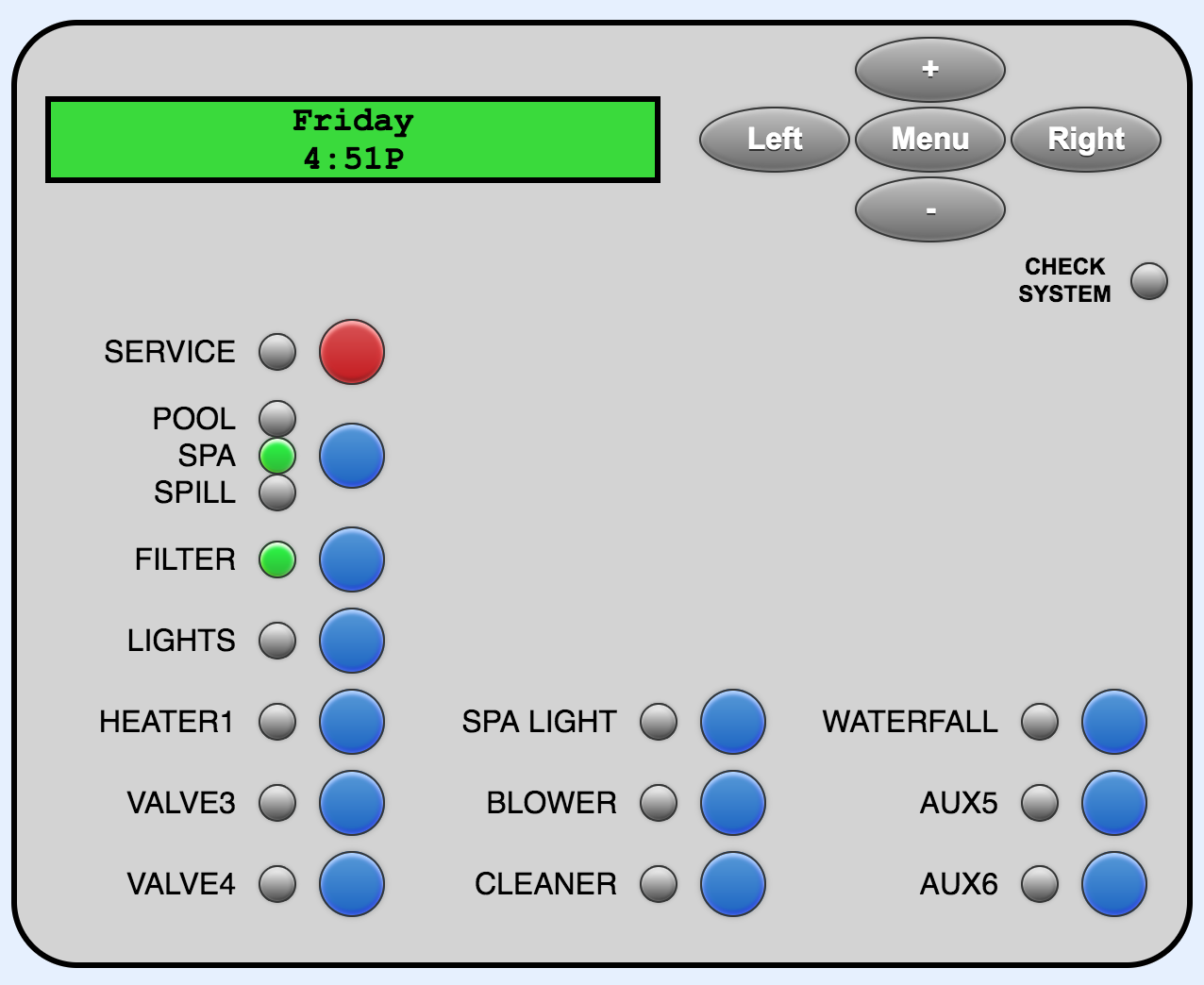
This video shows multiple clients interfacing with the unit and demonstrates display updates, button presses, menu controls, blinking display characters, and LED updates.
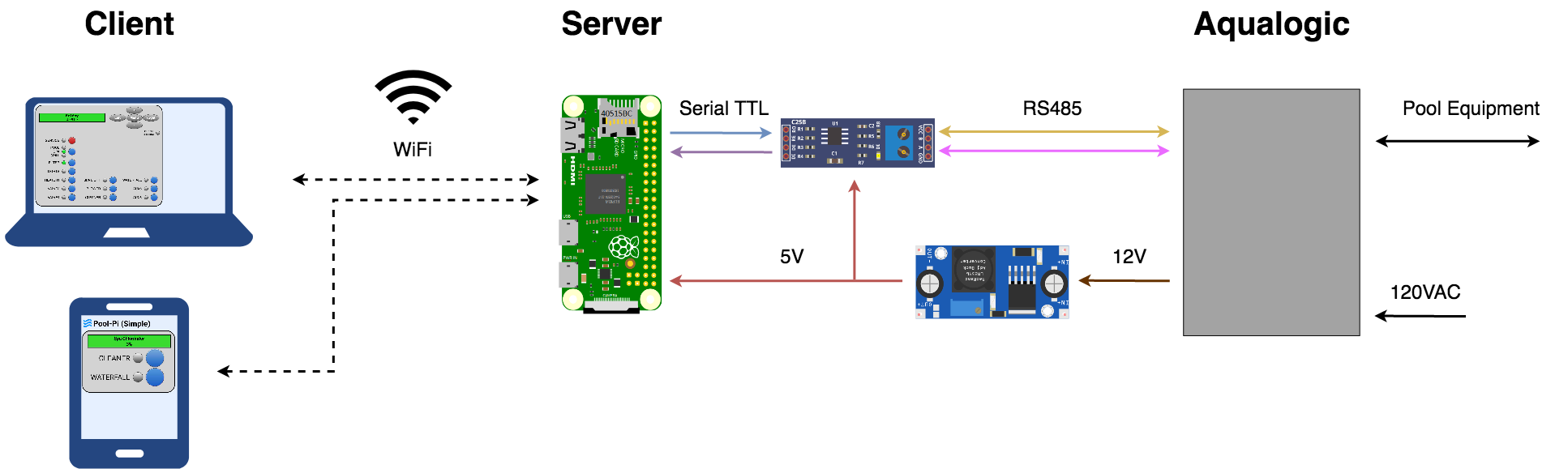
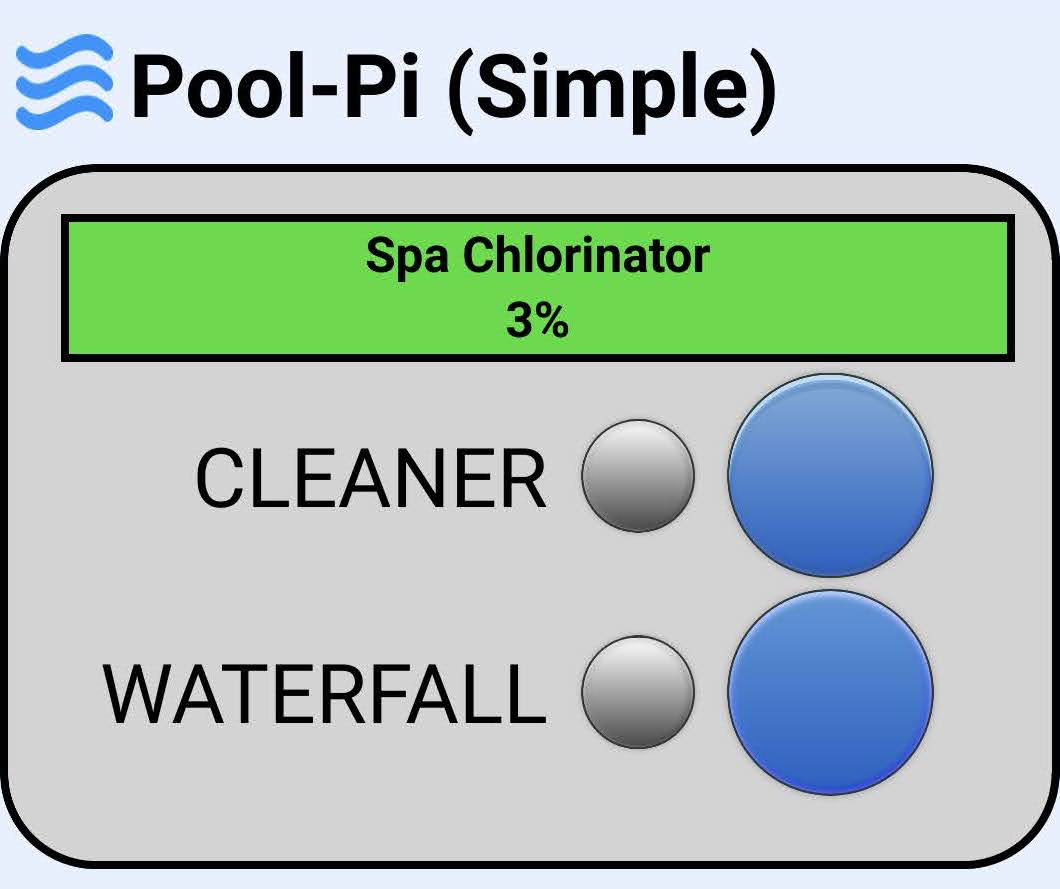
Pool-Pi provides a web interface which emulates a local PS-8 display, allowing for the same controls accessible from the physical unit. The serial bus exposes all 14 aux relays regardless of local display, so emulation of a PS-16 display is possible, allowing additional relays to be added without purchasing a larger local interface. An RS485 adapter is used to read and send messages in accordance with the Aqualogic serial communication protocol, mimicking an OEM device. The system also adds logging, which is unavailable on the OEM unit. A simplified GUI is available to show the most frequently used commands.
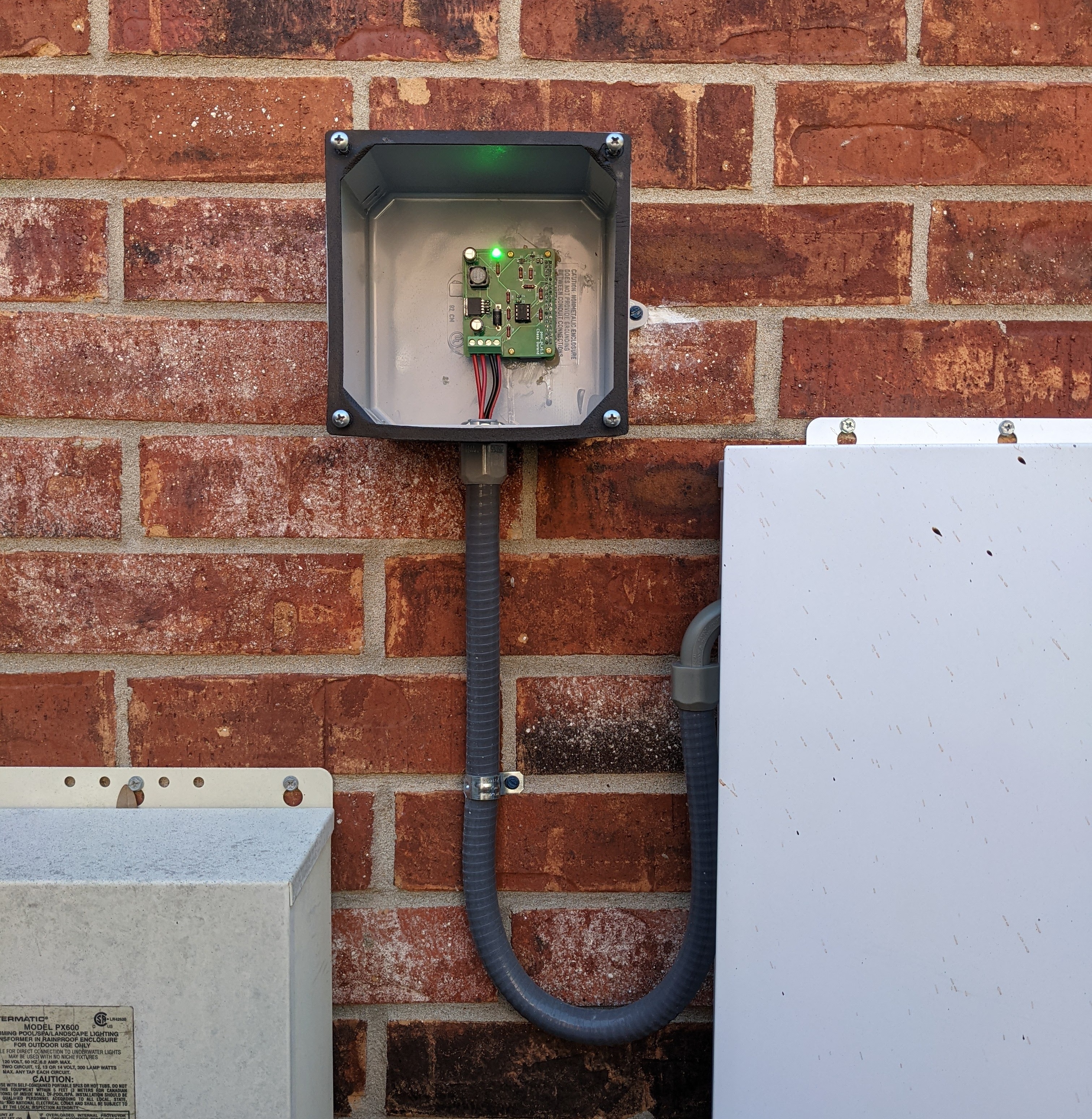
Project requirements and instructions can be found in docs/SETUP.md.
Thank you to other people who have put their own resources/solutions for solving this problem online, including draythomp, swilson, and Pete Tompkins.
This project is not endorsed or affiliated with Goldline/Hayward in any way.
| Qty | Value | Footprint | References |
|---|---|---|---|
| 4 | 10K | Resistor_THT:R_Axial_DIN0207_L6.3mm_D2.5mm_P7.62mm_Horizontal | R1, R2, R3, R7 |
| 4 | MountingHole_2.7mm_M2.5 | MountingHole:MountingHole_2.7mm_M2.5 | MH1, MH2, MH3, MH4 |
| 2 | 0.1uF | Capacitor_SMD:C_0805_2012Metric | C4, C6 |
| 2 | 10uF | Capacitor_SMD:C_0805_2012Metric | C3, C5 |
| 2 | 20K | Resistor_THT:R_Axial_DIN0207_L6.3mm_D2.5mm_P7.62mm_Horizontal | R4, R5 |
| 1 | 100uF | Capacitor_THT:CP_Radial_D8.0mm_P5.00mm | C1 |
| 1 | 120 | Resistor_THT:R_Axial_DIN0207_L6.3mm_D2.5mm_P7.62mm_Horizontal | R6 |
| 1 | 1711042 | TerminalBlock_Phoenix:TerminalBlock_Phoenix_MKDS-1,5-4_1x04_P5.00mm_Horizontal | J2 |
| 1 | 180uF | Capacitor_THT:CP_Radial_D8.0mm_P3.50mm | C2 |
| 1 | 1N5820-E3/73 | Diode_THT:D_DO-201AD_P12.70mm_Horizontal | D2 |
| 1 | 200 | Resistor_THT:R_Axial_DIN0207_L6.3mm_D2.5mm_P7.62mm_Horizontal | R9 |
| 1 | 47K | Resistor_THT:R_Axial_DIN0207_L6.3mm_D2.5mm_P7.62mm_Horizontal | R8 |
| 1 | 68uH | Inductor_SMD:L_12x12mm_H8mm | L1 |
| 1 | DMG2305UX-13 | DMG2305UX-13:SOT91P240X110-3N | Q2 |
| 1 | DMMT5401-7-F | DMMT5401-7-F:SOT95P285X140-6N | Q1 |
| 1 | GPIO | Connector_PinSocket_2.54mm:PinSocket_2x20_P2.54mm_Vertical | J1 |
| 1 | LED | LED_THT:LED_D4.0mm | D1 |
| 1 | LM2596S-5 | Package_TO_SOT_SMD:TO-263-5_TabPin3 | U1 |
| 1 | MAX485E | Package_DIP:DIP-8_W7.62mm | U2 |
It measures 65 × 56.5 mm and has 2 copper layers, 1.6 mm thick.
28 parts, built around the MAX485ED, LM2596S-5.0 and DMG2305UX-13. The full list of its parts is on this page, with links to each part's symbol and footprint where PCBKit's library has them.
From the ChaseDurand/Pool-Pi repository on GitHub, at the commit this page was made from: the board is docs/pcb/pool_pi_v1.1.kicad_pcb and its schematic docs/pcb/pool_pi_v1.1.kicad_sch. PCBKit opens the board in the browser, with nothing to install.
Its repository states no licence, so its author keeps all rights: ask ChaseDurand before reusing the design.

alcaaron/esi_project
ENGINYERIA DE SISTEMES: PROJECTE DE CURS Fet per - Aaron Alcalá - Albert Bombí - Marcos García

Colorado-School-of-Mines-Robotics-Club/VEX-Override
VURC team ORDGR's code for the 26-27 VEX Override game


mosyrf/Oxygen-Monitoring-System
This was my second year project as an electrical engineering student, and it was quite difficult because it used an STM32 controller, which I was not familiar with.

Satya777777/ESP32-Industrial-IO-Controller
4-layer ESP32-based industrial I/O controller designed in KiCad with 0–10 V, 4–20 mA, RS485, USB-C and relay interfaces.