4 layers406.4 × 254 mm
 c0pperdragon/BreadBin18
A CPU made of 7400 logic on breadboards - inside a bread bin ;-)
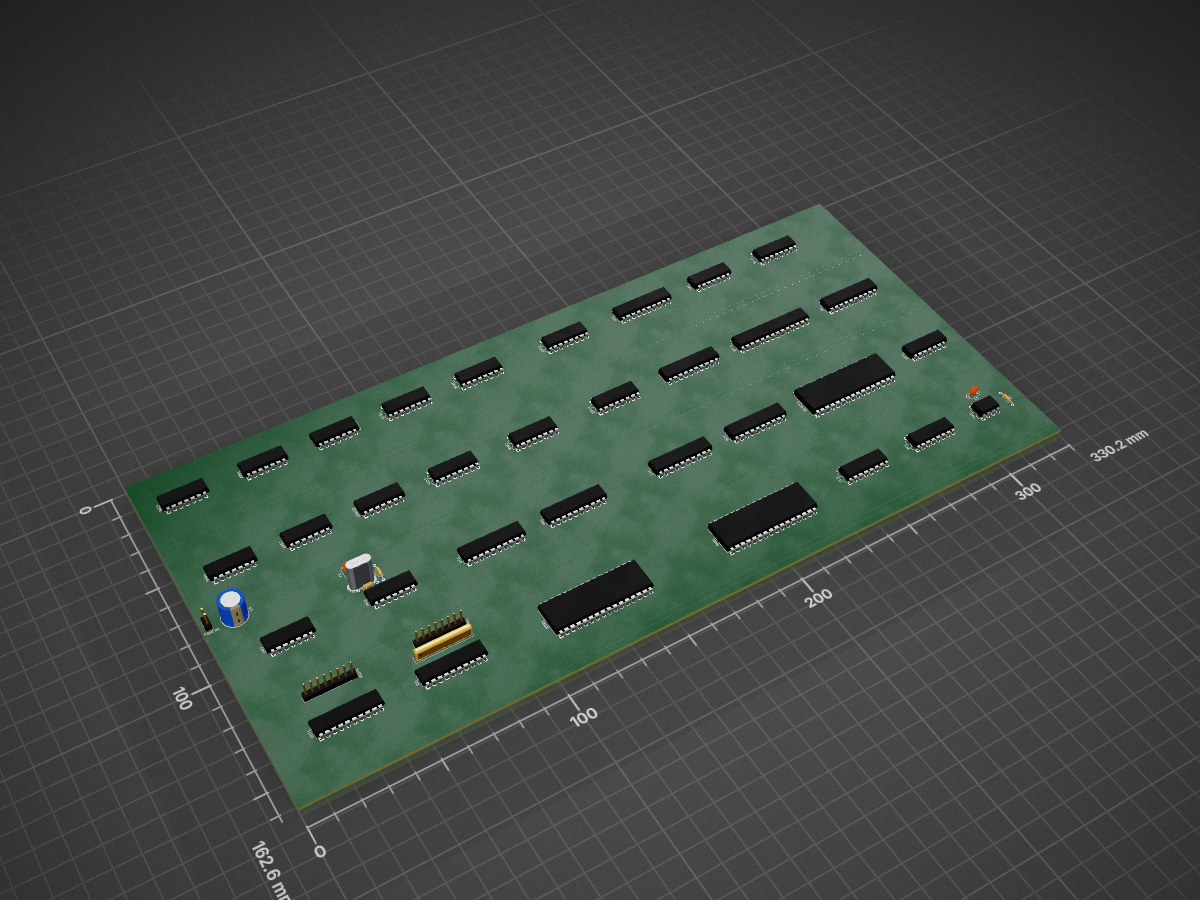
BreadBin is an open-source printed circuit board by c0pperdragon, from the c0pperdragon/BreadBin repository on GitHub. It is a 2-layer board with 45 parts on 169 nets, routed with 35 tracks and 0 vias.
It is built around the 74HC245D, 74HC541D and 74HC377D, with the 74AC153PC, 74AC00 and 74AC08PC among its other parts. Its parts include 4 capacitors, 3 resistors and 1 crystal.


A CPU made of 7400 logic on breadboards - inside a bread bin ;-)
After various experiments and failed attempts to design a 7400-based computer, I came to a quite minimalistic 8-bit approach which is nevertheless pretty versatile and can utilize a surprisingly large amount of memory resources. The CPU core itself executes its program from a static 64K flash memory and can access 32 bytes of internal RAM (which can be considered registers for all practical purposes). Access to the external memory area (up to 16MB of address space) allows addition of RAM, ROM and memory mapped IO. In the current setup this directly mirrors the capabilities of my OS816 reference design.
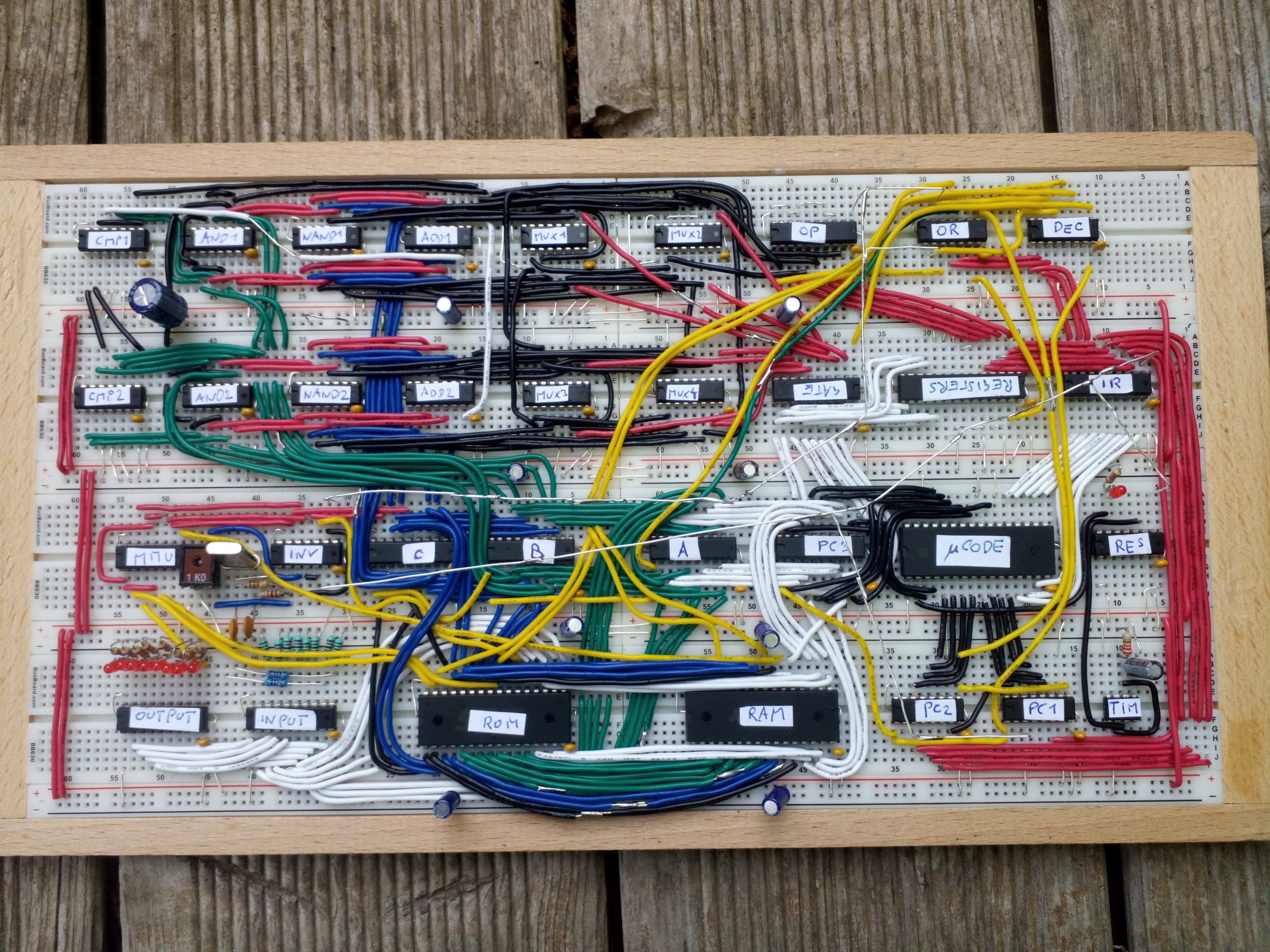
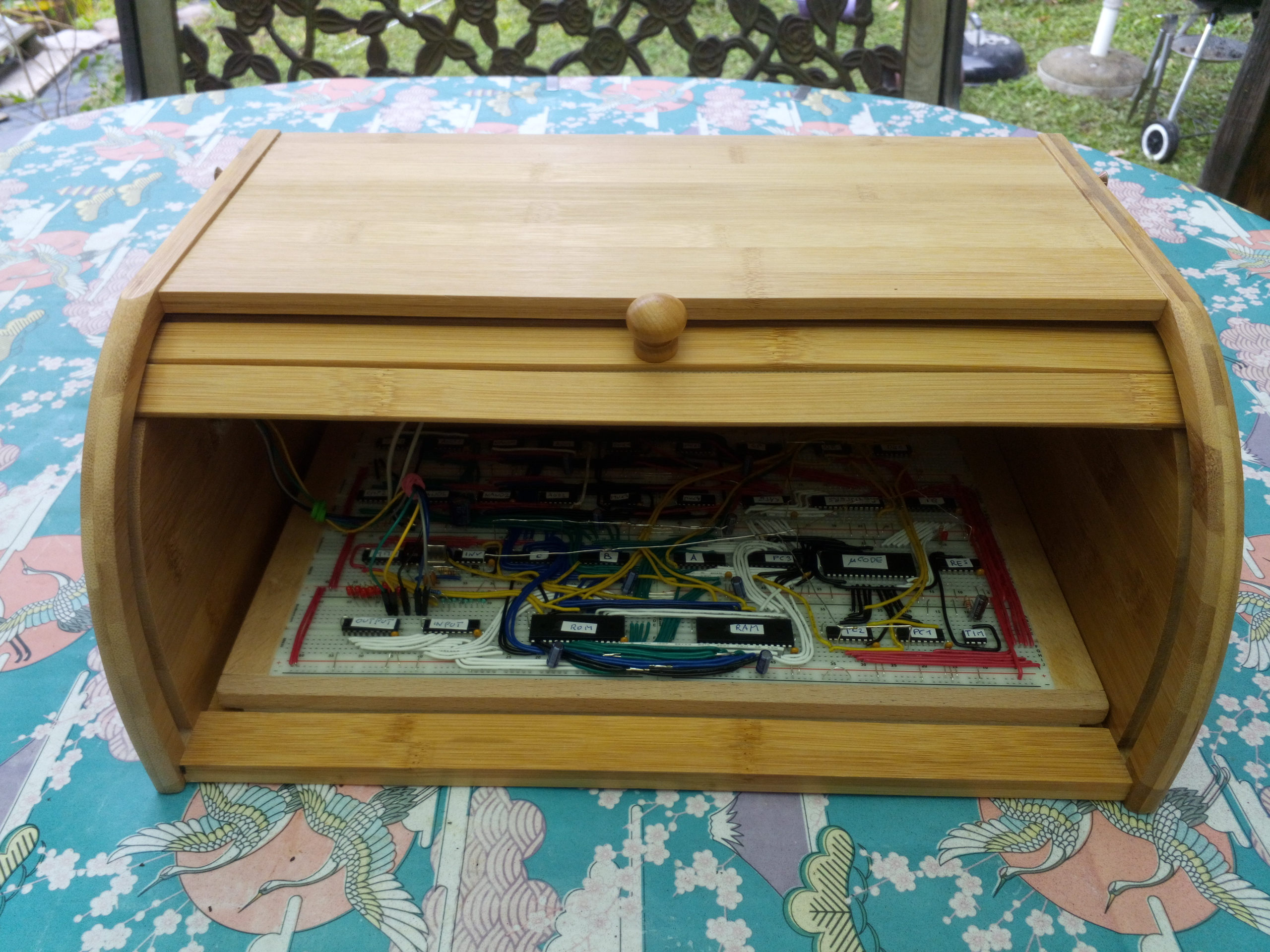
With the CPU already built so nicely on an actual wooden board, I had the idea to put it together with the rest of the computer into a matching bread bin. Because the machine will not require any ventilation this will keep the dust out quite reliably.
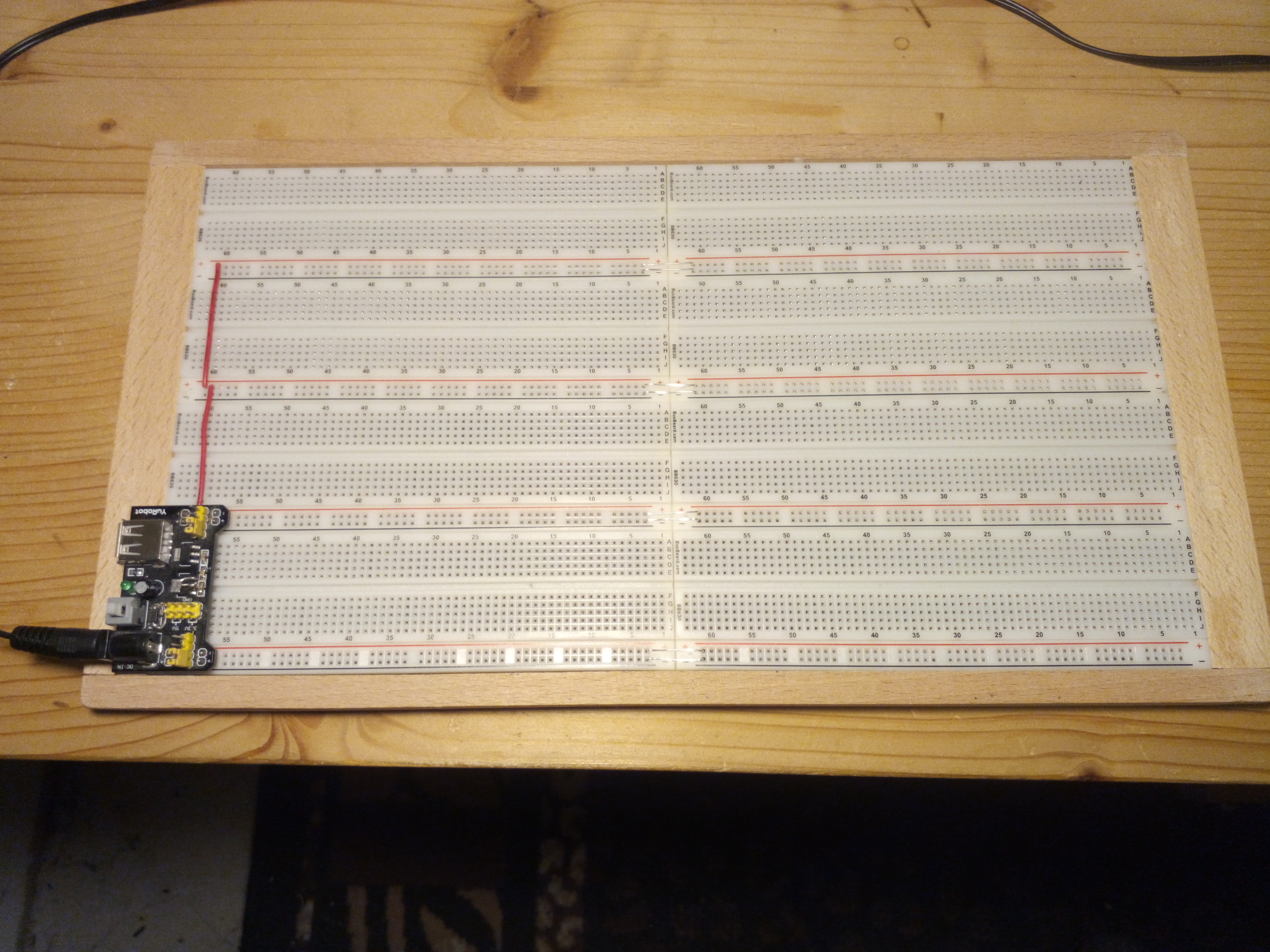
Since a very long time I wanted to design my own CPU and build it from smaller parts, preferable on bread boards. My main problem with the approach were my bad experiences with bread boards as a whole, as they seemed to be too unreliable for anything more serious than arduino tinkering. As it turns out it is only a matter of using high-quality boards and cabling to get a reliably working build. The boards I now use (BB830 from BusBoard) are quite expensive, but worth every penny and give me very little trouble.
In previous attempts I had much trouble to get a stable ground reference accross all the individual boards. So this time I directly soldered together ground rails of parallel boards with silver wire on the bottom and then placed the boards on top of a large plane of aluminium foil. This foil should make good contact to all the silver ground wires to connect them together and additionally work as shielding. So far this works pretty good.
When using this kind of setup it is important to also use a matching logic family of chips. 74AC, 74ACT, 74LVC or others have a very fast switching characteristics. This is great for many applications but in a large build with long and unshielded cables, their brutally steep signal edges wreck havoc with signal integritiy. So I settled for the moderately fast and well-behaved 74HC logic ICs with only a few 74AC parts to speed up the ALU.
One of the hardest parts of home-made computers is to actually build all the software to make the machine useful. To get the benefit of existing software, the breadboard computer core is designed to emulate the existing CPU 65C816. Together with 512K RAM and 512K Flash and identical IO capabilities, this now is a completely software compatible replica of the OS816 system - running at a lower overall speed, of course.
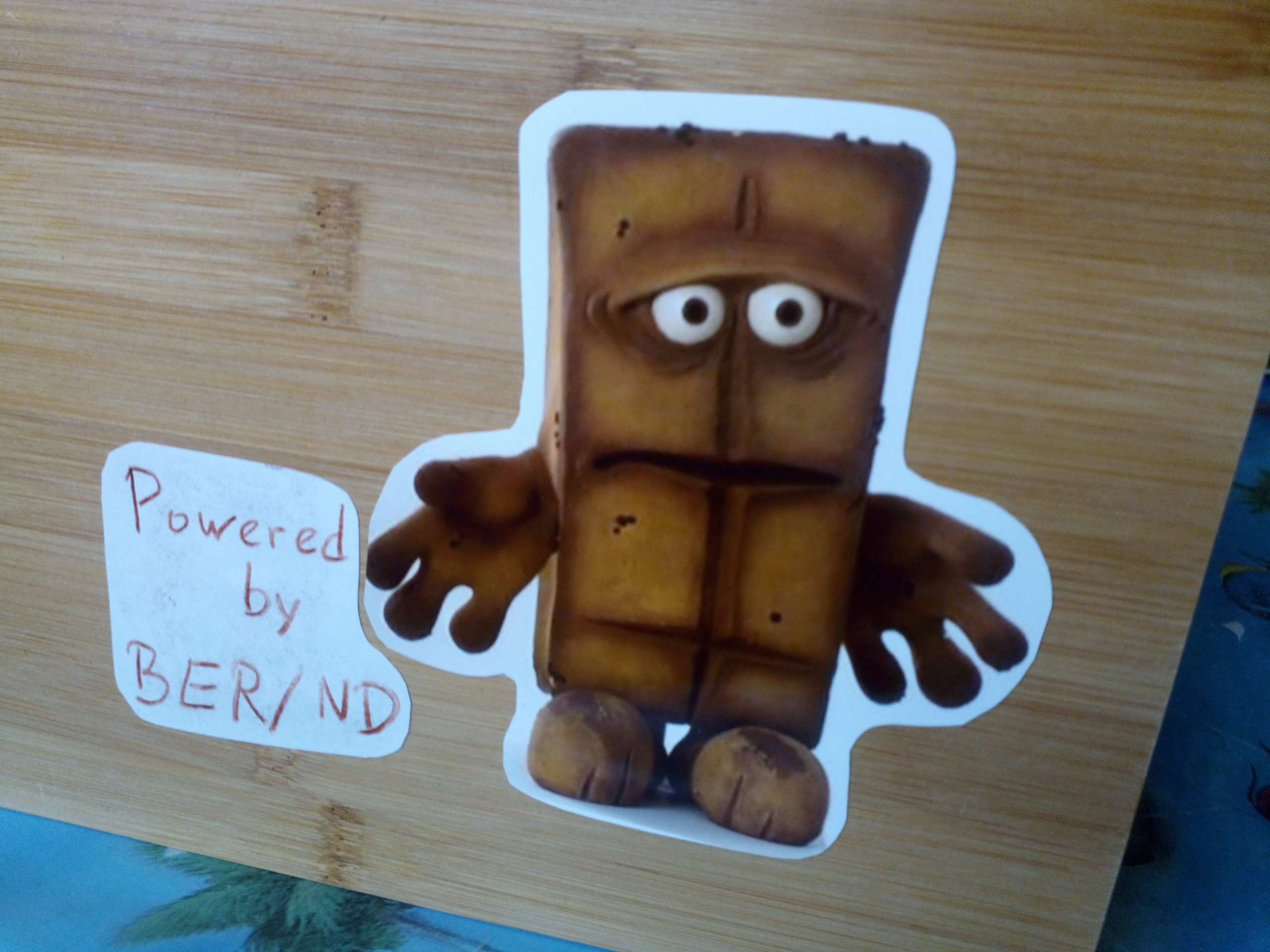
To properly stay in the "bread" theme, the emulator is called Bernd or BER/ND (if you like a more technical appearance). People familiar with the german TV station "Kinderkanal" will recognize the reference.
| Qty | Value | Footprint | References |
|---|---|---|---|
| 5 | 74HC377 | Package_DIP:DIP-20_W7.62mm | OP1, PC3, UA1, UB1, UC1 |
| 4 | 74AC153 | Package_DIP:DIP-16_W7.62mm | MUX1, MUX2, MUX3, MUX4 |
| 2 | 33pF | Capacitor_THT:C_Disc_D4.7mm_W2.5mm_P5.00mm | C1, C2 |
| 2 | 74AC00 | Package_DIP:DIP-14_W7.62mm | LOGIC1, LOGIC2 |
| 2 | 74AC08 | Package_DIP:DIP-14_W7.62mm | AND1, AND2 |
| 2 | 74AC11 | Package_DIP:DIP-14_W7.62mm | AND3, AND4 |
| 2 | 74AC283 | Package_DIP:DIP-16_W7.62mm | ADD1, ADD2 |
| 2 | 74HC163 | Package_DIP:DIP-16_W7.62mm | PC1, PC2 |
| 2 | 74HC32 | Package_DIP:DIP-14_W7.62mm | OR1, OR2 |
| 2 | 74HC574 | Package_DIP:DIP-20_W7.62mm | IR1, OUT1 |
| 2 | Conn_01x08 | Connector_PinHeader_2.54mm:PinHeader_1x08_P2.54mm_Vertical | JIN1, JOUT1 |
| 2 | SST39SF040 | Package_DIP:DIP-32_W15.24mm | MCODE1, ROM1 |
| 1 | 100uF | Capacitor_THT:CP_Radial_D10.0mm_P5.00mm | C4 |
| 1 | 10k | Resistor_THT:R_Array_SIP9 | RN1 |
| 1 | 10uF | Capacitor_THT:C_Disc_D4.7mm_W2.5mm_P5.00mm | C3 |
| 1 | 1M | Resistor_THT:R_Axial_DIN0204_L3.6mm_D1.6mm_P7.62mm_Horizontal | R2 |
| 1 | 1k | Resistor_THT:R_Axial_DIN0204_L3.6mm_D1.6mm_P7.62mm_Horizontal | R1 |
| 1 | 33k | Resistor_THT:R_Axial_DIN0204_L3.6mm_D1.6mm_P7.62mm_Horizontal | R3 |
| 1 | 74HC04 | Package_DIP:DIP-14_W7.62mm | INV1 |
| 1 | 74HC138 | Package_DIP:DIP-16_W7.62mm | DEC1 |
| 1 | 74HC164 | Package_DIP:DIP-14_W7.62mm | RES1 |
| 1 | 74HC245 | Package_DIP:DIP-20_W7.62mm | IN1 |
| 1 | 74HC541 | Package_DIP:DIP-20_W7.62mm | GATE1 |
| 1 | AS6C4008 | Package_DIP:DIP-32_W15.24mm | RAM1 |
| 1 | Conn_01x02 | Connector_PinHeader_2.54mm:PinHeader_1x02_P2.54mm_Vertical | JPOWER1 |
| 1 | Crystal | Crystal:Crystal_HC18-U_Vertical | Y1 |
| 1 | IDT71256 | Package_DIP:DIP-28_W7.62mm | REG1 |
| 1 | NE555 | Package_DIP:DIP-8_W7.62mm | TIM1 |
45 parts, built around the 74HC245D, 74HC541D, 74HC377D and 74AC153PC. The full list of its parts is on this page, with links to each part's symbol and footprint where PCBKit's library has them.
From the c0pperdragon/BreadBin repository on GitHub, at the commit this page was made from: the board is board/board.kicad_pcb. PCBKit opens the board in the browser, with nothing to install.
Its repository states no licence, so its author keeps all rights: ask c0pperdragon before reusing the design.

EwoudVV/arpeggiator
12-note analog arpeggiator with a 1/2/3 octave range, custom pcb and printed case

nailed-barnacle/Cisc-8-ttl-processor
A cut-down version of the 8080 processor using HCTTL and including a discrete ALU and instruction decoder


dbuchwald/Z80DevBoard
Simple Z80 based prototyping and development board designed as extension to Arduino Mega 2560

fran150/clementina-hardware
KiCad schematic for Clementina, a 3.3V W65C02S computer with a Raspberry Pi Pico 2 W (MIA) handling video, audio, storage and I/O.

