2 layers43.2 × 53.3 mm
A VideoBoard
c0pperdragon/A-VideoBoard
FPGA board to create a component video signal for vintage computers.
75 parts71MIT

 c0pperdragon/A-VideoBoard71
FPGA board to create a component video signal for vintage computers.
Zxspectrummod is an open-source printed circuit board by c0pperdragon, from the c0pperdragon/A-VideoBoard repository on GitHub, published under the MIT licence. It is a 2-layer board of 47 × 19 mm with 8 parts on 24 nets, routed with 125 tracks and 17 vias.
Its parts include 3 capacitors and 2 ICs. It belongs with the fPGA and programmable logic and retro computing and games boards of this library.
A small FPGA board with a component video interface to directly drive an analog monitor or TV input. Its main purpose is to create component video / RGB mods of vintage home computers and consoles or to provide video output for hobby projects.
It consists of the purest minimum parts necessary to have a multi-purpose FPGA combined with a simple way to generate a YPbPr signal. After much research I finally settled on a cheap MAX 10 device in a TQFP-144 package which I can solder by hand (barely). The rest of the parts are pretty cheap and quite easy to solder.
To interface any of the vintage systems to the A-Video Board, level shifters are necessary to translate the 5 volt to 3.3 volt for the FPGA input pins. These level shifters can be implemented in a system specific daughter board that can be stacked on top of the A-Video board. Any such interface board can probably be implemented in a simple single-sided wide-pitch PCB that can be even home-etched with some experience.
Currently I have built applications of the A-Video board for
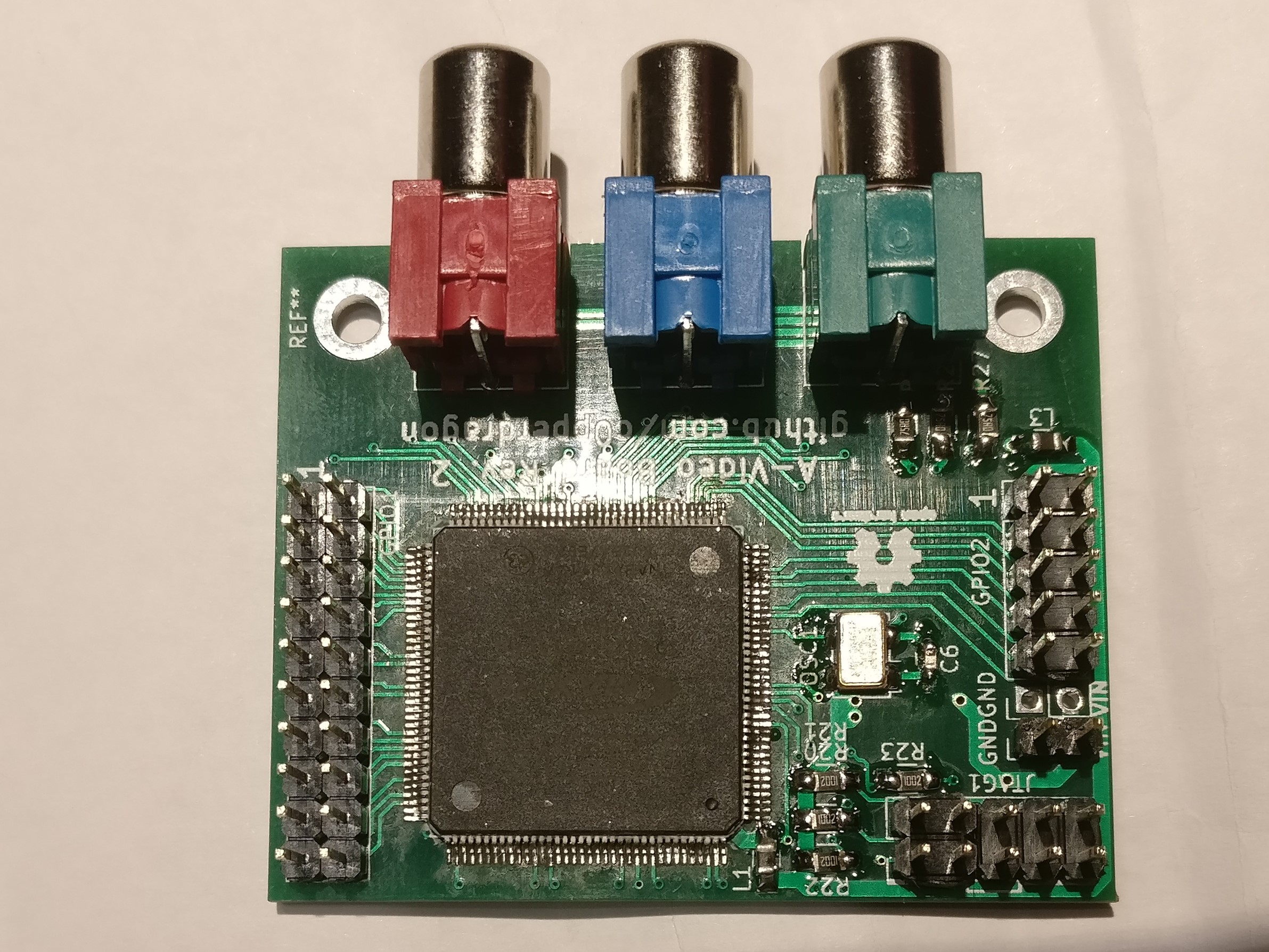
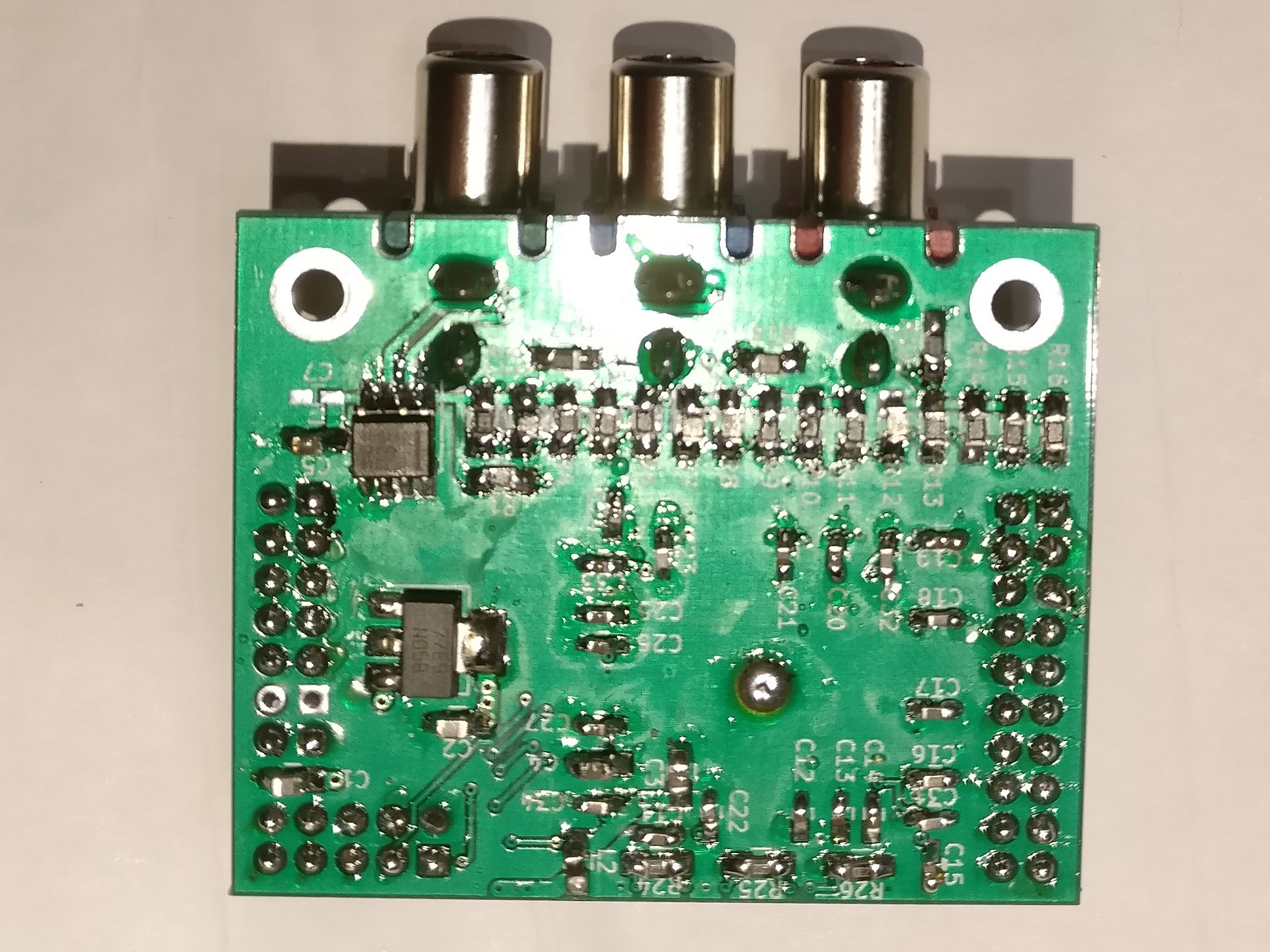
The board has these main parts
and various supporting passive components, mainly decoupling, filtering and pull-ups.
It has the following connectors:
If you plan to use an A-Video board, feel free to contact me for assistance:
reinhard.grafl (at) aon.at
Maybe I will either have some spare PCBs I could send you to populate yourself,
or even provide you with a fully assembled board for the cost of the parts and shipping.
| Qty | Value | Footprint | References |
|---|---|---|---|
| 2 | 100nF | Capacitors_SMD:C_0603_HandSoldering | C2, C3 |
| 2 | CONN_01X07 | Pin_Headers:Pin_Header_Straight_1x07_Pitch2.54mm | OUT1, OUT2 |
| 2 | LVC245A | Housings_SOIC:SOIC-20W_7.5x12.8mm_Pitch1.27mm | IC1, IC2 |
| 1 | 10uF | Capacitors_SMD:C_0805_HandSoldering | C1 |
| 1 | CONN_01X11 | Pin_Headers:Pin_Header_Straight_1x11_Pitch2.54mm | IN1 |
c0pperdragon/A-VideoBoard
FPGA board to create a component video signal for vintage computers.

c0pperdragon/A-VideoBoard
FPGA board to create a component video signal for vintage computers.

c0pperdragon/A-VideoBoard
FPGA board to create a component video signal for vintage computers.


joeycastillo/Sensor-Watch
A board replacement for the classic Casio F-91W wristwatch

rusefi/rusefi
rusefi - GPL internal combustion engine control unit

hoglet67/RGBtoHDMI
Bare-metal Raspberry Pi project that provides pixel-perfect sampling of Retro Computer RGB/YUV video and conversion to HDMI

shanteacontrols/OpenDeck
A platform for building interactive control and sensing devices using MIDI and OSC built with Zephyr RTOS.

hackclub/OnBoard
💡 Join 1,000 teenagers and make your first PCB with a $100 grant!

dangiu/PicoMemcard
Emulating PSX Memory Card (or controller) using a Raspberry Pi Pico

OLIMEX/DIY-LAPTOP
Do It Yourself Open Source Hardware and Software Modular Hacker's Friendly Laptop
It measures 47 × 19 mm and has 2 copper layers, 1.6 mm thick.
8 parts. The full list of its parts is on this page, with links to each part's symbol and footprint where PCBKit's library has them.
From the c0pperdragon/A-VideoBoard repository on GitHub, at the commit this page was made from: the board is zxspectrummod/board/board.kicad_pcb. PCBKit opens the board in the browser, with nothing to install.
Its repository publishes it under the MIT licence: you may reuse it on that licence's terms (keep the author's notice, and for a copyleft licence share your changes alike).