

2 layers139 × 139 mm
Screen driver
lambdaBoost/MC6205-graphical-display
graphical display on old neon plasma screen
285 parts7

 bskp/koebi1
Robotic Puppeteering
Brett is an open-source printed circuit board by bskp, from the bskp/koebi repository on GitHub, published under the MIT licence. It is a 2-layer board of 78.7 × 94 mm with 65 parts on 88 nets, routed with 683 tracks and 75 vias.
It is built around the TSR 1-2450 and BC547. Its parts include 9 capacitors, 5 resistors, 2 ICs, 2 transistors and 2 connectors. It belongs with the robots and motor control boards and the ESP32 boards of this library.
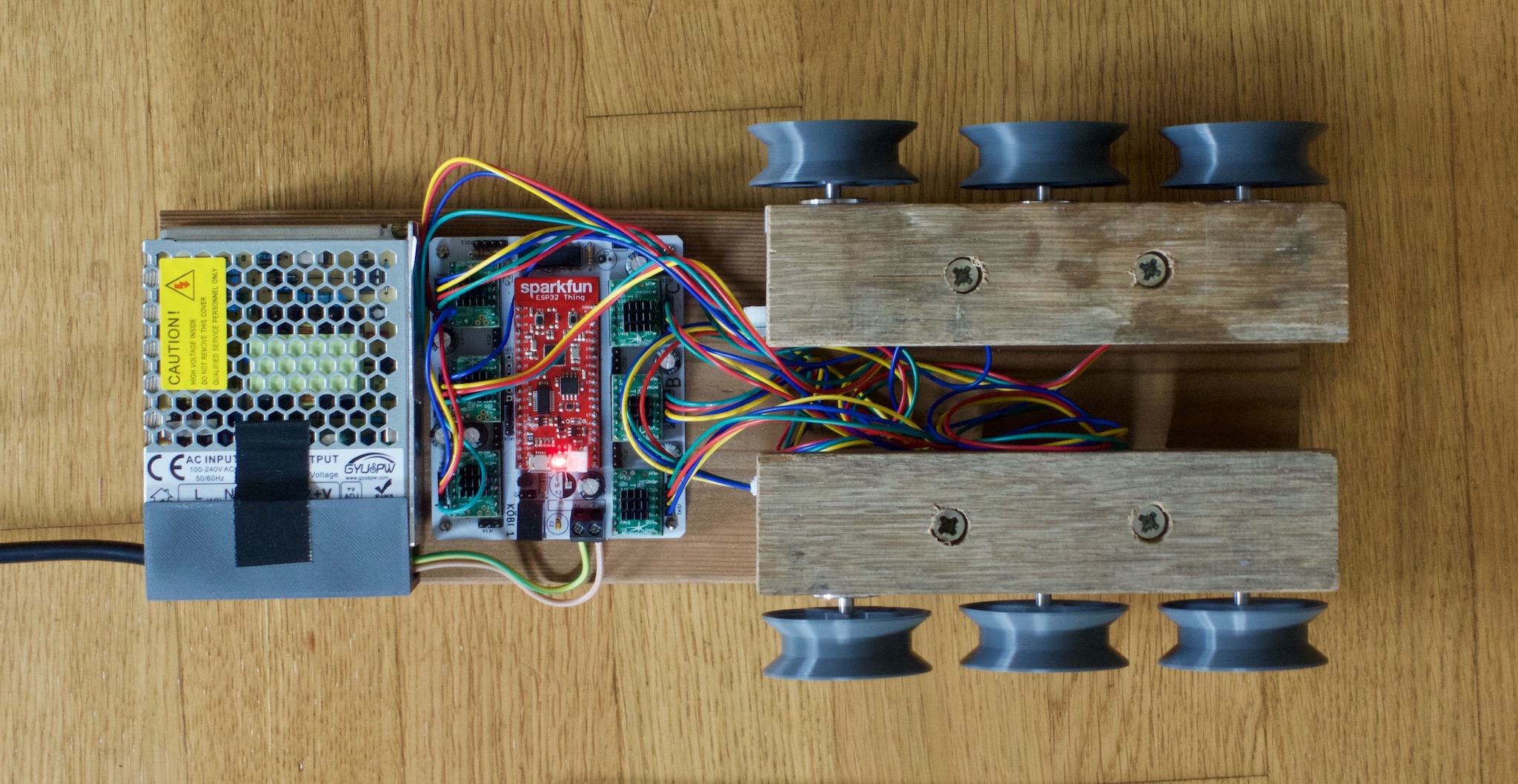
Köbi is a 6-channel wireless stepper controller consisting of a SparkFun ESP32 Thing (red) and a breakout shield (white). The latter is inspired by RAMPS and accomodates six stepper motor drivers (TMC2130 StepSticks, green), optical endstop sensors and fan control.
The software on the ESP32 provides an OSC (Open Sound Control) server. This, in combination with a matching tablet GUI for the modular TouchOSC app allows easy control of the steppers (which are the six thread spools).
Alternatively, the module can be controlled by any other OSC client. The OSC endpoints are documented at the end of this page.
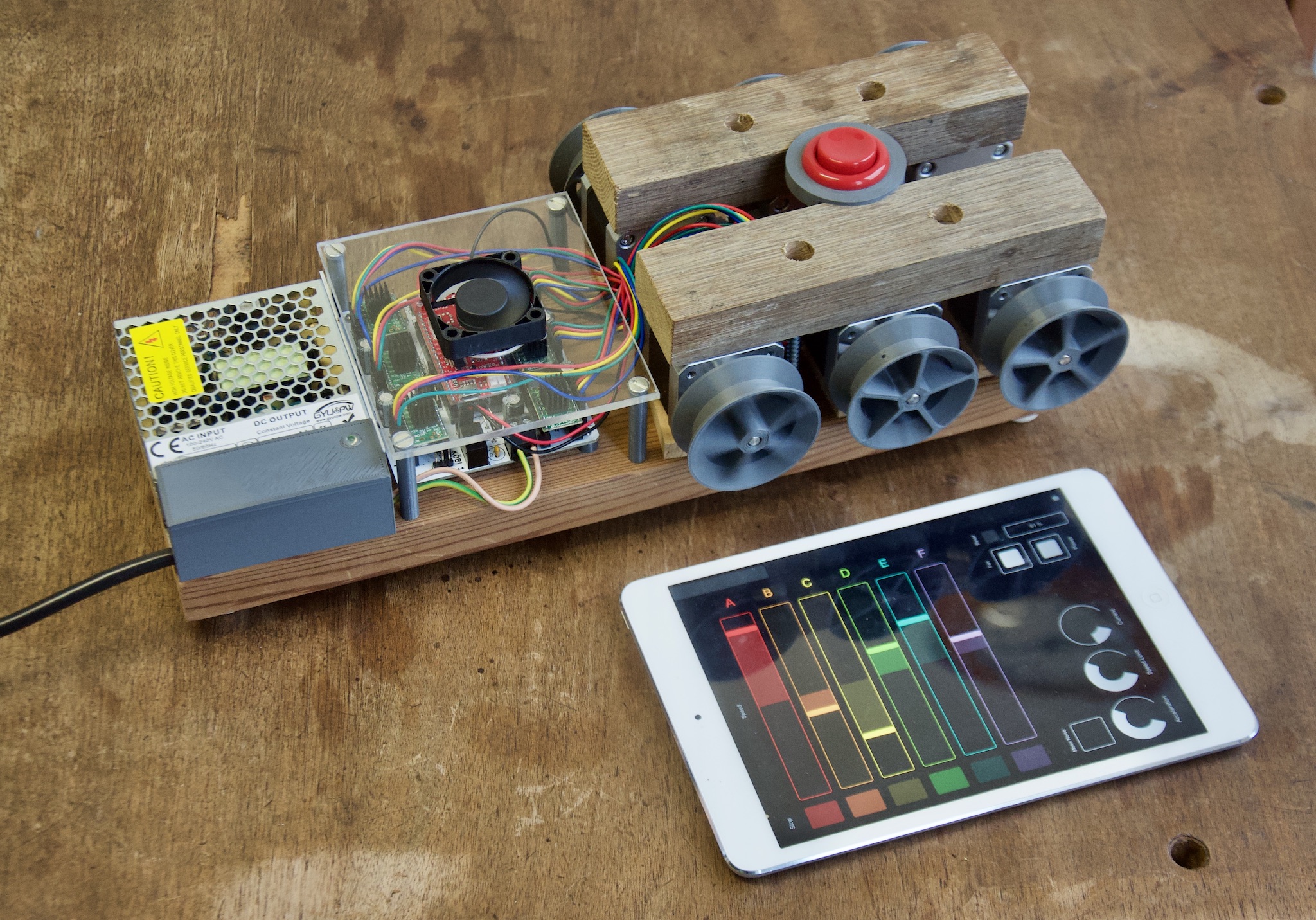
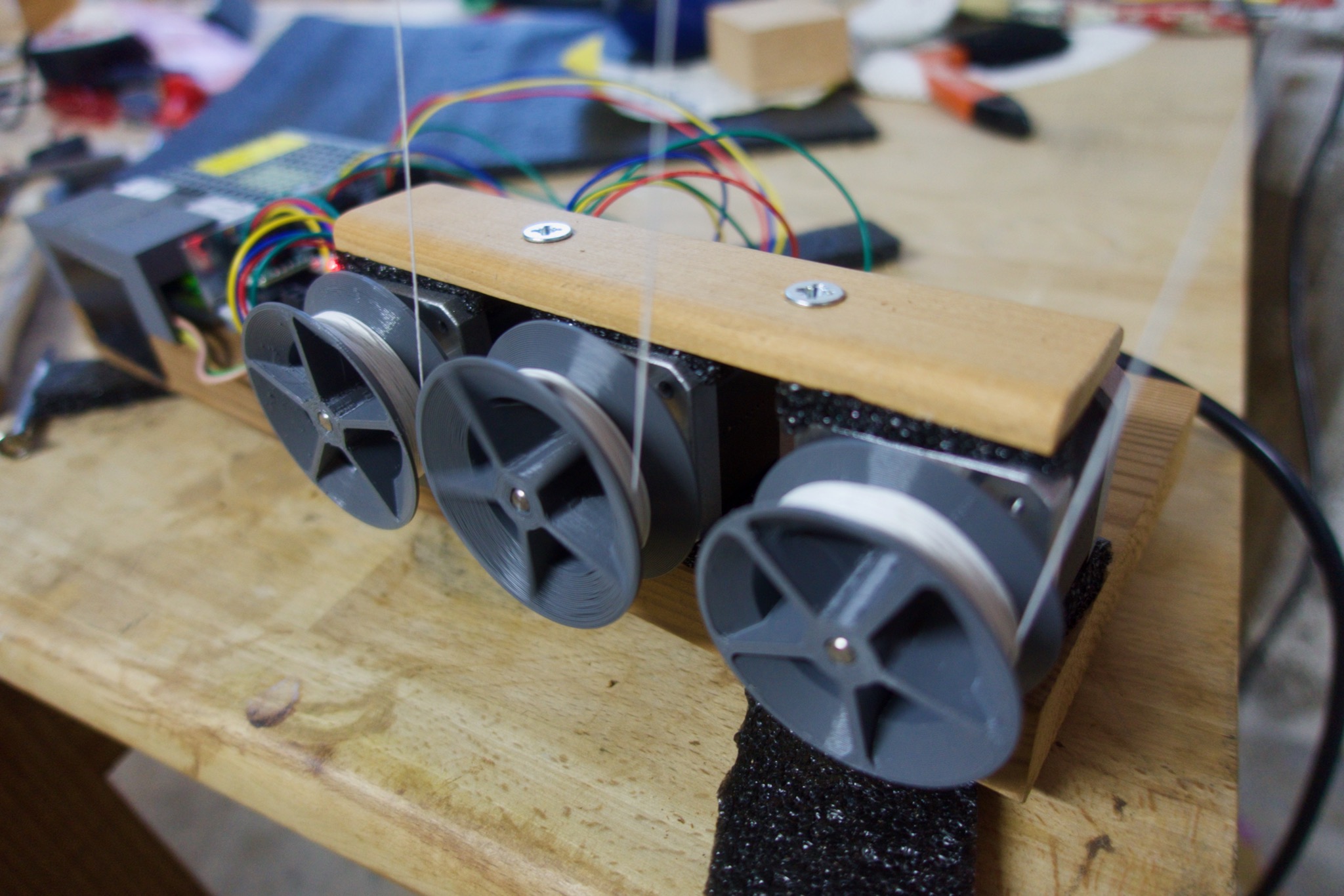
There are a ton of things you can hook it to. Feel free to reuse!
The ESP32-Board runs a special build of the Micropython firmware due to two requirements:
The PWM hardware module, which generates the pulses for the stepper motors, is currently not supported by Micropython. This special build includes a Python module supporting it, implemented in C: The MCPWM module.
The Python module for the Trinamic TMC steppper drivers (which holds names and descriptions to dozens of its registers) had to be frozen in order to save memory: The TMC [blocked] module. (TODO: Not published yet)
How much do you need? To get you started with the software, each of this three guides covers a different level:
This repo also supplies you with everything needed to build your own Köbi.
| Thing | Brand | Part | Source | Price |
|---|---|---|---|---|
| Steppers (5-pack) | Hanpose | 17HS4401 | AliExpress | 38.- |
| Voltage Supply (120W) | GYU&PW | S-120-24 | AliExpress | 13.- |
| ESP32 Thing | SparkFun | DEV-13907 | bastelgarage | 22.- |
SN74LS138N
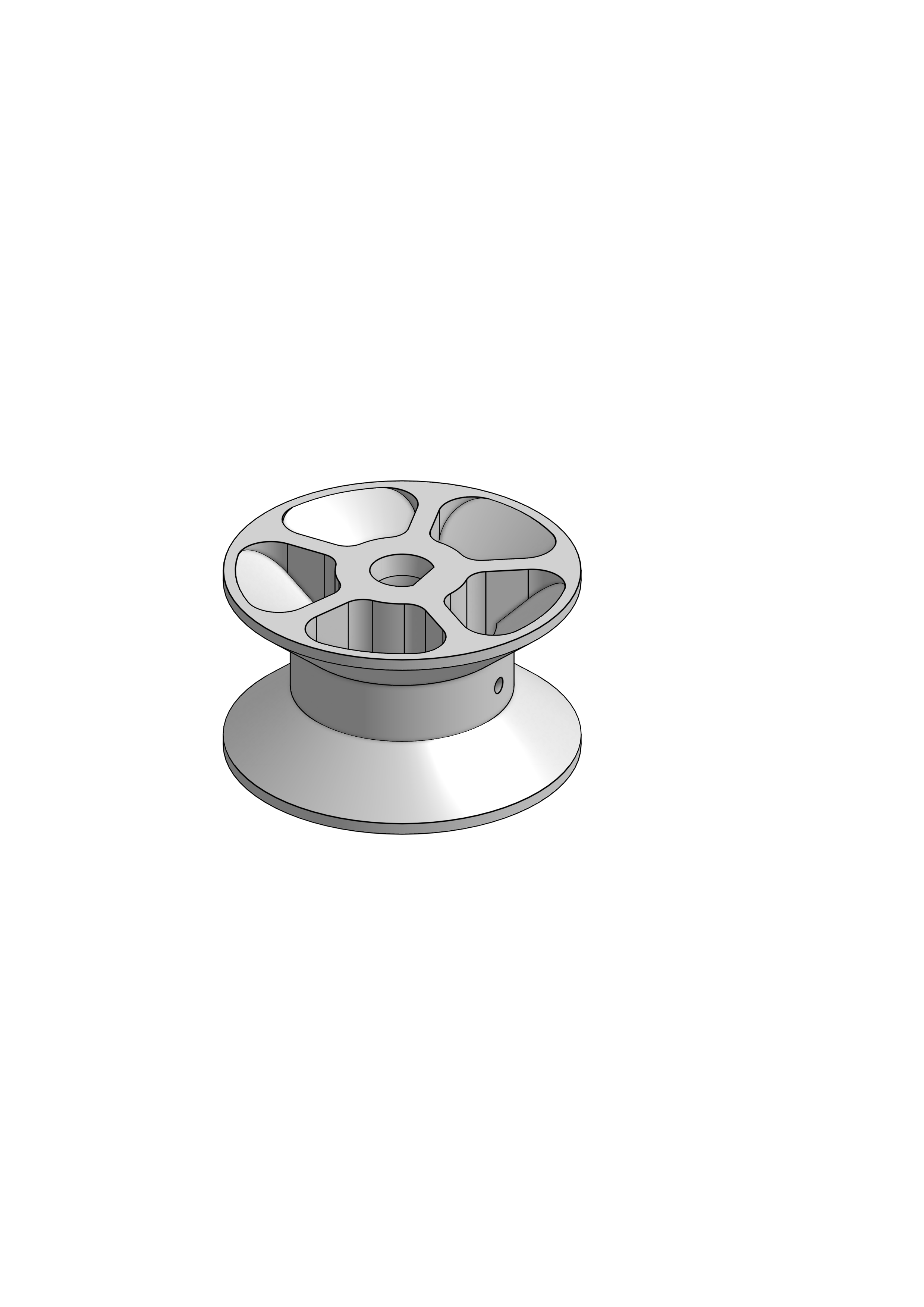
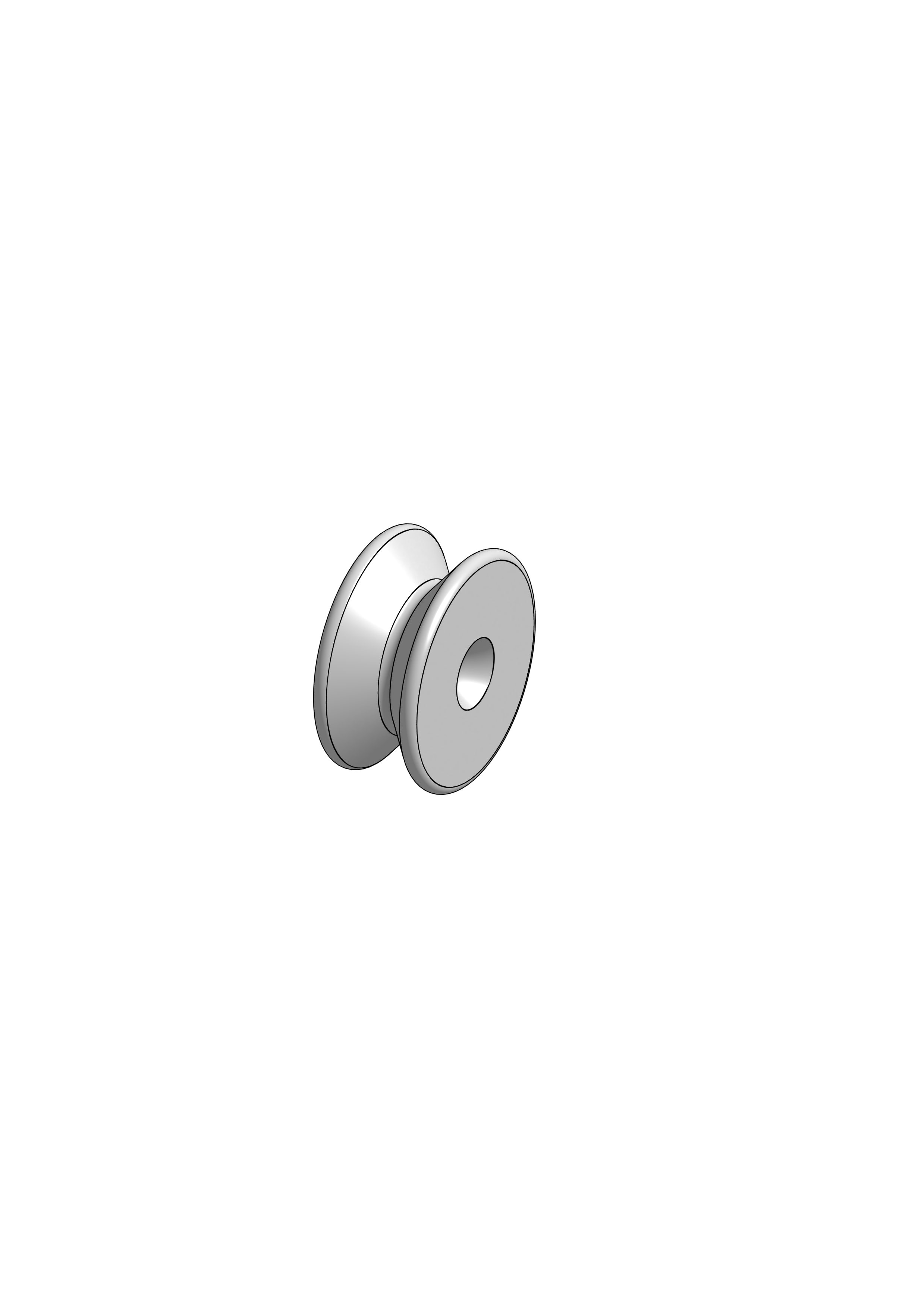
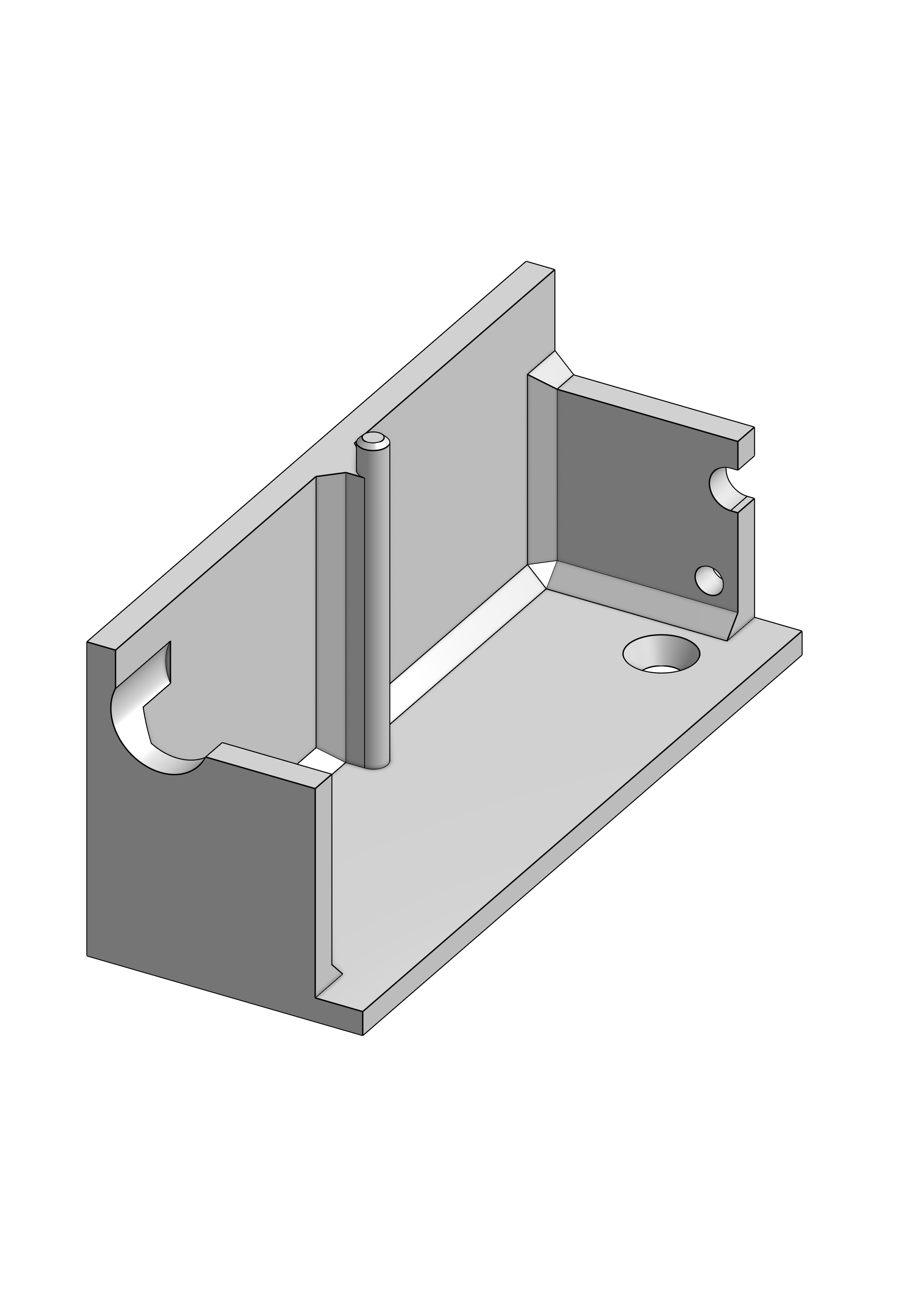
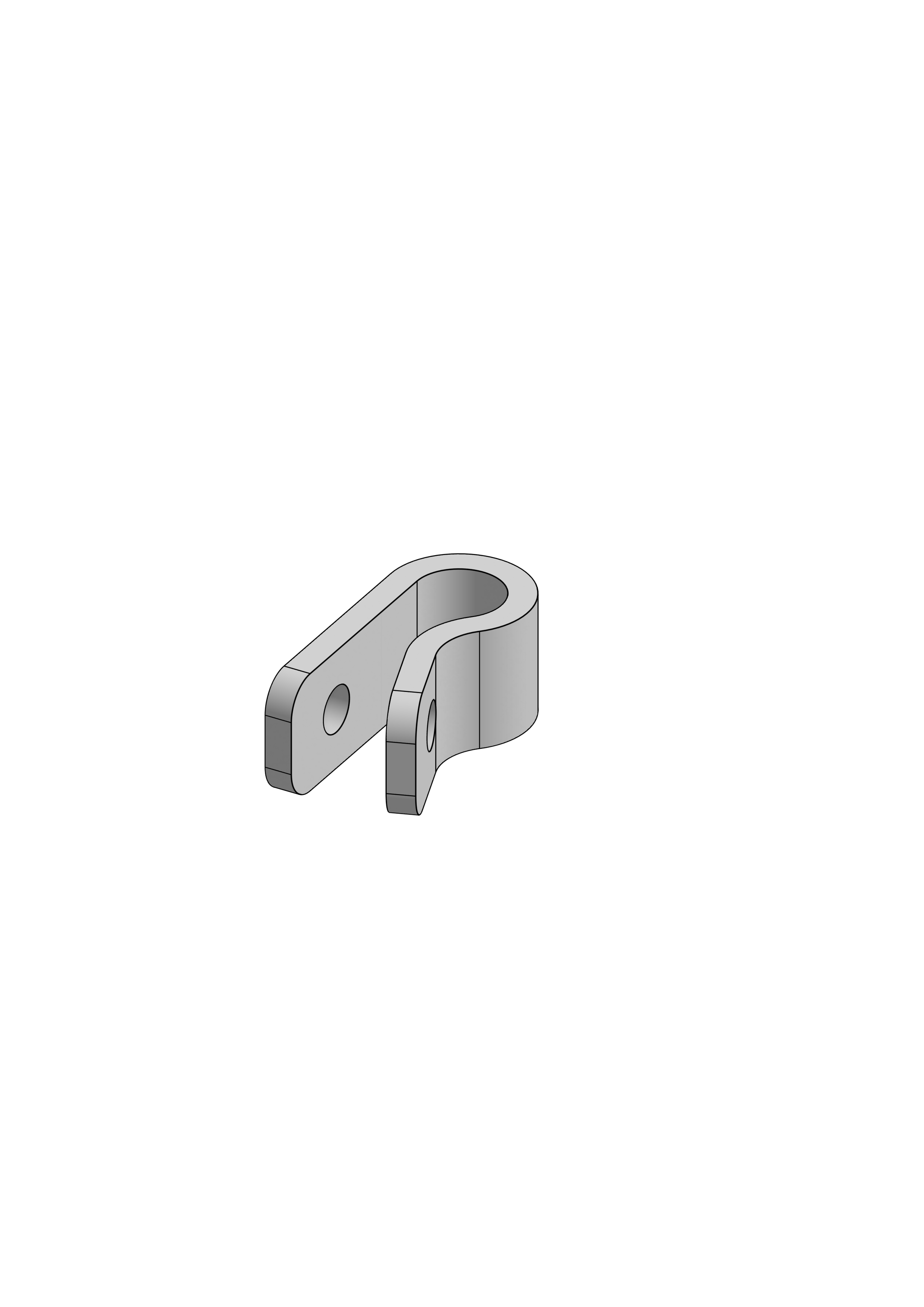
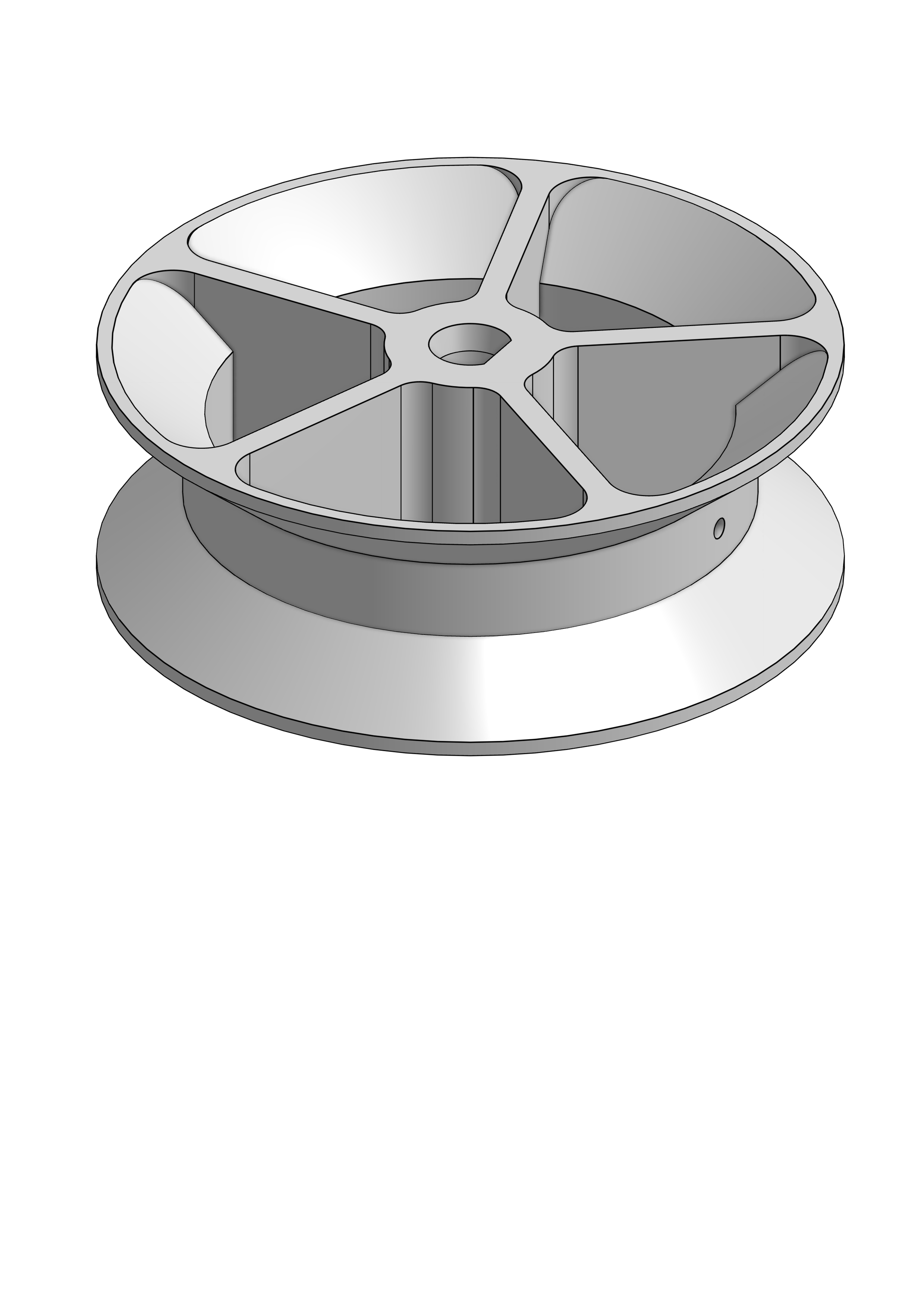 Thread Spool (40mm): .stl
| Qty | Value | Footprint | References |
|---|---|---|---|
| 13 | SolderJumper_3_Bridged12 | Jumper:SolderJumper-3_P1.3mm_Bridged12_RoundedPad1.0x1.5mm | JP1, JP5, JP6, JP7, JP8, JP9, JP10, JP11, JP12, JP13, JP14, JP15, JP16 |
| 8 | 100u | Capacitor_THT:CP_Radial_D8.0mm_P3.50mm | C1, C3, C4, C5, C6, C7, C8, C9 |
| 7 | Conn_01x04_Male | Connector_PinHeader_2.54mm:PinHeader_1x04_P2.54mm_Vertical | JAUX, JSM1, JSM2, JSM3, JSM4, JSM5, JSM6 |
| 6 | Conn_01x03_Male | Connector_PinHeader_2.54mm:PinHeader_1x03_P2.54mm_Vertical | JES1, JES2, JES3, JES4, JES5, JES6 |
| 6 | SilentStepStick | fait_maison:StepStick | B1, B2, B3, B4, B5, B6 |
| 3 | SolderJumper_3_Open | Jumper:SolderJumper-3_P1.3mm_Open_RoundedPad1.0x1.5mm | JP2, JP3, JP4 |
| 2 | 4k7 | Resistor_THT:R_Axial_DIN0207_L6.3mm_D2.5mm_P7.62mm_Horizontal | R3, R4 |
| 2 | BC547 | Package_TO_SOT_THT:TO-92_Inline | Q1, Q2 |
| 1 | 100kOhm | Resistor_THT:R_Axial_DIN0207_L6.3mm_D2.5mm_P7.62mm_Horizontal | R1 |
| 1 | 100n | Capacitor_THT:C_Radial_D6.3mm_H5.0mm_P2.50mm | C2 |
| 1 | 10k | Resistor_THT:R_Axial_DIN0207_L6.3mm_D2.5mm_P7.62mm_Horizontal | R2 |
| 1 | 1k | Resistor_THT:R_Axial_DIN0207_L6.3mm_D2.5mm_P7.62mm_Horizontal | R5 |
| 1 | 1n | Capacitor_THT:C_Radial_D6.3mm_H5.0mm_P2.50mm | _C1 |
| 1 | 74LS138 | Package_DIP:DIP-16_W7.62mm | U1 |
| 1 | Conn_01x01_Male | Connector_PinHeader_2.54mm:PinHeader_1x01_P2.54mm_Vertical | JRST1 |
| 1 | Conn_01x02_Male | Connector_PinHeader_2.54mm:PinHeader_1x02_P2.54mm_Vertical | J3 |
| 1 | Conn_01x04_Female | Connector_PinHeader_2.54mm:PinHeader_1x04_P2.54mm_Vertical | JI2C1 |
| 1 | Conn_01x06_Male | Connector_PinHeader_2.54mm:PinHeader_1x06_P2.54mm_Vertical | JSPI |
| 1 | ESP32_THING_W_ANT_KEEPOUT | Boards:ESP32_THING | B0 |
| 1 | Polyfuse | Fuse:Fuse_Bourns_MF-RHT1000 | F1 |
| 1 | Screw_Terminal_01x02 | TerminalBlock_RND:TerminalBlock_RND_205-00232_1x02_P5.08mm_Horizontal | J1 |
| 1 | TSR_1-2450 | Converter_DCDC:Converter_DCDC_TRACO_TSR-1_THT | U2 |
The 61 most common of 65 parts.
It measures 78.7 × 94 mm and has 2 copper layers, 1.6 mm thick.
65 parts, built around the TSR 1-2450 and BC547. The full list of its parts is on this page, with links to each part's symbol and footprint where PCBKit's library has them.
From the bskp/koebi repository on GitHub, at the commit this page was made from: the board is pcb/brett.kicad_pcb. PCBKit opens the board in the browser, with nothing to install.
Its repository publishes it under the MIT licence: you may reuse it on that licence's terms (keep the author's notice, and for a copyleft licence share your changes alike).
lambdaBoost/MC6205-graphical-display
graphical display on old neon plasma screen


corygrant/dingoPDM
Hardware - dingoPDM is an open source, affordable automotive PDM (Power Distribution Module). Pre-assembled and tested units are available or the design can be used to build a DIY version.

hberntsen/mhi-ac-ctrl-esp32
Control MHI Airconditioning locally using your own ESP32 series chip!


