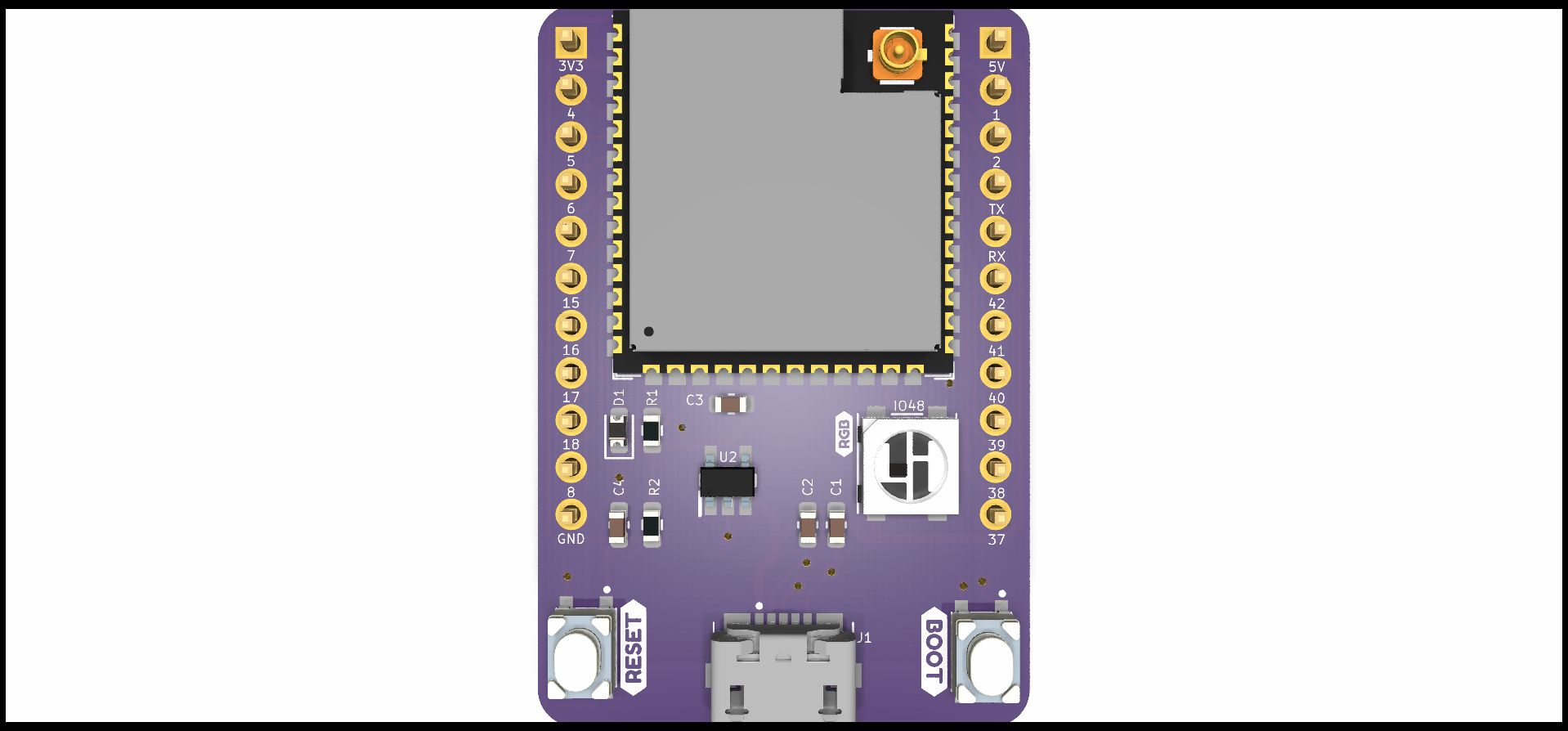
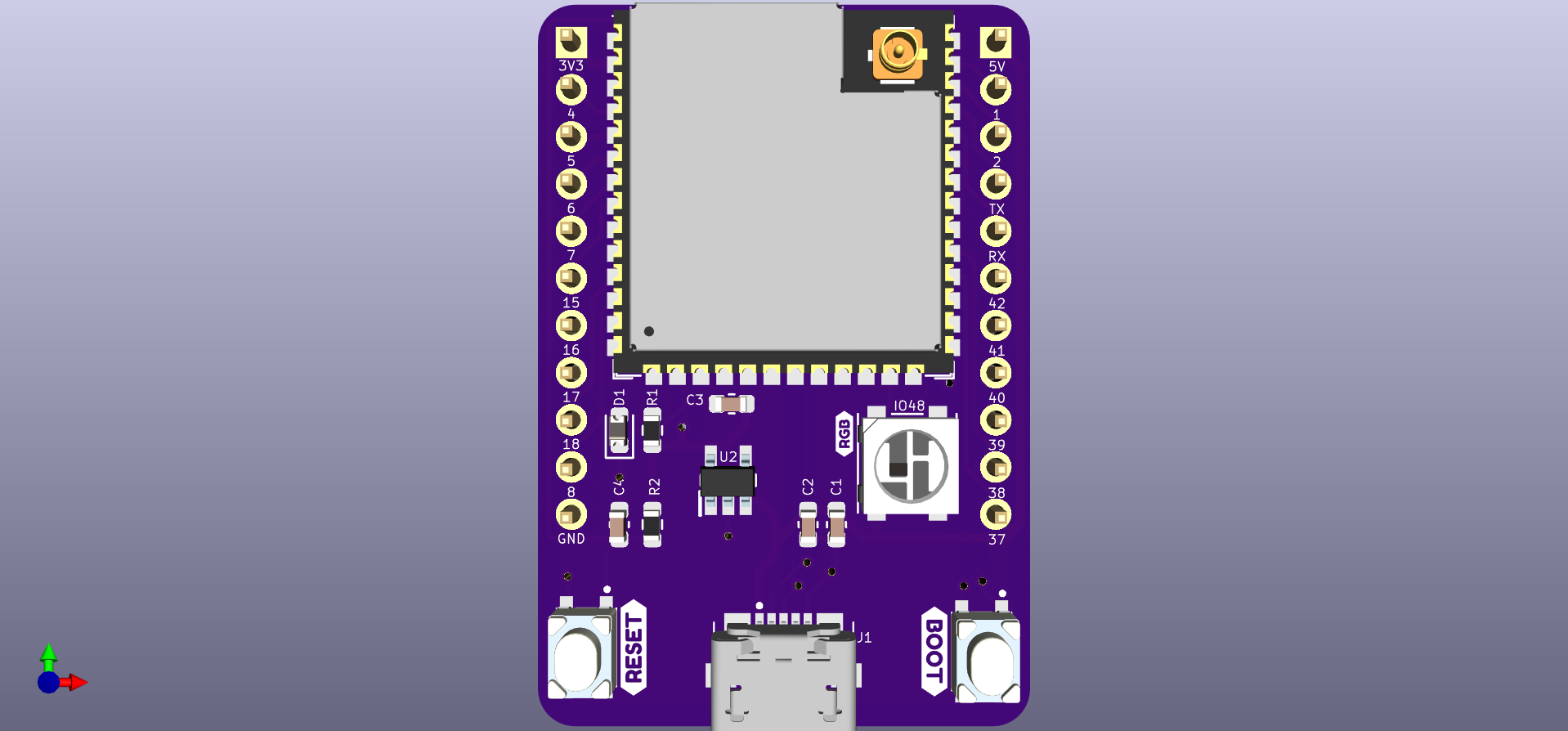
2 layers26.5 × 38.8 mm
Esp32-chungus
ayan4m1/esp-chungus
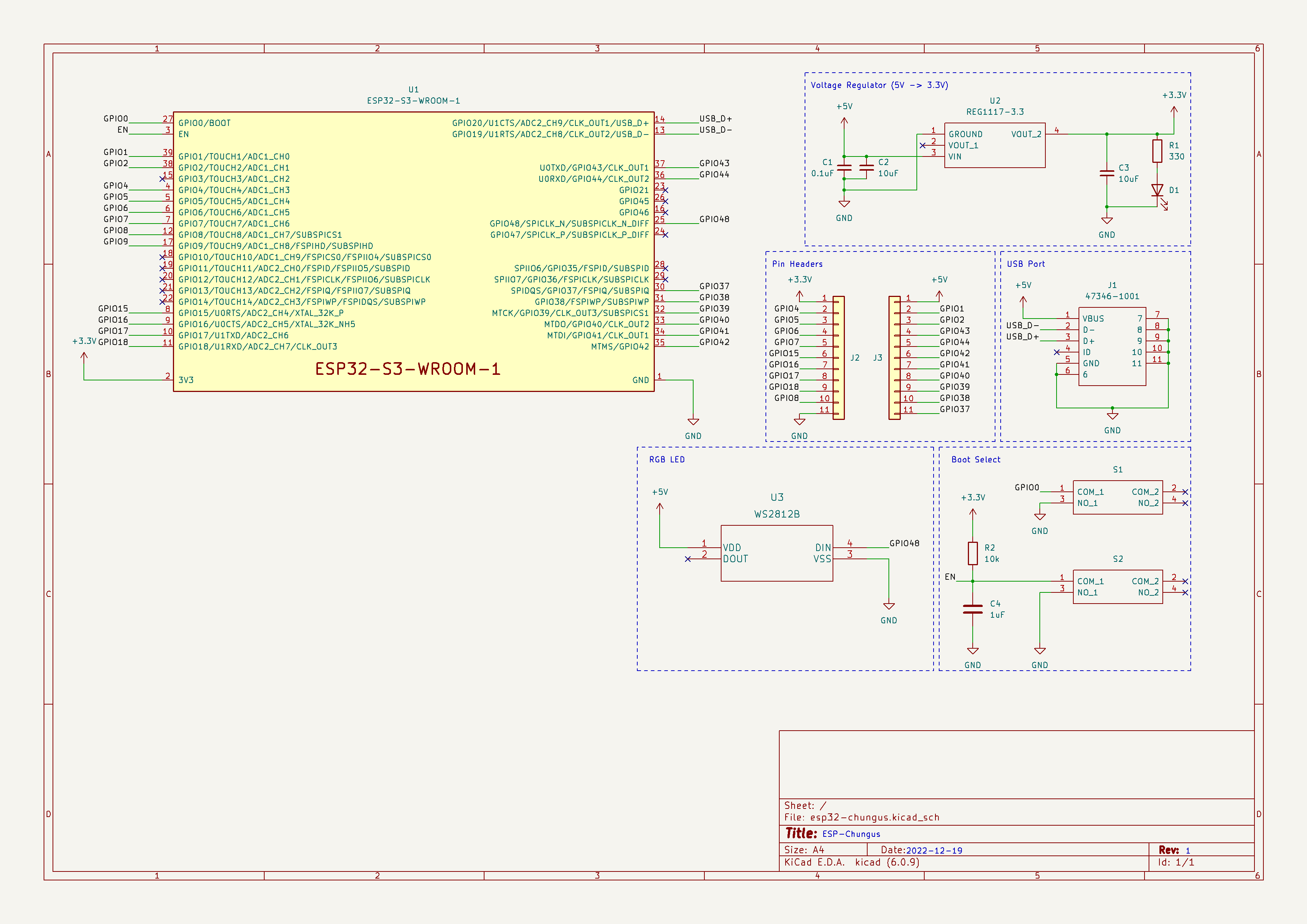
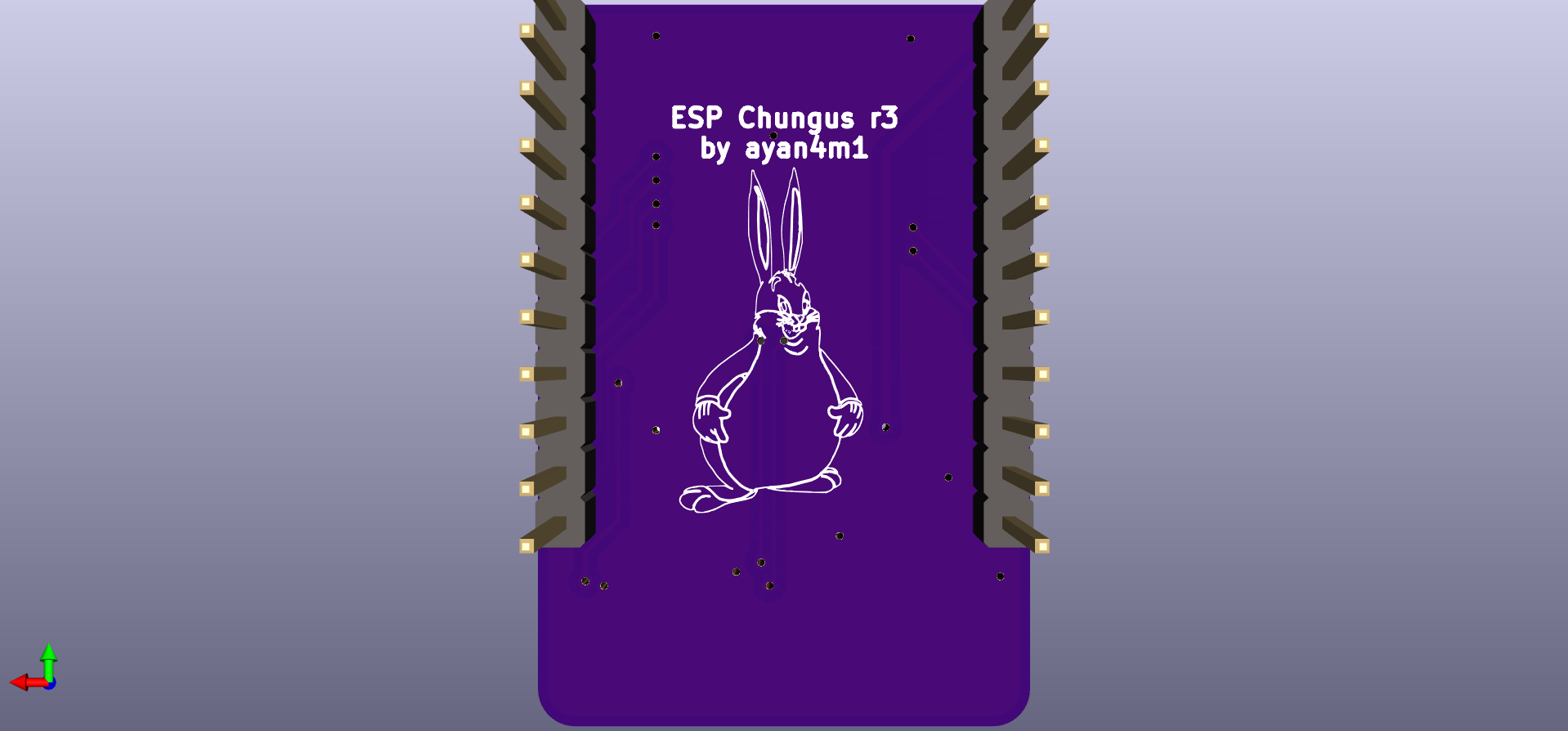
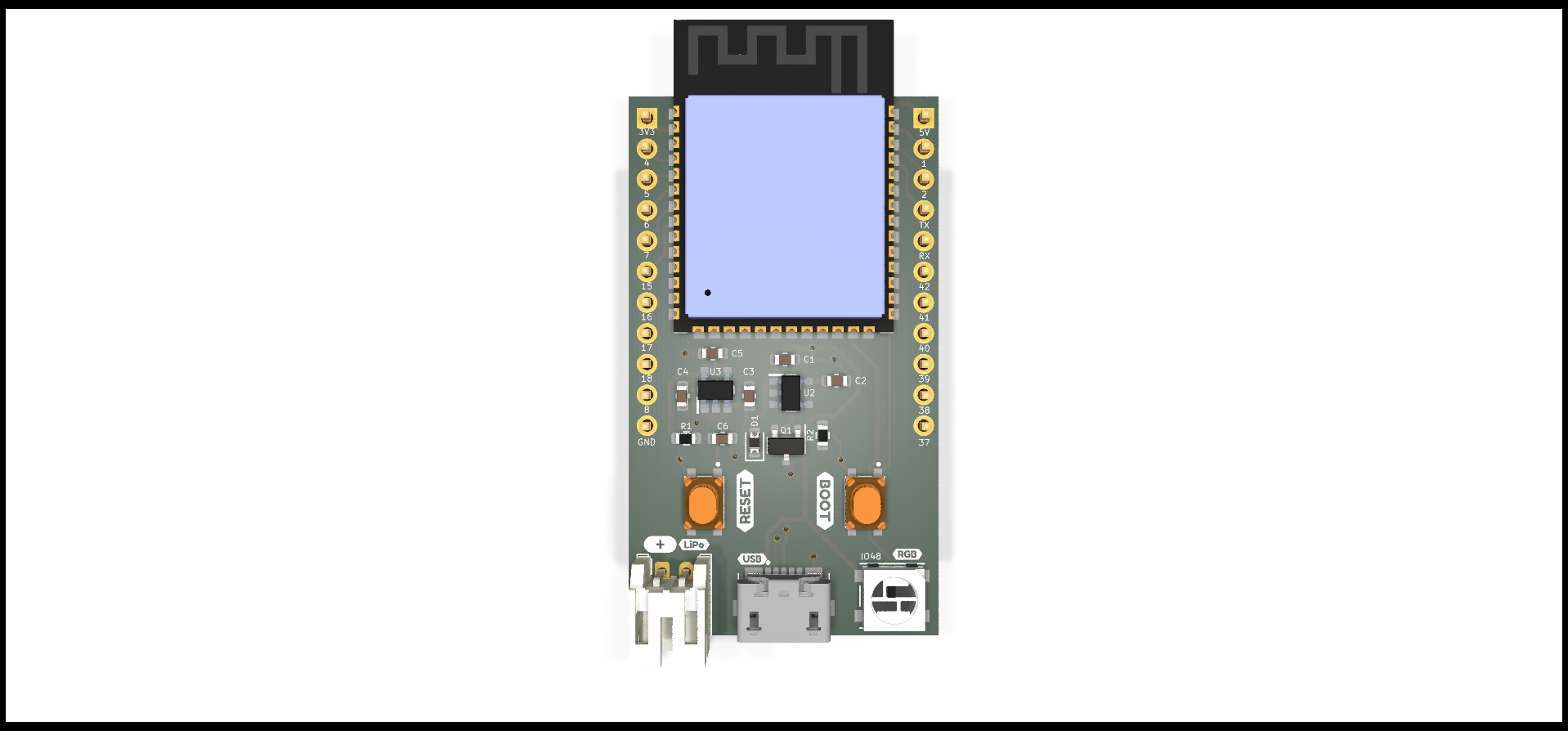
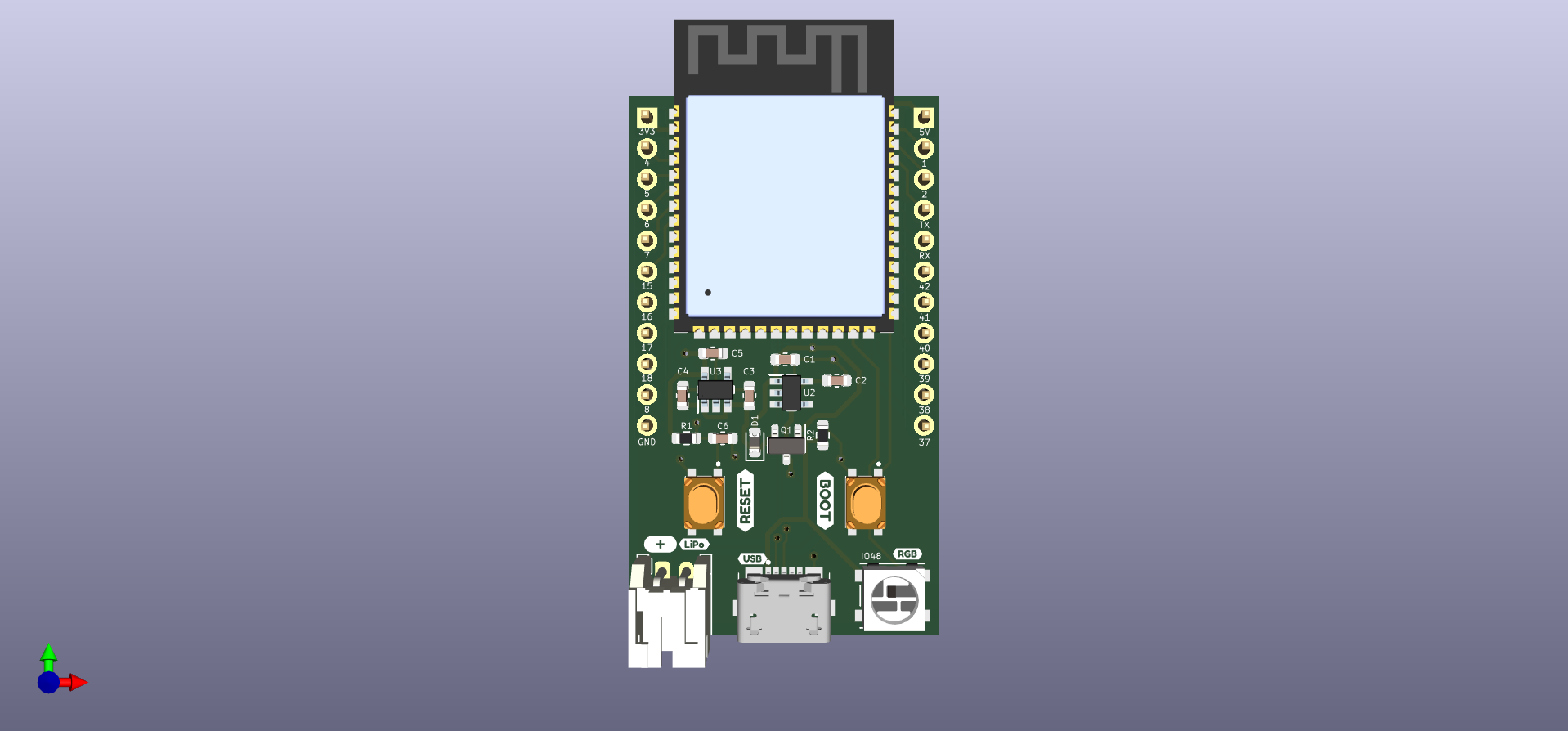
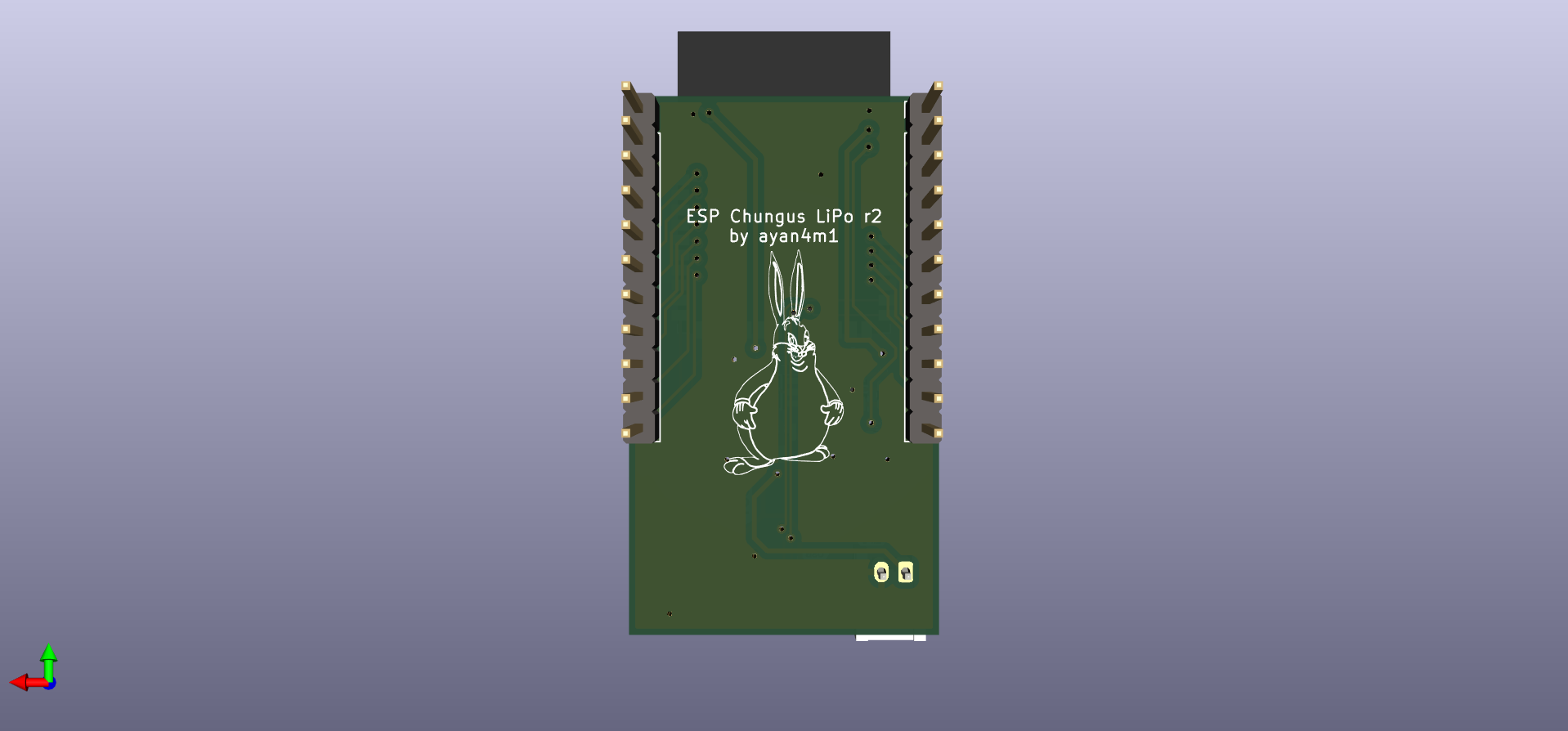
Chungus is an ESP32-S3 development board created as a learning exercise in KiCad.
19 parts2MIT

 ayan4m1/esp-chungus2
Chungus is an ESP32-S3 development board created as a learning exercise in KiCad.
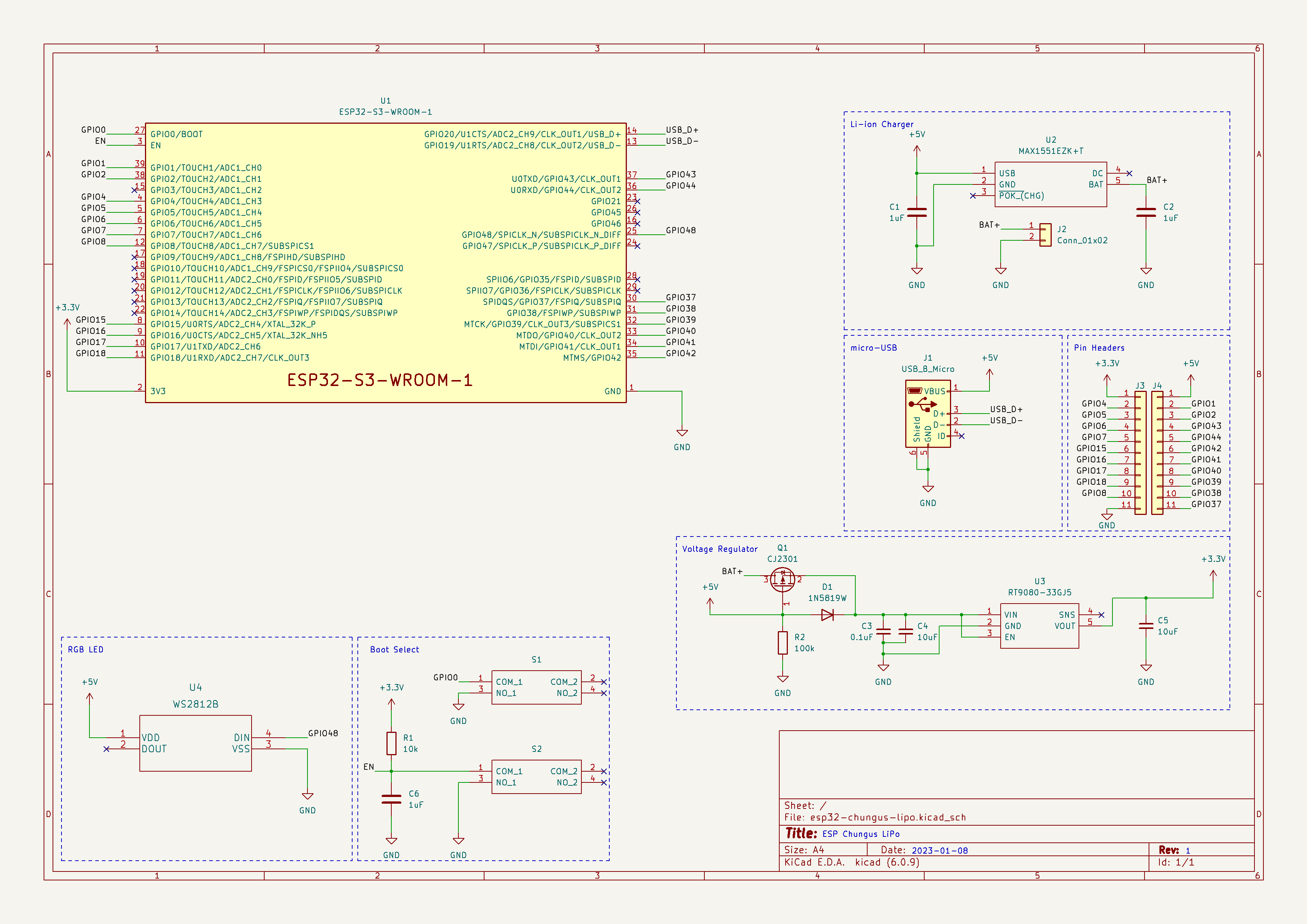
Esp32-chungus lipo is an open-source printed circuit board by ayan4m1, from the ayan4m1/esp-chungus repository on GitHub, published under the MIT licence. It is a 2-layer board of 25.6 × 44.5 mm with 27 parts on 51 nets, routed with 242 tracks and 32 vias.
It is built around the ESP32-S3-WROOM-1-N8, MAX1551EZK+T and RT9080-33GJ5, with the WS2812B, PTS526SM15SMTR2LFS and 1N5819W among its other parts. Its parts include 6 capacitors, 4 ICs, 4 connectors, 2 resistors and 2 switches. It belongs with the power boards and the ESP32 and RISC-V boards of this library.


Chungus is an ESP32-S3 development board created as a learning exercise in KiCad.
Either ESP32-S3-WROOM-1 (PCB antenna) or ESP32-S3-WROOM-1U (IPEX antenna connector) are suitable for these boards.
The voltage regulator was chosen specifically for its low quiescent current. If you cannot source it, look for SOT23-5 LDO regulators with 3.3V output voltage and at least 500mA output current.
| Designator | Part | Notes |
|---|---|---|
| C1 | 0603 SMD 0.1uF | |
| C2/C3 | 0603 SMD 10uF | |
| C4 | 0603 SMD 1uF | |
| D1 | 0603 SMD LED | |
| J1 | Molex 47346-1001 | Micro-USB connector |
| J2/J3 | 2.54mm Pin Header | |
| R1 | 0603 SMD 330 Ohm | |
| R2 | 0603 SMD 10k Ohm | |
| S1/S2 | PTS526_SM15_SMTR2_LFS | Tactile switch |
| U1 | ESP32-S3-WROOM-1U | |
| U2 | RT9080-33GJ5 | Voltage regulator |
| U3 | WS2812B | RGB LED |
| Designator | Part | Notes |
|---|---|---|
| C1/C2/C6 | 0603 SMD 1uF | |
| C3 | 0603 SMD 0.1uF | |
| C4/C5 | 0603 SMD 10uF | |
| J1 | Molex 47346-1001 | Micro-USB connector |
| J2 | JST-PH-2 | LiPo connector |
| J3/J4 | 2.54mm Pin Header | |
| R1 | 0603 SMD 10k Ohm | |
| R2 | 0603 SMD 100k Ohm | |
| S1/S2 | PTS526_SM15_SMTR2_LFS | Tactile switch |
| U1 | ESP32-S3-WROOM-1U | |
| U2 | MAX1551EZK+T | LiPo Charge IC |
| U3 | RT9080-33GJ5 | Voltage regulator |
| U4 | WS2812B | RGB LED |
| Q1 | CJ2301 | P-channel FET |
| Qty | Value | Footprint | References |
|---|---|---|---|
| 3 | 1uF | Capacitor_SMD:C_0603_1608Metric | C1, C2, C6 |
| 2 | 10uF | Capacitor_SMD:C_0603_1608Metric | C4, C5 |
| 2 | Conn_01x11 | Connector_PinHeader_2.54mm:PinHeader_1x11_P2.54mm_Vertical | J3, J4 |
| 2 | PTS526_SM15_SMTR2_LFS | SamacSys_Parts:PTS815SJM250SMTRLFS | S1, S2 |
| 1 | 0.1uF | Capacitor_SMD:C_0603_1608Metric | C3 |
| 1 | 100k | Resistor_SMD:R_0603_1608Metric | R2 |
| 1 | 10k | Resistor_SMD:R_0603_1608Metric | R1 |
| 1 | 1N5819W | Diode_SMD:D_0603_1608Metric | D1 |
| 1 | CJ2301 | Package_TO_SOT_SMD:SOT-23 | Q1 |
| 1 | Conn_01x02 | Connector_JST:JST_PH_S2B-PH-K_1x02_P2.00mm_Horizontal | J2 |
| 1 | ESP32-S3-WROOM-1 | Espressif:ESP32-S3-WROOM-1 | U1 |
| 1 | G*** | kibuzzard-63BAF173 | kibuzzard-63BAF173 |
| 1 | G*** | kibuzzard-63BB11FD | kibuzzard-63BB11FD |
| 1 | G*** | kibuzzard-63BB1216 | kibuzzard-63BB1216 |
| 1 | G*** | kibuzzard-63BAF358 | kibuzzard-63BAF358 |
| 1 | G*** | kibuzzard-63BAF13E | kibuzzard-63BAF13E |
| 1 | G*** | kibuzzard-63BAF117 | kibuzzard-63BAF117 |
| 1 | LOGO | chungus:chungus | G*** |
| 1 | MAX1551EZK+T | SamacSys_Parts:SOT95P275X110-5N | U2 |
| 1 | RT9080-33GJ5 | SamacSys_Parts:SOT94P280X100-5N | U3 |
| 1 | USB_B_Micro | SamacSys_Parts:473461001 | J1 |
| 1 | WS2812B | WS2812B:WS2812B | U4 |
ayan4m1/esp-chungus
Chungus is an ESP32-S3 development board created as a learning exercise in KiCad.

ElektorLabs/esp32-energymeter
The Elektor ESP32 Energy Meter project, featuring schematics, PCB designs, and ESPHome integration for advanced energy monitoring


nekonaute/pogobot
Pogobot is an open-source open-hardware robotic platform for swarm robotics

GeneralSyb/Sagittarius-Headtracker
Project files for the Sagittarius S1 Prototype

Chicken-Fried/Cave-Uno
Modernized Arduino Uno R3 compatible board powered by Microchip ATmega328PB. Features driverless USB-C, 1.5A sync buck, ideal-diode OR-ing, dual I2C/SPI/UART, and LiDAR topographic artwork.


It measures 25.6 × 44.5 mm and has 2 copper layers, 1.6 mm thick.
27 parts, built around the ESP32-S3-WROOM-1-N8, MAX1551EZK+T, RT9080-33GJ5 and WS2812B. The full list of its parts is on this page, with links to each part's symbol and footprint where PCBKit's library has them.
From the ayan4m1/esp-chungus repository on GitHub, at the commit this page was made from: the board is kicad/esp32-chungus-lipo.kicad_pcb and its schematic kicad/esp32-chungus-lipo.kicad_sch. PCBKit opens the board in the browser, with nothing to install.
Its repository publishes it under the MIT licence: you may reuse it on that licence's terms (keep the author's notice, and for a copyleft licence share your changes alike).