
2 layers123.5 × 132 mm
BLDC
AssaadMH/sensorless-bldc-control
Spinning a brushless motor with no position sensor — commutating on the back-EMF zero crossings instead.
28 parts1MIT

 AssaadMH/sensorless-bldc-control1
Spinning a brushless motor with no position sensor — commutating on the back-EMF zero crossings instead.
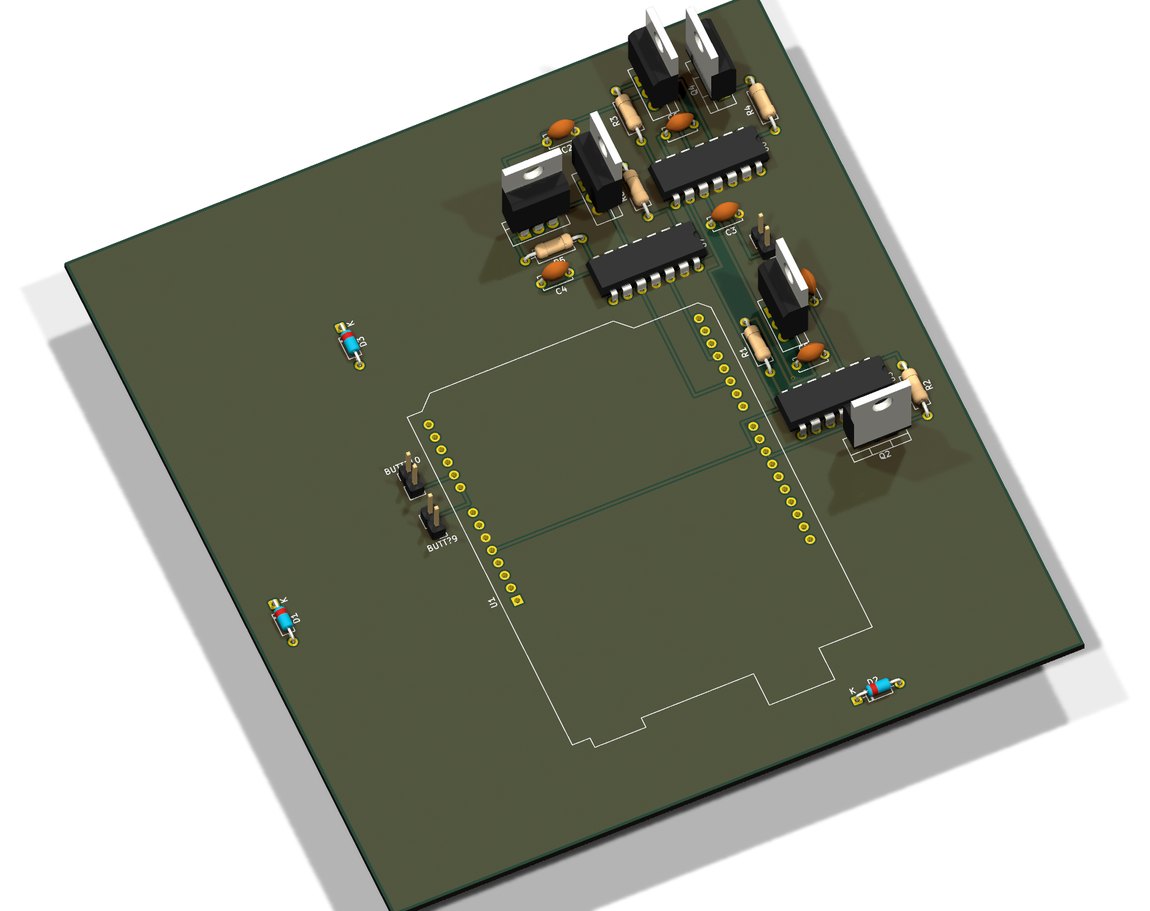
BRUSHLESS is an open-source printed circuit board by AssaadMH, from the AssaadMH/sensorless-bldc-control repository on GitHub, published under the MIT licence. It is a 2-layer board of 53.2 × 53.5 mm with 14 parts on 9 nets, routed with 37 tracks and 0 vias.
It is built around the IRFZ44N. Its parts include 6 diodes, 4 resistors and 3 transistors. It belongs with the robots and motor control and sensors and measurement boards of this library.
Spinning a brushless motor with no position sensor — commutating on the back-EMF zero crossings instead.
2025·BLDC·Sensorless·Back-EMF·Arduino·Proteus·Motor control
A focused study of how to run a brushless-DC motor without any Hall sensors. Removing the position sensors makes the motor cheaper and more robust, but it also removes the thing the controller normally relies on to know when to commutate — so the rotor position has to be recovered from the motor itself.
The method is back-EMF zero-crossing detection. At any instant one of the three windings is unenergised, and the voltage it generates — its back-EMF, measured against a virtual neutral point — crosses zero exactly between two commutation events. Detecting that crossing, waiting the right electrical angle, and stepping the PWM to the next phase keeps the motor in sync with no sensor at all.
The work covers the electrical and mechanical model of the motor, the commutation and PWM logic, and a Proteus simulation alongside the Arduino implementation — the standard progression of proving the idea in simulation before trusting it to real windings, which is exactly where sensorless schemes tend to bite.
captures/
docs/
kicad/Everything in this repository is my own work. It builds on the following, which are not mine and are used under their own licences:
Lassaad Mahmoudi — assaadmahmoudi0@gmail.com
https://linkedin.com/in/mahmoudi-assaad
| Qty | Value | Footprint | References |
|---|---|---|---|
| 6 | 1N4007 | Diode_THT:D_DO-41_SOD81_P10.16mm_Horizontal | D1, D2, D3, D4, D5, D6 |
| 3 | 10k | Resistor_THT:R_Axial_DIN0207_L6.3mm_D2.5mm_P10.16mm_Horizontal | R1, R2, R3 |
| 3 | IRFZ44N | Package_TO_SOT_THT:TO-220-3_Vertical | Q1, Q2, Q3 |
| 1 | 100k | Resistor_THT:R_Axial_DIN0207_L6.3mm_D2.5mm_P10.16mm_Horizontal | R4 |
| 1 | 40V | Connector_PinHeader_2.54mm:PinHeader_1x02_P2.54mm_Vertical | B1 |
AssaadMH/sensorless-bldc-control
Spinning a brushless motor with no position sensor — commutating on the back-EMF zero crossings instead.

NikodemBartnik/Mini-Mars-Rover
Educational robotic platform made to look like a mini mars rover


NikodemBartnik/Pico-Watering-System
Raspberry Pi Pico based automated watering system for your garden

BenjamimKrug/robo_humanoide
Repositorio para arquivos gerais necessários para o desenvolvimento do Robô humanoide

2technology/g-board
ESP32 IoT Home automation PCB - 1 * 12V relay, 4 * input button connector with HW debounce, 4 * ws2812b output

AvishkaVishwa/12V-DC-Motor-Speed-Controller-PCB-Design-using-KiCAD
using 555 timer is at Astable mode

RichardBenear/DDScopeX-Hardware
Hardware documentation for Direct Drive Scope

paulmikael02/ESP32-BLDC-Motor-Controller
ESP32-based BLDC motor controller built with ESP-IDF, utilizing Hall sensors and the hardware MCPWM peripheral.
It measures 53.2 × 53.5 mm and has 2 copper layers, 1.6 mm thick.
14 parts, built around the IRFZ44N. The full list of its parts is on this page, with links to each part's symbol and footprint where PCBKit's library has them.
From the AssaadMH/sensorless-bldc-control repository on GitHub, at the commit this page was made from: the board is kicad/BRUSHLESS/BRUSHLESS.kicad_pcb. PCBKit opens the board in the browser, with nothing to install.
Its repository publishes it under the MIT licence: you may reuse it on that licence's terms (keep the author's notice, and for a copyleft licence share your changes alike).