
2 layers13 × 13 mm

 arnytrty/pico3212
small open source board based on ESP32-PICO-D4
Pico32 is an open-source printed circuit board by arnytrty, from the arnytrty/pico32 repository on GitHub, published under the GPL-3.0 licence. It is a 2-layer board of 20 × 20 mm with 42 parts on 45 nets, routed with 125 tracks and 23 vias.
It is built around the ESP32-PICO-D4. Its parts include 4 capacitors, 2 ICs and 1 resistor. It belongs with the ESP32 and RISC-V boards of this library.
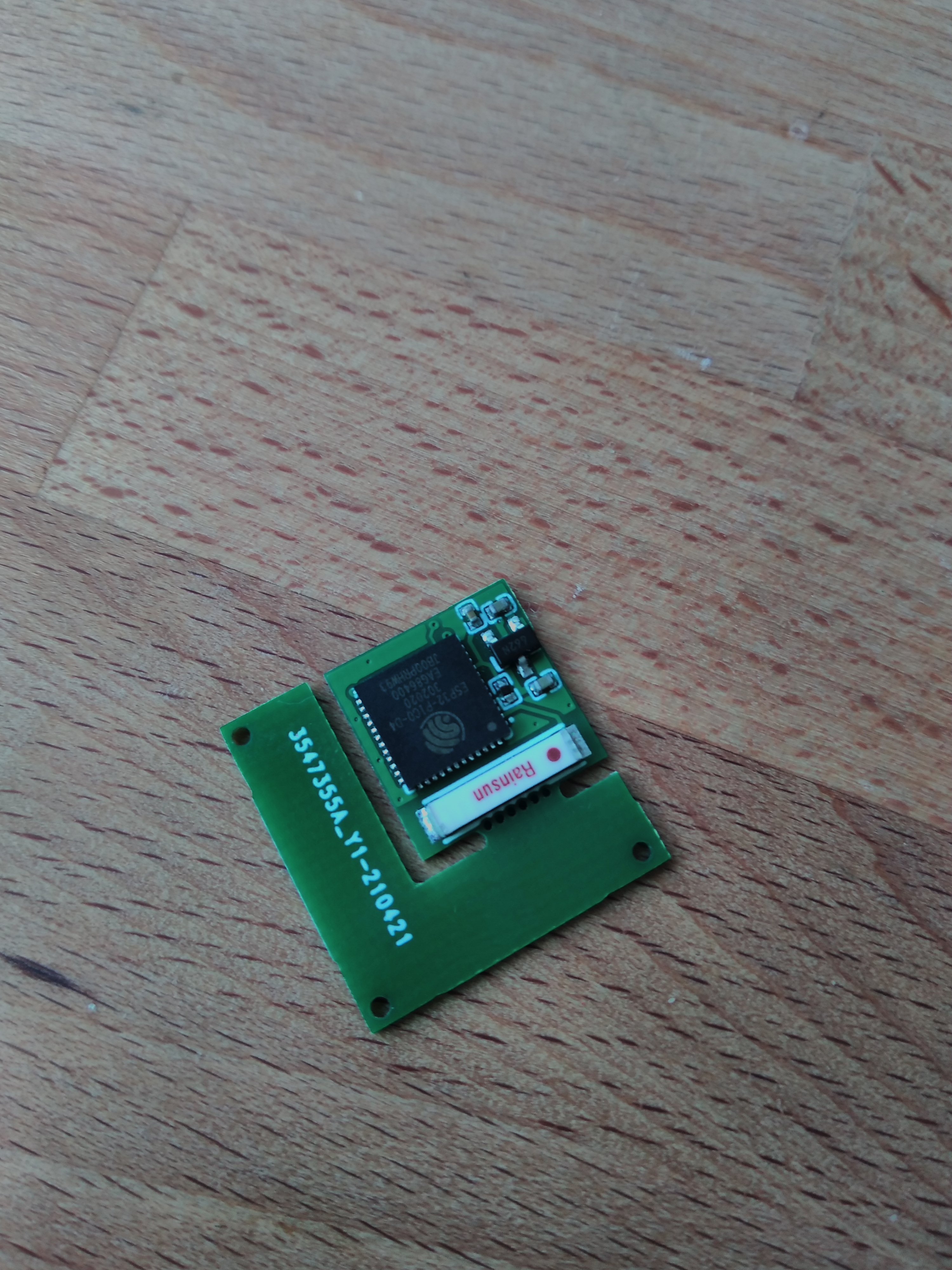
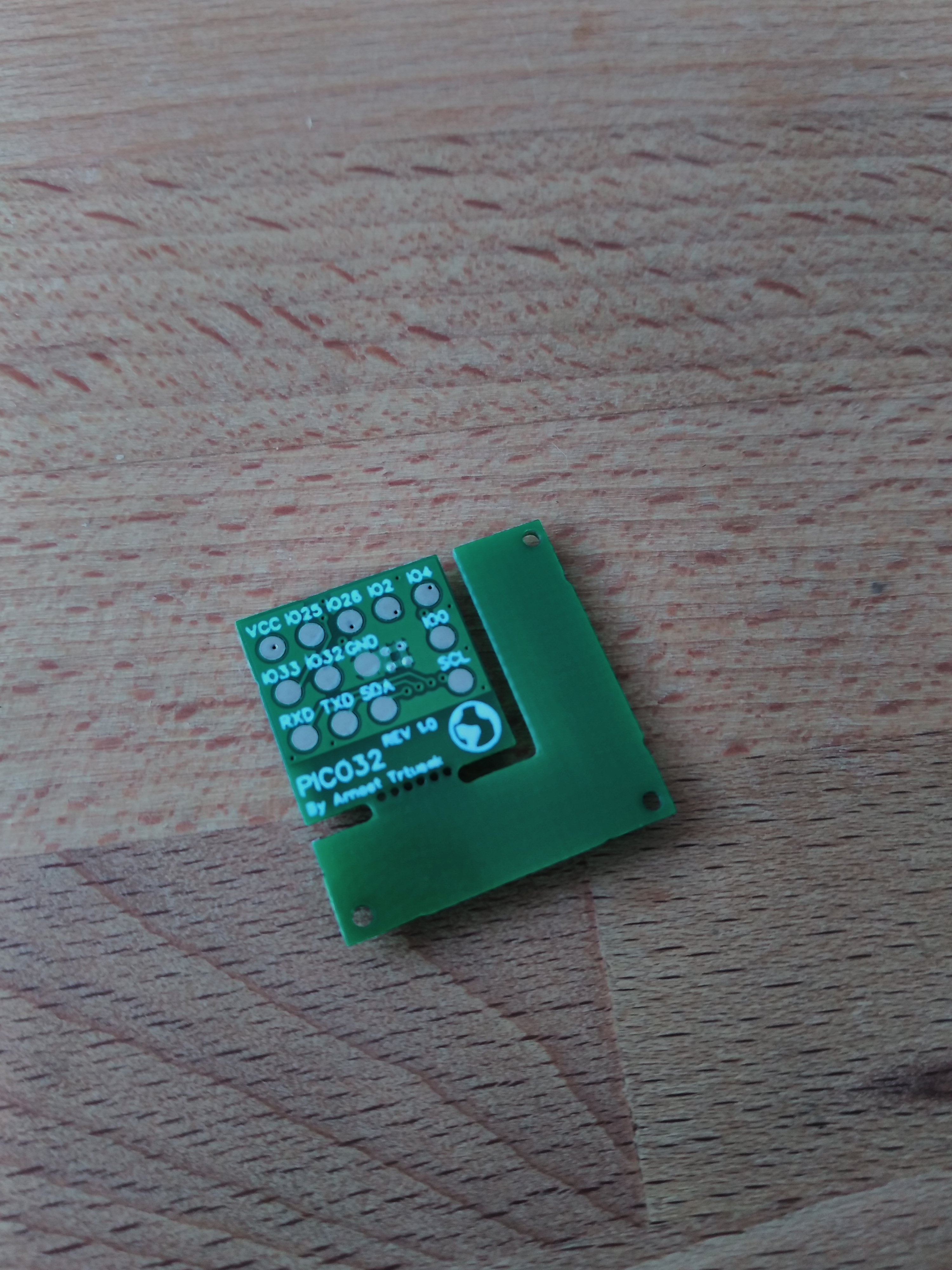
Pico32 is small (13mm*13mm) open source board based on ESP32-PICO-D4. It was designed for full use of the SoC package from Espressif & make it more accessible so you can simply handsolder without any special tools. It has a 4MB embedded flash (esp32-pico-d4 datasheet).
This board does not have USB to UART converter, you will need an external one to program it (they are pretty cheap). For a programming guide, check out FLASHING.md.
Main folders:
| Name | Content |
|---|---|
| hardware | board CAD files |
| images | images of the board |
| models | Exported 3D models |
| order | GERBER, BOM & CPL files |
Subfolders:
| Name | Revision | Tested | Comment |
|---|---|---|---|
| pico32_v1_jlcpcb_assembly | v1 | YES | got removeable frame to match jlcpcb assembly requirements; designed in EasyEDA; fully working, but has pins from bootm & got only 100mA regulator |
| pico32_v2 | v2 | NO | pins from side; better regulator; designed in KiCad |
| pico32_v2_jlcpcb_assembly | v2 | NO | got removeable frame to match jlcpcb assembly requirements, other parameters are the same as pico32_v2 |
Currently I dont sell these myself, but you can check out how to buy them for yourself on ORDER.md guide.
This version is more universal than the first one, it also removes the flaws of v1. It has the same footprint as before (13mm*13mm), but instead of having pads on the bottom, it has them cascellated through holes on sides so you can easily solder it on a homemade PCB.
Known issues:
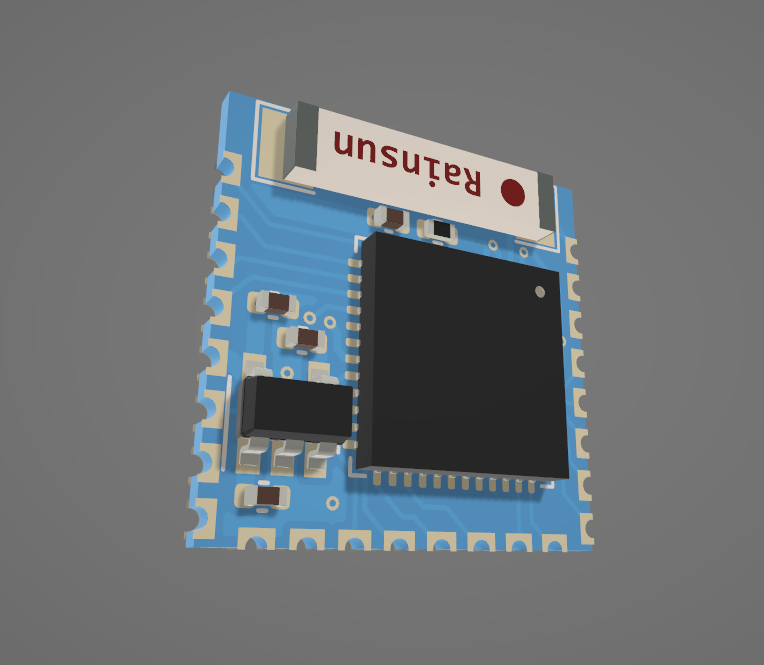
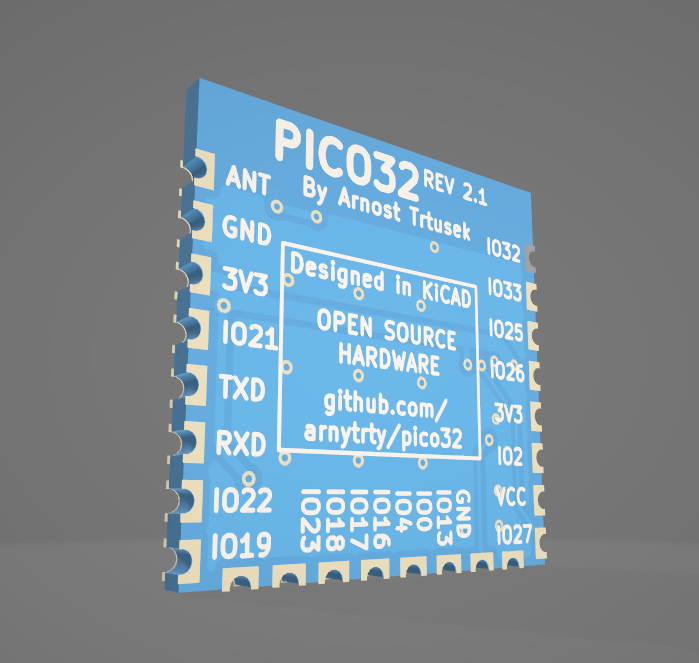
This was used as the test of how many components ESP32-PICO-D4 needs, it works pretty well, but if you use CPU speed over 80MHz it will throw Brownout detector was triggered. With its 13mm*13mm footprint, you can simply fit it in ending of aluminium profile & control rgb leds with it.
Known issues:
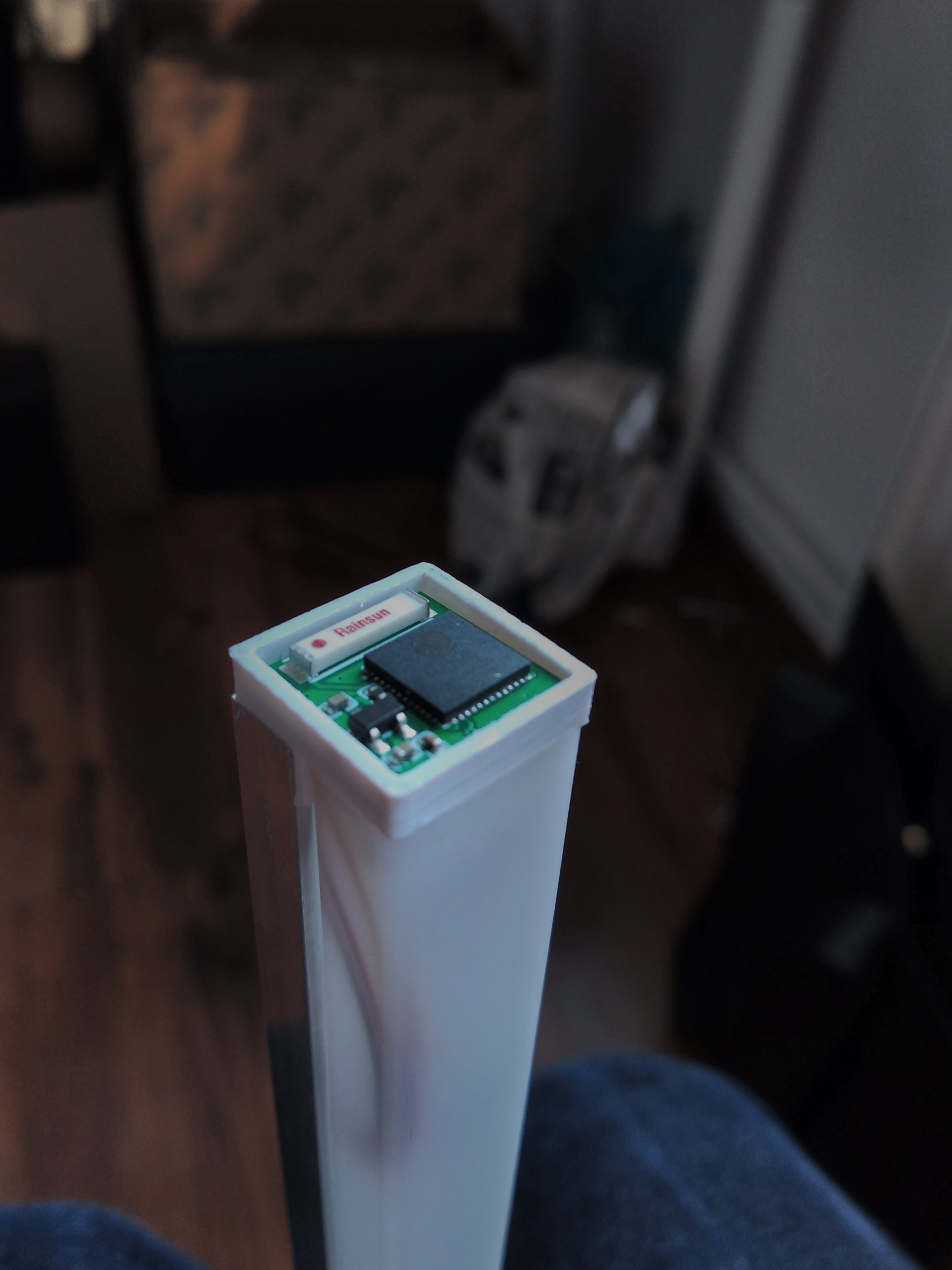
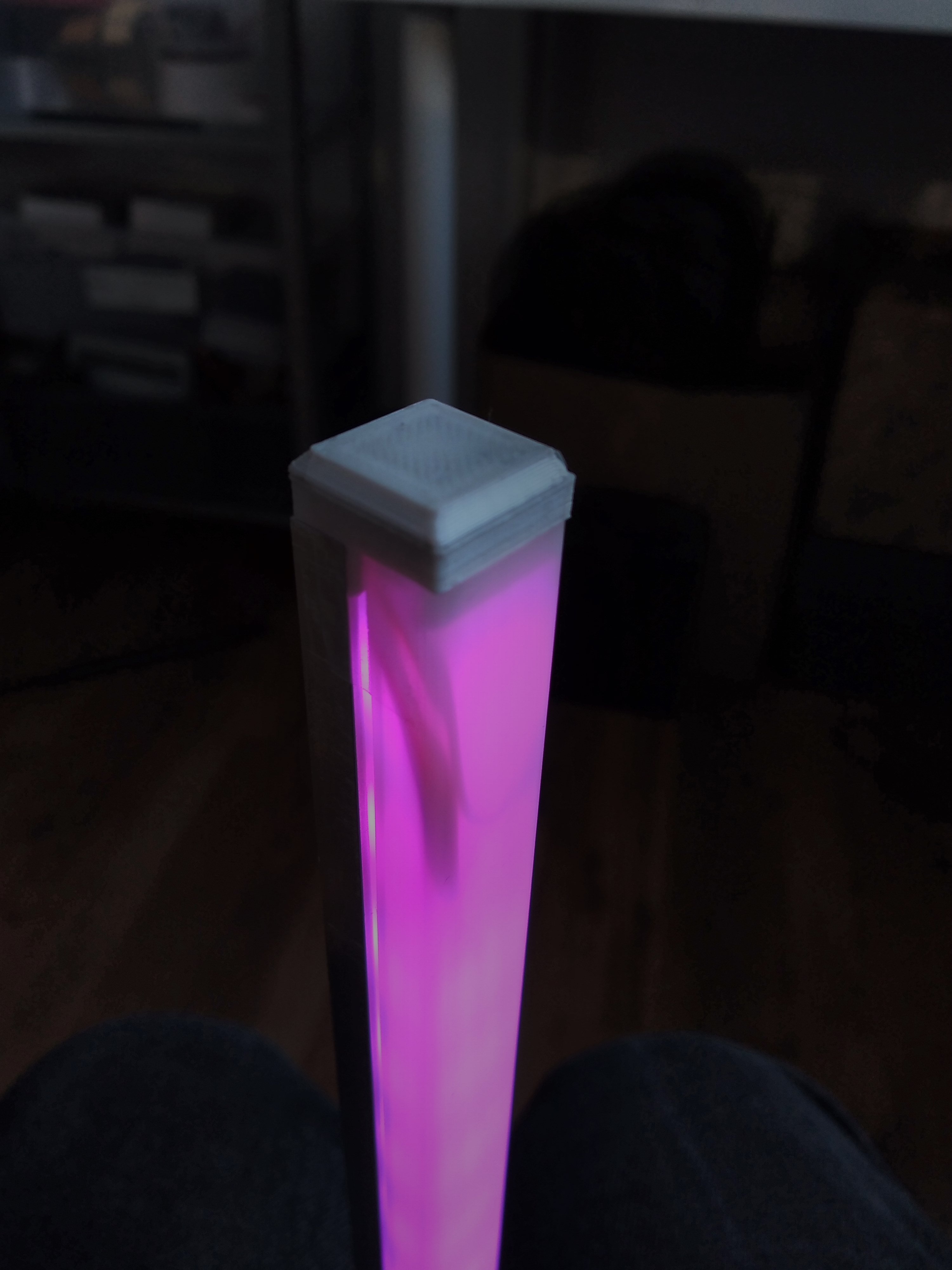
| Qty | Value | Footprint | References |
|---|---|---|---|
| 3 | 1uF | Capacitor_SMD:C_0402_1005Metric | C1, C2, C4 |
| 1 | 10nF | Capacitor_SMD:C_0402_1005Metric | C3 |
| 1 | 1k | Resistor_SMD:R_0402_1005Metric | R1 |
| 1 | Antenna | Pico32:AN9520-245 | AE1 |
| 1 | ESP32-PICO-D4 | Package_DFN_QFN:QFN-48-1EP_7x7mm_P0.5mm_EP5.3x5.3mm | U2 |
| 1 | TPS79333-EP | Package_TO_SOT_SMD:SOT-23-5 | U1 |
The 8 most common of 42 parts.

TobleMiner/ESP32-Devkit-Type-C
Breadboard friendly, USB Type C enabled, ESP32 Devkit compatible, JLCPCB assembly ready ESP32 devboard


Pixelvation/Pixelvation
This GitHub repository is the current home of Pixelvation and will be updated whenever there's some significant new development.

heyspacebuck/double-oh
A WiFi-enabled power supply in a AA battery form factor, designed for sex toys


Paschalis/UAV-TelemetryLink
Receiver and transmitter solution for GCS using ELRS, mLRS, and MAVLink for reliable telemetry and control.
It measures 20 × 20 mm and has 2 copper layers, 0.8 mm thick.
42 parts, built around the ESP32-PICO-D4. The full list of its parts is on this page, with links to each part's symbol and footprint where PCBKit's library has them.
From the arnytrty/pico32 repository on GitHub, at the commit this page was made from: the board is hardware/pico32_v2_jlcpcb_assembly/Pico32.kicad_pcb. PCBKit opens the board in the browser, with nothing to install.
Its repository publishes it under the GPL-3.0 licence: you may reuse it on that licence's terms (keep the author's notice, and for a copyleft licence share your changes alike).