8 layers160 × 100 mm

 Alex-ala/OpenCatFlap8
Smart cat flap using Wifi+HTTP to work without a cloud.
OpenCatFlap is an open-source printed circuit board by Alex-ala, from the Alex-ala/OpenCatFlap repository on GitHub. It is a 2-layer board of 95 × 60 mm with 104 parts on 82 nets, routed with 642 tracks and 100 vias.
It is built around the EM4095HMS, BC546BBK and NE555D, with the LM1117DTX-3.3/NOPB, BSS138L and IL-G-2P-S3T2-SA among its other parts. Its parts include 37 capacitors, 32 resistors, 14 ICs, 12 connectors and 4 transistors. It belongs with the radio and wireless boards and the AVR (ATmega, ATtiny) boards of this library.


Work in progress...
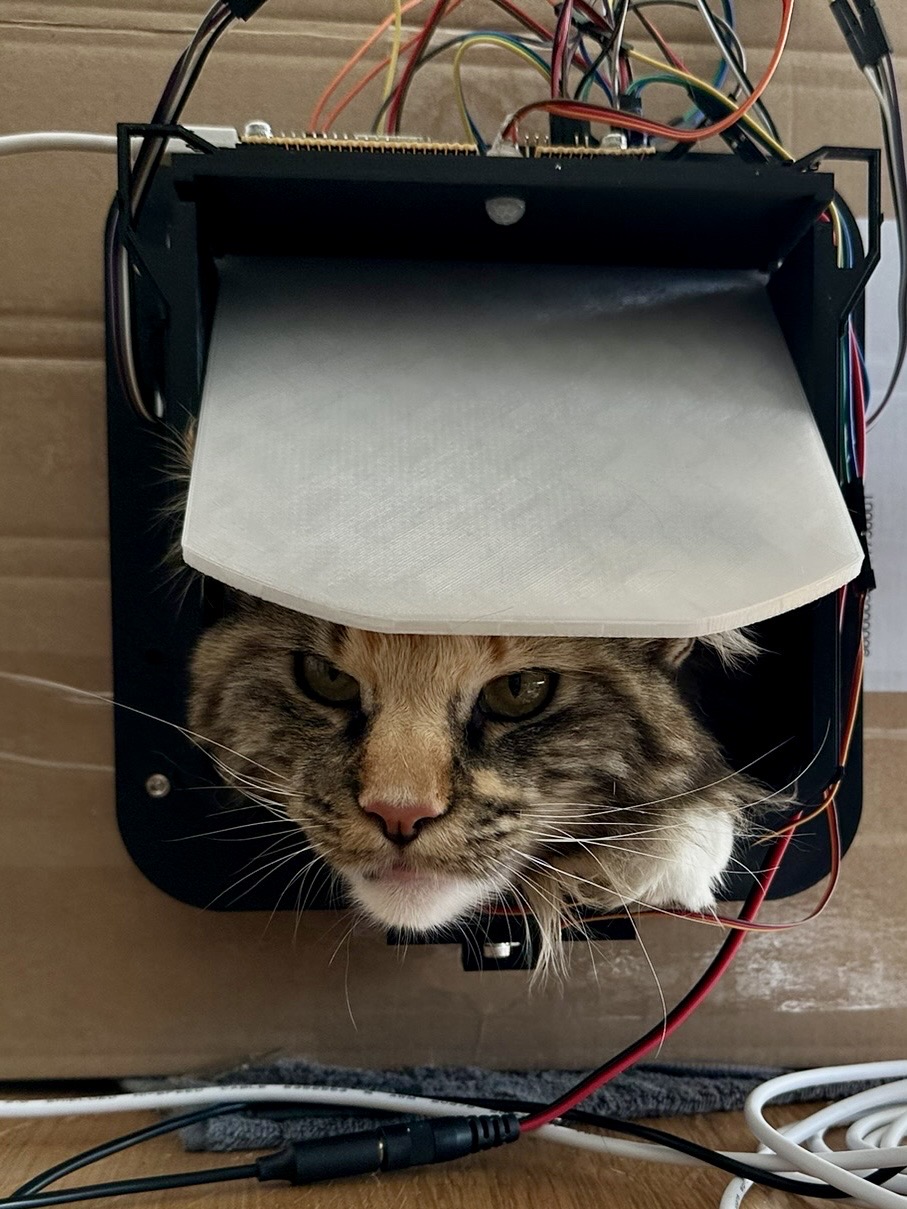
Being fed up with SurePets cat flap requiring cloud connection to properly work, I decided to design my own flap. The 3D model is intended to fit into the SurePet adapter already installed.
I want my flap to have at least these features:
In addition to that the software should be capable of everything SureFlap is capable of, plus:
Hardware:
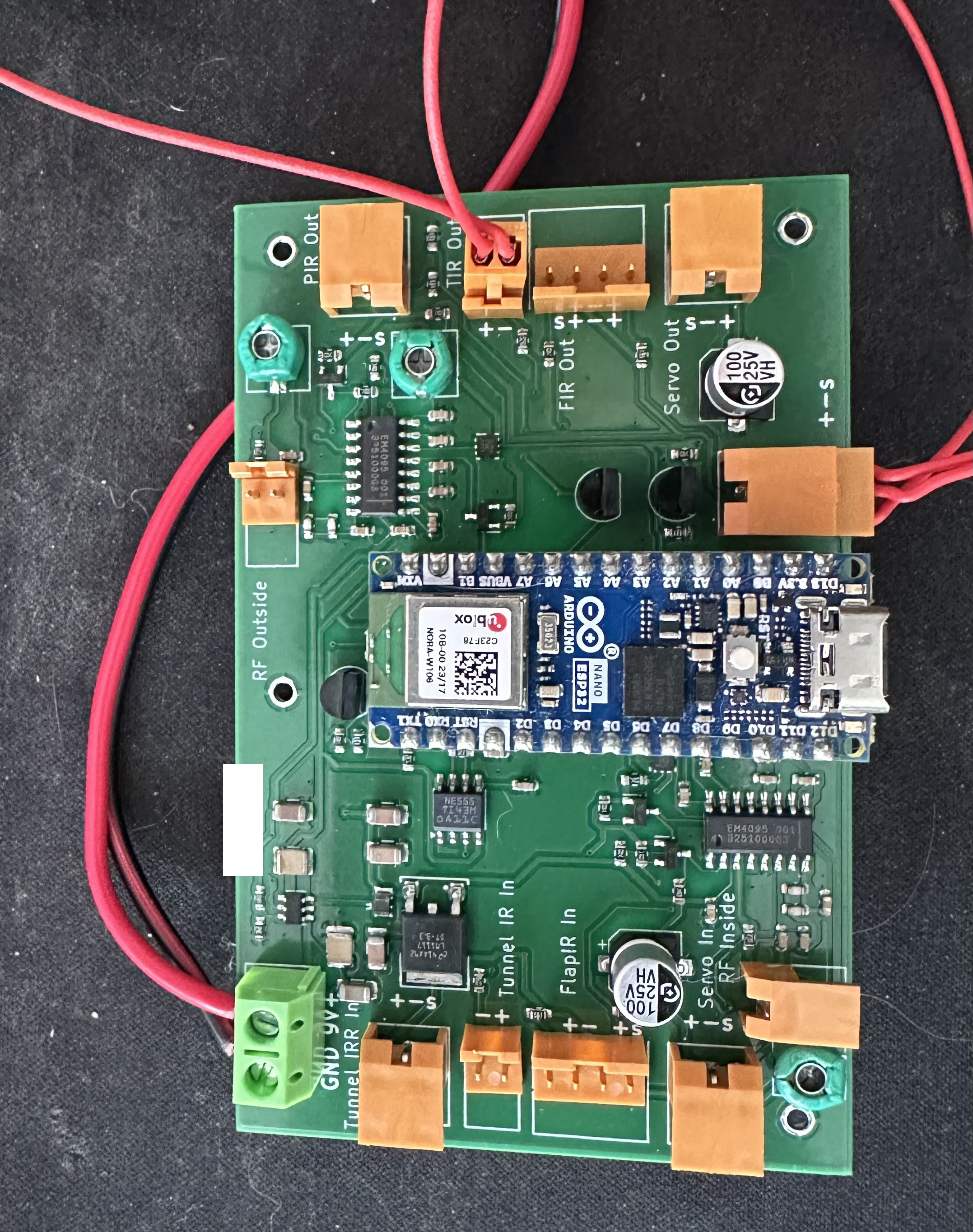
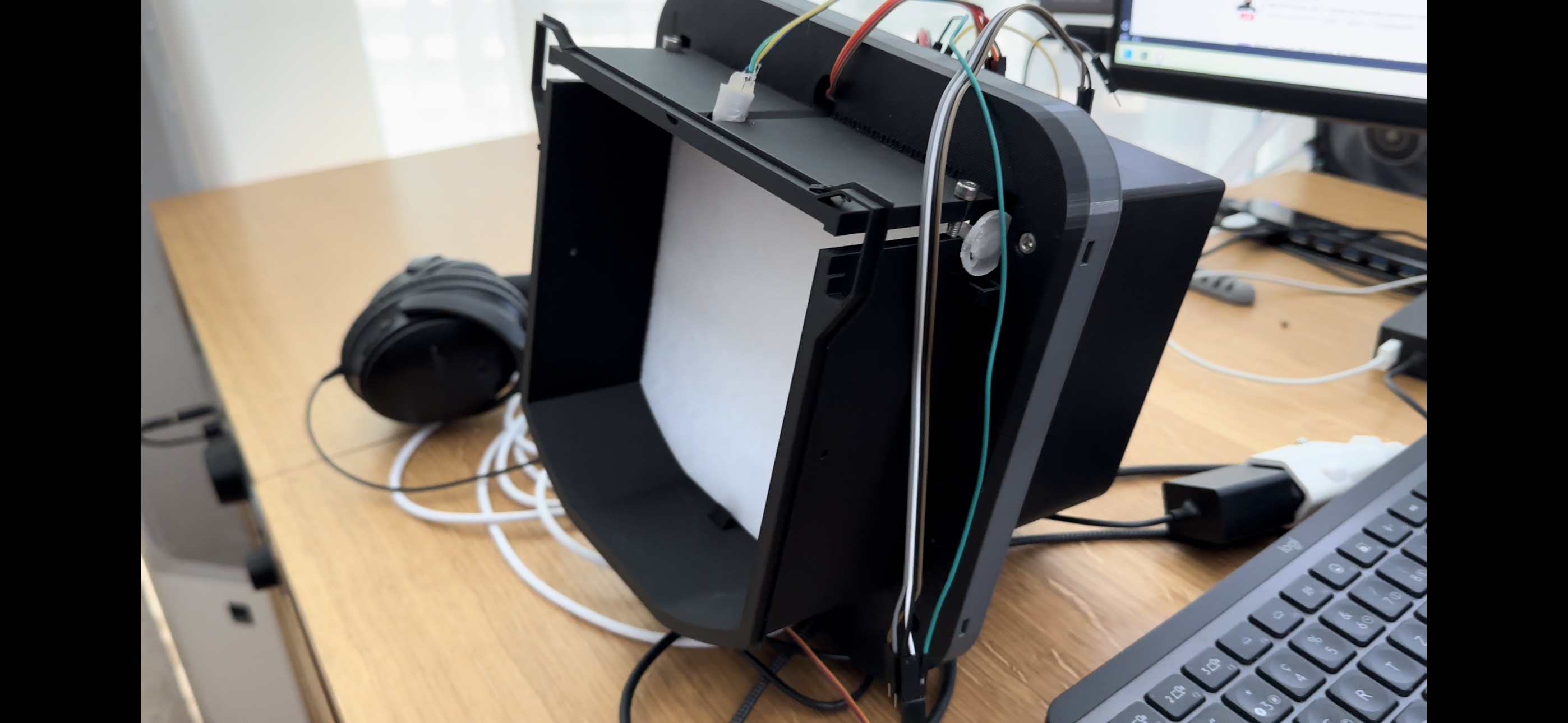
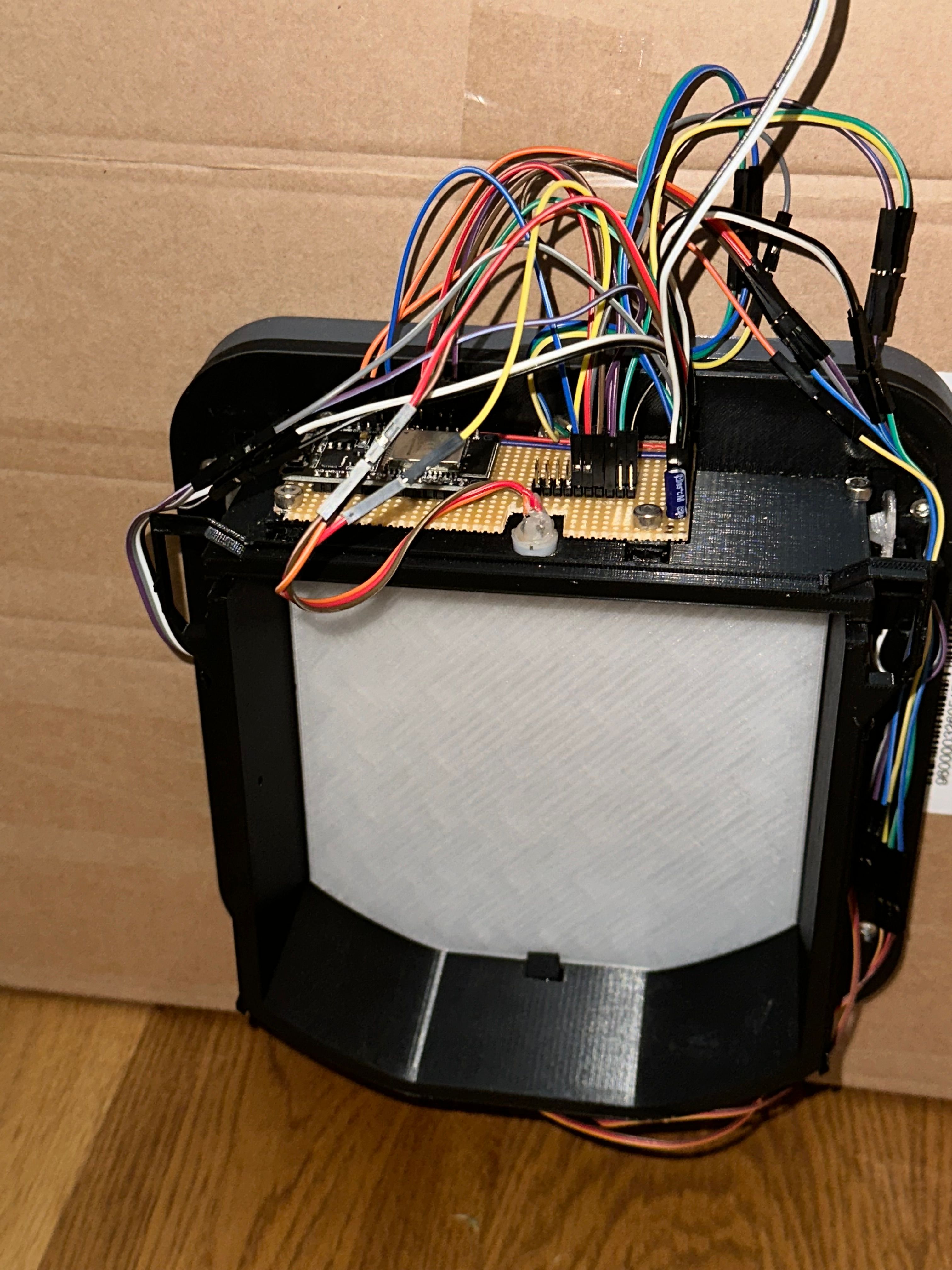
It is bases on an ESP32 (Arduino Nano ESP32 for development) with various sensors and two servos to lock/unlock. The 3D model is ready to be tested and a printed version is already in use to debug the code. Slight adjustments to the antenna design will be done in future.
Used vital parts:
Software:
The software runs a main process that handles global configs and aggregates events reported by the two state machines. After the last hardware overhaul, quite some work is to be done to update sensors and reading RFID from EM4095 instead of WL-134
The locking and unlocking logic is split up into two independent state machines, one for each direction of travel. One state machine handles the PIR, RFID and Servo on one side of the cat flap.
This way the flap can idependently unlock for ougoing or incoing cats without acidentally opening the other direction aswell, allowing false passages.
Roughly speaking there are 3 states: Idle (only PIR active to wait for motion), Reading (RFID enabled when motion is detected) and unlocked (when a correct RFID is read).
If no Wifi is configured, the flap acts as an AP opening an open "OpenCatFlap" wifi. One can either use this wifi for full control via api, or send credentials to connect to an existing wifi.
MQTT can be configured to connect to an existing MQTT server. The flap will then send events to topics opencatflap/<flapname>/<type>.
Configuration via MQTT is planned.
Current means to configure the flap is via http. There is a webserver running on :80 that takes requests to configure wifi, mqtt, lock allowance and cats, aswell as getting some status information.
How to configure (for now):
Wifi: curl -H "Content-Type: application/json" http://192.168.4.1/api -d '{"command": "wifiConfig", "ssid": "Bockenburg", "passphrase": "", "ntpServer": "ip preffered, hostname possible"}'
MQTT: curl -H "Content-Type: application/json" 'http://10.5.0.60/api' -d'{"command": "mqttConfig", "server": "mosquitto.ahome", "port": 8011, "ssl": true, "logActivity": true}'
MQTT Certificates:
curl -H "Content-Type: text/plain" 'http://10.5.0.60/api/certs?name=key' --data-binary @/home/alex/trash/opencatflap.key
curl -H "Content-Type: text/plain" 'http://10.5.0.60/api/certs?name=cert' --data-binary @/home/alex/trash/opencatflap.crt
curl -H "Content-Type: text/plain" 'http://10.5.0.60/api/certs?name=ca' --data-binary @/home/alex/trash/ca.crt
Future Improvements:
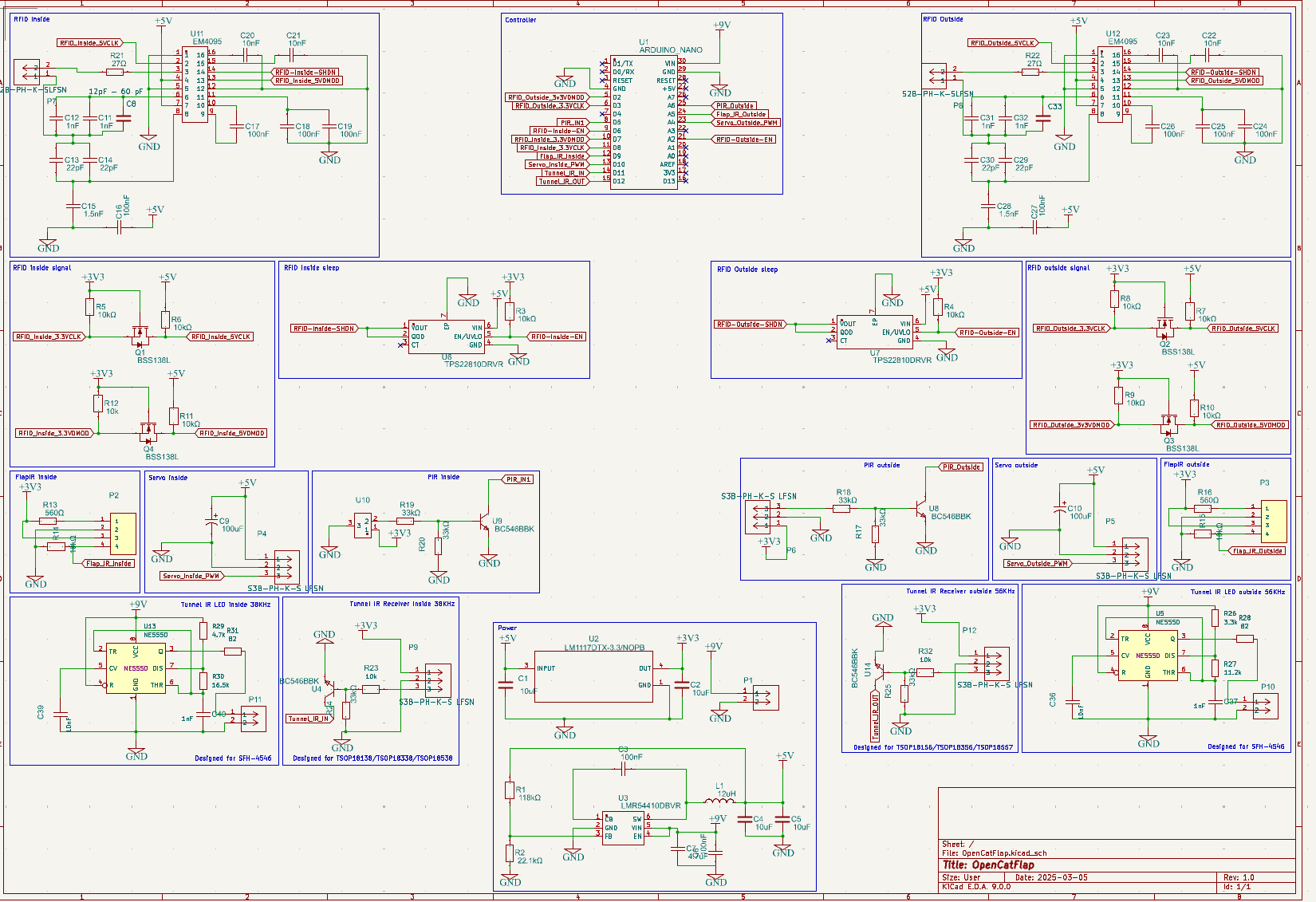
| Qty | Value | Footprint | References |
|---|---|---|---|
| 11 | 10kΩ | Resistor_SMD:R_0603_1608Metric | R3, R4, R5, R6, R7, R8, R9, R10, R11, R14, R15 |
| 8 | 100nF | Capacitor_SMD:C_0603_1608Metric | C16, C17, C18, C19, C24, C25, C26, C27 |
| 6 | 10nF | Capacitor_SMD:C_0603_1608Metric | C20, C21, C22, C23, C36, C39 |
| 6 | 1nF | Capacitor_SMD:C_0603_1608Metric | C11, C12, C31, C32, C37, C40 |
| 6 | 33kΩ | Resistor_SMD:R_0603_1608Metric | R17, R18, R19, R20, R24, R25 |
| 5 | S3B-PH-K-S LFSN | OpenCatFlap:CONN_S3B-PH-K-S_JST | P4, P5, P6, P9, P12 |
| 4 | 10uF | OpenCatFlap:CAP_CL31A_SAM | C1, C2, C4, C5 |
| 4 | 22pF | Capacitor_SMD:C_0603_1608Metric | C13, C14, C29, C30 |
| 4 | BC546BBK | Package_TO_SOT_THT:TO-92L_Inline | U4, U8, U9, U14 |
| 4 | BSS138L | OpenCatFlap:BSS138L | Q1, Q2, Q3, Q4 |
| 4 | Bohrloch | OpenCatFlap:Bohrloch | Pad_gge19202, Pad_gge19226, Pad_gge19274, Pad_gge19274 |
| 4 | S2B-PH-K-SLFSN | OpenCatFlap:CONN_S2B-PH-K-S_JST | P1, P7, P8, P11 |
| 3 | 10k | Resistor_SMD:R_0603_1608Metric | R12, R23, R32 |
| 2 | 1.5nF | Capacitor_SMD:C_0603_1608Metric | C15, C28 |
| 2 | 100nF | Capacitor_SMD:C_1210_3225Metric | C3, C6 |
| 2 | 100uF | Capacitor_SMD:CP_Elec_6.3x7.7 | C9, C10 |
| 2 | 12pF - 60 pF | OpenCatFlap:VCAP_GKGXXX15_SGM | C8, C33 |
| 2 | 27Ω | Resistor_SMD:R_0603_1608Metric | R21, R22 |
| 2 | 560Ω | Resistor_SMD:R_0603_1608Metric | R13, R16 |
| 2 | 82 | Resistor_SMD:R_0603_1608Metric | R28, R31 |
| 2 | EM4095 | OpenCatFlap:EM4095 | U11, U12 |
| 2 | NE555D | Package_SO:SOIC-8_3.9x4.9mm_P1.27mm | U5, U13 |
| 2 | S4B-PH-K-S_LF__SN_ | OpenCatFlap:CONN_S4B-PH-K-S_JST | P2, P3 |
| 2 | TPS22810DRVR | OpenCatFlap:DRV0006A_NV | U6, U7 |
| 1 | 11.2k | Resistor_SMD:R_0603_1608Metric | R27 |
| 1 | 118kΩ | Resistor_SMD:R_0603_1608Metric | R1 |
| 1 | 12uH | OpenCatFlap:LBM2016TI20J | L1 |
| 1 | 16.5k | Resistor_SMD:R_0603_1608Metric | R30 |
| 1 | 22.1kΩ | Resistor_SMD:R_0603_1608Metric | R2 |
| 1 | 3.3k | Resistor_SMD:R_0603_1608Metric | R26 |
| 1 | 4.7k | Resistor_SMD:R_0603_1608Metric | R29 |
| 1 | 4.7uF | Capacitor_SMD:C_1206_3216Metric | C7 |
| 1 | ARDUINO_NANO | OpenCatFlap:Arduino Nano ESP32 | U1 |
| 1 | IL-G-2P-S3T2-SA | OpenCatFlap:CONN_S2B-PH-K-S_JST | P10 |
| 1 | LM1117DTX-3.3/NOPB | OpenCatFlap:LM1117DTX-3.3NOPB | U2 |
| 1 | LMR54410DBVR | OpenCatFlap:U_SOT-23_TEX | U3 |
| 1 | SENSOR MOTION SPOT 5V BLK LENS | OpenCatFlap:AMN33111 | U10 |
It measures 95 × 60 mm and has 2 copper layers, 1.6 mm thick.
104 parts, built around the EM4095HMS, BC546BBK, NE555D and LM1117DTX-3.3/NOPB. The full list of its parts is on this page, with links to each part's symbol and footprint where PCBKit's library has them.
From the Alex-ala/OpenCatFlap repository on GitHub, at the commit this page was made from: the board is cad/opencatflap/opencatflap.kicad_pcb and its schematic cad/opencatflap/opencatflap.kicad_sch. PCBKit opens the board in the browser, with nothing to install.
Its repository states no licence, so its author keeps all rights: ask Alex-ala before reusing the design.

rct4/Autonomous-Soil-Monitoring-Rover
The autonomous soil monitoring rover is a project that aims to assist commercial farmers and personal gardeners by introducing an automated solution to monitoring soil data.


harsha-2-006/134khz_Rfid_Reader
Low-frequency 134.2 kHz RFID reader using EM4095 and ESP32


rpiEHC/rpi-rfid-2
A new RPI RFID project based on the old designs from https://github.com/MakerPulse