

2 layers1,817.8 × 281.5 mm
Clarinoid devboard
thenfour/Clarinoid
an electronic wind instrument / clarinet / flute / not sure
377 parts4

 afoxinsocks/foxie-clock24
A Nixie-like, retro, RGB LED, Arduino-powered clock
Foxie clock nano is an open-source printed circuit board by afoxinsocks, from the afoxinsocks/foxie-clock repository on GitHub, published under the GPL-3.0 licence. It is a 2-layer board with 133 parts on 130 nets, routed with 1,493 tracks and 243 vias.
It is built around the SN74AHCT125N and WS2812B. Its parts include 122 diodes, 4 capacitors, 4 switches, 2 ICs and 1 resistor. It belongs with the lEDs and displays boards of this library.
Welcome to the Foxie Clock, a fully open-source RGB clock with nixie-like edge-lit acrylic digits. Or... an RGB pixel display clock, if you like!
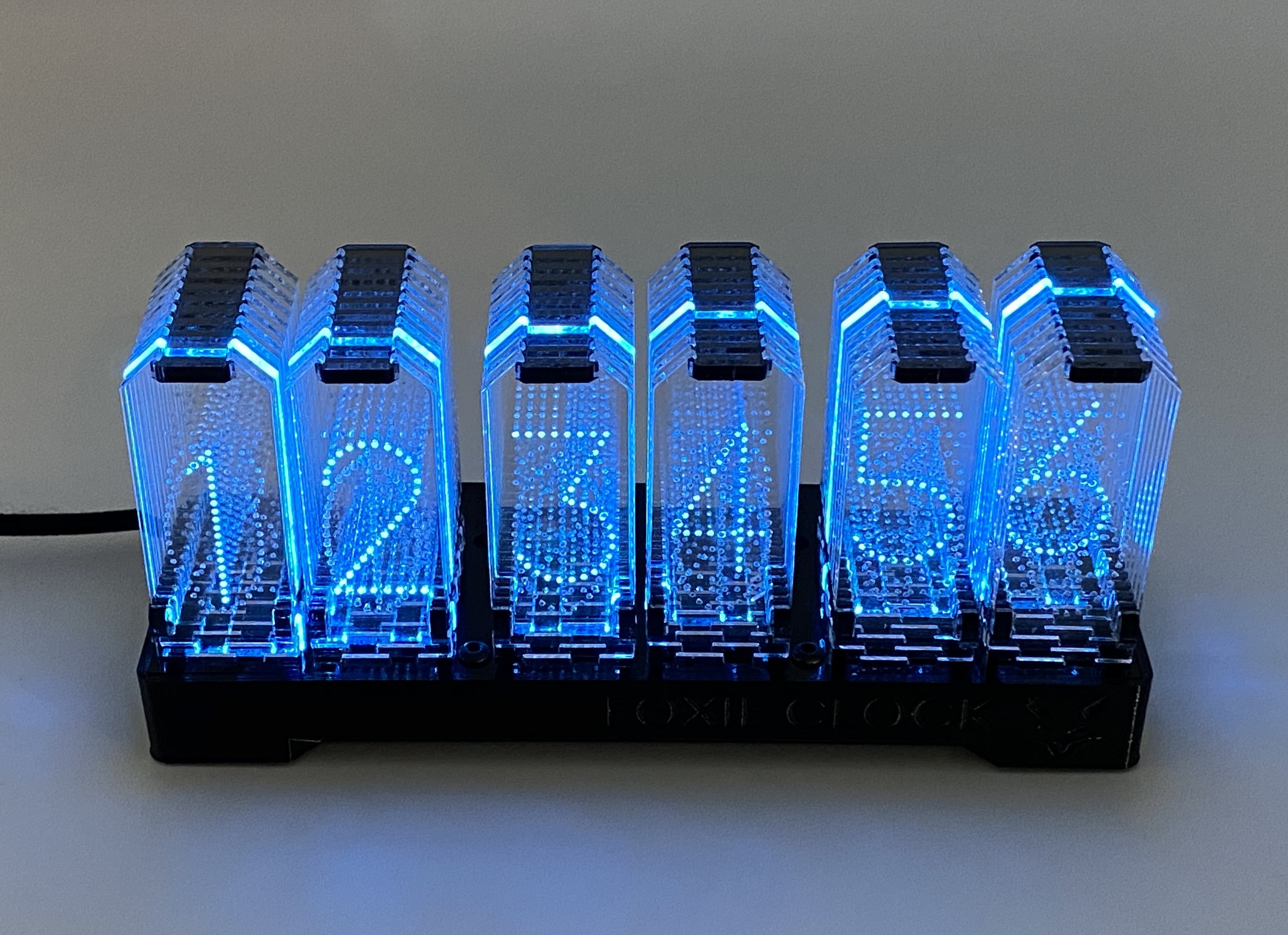
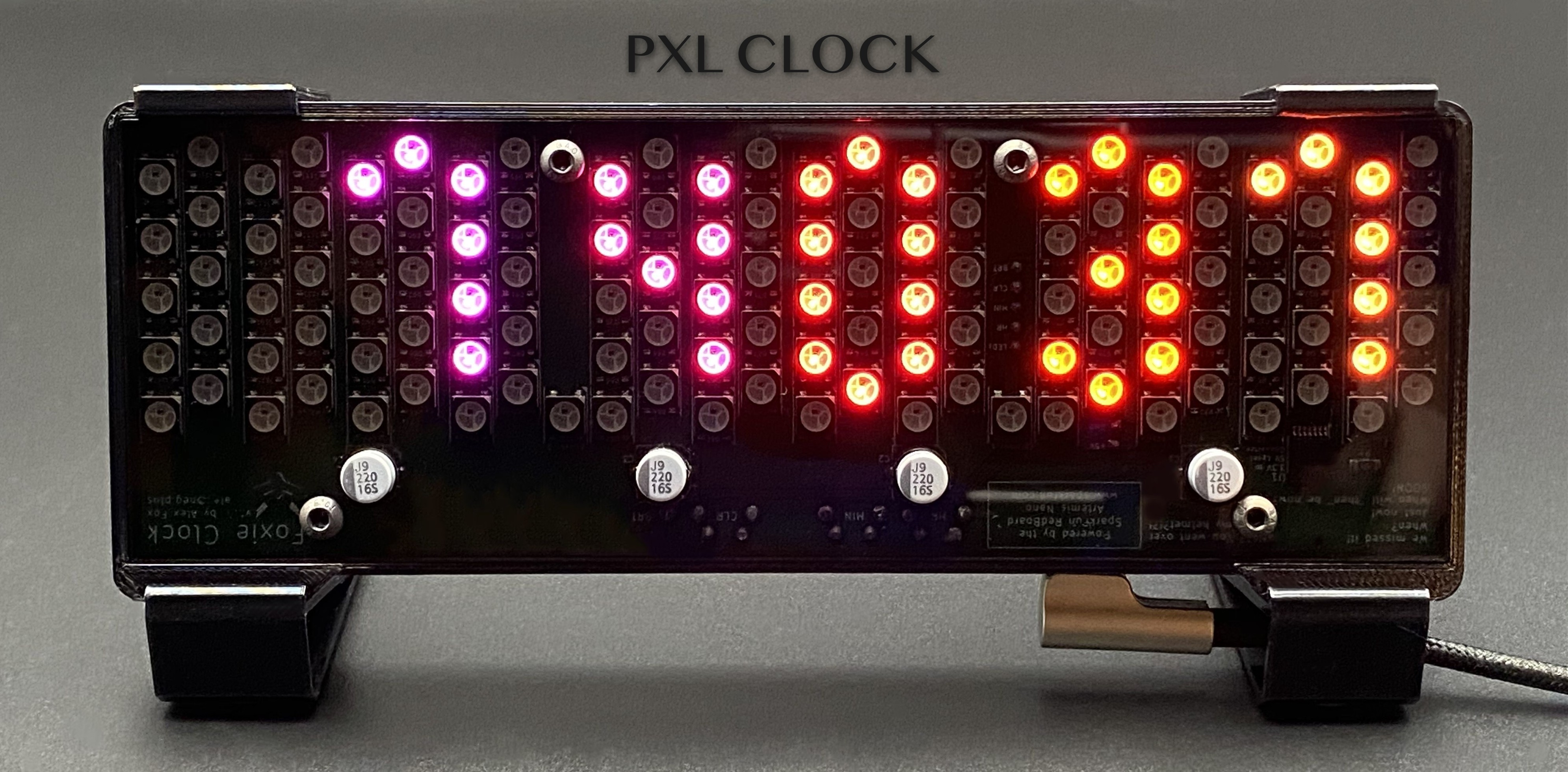
With a look inspired by old nixie tubes and with capacitors protruding through the surface like vacuum tubes, the Foxie Clock is a fun, colorful way to display the time at your desk, office, or anywhere. Brightness, color, and time are all adjustable directly with 4 buttons on the back. Using the clock is very easy, with 4 buttons on the back providing various functionality for setting time, animation modes, colors, and brightness, 12/24h mode, PXL mode, and more.
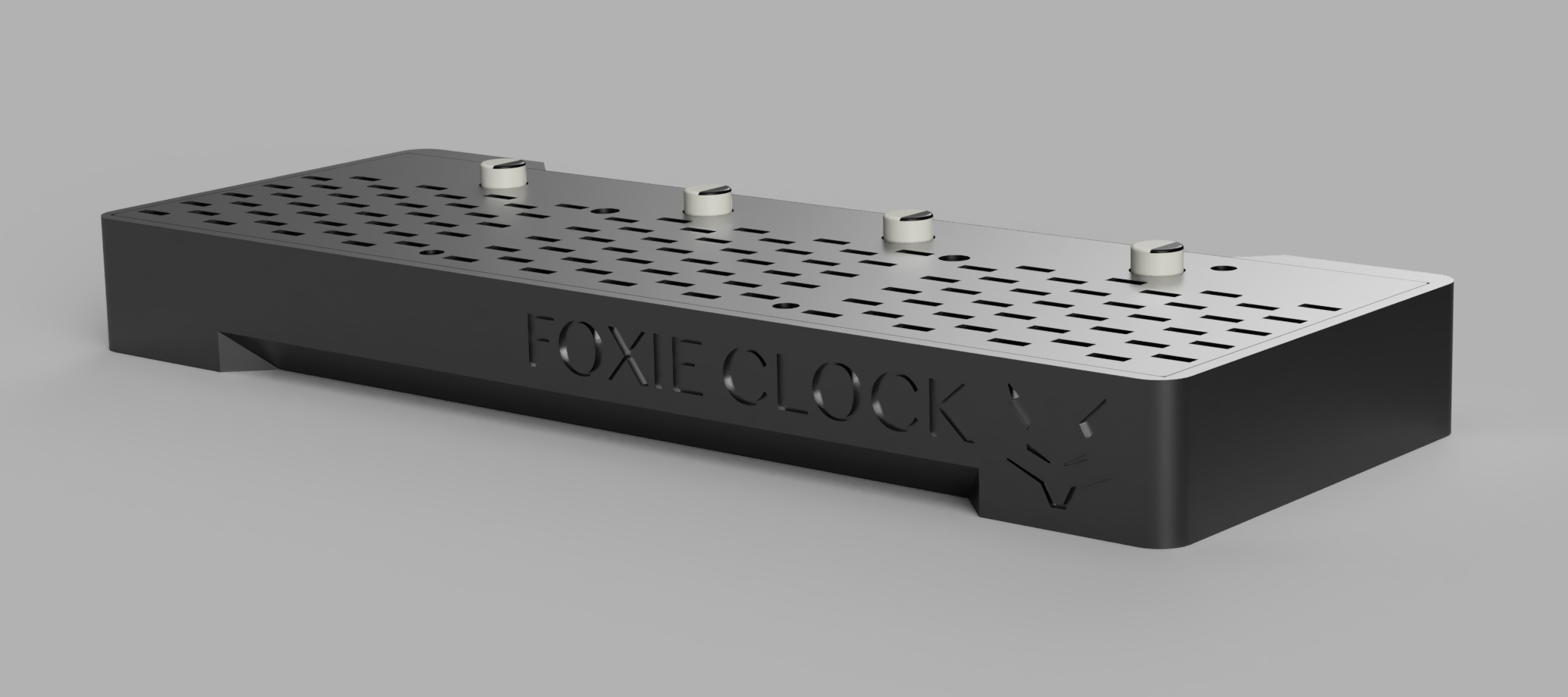
Head over to Foxie Products to order your own Foxie Clock kit.
All .STL models and the full Fusion360 project and the .step files are also available for anyone wanting to make changes to the design more easily. Head over to Thingiverse to download.
The clock is easy to assemble and looks beautiful when complete.
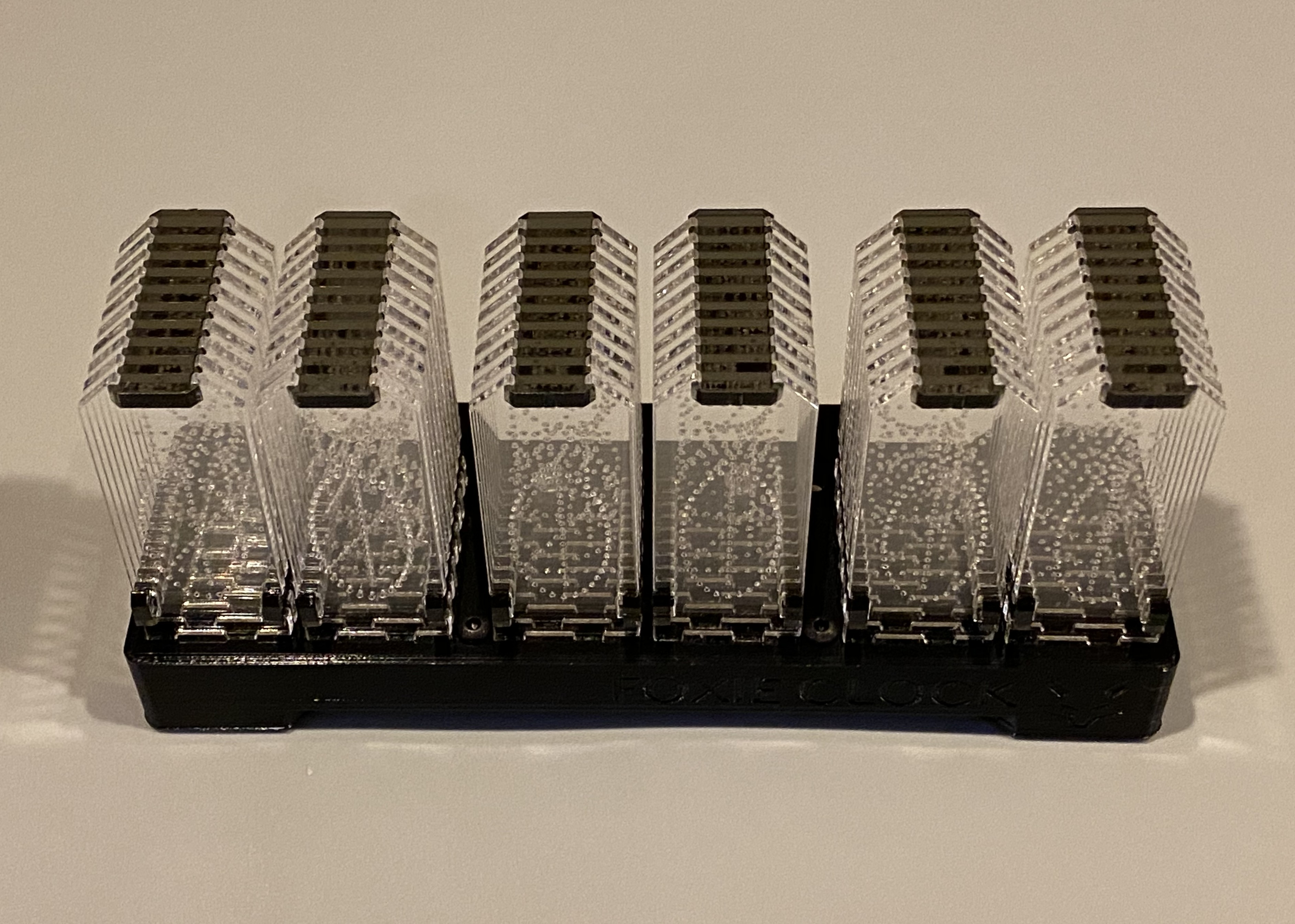
The case is 3D printed and is included with the kit.
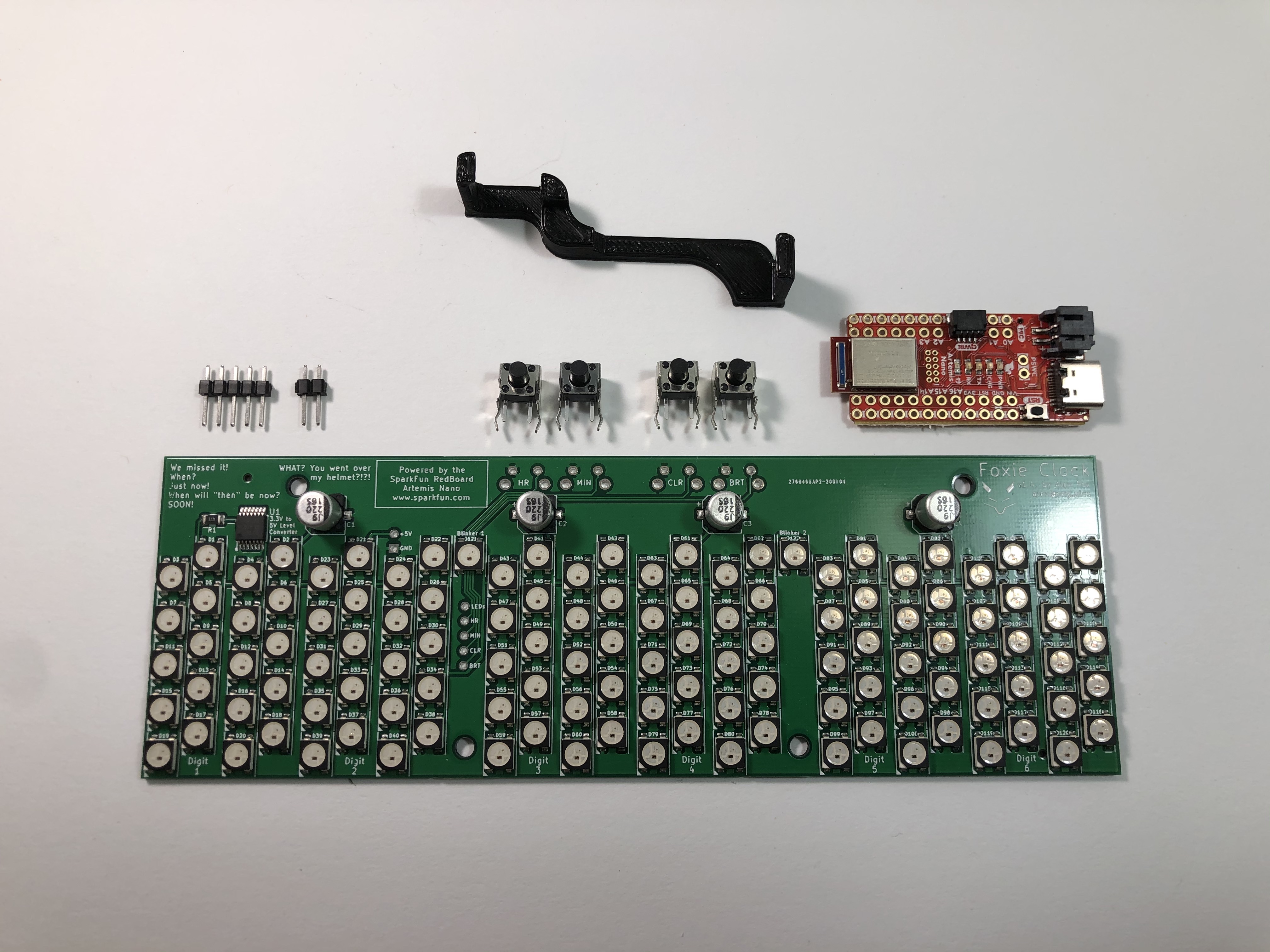
The circuit board can be ordered fully soldered, or if you like, you can solder the 4 buttons and RedBoard Nano yourself, using the plentiful pictures in the electronics assembly guide.
The Foxie Clock is powered by a SparkFun RedBoard Artemis Nano (https://www.sparkfun.com/products/15443), an extremely cool, fully Arduino-compatible board that supports Bluetooth LE 5.0 and much, much more. It is included in every Foxie Clock kit, along with everything you need (including USB-C cable) to get running.
The Foxie Clock PCB and firmware were developed using Open Source software. The source code, laser cutting files, PCB design, and documentation for assembly are all freely available here.
| Qty | Value | Footprint | References |
|---|---|---|---|
| 122 | WS2812B | foxie_clock_nano:LED_WS2812B_PLCC4_5.0x5.0mm_P3.2mm | D1, D10, D11, D100, D101, D102, D103, D104, D105, D106, D107, D108, D109, D110, D111, D112 +106 |
| 4 | 220uF | Capacitor_SMD:CP_Elec_6.3x7.7 | C1, C2, C3, C4 |
| 1 | 470 | Resistor_SMD:R_1206_3216Metric | R1 |
| 1 | Artemis-Nano | foxie_clock_nano:Artemis-Nano | U2 |
| 1 | BTN_Brightness | Button_Switch_THT:SW_Tactile_SPST_Angled_PTS645Vx58-2LFS | SW4 |
| 1 | BTN_Color | Button_Switch_THT:SW_Tactile_SPST_Angled_PTS645Vx58-2LFS | SW3 |
| 1 | BTN_Hour | Button_Switch_THT:SW_Tactile_SPST_Angled_PTS645Vx58-2LFS | SW1 |
| 1 | BTN_Minute | Button_Switch_THT:SW_Tactile_SPST_Angled_PTS645Vx58-2LFS | SW2 |
| 1 | SN74AHCT125N | Package_SO:TSSOP-14_4.4x5mm_P0.65mm | U1 |
133 parts, built around the SN74AHCT125N and WS2812B. The full list of its parts is on this page, with links to each part's symbol and footprint where PCBKit's library has them.
From the afoxinsocks/foxie-clock repository on GitHub, at the commit this page was made from: the board is board/foxie_clock_nano.kicad_pcb. PCBKit opens the board in the browser, with nothing to install.
Its repository publishes it under the GPL-3.0 licence: you may reuse it on that licence's terms (keep the author's notice, and for a copyleft licence share your changes alike).
thenfour/Clarinoid
an electronic wind instrument / clarinet / flute / not sure


klein0r/pcb-ws2812-wifi-controller
WiFi Controller for WS2812 LED Stripes


klein0r/pcb-ws2812-ethernet-controller
Ethernet Controller for WS2812 LED Stripes

f2daz/WLED_PCB_D1_Mini
PCB for WLED with WeMos D1 Mini and SN74AHCT125N level shifter

andrekuehne/openradfan
An ESPHome-driven controller for radiator fans to improve heat output