2 layers142.5 × 106.3 mm

 aaatipamula/butterfly
A keyboard inspired by the corne
Butterfly is an open-source printed circuit board by aaatipamula, from the aaatipamula/butterfly repository on GitHub. It is a 2-layer board of 281.4 × 112.9 mm with 88 parts on 66 nets, routed with 583 tracks and 0 vias.
Its parts include 42 diodes, 1 IC and 1 switch. It belongs with the keyboards and input boards and the AVR (ATmega, ATtiny) boards of this library.
I started this project for a few reasons:
As mentioned before I took a lot of inspiration from the very popular corne designed by foostan. Most of the layout was taken directly from the corne, however, a few key changes were made to fit my constraints. They are as follows:
The intended use I had for this board was to simply use the pcb as the entire board. I wanted to keep the board as thin and small as possible. A foam pad should cover the bottom of the board to protect it from damage.
The name came about as I was outlining the pcb for the board. The shape heavily reminded me of a butterfly and I decided to name the board as such!
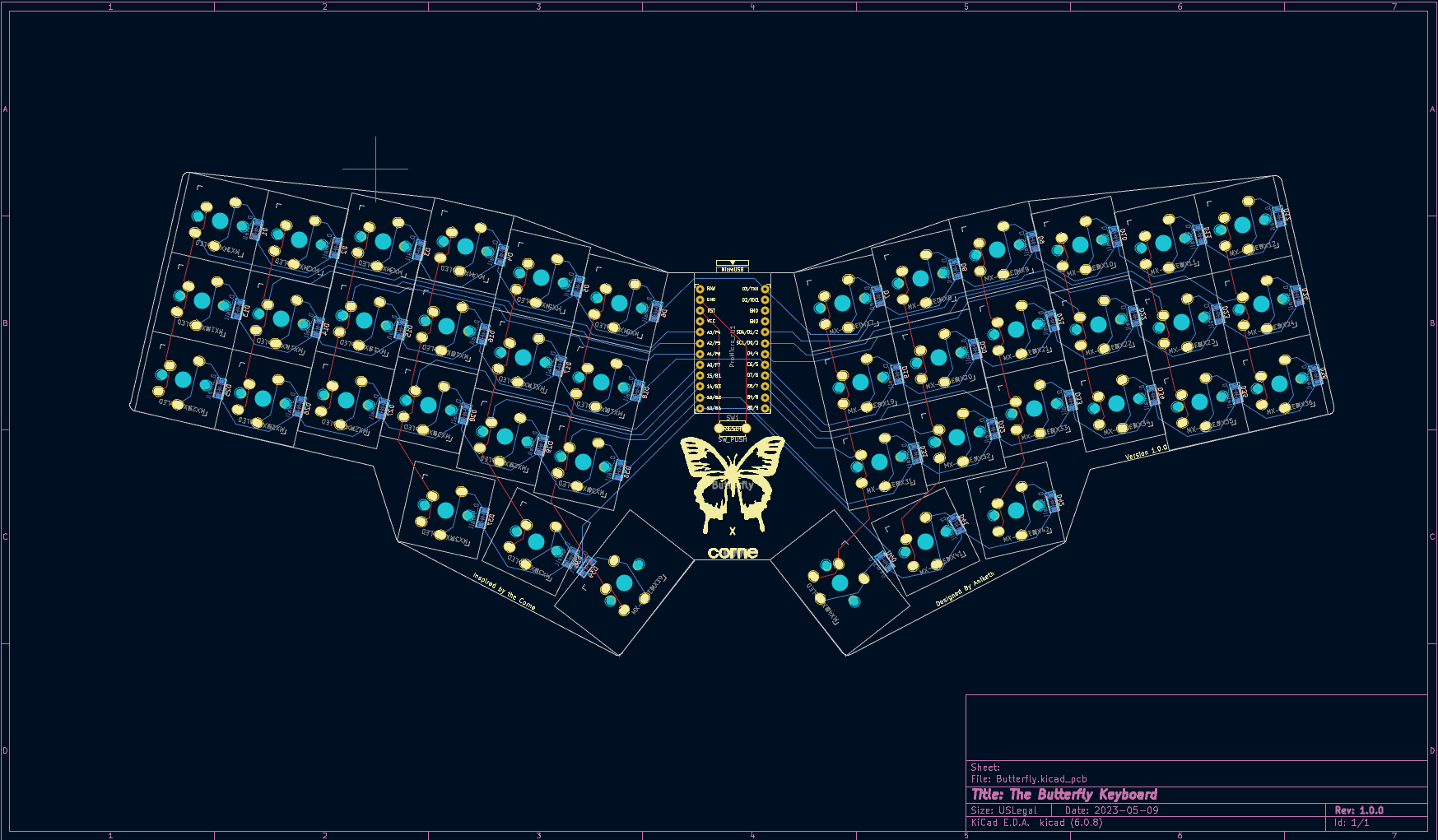
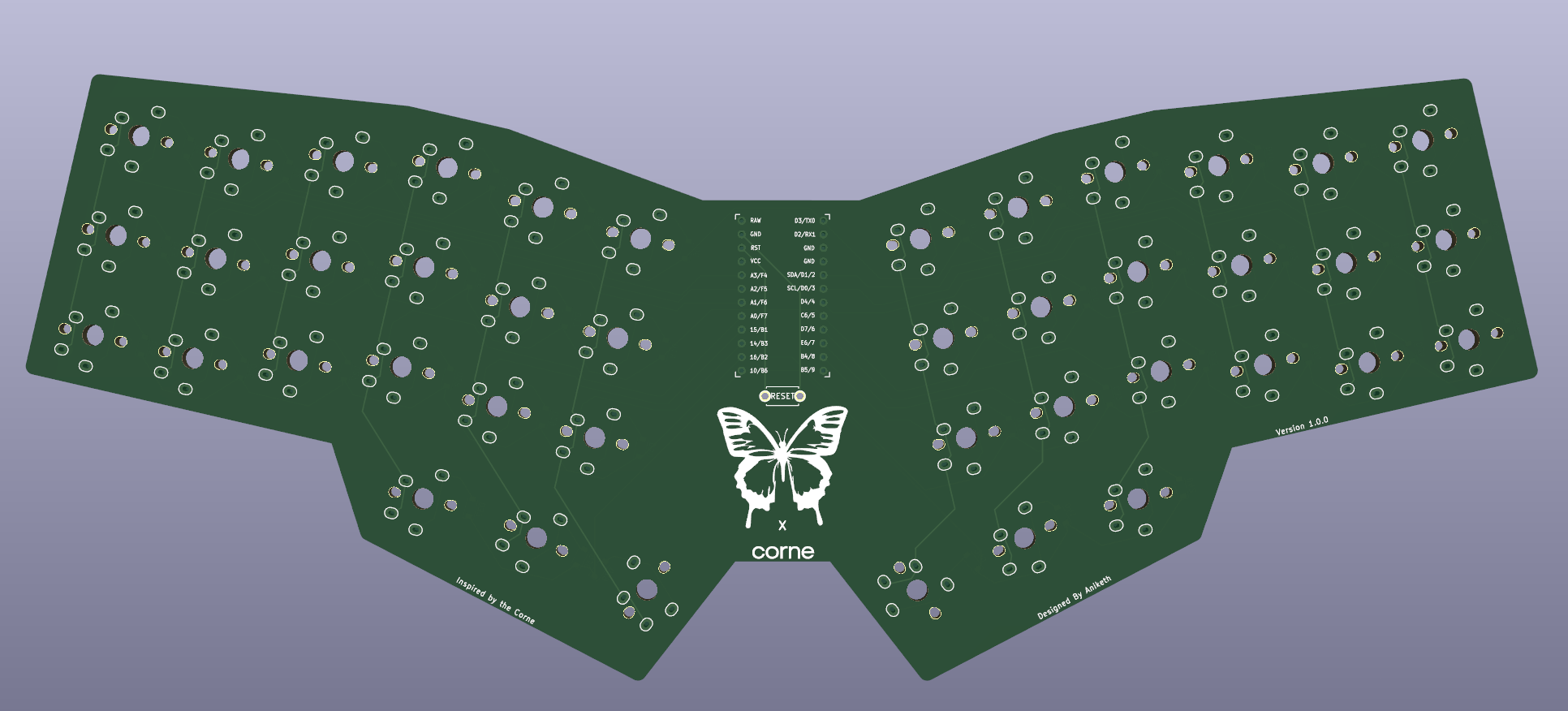
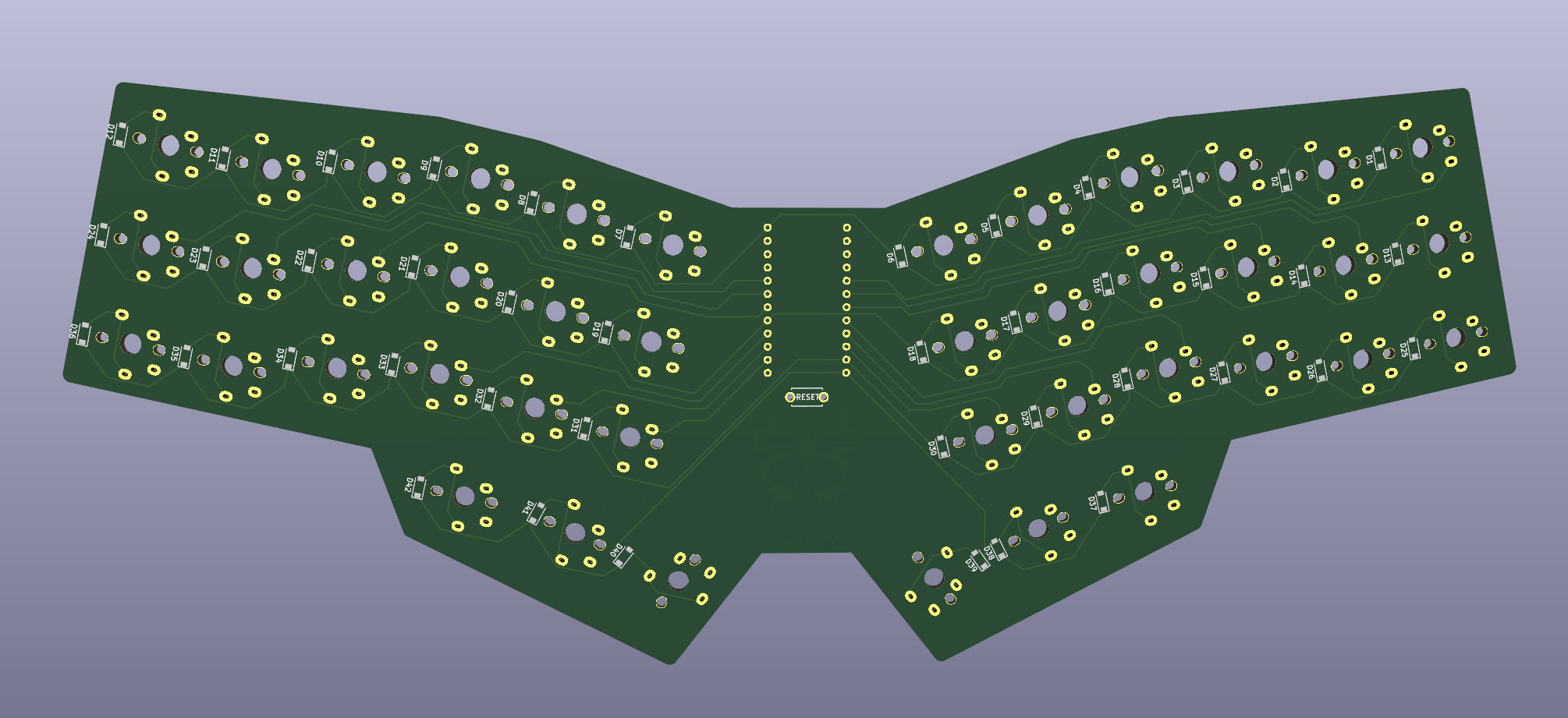
| Qty | Value | Footprint | References |
|---|---|---|---|
| 42 | D_Small | Diode_SMD:D_SOD-123 | D1, D2, D10, D11, D12, D13, D14, D15, D16, D17, D18, D19, D20, D21, D22, D23 +26 |
| 40 | MX-NoLED | kbd:CherryMX_Choc_1u | MX1, MX2, MX10, MX11, MX12, MX13, MX14, MX15, MX16, MX17, MX18, MX19, MX20, MX21, MX22, MX23 +24 |
| 2 | MX-NoLED | kbd:CherryMX_Choc_1.5u | MX39, MX40 |
| 1 | LOGO | kbd:corne-logo-horizontal | G*** |
| 1 | ProMicro_r | kbd:ProMicro_v3 | U1 |
| 1 | SW_PUSH | kbd:ResetSW | SW1 |
| 1 | X | Graphics:butterfly_small | Butterfly |

c0pperdragon/C64-Video-Enhancement
Component video modification for the C64 8-bit computer


henrikssn/TurboCAN
This is the official repository for the TurboCAN controller board, designed specifically for the Voron AfterBurner toolhead but can also be used on similar toolheads using NEMA17 steppers.

It measures 281.4 × 112.9 mm and has 2 copper layers, 1.6 mm thick.
88 parts. The full list of its parts is on this page, with links to each part's symbol and footprint where PCBKit's library has them.
From the aaatipamula/butterfly repository on GitHub, at the commit this page was made from: the board is Butterfly.kicad_pcb and its schematic Butterfly.kicad_sch. PCBKit opens the board in the browser, with nothing to install.
Its repository states no licence, so its author keeps all rights: ask aaatipamula before reusing the design.