2 layers151 × 114.1 mm

 WolfgangFranke/LightFlickerMeasure10
Measures flickering lights, like PWM driven LED-systems, using Arduino Nano.
Arduino Light Flicker Measure PCB is an open-source printed circuit board by WolfgangFranke, from the WolfgangFranke/LightFlickerMeasure repository on GitHub, published under the GPL-3.0 licence. It is a 2-layer board with 35 parts on 42 nets, routed with 290 tracks and 43 vias.
It is built around the ATMEGA328P-PU, AD5242BRU and AD823AN, with the BC547 among its other parts. Its parts include 12 capacitors, 11 resistors, 4 ICs, 3 connectors and 2 transistors. It belongs with the AVR (ATmega, ATtiny) boards of this library.


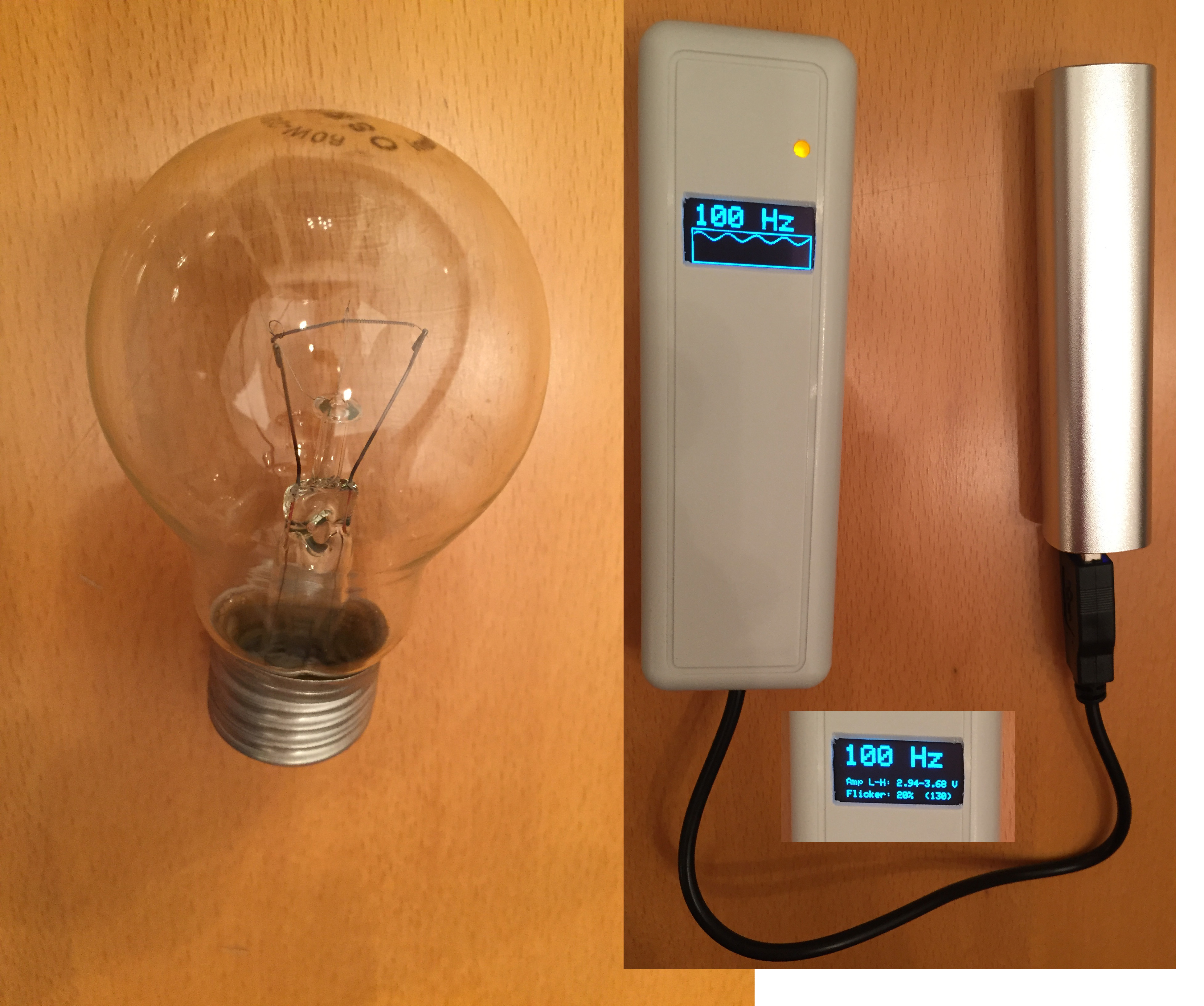
An old Light Bulb sends 80% constant light and a 20% sine waveform as 100 Hz noise ontop, so no flicker is recognized.
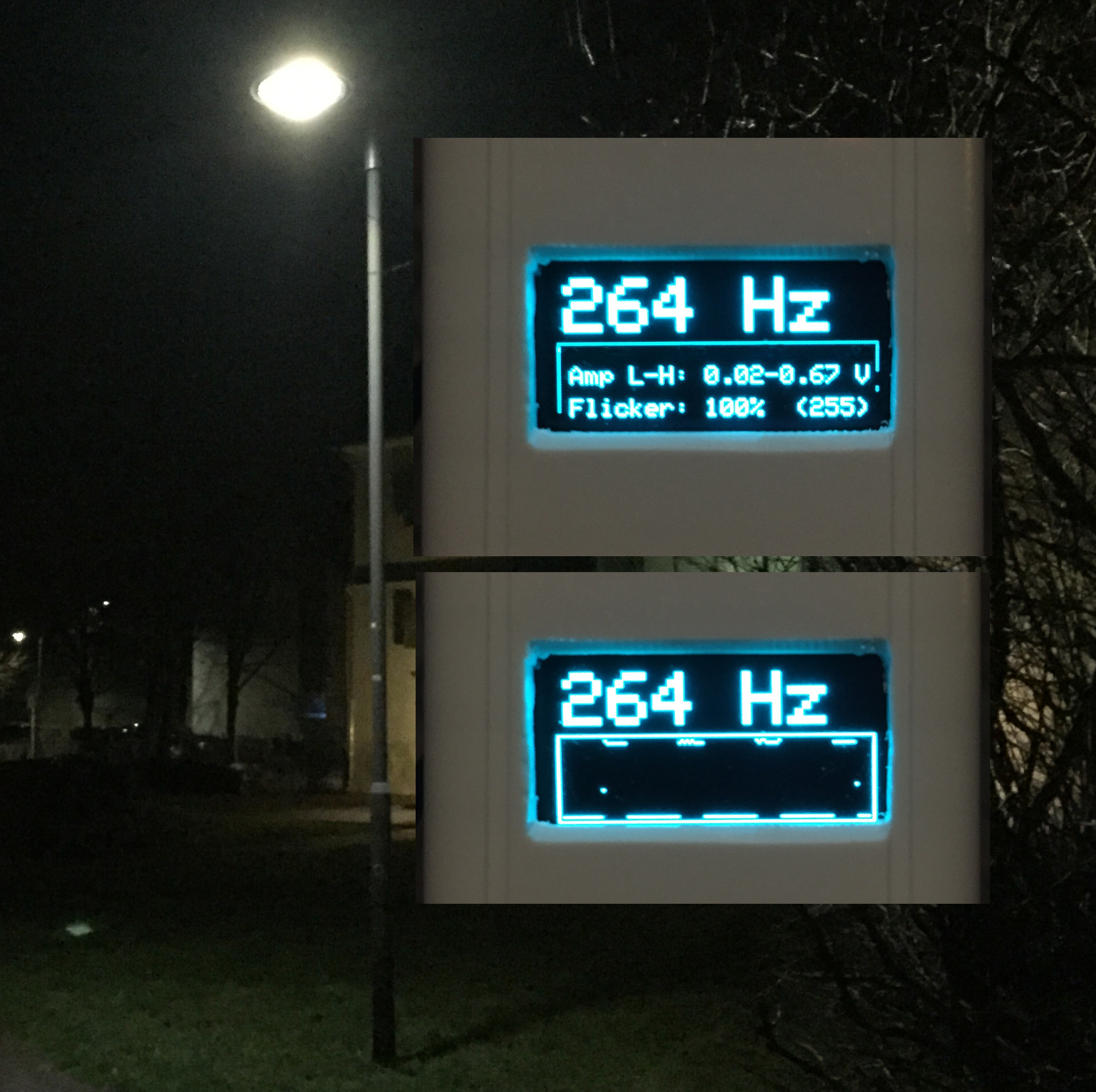
This LED Streetlamp sends a permanent PWM of 264 Hz frequency instead of a steady light! Going for a walk at night, this lamp is really annoying.
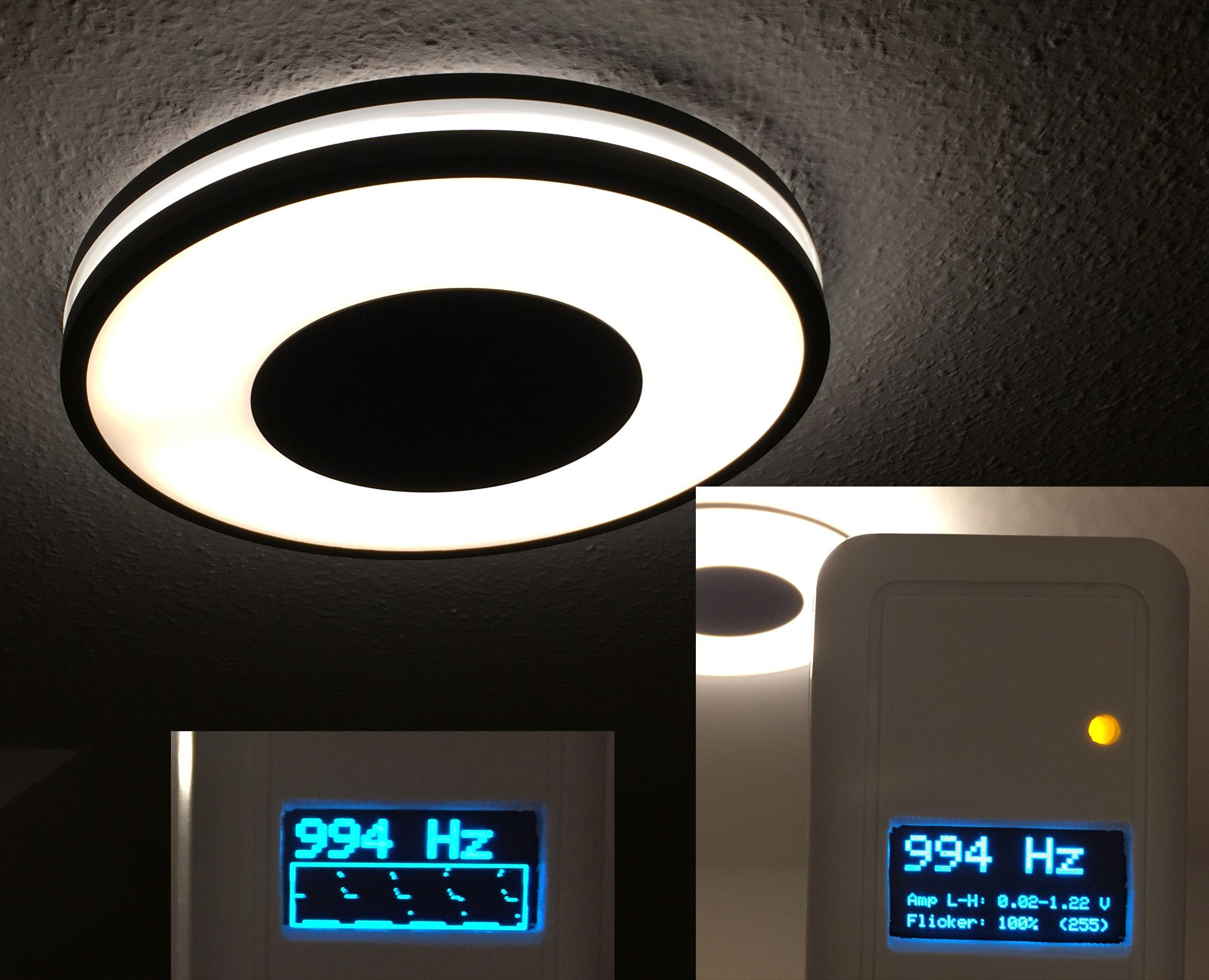
Philips Hue Being ceiling light and also the Philips Hue Light Strip+, as well as my Philips Hue RGB light bulbs, run at 1 kHz PWM. That still flickers irritatingly in your eyes when looking around in your appartment. I'm surprised seeing that the Hue Being let's overshoot the light at the begin of a PWM=high, but it may be seen due to the two LEDs providing the CCT.
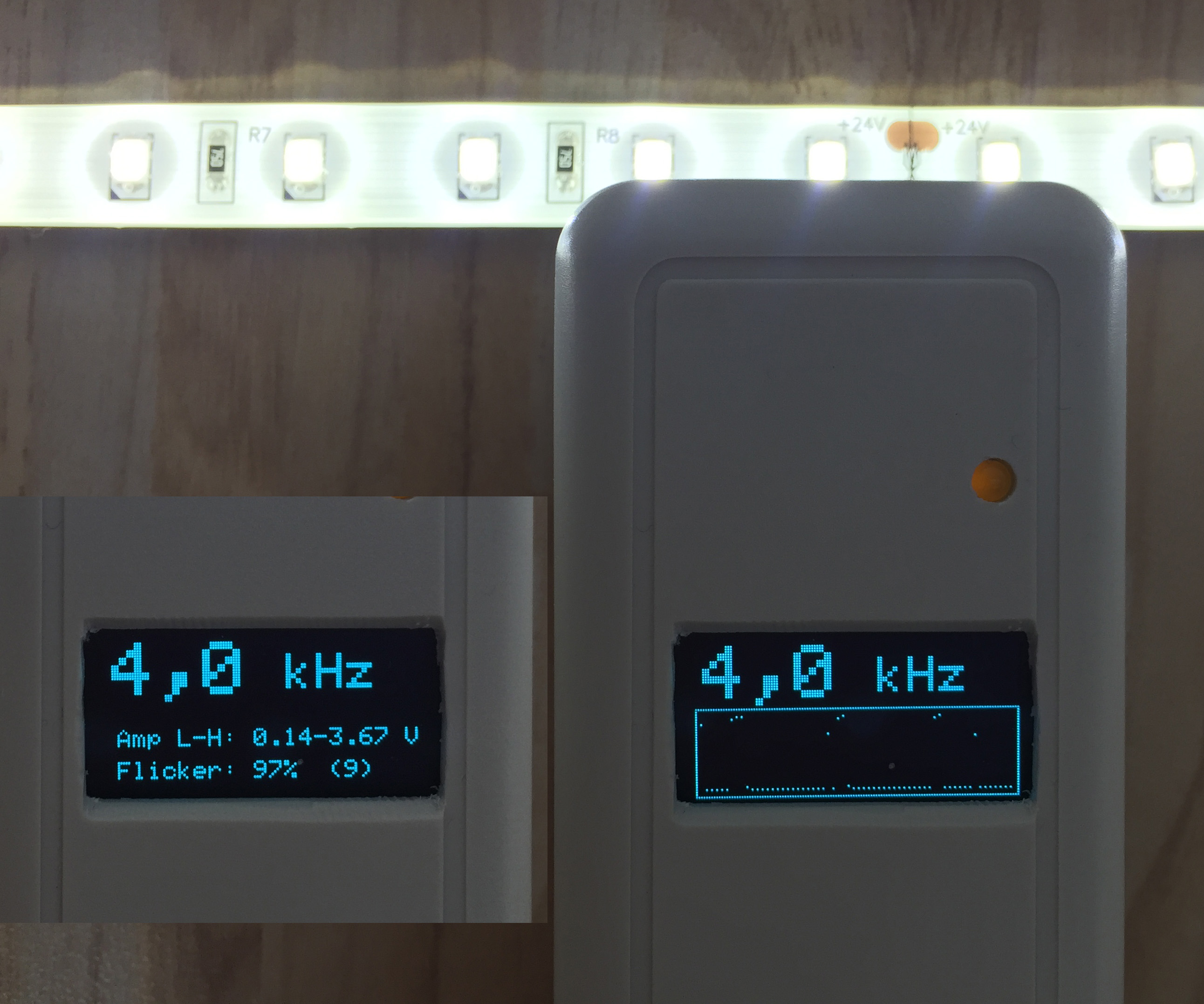
Talking about LED strips, the Paulmann SimpLED-Strip Set (789.56) dims in the PWM frequency range of 2,5 to 4 kHz. Covered by an opaque plastic housing, this could be considered it as less to no flicker. But if you install the strip in direkt sight, a strong flicker will be recognized when moving head or eyes.
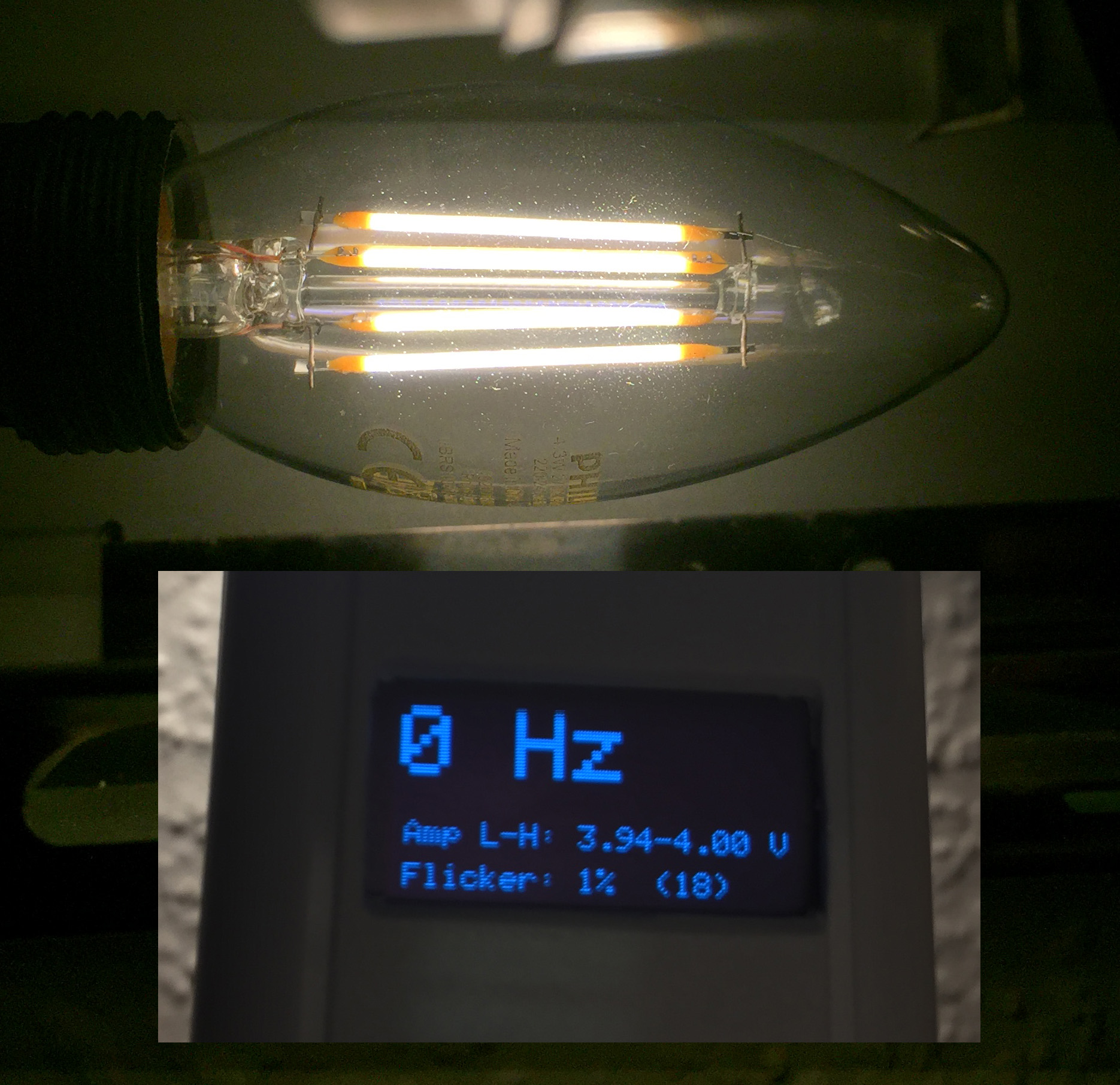
Totally smooth light sent by a Philips Filament Bulb (not dimmable), I really enjoy it.
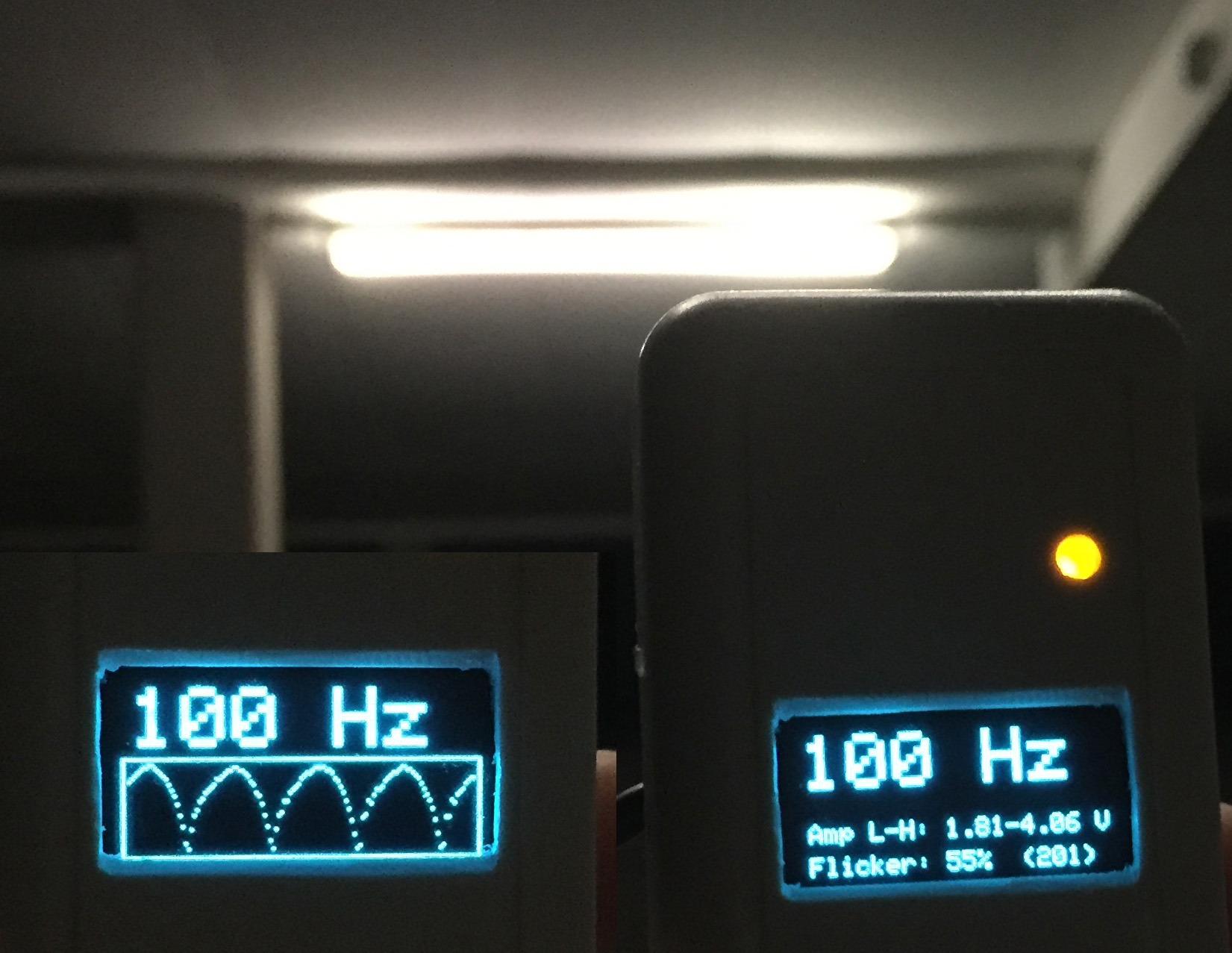
And how about an old-fashioned Neon Lamp, where we all know it does not give a good light? Yep, it does not give a good light!
| Qty | Value | Footprint | References |
|---|---|---|---|
| 4 | 10k | Resistor_THT:R_Axial_DIN0207_L6.3mm_D2.5mm_P10.16mm_Horizontal | R1, R2, R3, R4 |
| 3 | 1,5k | Resistor_THT:R_Axial_DIN0207_L6.3mm_D2.5mm_P10.16mm_Horizontal | R7, R9, R11 |
| 3 | 100n | Capacitor_THT:C_Rect_L4.0mm_W2.5mm_P2.50mm | C2, C9, C11 |
| 2 | 100n | Capacitor_THT:C_Rect_L9.0mm_W2.5mm_P7.50mm_MKT | C7, C10 |
| 2 | 100n | Capacitor_THT:C_Rect_L11.0mm_W2.8mm_P10.00mm_MKT | C1, C3 |
| 2 | 22p | Capacitor_THT:C_Disc_D3.0mm_W1.6mm_P2.50mm | C4, C5 |
| 2 | BC547 | Package_TO_SOT_THT:TO-92_HandSolder | Q1, Q2 |
| 1 | 1000µ | Capacitor_THT:CP_Radial_D8.0mm_P3.50mm | C12 |
| 1 | 100k | Resistor_THT:R_Axial_DIN0207_L6.3mm_D2.5mm_P10.16mm_Horizontal | R10 |
| 1 | 100n | Capacitor_THT:C_Rect_L7.0mm_W2.0mm_P5.00mm | C8 |
| 1 | 120k | Resistor_THT:R_Axial_DIN0207_L6.3mm_D2.5mm_P10.16mm_Horizontal | R6 |
| 1 | 12p | Capacitor_THT:C_Disc_D3.0mm_W1.6mm_P2.50mm | C6 |
| 1 | 1M | Resistor_THT:R_Axial_DIN0207_L6.3mm_D2.5mm_P10.16mm_Horizontal | R5 |
| 1 | 1k | Resistor_THT:R_Axial_DIN0207_L6.3mm_D2.5mm_P10.16mm_Horizontal | R8 |
| 1 | AD5242 | Package_SO:SOIC-16_3.9x9.9mm_P1.27mm | U2 |
| 1 | AD823A | Package_SO:SOIC-8_3.9x4.9mm_P1.27mm | U3 |
| 1 | ATmega328P-PU | Package_DIP:DIP-28_W7.62mm | U1 |
| 1 | Display | Connector_PinHeader_2.54mm:PinHeader_1x04_P2.54mm_Vertical | U4 |
| 1 | Ds | Connector_PinHeader_2.54mm:PinHeader_1x03_P2.54mm_Vertical | J1 |
| 1 | FTDI | Connector_PinHeader_2.54mm:PinHeader_1x06_P2.54mm_Vertical | J3 |
| 1 | LED | LED_THT:LED_D3.0mm | D5 |
| 1 | PWR(5V) | Connector_PinHeader_2.54mm:PinHeader_1x02_P2.54mm_Vertical | J5 |
| 1 | Q | Crystal:Crystal_HC49-U_Vertical | 16MHz1 |
| 1 | TestPoint | Connector_PinHeader_2.54mm:PinHeader_1x01_P2.54mm_Vertical | TP1 |

Phalkon-Industries/phoenix-instrument
Git repo for the content of the new Phoenix ph handheld instrument.


William-Souza-Santos/ADAPTIVE_FUZZY_LOGIC_CONTROL_FOUR_SWITCH_BIDIRECTIONAL_BUCK_BOOST_DC_DC_CONVERTER
Final Year Project by Electronic Engineering

eGuardianDev/atmegaStepperDriver
Open source stepper driver powered by atmega328p chip. First prototype designed for used in 3D printer.


blaskicl/seminar_pcb
Seminarski rad iz kolegija projektiranje tiskanih pločica
35 parts, built around the ATMEGA328P-PU, AD5242BRU, AD823AN and BC547. The full list of its parts is on this page, with links to each part's symbol and footprint where PCBKit's library has them.
From the WolfgangFranke/LightFlickerMeasure repository on GitHub, at the commit this page was made from: the board is KiCAD-Schematic+Board/Arduino_Light_Flicker_Measure_PCB.kicad_pcb. PCBKit opens the board in the browser, with nothing to install.
Its repository publishes it under the GPL-3.0 licence: you may reuse it on that licence's terms (keep the author's notice, and for a copyleft licence share your changes alike).