Skip to the content
2 layers19 × 18 mmLED, the printed circuit board in 3D

Software, mechanical design and hardware for ROV

Size
19 × 18 mm
Copper layers
2
Thickness
1.6 mm
Parts
8
Nets
5
Pads
18
Tracks, vias
17, 0
Pours
6
Routed
Yes
KiCad
KiCad 6 (file 20211014)
Created
18 Jul 2021
Updated
25 Mar 2022

Overview

LED is an open-source printed circuit board by UoM-Robotics-Society, from the UoM-Robotics-Society/ROV-project repository on GitHub. It is a 2-layer board of 19 × 18 mm with 8 parts on 5 nets, routed with 17 tracks and 0 vias.

It is built around the CPH3455-TL-H. Its parts include 3 ICs, 2 capacitors, 1 diode, 1 transistor and 1 connector.

Main components

1

README

README.md

ROV-project

Description

This repository contains the software, hardware and 3D design for the ROV project.

Project introduction and motivation

Goal is to create Remotely Operated Vehicle for underwater environments. ROV should :

  • should operate safely in underwater environment up to reasonably low water depth ( construction should be waterproof, designed in mind to deal with the possibility of flooding)
  • be able to be controlled by the User on ground station ( using something like GUI or physical devices like joystick/xbox controller etc. )
  • provide useful data from sensors to User ( video feedback, attitude ( orientation ), other somehow relevant sensors )
  • design should be flexible for possible modification in future

Diagram

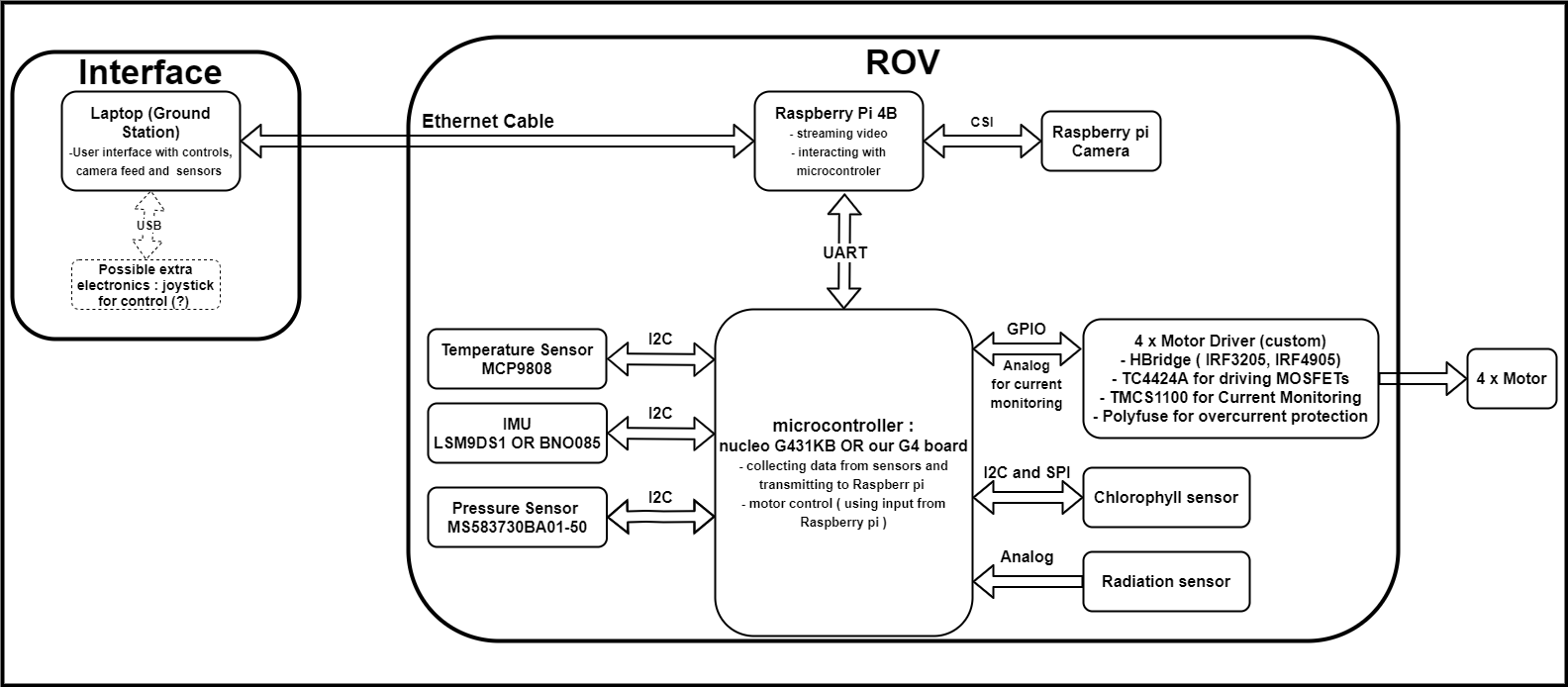
Whole system of the ROV is presented on the image below : diagram

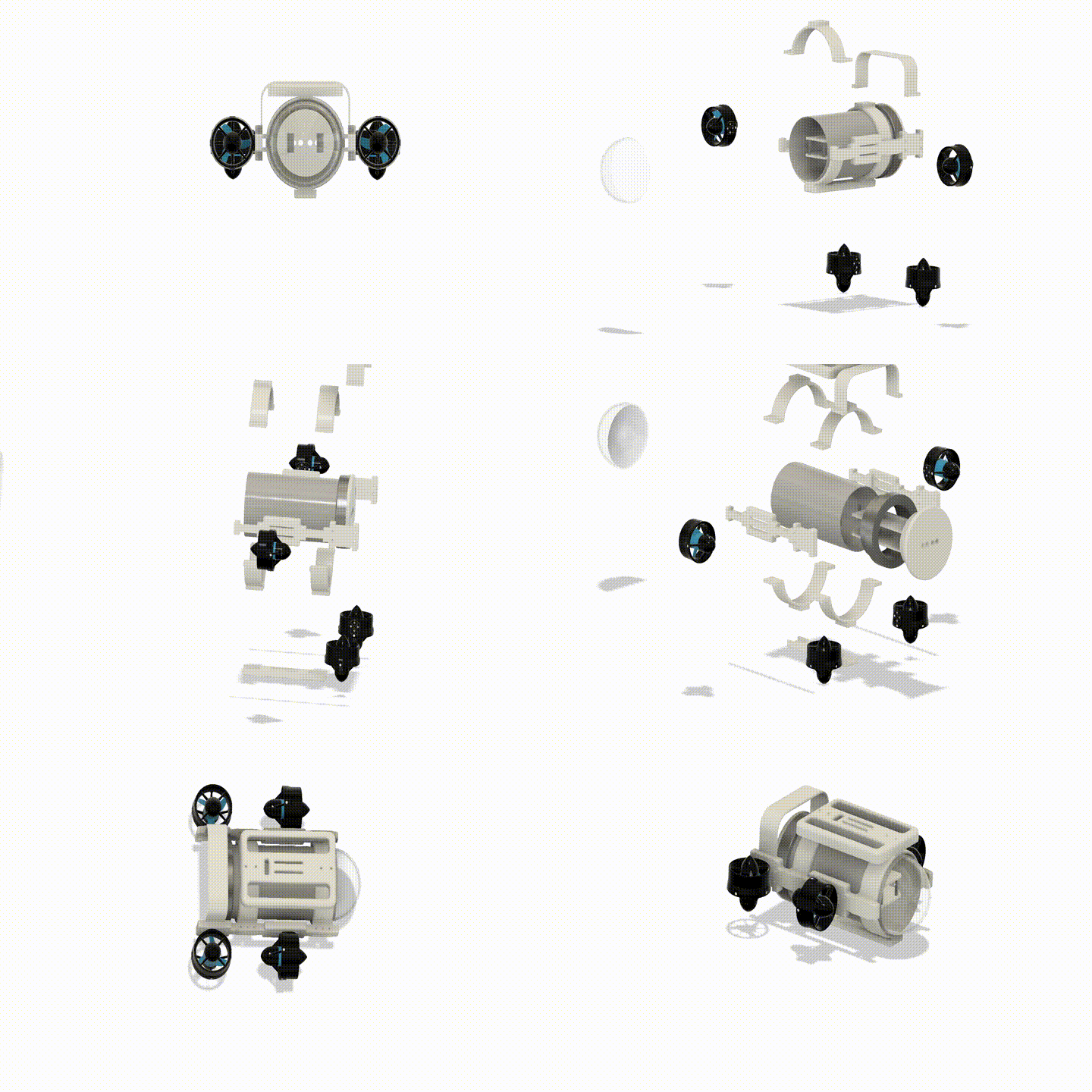
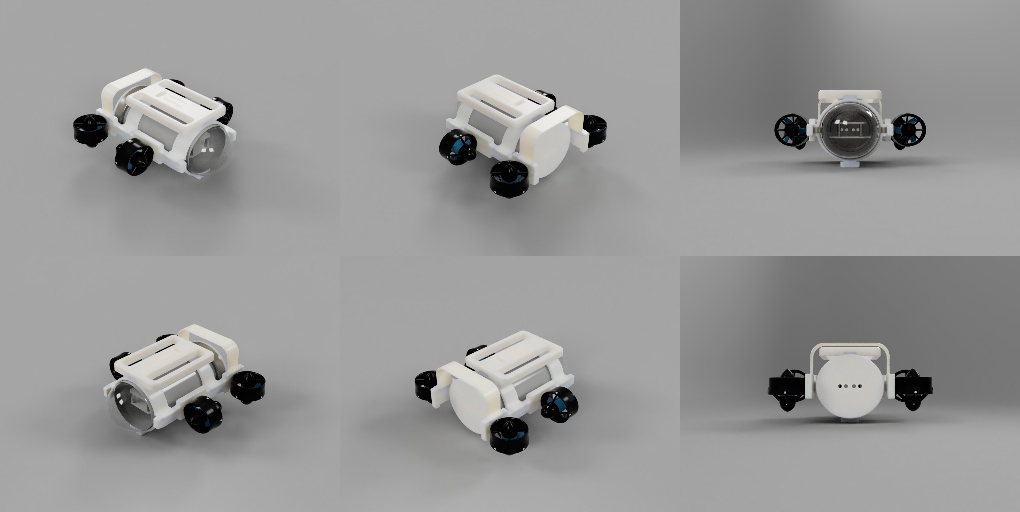
Mechanical Design

Design

video of the model render

stiched images of the mode

whole mechanical design is done by mechanical team of ROV team

Waterproofing

Components Description

Ground Station
  • Main device with which User will interact will be laptop ( or other device to which we can connect Ethernet cable and will provide easy interaction ). Using laptop/other workstation provides few benefits :
    • Most of the "heavy stuff" will be done on the workstation that we can control and only necessary software will run in the actual ROV
    • makes the system very flexible : lots of possible expansion in the future ( fancy control like joysticks ? We can create own device and plug to USB or add support for xbox controller. Some computer vision algorithms for the camera ? the workstation can have GPU on it, we can provide quite a lot of computation power ( rather than relying on raspberry pi or other single board computer ))
Communication
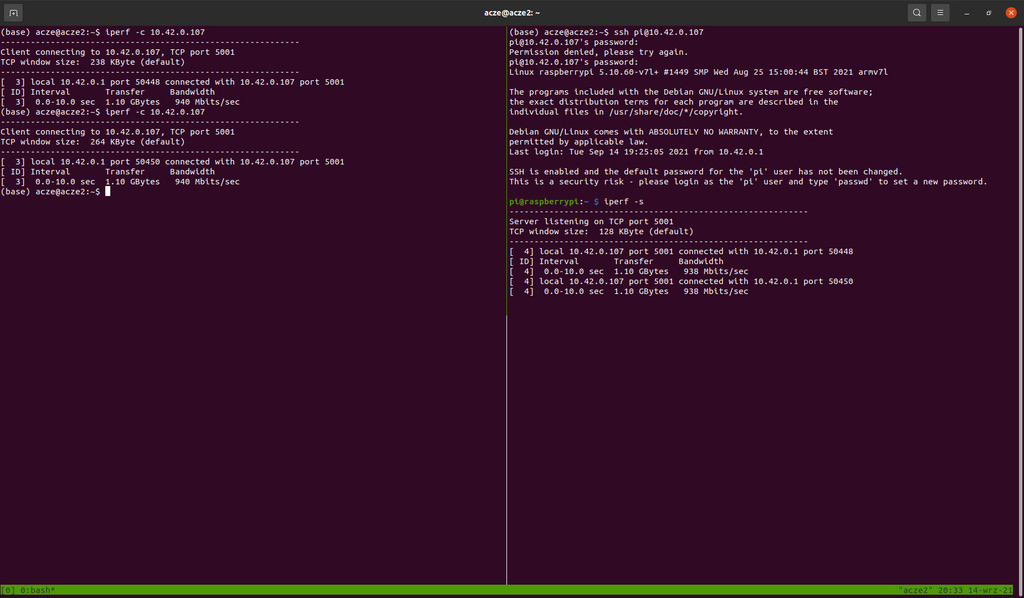
  • Ethernet should allow fast ( Raspberry pi has 1Gbit Ethernet port ), reliable and long distance communication ( and works underwater since it's just a cable ). We can also use Ethernet to power the device ( "Power over Ethernet")
  • All other communication within ROV uses standard and popular data transmission protocols
  • According to David, possiblity of extension to wireless

Raspberry pi connected to laptop over 20 meter ethernet cable. Currently just streams video ( 1080p) over MQTT, bandwidth test below : 940 Mbit/s for communication

Single Board Computer ( Raspberry Pi 4b)

  • Extremely popular platform with support for good quality, real time video streaming and interacting with hardware ( using Serial communication ). Great community support and very fast to learn ( also Computer Science departament uses it in teaching )
  • Can be programmed in few languages ( C, C++, python, probably others ), although python is used for the fast and easy development ( limitations of python like GIL can be removed by using multiprocessing etc.).

Microcontroller ( STM32G4)

  • Microcontroller from new G4 line from STMicroelectronics. Not popular line, not "battle-tested" but cheap, high-performance microcontroller with lots of peripherals and can be programmed in Mbed Environment or HAL. Although there are popular choices ( pico's, arduino atmega's, ESP32's other stm's) it can be great opportunity to learn new platform that seems to be targeted for more industrial applications ( and overall learn something new and fun). Other than that, it has lots of features per pound ( 3.5 pound before chip shortage). The design doesn't realy that much on the microcontroller ( it requires few good timers, I2C, UART, SPI, reasonable ADC, most of the microcontrollers provide that) so we can change to other platform if the chosen microcontroller won't prove it's worth.

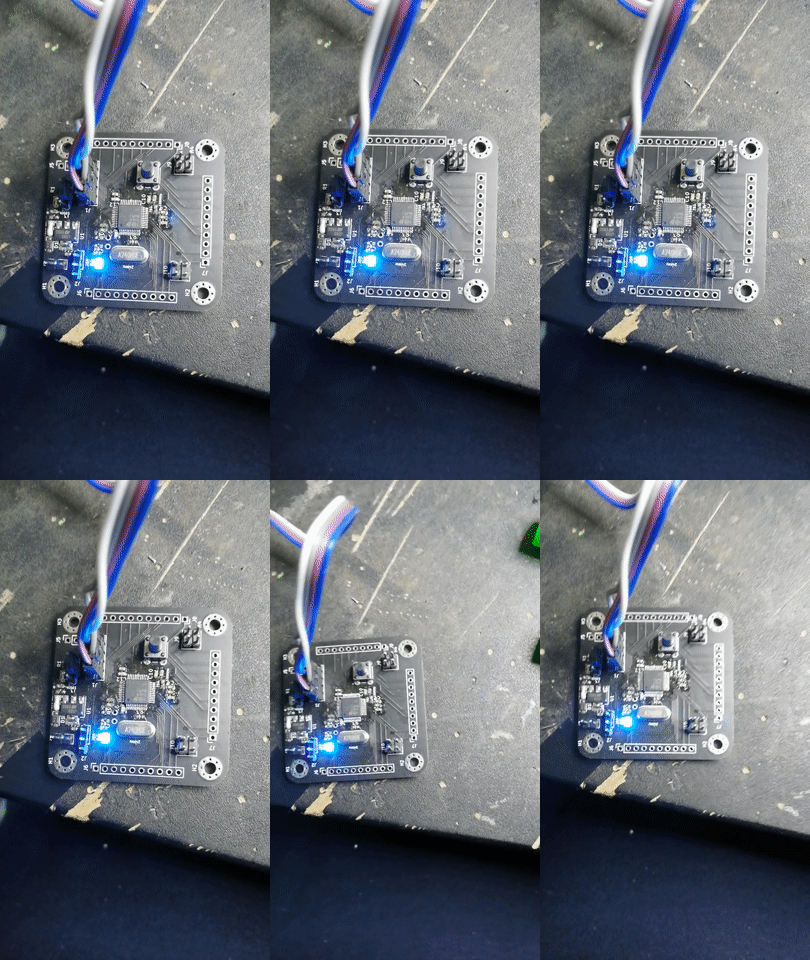
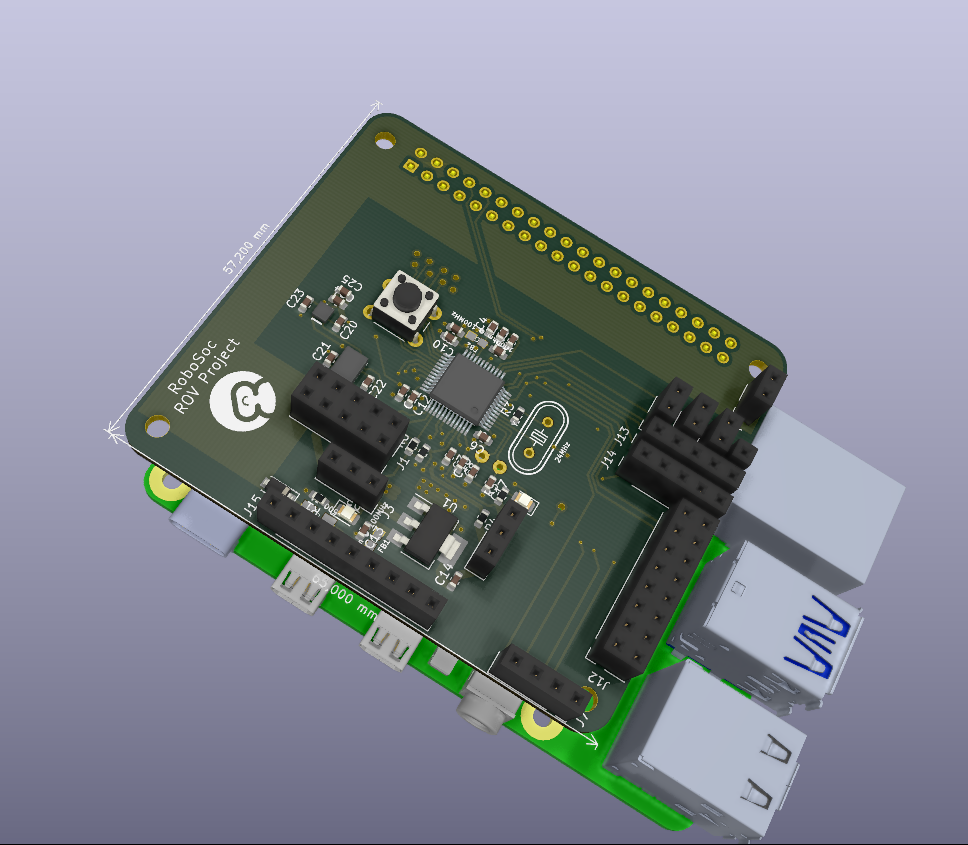
Current microcontroller board :
STM32 G4 board

Render of the final board that will go hopefully in the final design STM32 G4 board

Motors

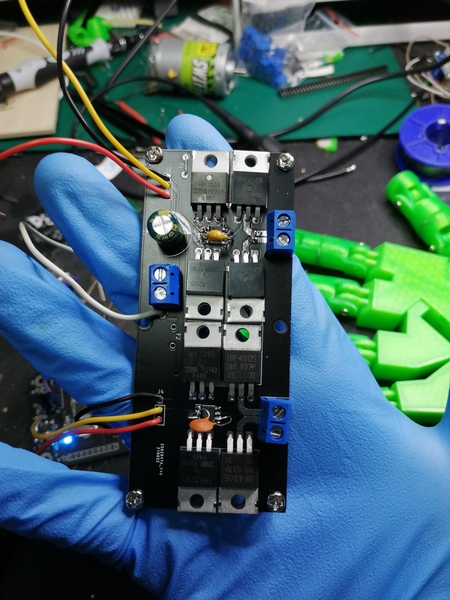
  • Lots of possible choices ( We orderd the dual shaft ,mabuchi like(DC motor),~30W from robotshop). Custom driver created for the motors using Hbridge circuit. Main drawback is that we need to solder/design/debug it but advantage is that it provides quite a bit of extra features that we included in our design : overcurrent protection ( using polyfuse ), high amperage and reasonably low power losses ( dependent on mosfets ), protection of Microcontroller pins ( using Mosfet driver to drive large mosfets from Hbridge) and current monitoring ( output voltage of TMCS1100 sensor is proportional to the current that flows through the mosfets). All of the features could possibly help us debugging, monitoring and hopefully help with safety when dealing with large motors.
  • Possibility of adding encoders in the future

Current Motor driver :
Motor driver

Sensors

  • Other than driving platform we wanted to provide range of measurements:
    • Temperature sensor is standard.
    • Pressure sensor is not popular sensor, designed specifically for underwater environment ( up to 300m ) which provides high resolution ( and it's low cost compared to other underwater sensors ).
    • MARG sensor ( accelerometer, gyroscope, magnetometer). Using the data we can use AHRS algorithm ( experimented with Madgwick Filter which will be probably used in the design) we can visualize the orientation of the ROV on display on the laptop / ground station Madgwick Report.
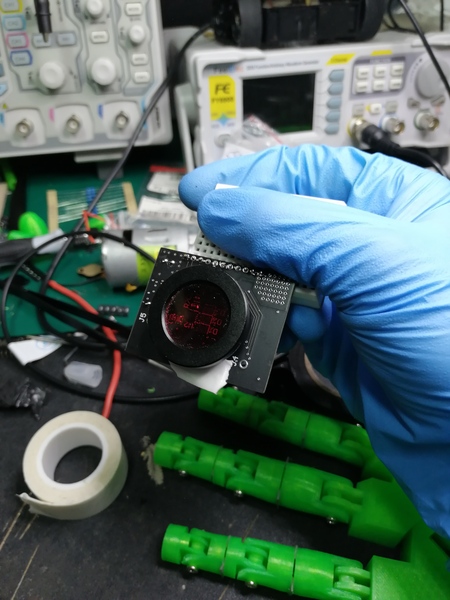
    • Chlorophyll sensor. Custom sensor using the fluorescence measurement that should allow us to estimate the chlorophyll concentration. Chlorophyll concentration helps scientists to estimate health of the lake/other water containers [TODO point to document with more details].
    • Radiation sensor : was in the first design because of initial project idea from Sellafield. Seems like challenging project and cool expansion to the project. Initial design created from the Elektor magazine article about Radiation detection. General reference used for it was "Radiation detection and measurement" and opengeiger website

Sensors :
Chlorophyll sensor :
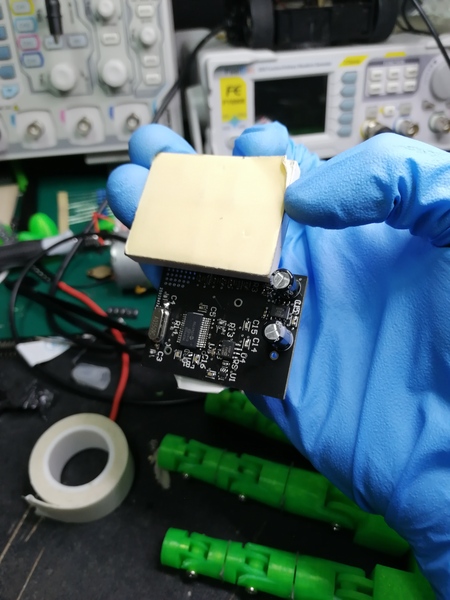
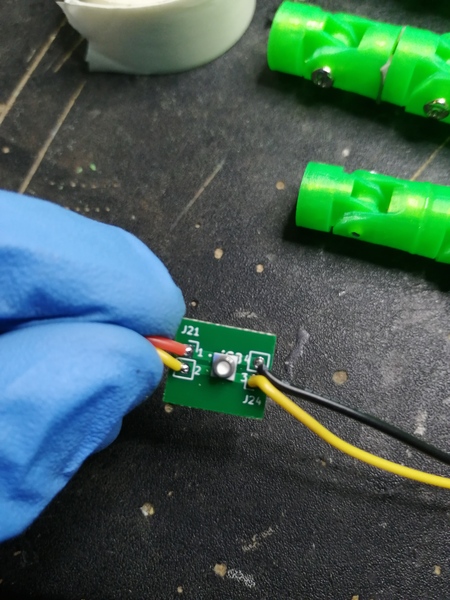
Chlorophyll sensor front Chlorophyll sensor back

Pressure Sensor :
Pressure sensor

Parts

8
QtyValueFootprintReferences
3AL5809components:PowerDI123U1, U2, U3
110uFCapacitor_SMD:C_0603_1608Metric_Pad1.08x0.95mm_HandSolderC2
11uFCapacitor_SMD:C_0603_1608Metric_Pad1.08x0.95mm_HandSolderC1
1CPH3455components:CPH3455Q1
1Conn_01x03_MaleConnector_PinSocket_2.54mm:PinSocket_1x03_P2.54mm_VerticalJ1
1LEDcomponents:LEDD1

More from UoM-Robotics-Society/ROV-project

6
  • 2 layers80 × 38.1 mmMotor v3, the printed circuit board in 3D

    Motor v3

    UoM-Robotics-Society/ROV-project

    Software, mechanical design and hardware for ROV

    92 parts14
  • 4 layers57.2 × 65 mmBluePillG, the printed circuit board in 3D

    BluePillG

    UoM-Robotics-Society/ROV-project

    Software, mechanical design and hardware for ROV

    60 parts14
  • 4 layers50 × 50 mmBluePillG, the printed circuit board in 3D

    BluePillG

    UoM-Robotics-Society/ROV-project

    Software, mechanical design and hardware for ROV

    48 parts14
  • 2 layers33 × 23 mmRadiation sensor, the printed circuit board in 3D

    Radiation sensor

    UoM-Robotics-Society/ROV-project

    Software, mechanical design and hardware for ROV

    33 parts14
  • 2 layers58.6 × 67.4 mmFlight controller, the printed circuit board in 3D

    Flight controller

    UoM-Robotics-Society/ROV-project

    Software, mechanical design and hardware for ROV

    29 parts14
  • 2 layers20 × 20 mmChlorophyll sensor v2, the printed circuit board in 3D

    Chlorophyll sensor v2

    UoM-Robotics-Society/ROV-project

    Software, mechanical design and hardware for ROV

    22 parts14

Similar boards

  • 2 layers20.5 × 24.8 mmPi interface, the printed circuit board in 3D

    Pi interface

    opulo-inc/lumenpnp

    The LumenPnP is an open source pick and place machine.

    8 parts3.7k
  • 2 layers59.9 × 25.7 mmBuffer, the printed circuit board in 3D

    Buffer

    hoglet67/RGBtoHDMI

    Bare-metal Raspberry Pi project that provides pixel-perfect sampling of Retro Computer RGB/YUV video and conversion to HDMI

    8 parts1kGPL-3.0
  • 2 layers52 × 12.6 mmUSB, the printed circuit board in 3D

    USB

    shanteacontrols/OpenDeck

    A platform for building interactive control and sensing devices using MIDI and OSC built with Zephyr RTOS.

    8 parts960Apache-2.0
  • 2 layers87.5 × 48.5 mm7 input macropad, the printed circuit board in 3D

    7 input macropad

    hackclub/OnBoard

    💡 Join 1,000 teenagers and make your first PCB with a $100 grant!

    8 parts915
  • 2 layers36.2 × 63.1 mmPicoMemcard pico, the printed circuit board in 3D

    PicoMemcard pico

    dangiu/PicoMemcard

    Emulating PSX Memory Card (or controller) using a Raspberry Pi Pico

    8 parts694GPL-3.0
  • 2 layers36 × 10 mmPCB4-PWR BTN Rev.A, the printed circuit board in 3D

    PCB4-PWR BTN Rev.A

    OLIMEX/DIY-LAPTOP

    Do It Yourself Open Source Hardware and Software Modular Hacker's Friendly Laptop

    8 parts578Apache-2.0

Questions

How big is the LED PCB?

It measures 19 × 18 mm and has 2 copper layers, 1.6 mm thick.

What parts does the LED use?

8 parts, built around the CPH3455-TL-H. The full list of its parts is on this page, with links to each part's symbol and footprint where PCBKit's library has them.

Where can I download the LED KiCad files?

From the UoM-Robotics-Society/ROV-project repository on GitHub, at the commit this page was made from: the board is hardware/LED/LED.kicad_pcb and its schematic hardware/LED/LED.kicad_sch. PCBKit opens the board in the browser, with nothing to install.

Can I use the LED design in my own project?

Its repository states no licence, so its author keeps all rights: ask UoM-Robotics-Society before reusing the design.