Skip to the content
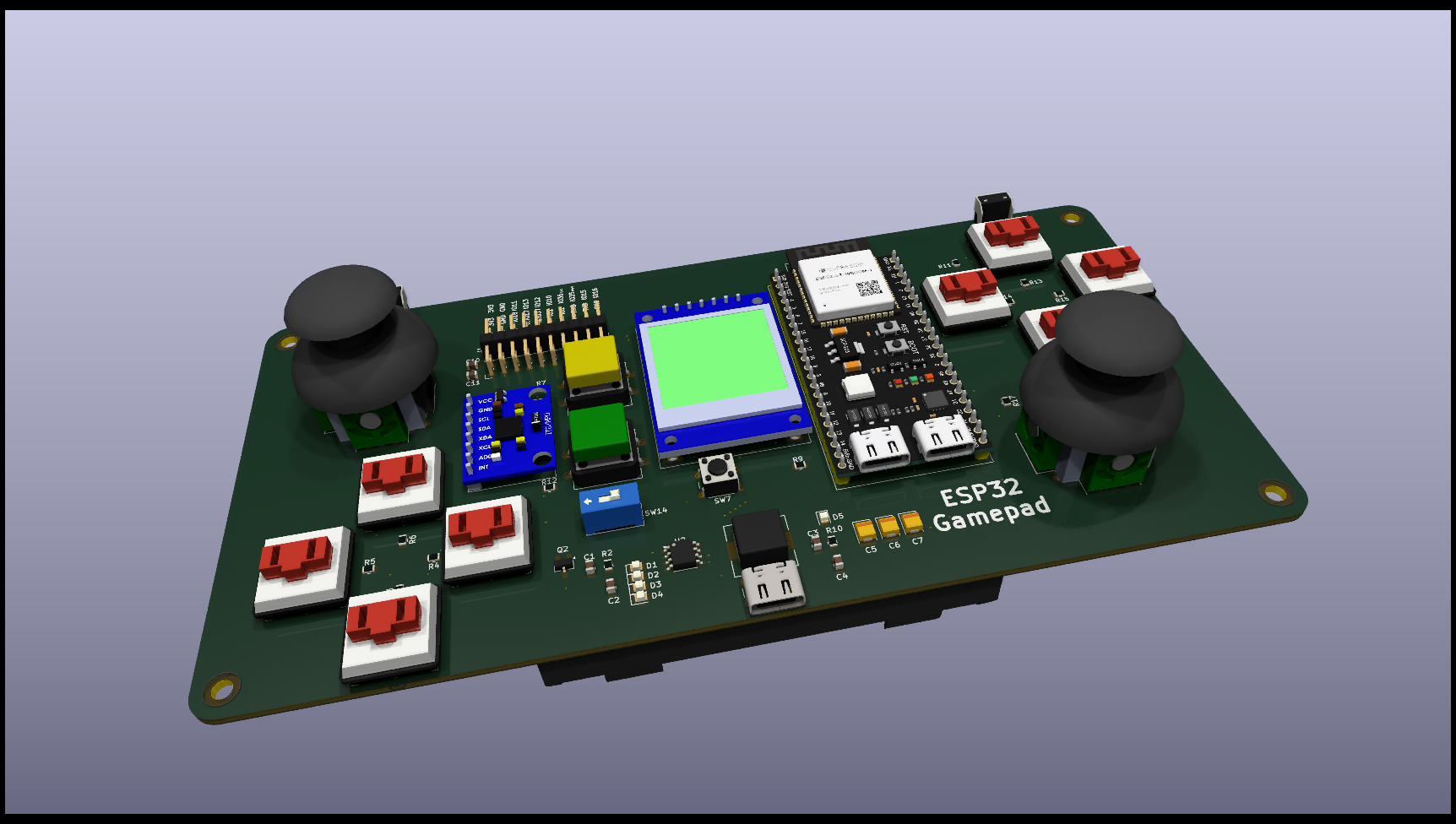
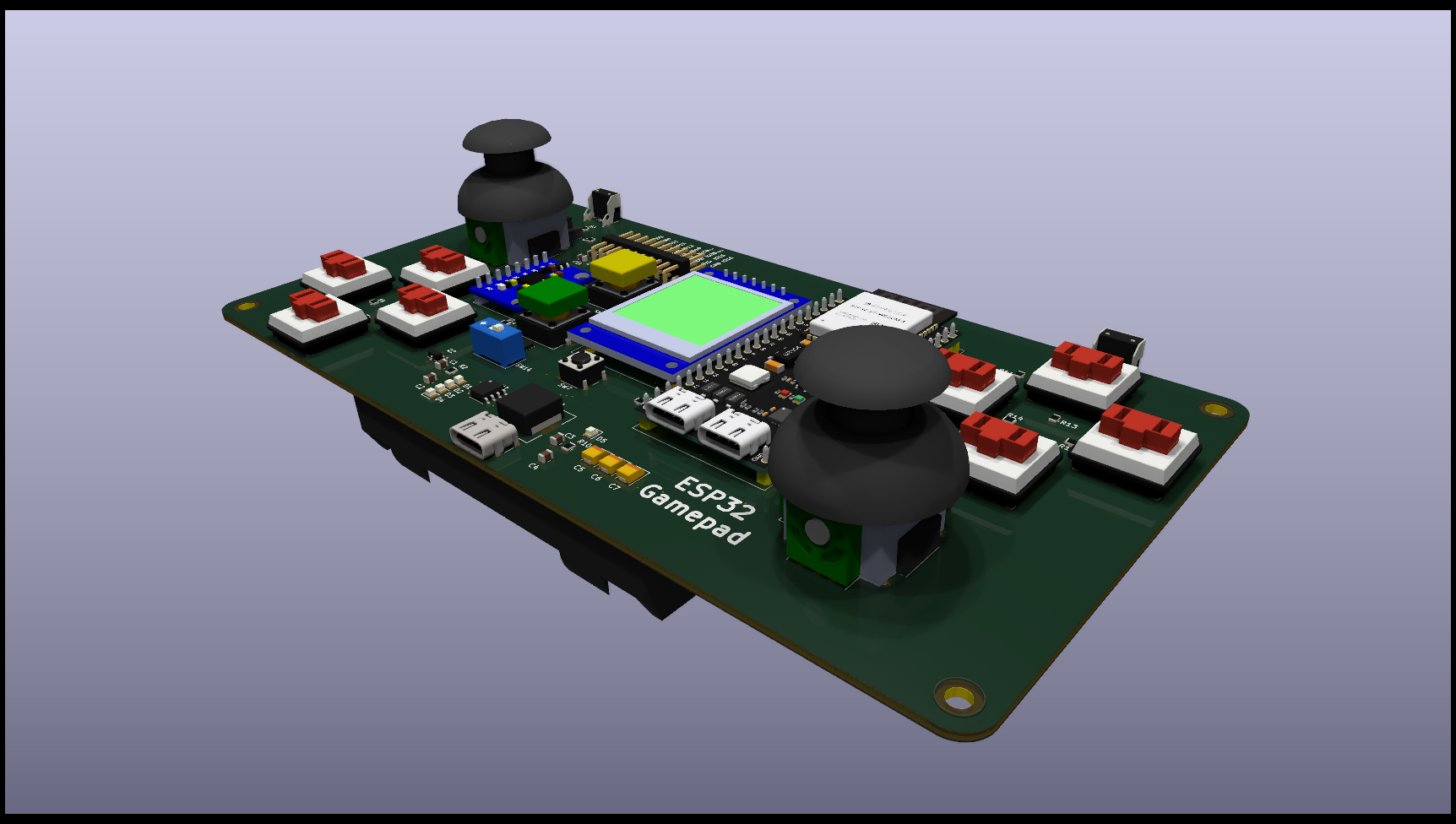
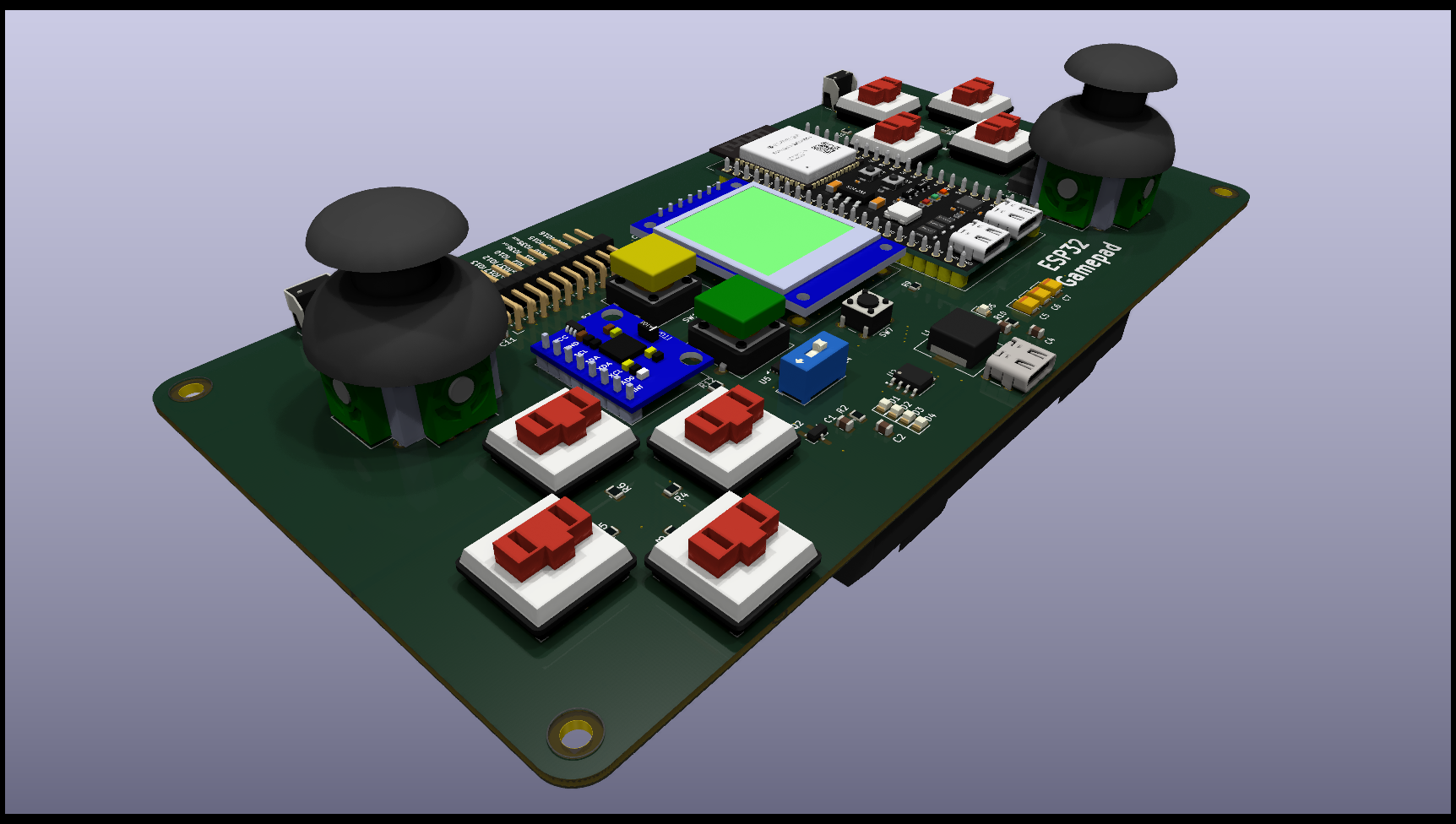
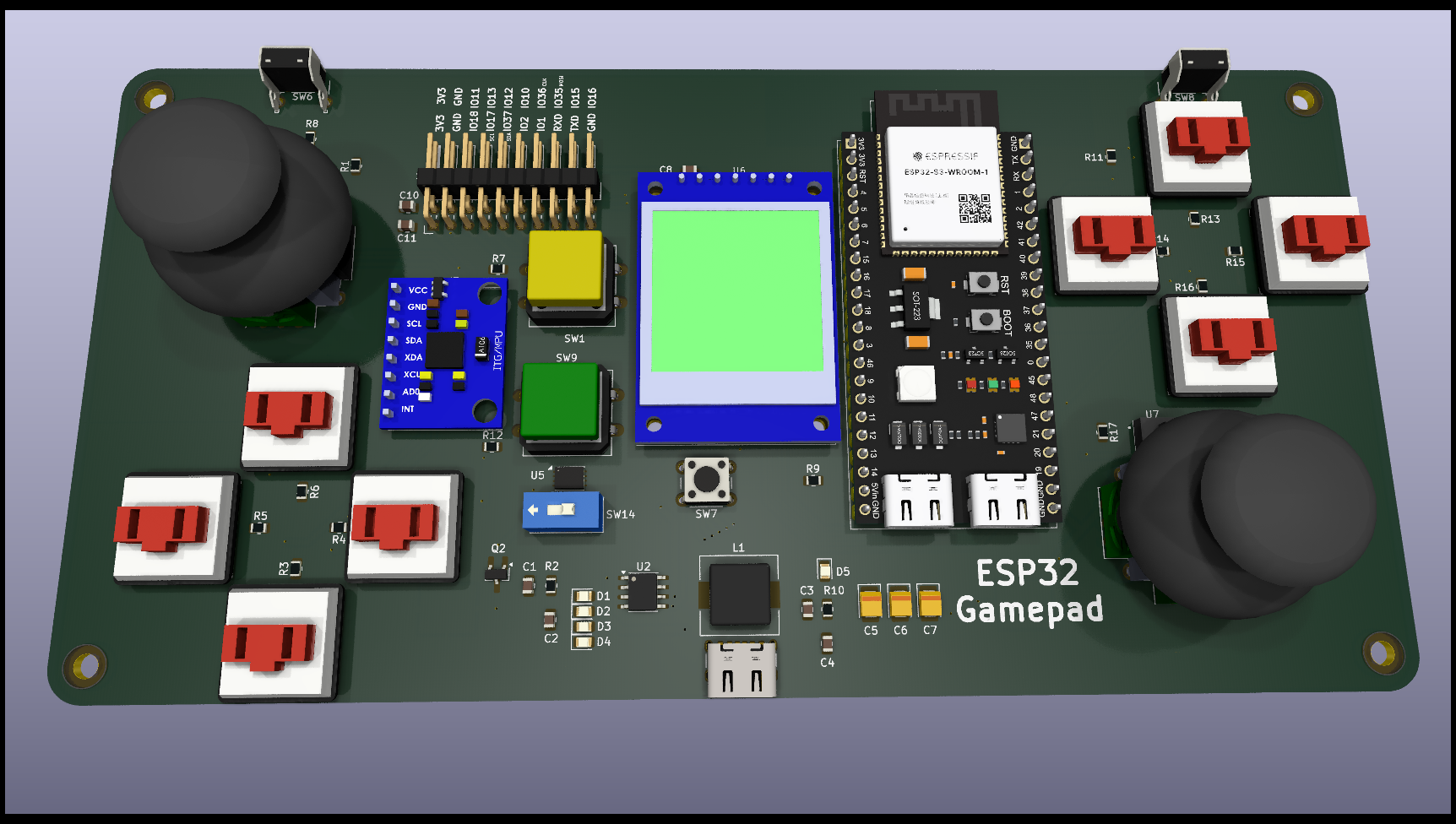
2 layers188.5 × 88.9 mmEsp gamepad v2, the printed circuit board in 3D

This project focuses on developing an autonomous car system powered by neural networks (NN). It utilizes deep learning techniques to enable key functionalities such as perception, path planning, and control. The system processes real-world sensor data to detect the environment, predict obstacles, and make driving decisions.

Size
188.5 × 88.9 mm
Copper layers
2
Thickness
1.6 mm
Parts
70
Nets
61
Pads
321
Tracks, vias
819, 91
Pours
3
Routed
Yes
KiCad
KiCad 8.0 (file 20240108)
Created
17 Dec 2024
Updated
8 Apr 2025

Overview

Esp gamepad v2 is an open-source printed circuit board by Reiko0908, from the Reiko0908/NeuralNetwork_Based_AutonomousCar repository on GitHub, published under the Apache-2.0 licence. It is a 2-layer board of 188.5 × 88.9 mm with 70 parts on 61 nets, routed with 819 tracks and 91 vias.

It is built around the COM-09032, IP5306 and SI2300. Its parts include 19 resistors, 14 switches, 13 capacitors, 7 ICs and 5 diodes. It belongs with the keyboards and input boards of this library.

Main components

3

README

README.md

NeuralNetwork_Based_AutonomousCar

Project Overview

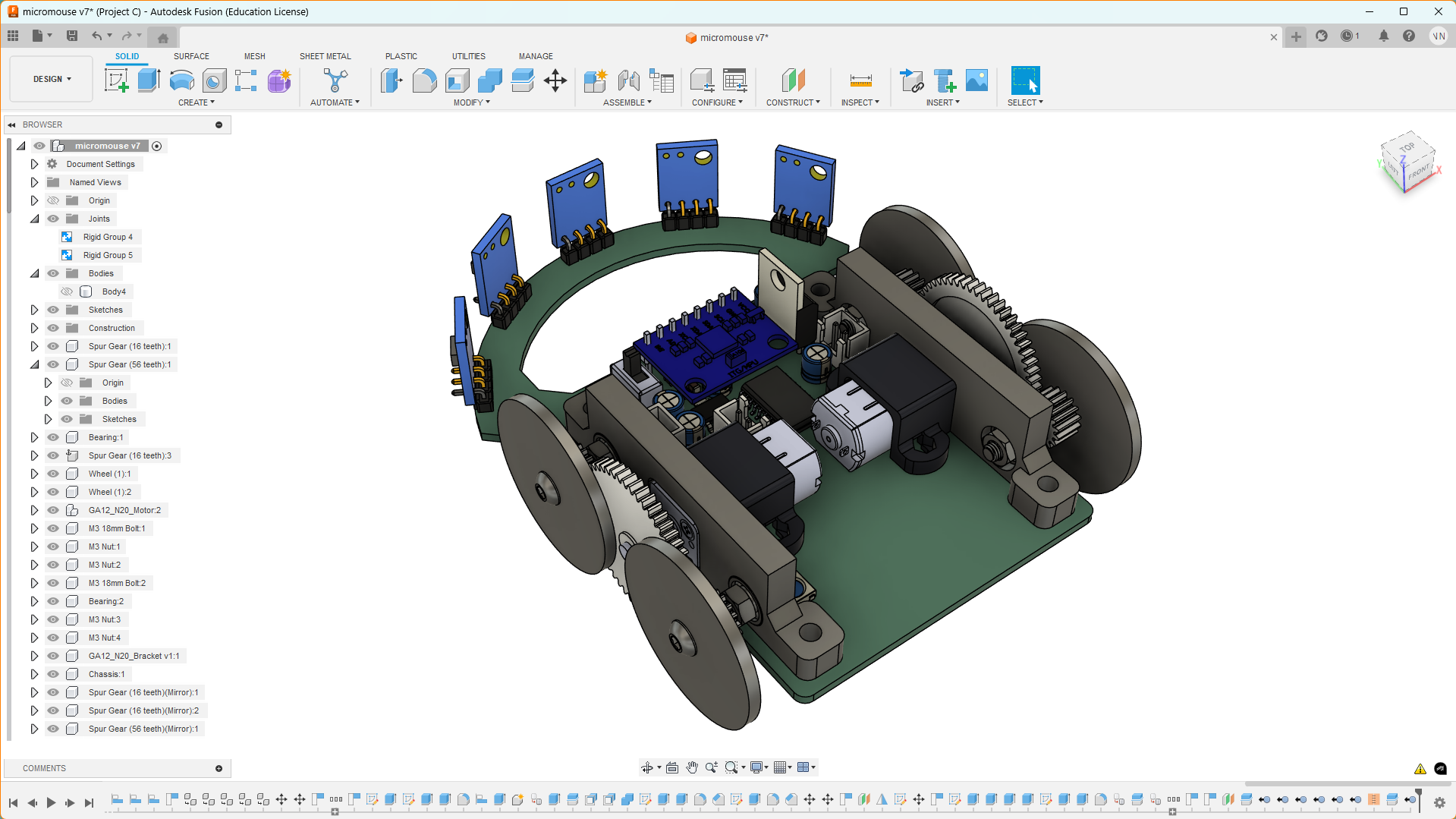
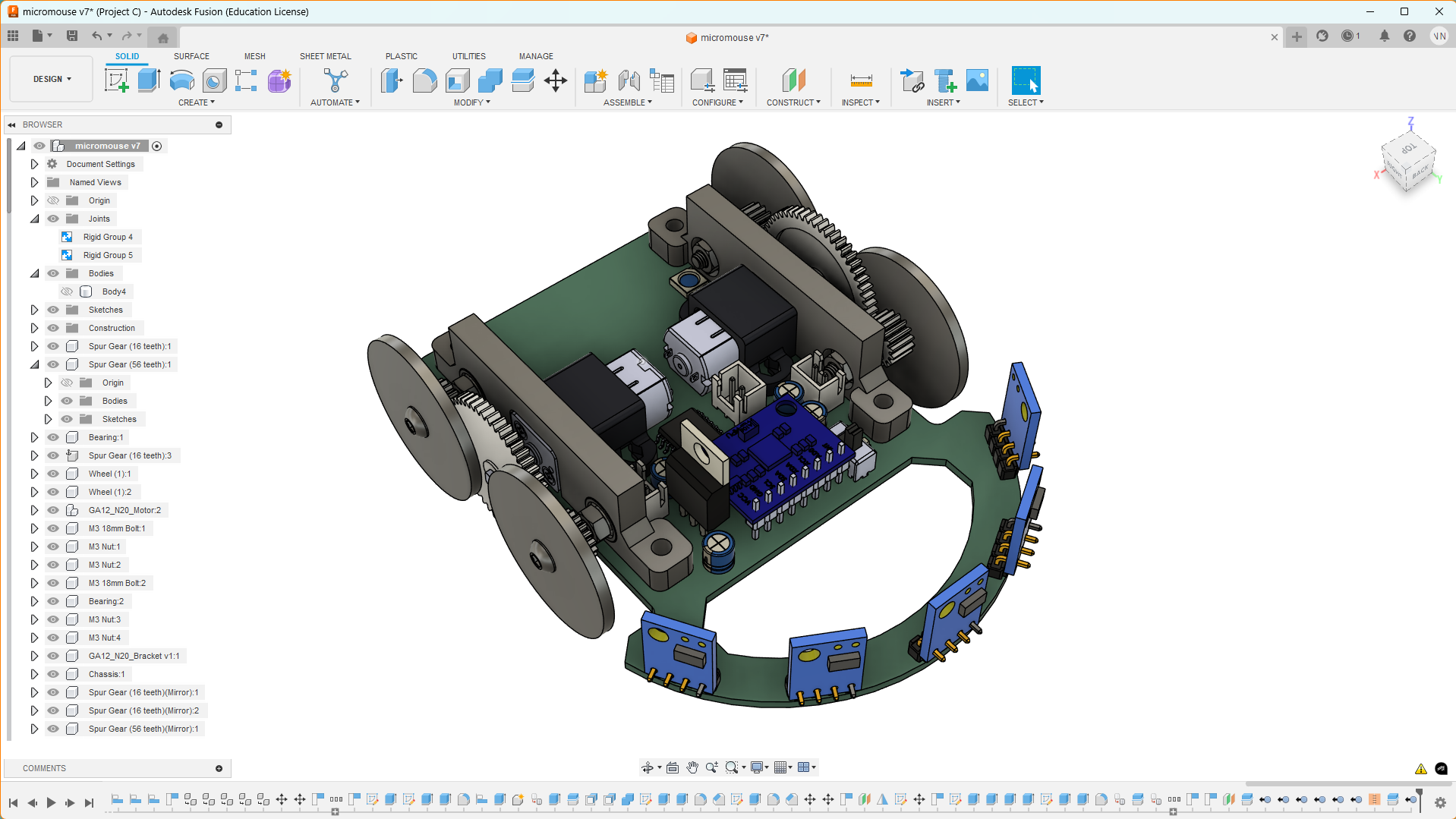
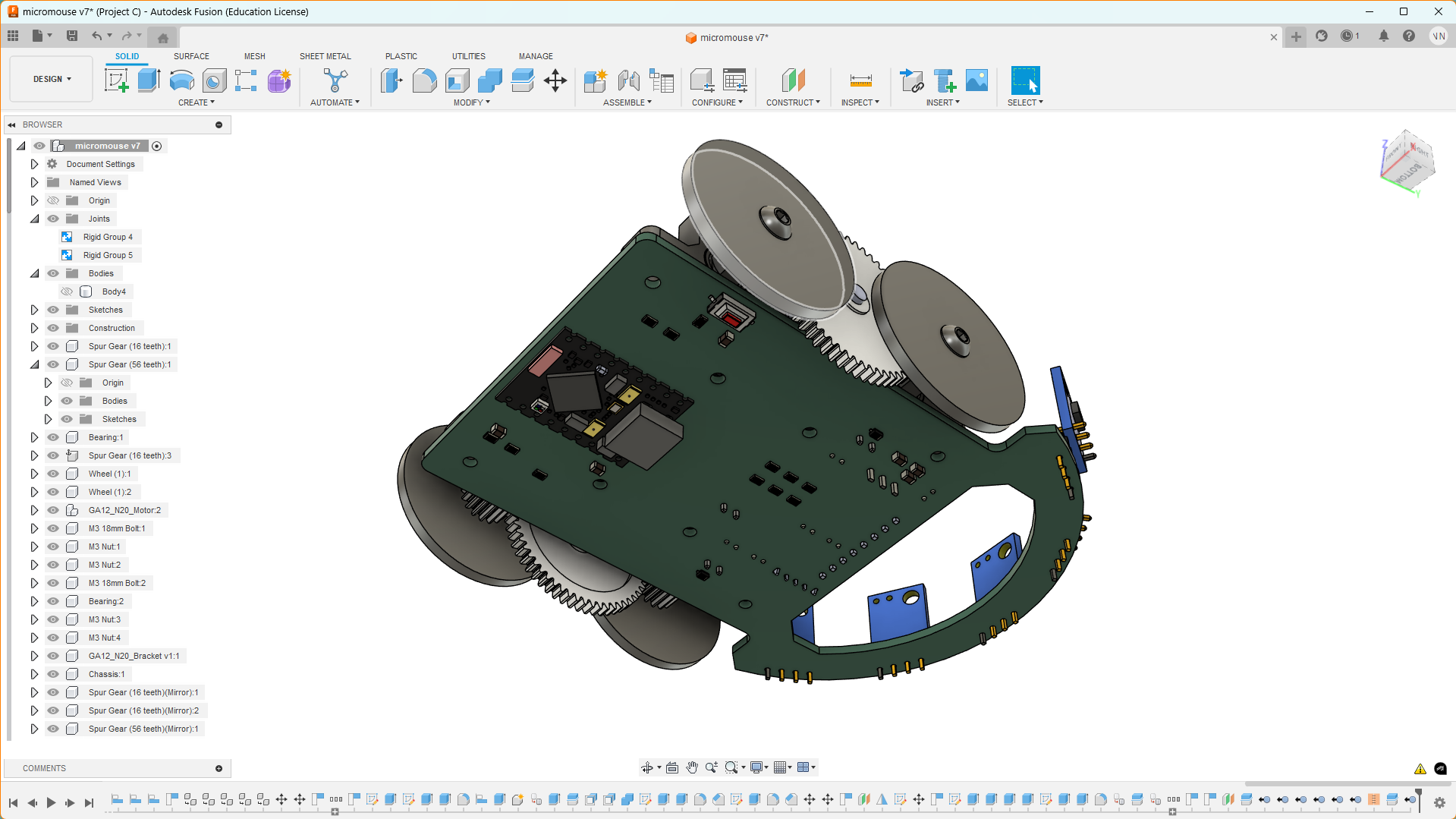
This project focuses on developing an autonomous car system powered by neural networks (NN). Inspired by the design architecture of micromouse, the car is designed to navigate autonomously using deep learning techniques. The project leverages deep learning and neural network models to enable the autonomous functionalities of the car. The neural network processes real-world sensor data to make real-time decisions for the car's navigation. The project timeline is divided into several stages:

  1. Concept Development: Initial phase where the concept was developed.
  2. Gamepad PCB Design: Creation of the gamepad hardware to control the car.
  3. Autonomous Car Design: Currently in progress, focusing on the car's hardware and software integration.
  4. Neural Network Training: Future phase where the model will be trained.
  5. Documentation: Final phase to document the project.

Software Architecture

  • Data Collection: Using the gamepad (now replaced by computer control) to navigate the car in a physical map with walls. The sensors collect data and transmit it to the ESP32-S3 on the computer.
  • Machine Learning Training: Utilizing Python and TensorFlow to train the neural network model.
  • Deployment: Importing the trained model configurations to the car for autonomous navigation.

Hardware

Car Hardware

  • ESP32-S3 Super Mini: Main microcontroller used in the car.
  • GY87 9-DOF IMU: Inertial measurement unit for orientation and motion sensing.
  • 5 VL53L0X Sensors: Distance measurement sensors for mapping the environment.
  • L293DD Motor Driver: Controls the motors of the car.
  • GA12 N20 Motor: Motor with a step-up gearbox of 56:16 for movement.
  • 2S Lipo Battery

Gamepad Hardware

  • Joysticks
  • MPU6050 6-DOF IMU
  • ESP32-S3 N16R8
  • ST7789 LCD TFT SPI Screen
  • IP5306 for Power Management
  • Low Profile Switches
  • Single-cell 18650 Battery
  • Additional Buttons and Pin Headers

Machine Learning Training Procedure

  1. Collecting Data: Create a physical map with walls and use the gamepad (now our computer) to control the car. The 5 VL53L0X sensors onboard will collect map data, transmit them to the ESP on the computer.
  2. Training the Model: Use Python with TensorFlow library to train the neural network model.
  3. Deployment: Import the trained model configurations to the car and let it navigate autonomously.

Milestone Pictures

  • Micromouse Design Inspiration Micromouse 1 Micromouse 2 Micromouse 3
  • Gamepad PCB Gamepad Pic 2 Gamepad Pic 3 Gamepad Pic 4 Gamepad Pic 5

Additional Information

The gamepad PCB encountered a hardware issue that cannot be fixed in time. As a workaround, we will use an external ESP32-S3 connected to the computer to control the car via BLE. We will continue to develop and improve the project.


Author: pacman314159

Parts

70
QtyValueFootprintReferences
1710KResistor_SMD:R_0805_2012MetricR1, R2, R3, R4, R5, R6, R7, R8, R10, R11, R12, R13, R14, R15, R16, R17 +1
1010uFCapacitor_SMD:C_0805_2012MetricC1, C2, C3, C4, C5, C6, C7, C8, C9, C10
8SW_PushKeyboard_Switches:SW_MX_LowProfile_Kailh_Choc_V1V2_THT_HybridSW3, SW5, SW6, SW7, SW8, SW9, SW10, SW14
5LEDLED_SMD:LED_0805_2012MetricD1, D2, D3, D4, D5
4MountingHoleMountingHole:MountingHole_3.2mm_M3_PadH1, H2, H3, H4
322uFCapacitor_Tantalum_SMD:CP_EIA-3528-15_AVX-H_Pad1.50x2.35mm_HandSolderC11, C12, C13
3~XH_2p54:XH_2p54_4P_maleJ1, J2, J4
22RResistor_SMD:R_0805_2012MetricR18, R19
2COM-09032Joystick:PS4_joystickU3, U6
2SW_PushButton_Switch_THT:SW_Tactile_SPST_Angled_PTS645Vx31-2LFSSW1, SW2
2SW_PushButton_Switch_THT:SW_PUSH-12mmSW4, SW12
12R2Inductor_SMD:L_10.4x10.4_H4.8L1
1Battery_CellBattery:BatteryHolder_Keystone_1042_1x18650BT1
1DIPButton_Switch_THT:SW_DIP_SPSTx01_Slide_9.78x4.72mm_W7.62mm_P2.54mmSW11
1IP5306Package_SO:SOIC-8-1EP_3.9x4.9mm_P1.27mm_EP2.41x3.3mm_ThermalViasU7
1LC709203FQH-02TWGPackage_DFN_QFN:WDFN-8-1EP_4x3mm_P0.65mm_EP2.4x1.8mm_ThermalViasU5
1SI2300Package_TO_SOT_SMD:SOT-23_HandsolderingQ1
1SW_PushButton_Switch_THT:SW_PUSH_6mmSW13
1USB_C_Plug_USB2.0Connector_USB:USB_C_Receptacle_GCT_USB4125-xx-x-0190_6P_TopMnt_HorizontalP1
1~ESP32_S3_DevkitC1:ESP32_S3_DevkitC1U2
1~IMU:MPU6050U4
1~XH_2p54:XH_2p54_9P_maleJ3
1~LCD_TFT_ST7789:LCD_TFT_1.3_inches_ST7789U1

More from Reiko0908/NeuralNetwork_Based_AutonomousCar

2
  • 2 layers188.5 × 88.9 mmEsp gamepad, the printed circuit board in 3D

    Esp gamepad

    Reiko0908/NeuralNetwork_Based_AutonomousCar

    This project focuses on developing an autonomous car system powered by neural networks (NN). It utilizes deep learning techniques to enable key functionalities such as perception, path planning, and control.

    65 parts2Apache-2.0
  • 2 layers77.4 × 100.8 mmMicromouse, the printed circuit board in 3D

    Micromouse

    Reiko0908/NeuralNetwork_Based_AutonomousCar

    This project focuses on developing an autonomous car system powered by neural networks (NN). It utilizes deep learning techniques to enable key functionalities such as perception, path planning, and control.

    57 parts2Apache-2.0

Similar boards

  • 2 layers87 × 71 mmSocket, the printed circuit board in 3D

    Socket

    eddyem/STM8_samples

    Some code samples and ready projects based on STM8 (deprecated)

    89 parts80
  • 2 layers89.3 × 52.1 mmDivergence Meter Project v2, the printed circuit board in 3D

    Divergence Meter Project v2

    waicool20/Divergence-Meter-Project-v2

    This is the second iteration of the Divergence Meter Project and another personal learning project, this time learning how to integrate Li-Ion batteries into a project, new electrical converter topologies, Rust…

    149 parts28
  • 2 layers72.6 × 30.6 mmEsp20A80V, the printed circuit board in 3D

    Esp20A80V

    RoboDurden/Esp32_20A_80V_dcdc

    20A 80V dcdc/mppt with Esp32 and touch display

    31 parts2MIT
  • 2 layers100 × 100 mmSmart air, the printed circuit board in 3D

    Smart air

    meeTeam05/smart-air

    Devices provision over BLE, publish telemetry/shadow over MQTT, and serve the app through a Cloudflare-fronted Fastify API. See Features below for the full breakdown.

    70 parts1MIT
  • 2 layers25.8 × 24.3 mm4in1 ESC, the printed circuit board in 3D

    4in1 ESC

    PrashantHalai-212/4in1_Brushed_Motor_ESC

    4-in-1 Brushed DC Motor ESC for Drones. A compact electronic speed controller designed to drive four brushed DC motors simultaneously.

    35 parts1MIT
  • 4 layers80 × 140 mmIOB V3, the printed circuit board in 3D

    IOB V3

    SpaceTeam/Lamarr_IOB_V3

    280 parts1
  • 2 layers29.8 × 56.2 mmDrone, the printed circuit board in 3D

    Drone

    bottlecoder-raj/FPV-DRONE

    Personal drone project FPV

    22 parts
  • 2 layers99.4 × 99.3 mmIoT2526 HK2, the printed circuit board in 3D

    IoT2526 HK2

    Chethien1912/IoT-Environmental-Monitoring-System

    ESP32-based IoT environmental monitoring project semester 2 2025-2026 HCMUTE

    78 partsMIT

Questions

How big is the Esp gamepad v2 PCB?

It measures 188.5 × 88.9 mm and has 2 copper layers, 1.6 mm thick.

What parts does the Esp gamepad v2 use?

70 parts, built around the COM-09032, IP5306 and SI2300. The full list of its parts is on this page, with links to each part's symbol and footprint where PCBKit's library has them.

Where can I download the Esp gamepad v2 KiCad files?

From the Reiko0908/NeuralNetwork_Based_AutonomousCar repository on GitHub, at the commit this page was made from: the board is pcbs/esp_gamepad_v2/esp_gamepad_v2.kicad_pcb and its schematic pcbs/esp_gamepad/esp_gamepad.kicad_sch. PCBKit opens the board in the browser, with nothing to install.

Can I use the Esp gamepad v2 design in my own project?

Its repository publishes it under the Apache-2.0 licence: you may reuse it on that licence's terms (keep the author's notice, and for a copyleft licence share your changes alike).