
2 layers85.6 × 22.8 mm

 Milk-Cool/cardtaiko1
osu!taiko simulator in a card form-factor!
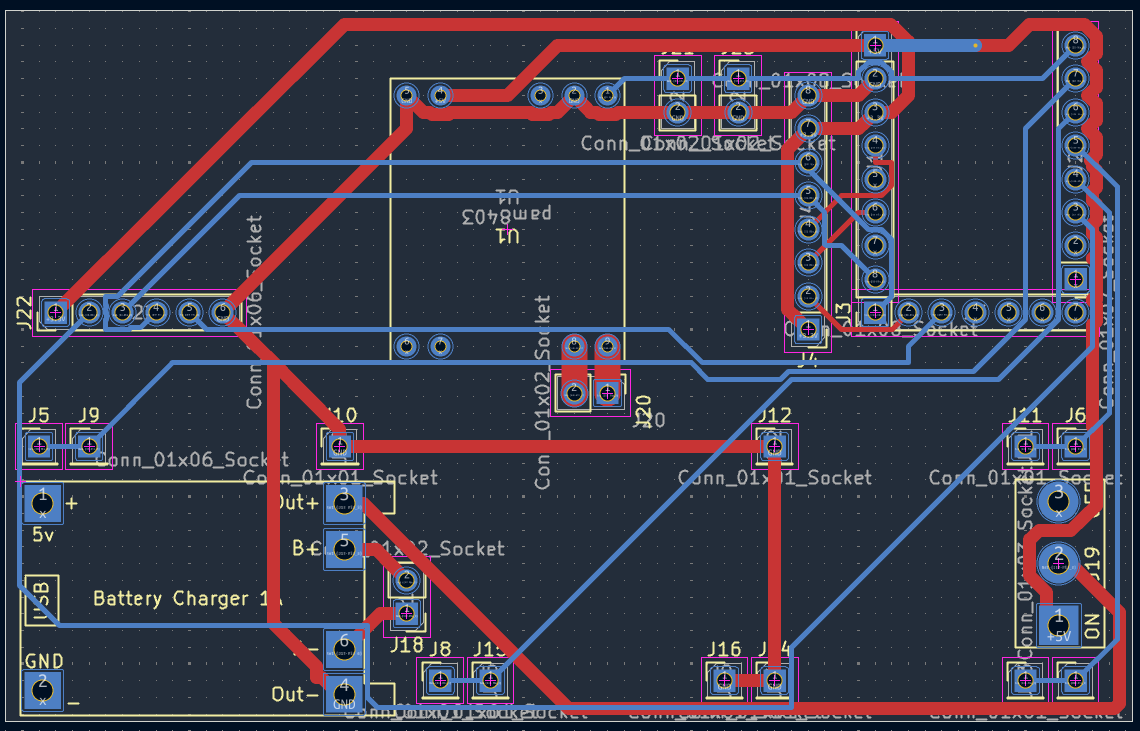
Cardtaiko is an open-source printed circuit board by Milk-Cool, from the Milk-Cool/cardtaiko repository on GitHub, published under the MIT licence. It is a 2-layer board of 85.6 × 54 mm with 24 parts on 34 nets, routed with 200 tracks and 1 via.
It is built around the PAM8403. Its parts include 23 connectors and 1 IC.
osu!taiko simulator in a card form-factor!
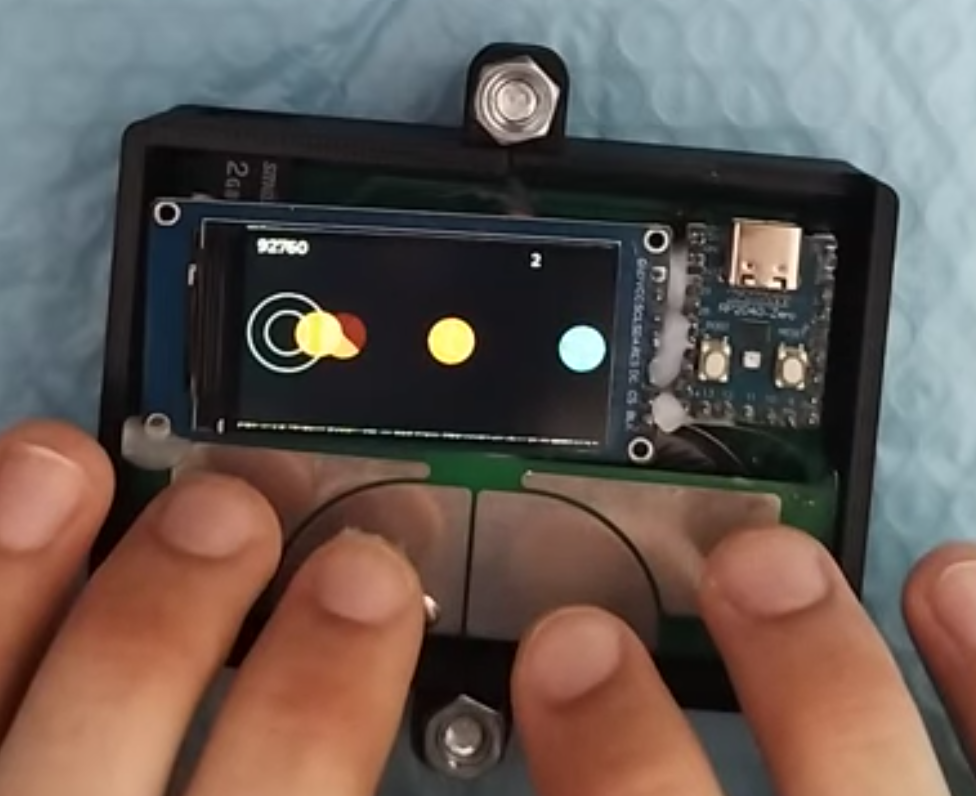
this is an RP2040-Zero based device that is made for simulating osu!taiko as closely as i was able to make it. it comes with capacitive touch buttons specifically shaped for taiko, a 320x170 display, an SD card reader, a speaker and a battery. you can also emulate a keyboard to play taiko-based games on your PC.
you'll have to build one yourself!! you can see bom.xml for the list of parts, and all the PCBs and modelsn as well as the firmware can also be found in this repository. then, you can convert and upload songs to an sd card using the online tool. you have to put the songs in /taiko on the SD card. then, boot up the device, select your song and have fun!! (you can pause at any time by pressing BOOTSEL on the board.)
for navigation, you can use the outer buttons to switch between options, the inner left one to go back and the inner right one to select.
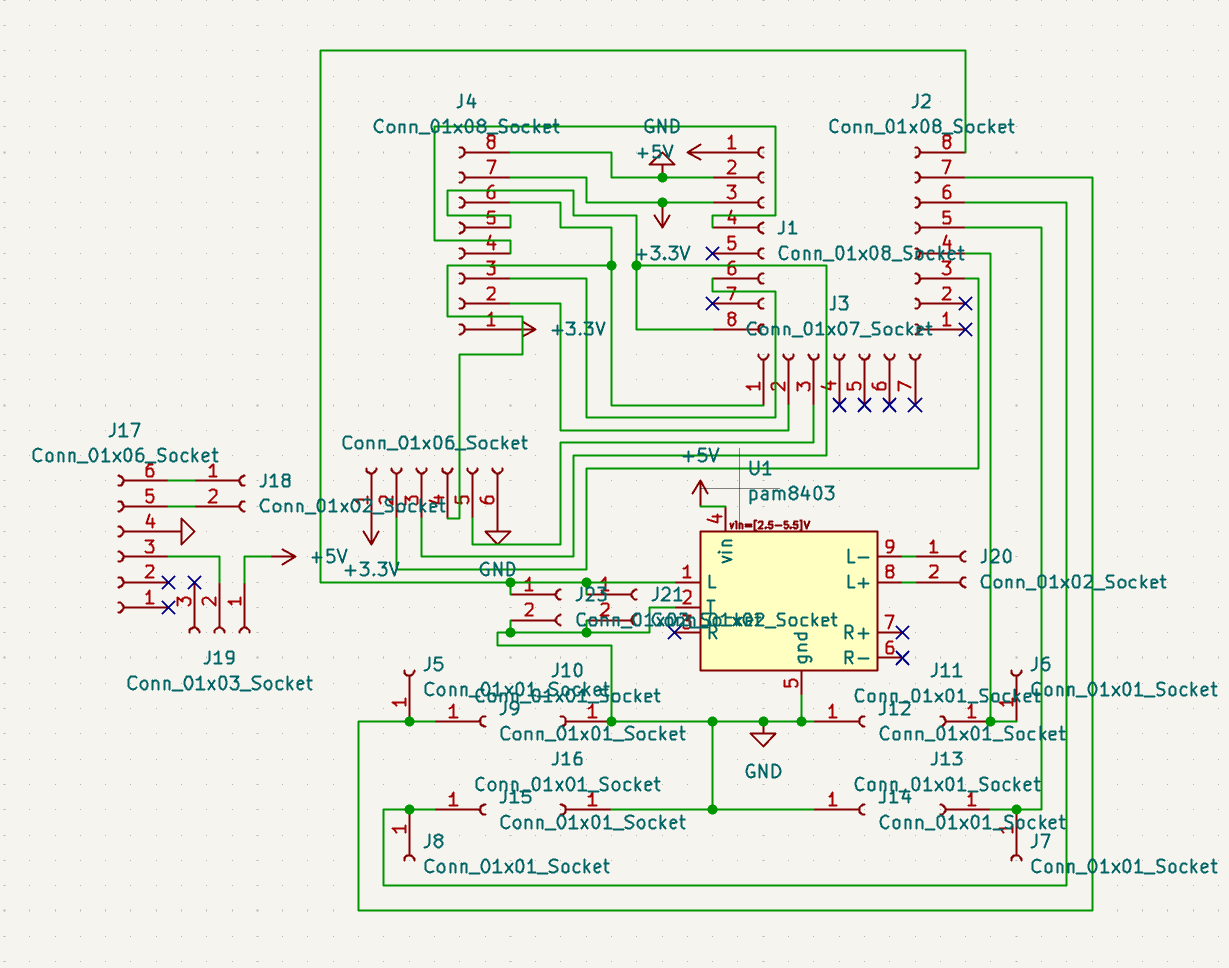
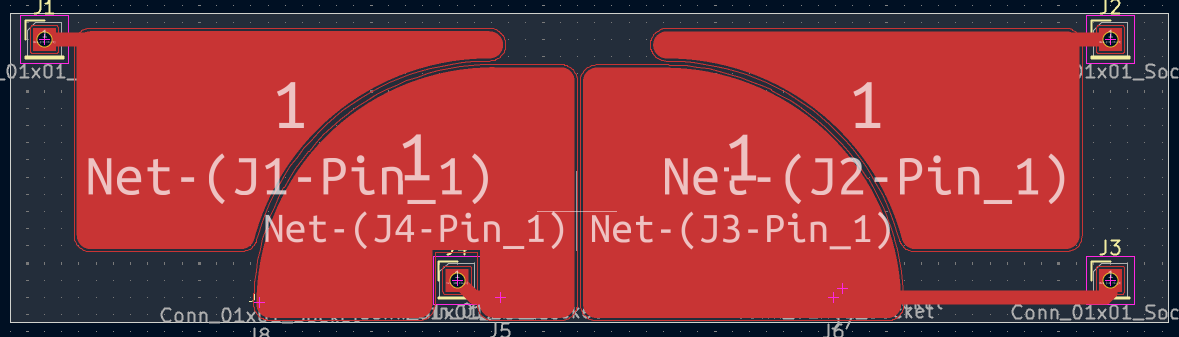
there are a few unmarked headers on the pcb. the one closest to the RP2040-Zero is where the display goes, the one in the upper left corner is for the SD card reader, and the four small ones all around the bottom part are where the 1x1 headers go in for the capacitive touch board. speaking of which, you also have to solder in 4 1MOhm resistors near the pins so that capactive touch works.
important: see the touch board to make sure everything lines up!!
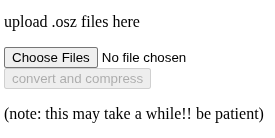
the interface is very simple: upload your .osz files, wait for the button to become active (that means that ffmpeg has loaded) and click convert!! evrything happens in your browser so it shouldn't take too long to finish.
i am a huge fan of both taiko no tatsujin and osu!taiko, and also the cardputer, which is why i decided it might be a fun idea to make a device that would let you play taiko on the go. and i also thought people might find the idea interesting as well :D
| Qty | Value | Footprint | References |
|---|---|---|---|
| 12 | Conn_01x01_Socket | Connector_PinHeader_2.54mm:PinHeader_1x01_P2.54mm_Vertical | J5, J6, J7, J8, J9, J10, J11, J12, J13, J14, J15, J16 |
| 4 | Conn_01x02_Socket | Connector_PinHeader_2.54mm:PinHeader_1x02_P2.54mm_Vertical | J18, J20, J21, J23 |
| 3 | Conn_01x08_Socket | Connector_PinHeader_2.54mm:PinHeader_1x08_P2.54mm_Vertical | J1, J2, J4 |
| 1 | Conn_01x03_Socket | 1P2T:1p2t | J19 |
| 1 | Conn_01x06_Socket | Connector_PinHeader_2.54mm:PinHeader_1x06_P2.54mm_Vertical | J22 |
| 1 | Conn_01x06_Socket | TP4056:TP4056-18650 | J17 |
| 1 | Conn_01x07_Socket | Connector_PinHeader_2.54mm:PinHeader_1x07_P2.54mm_Vertical | J3 |
| 1 | pam8403 | PAM8403:pam8403 | U1 |

plyalex/OpenFence
OpenFence is an open source GPS based digital livestock fencing system and web interface, aiming to reduce barriers of using cell grazing.

DAlexis/caustic-lasertag-system
Caustic project is a full-featured indoor and outdoor lasertag system

TeknoTrek/Arduino-Nano-FM-Radio-Si4703
Part of the Teknotrek YouTube channel, this repository includes KiCad files for an FM Radio project using Arduino Nano, Si4703, and other components.


aluisioalves123/rf-intercom
Interfone de apertar para falar, sem fio: as duas unidades conversam por rádio (nRF24L01+ com antena) e só precisam de uma tomada.

anadskman/Mini-Record-Player-Clock
A compact desktop Bluetooth speaker and clock inspired by a vintage record player. The aim of this project is to combine a functional Bluetooth speaker and Wi-Fi clock into a clean, fully 3D printed desktop display.

It measures 85.6 × 54 mm and has 2 copper layers, 1.6 mm thick.
24 parts, built around the PAM8403. The full list of its parts is on this page, with links to each part's symbol and footprint where PCBKit's library has them.
From the Milk-Cool/cardtaiko repository on GitHub, at the commit this page was made from: the board is kicad/main/cardtaiko.kicad_pcb and its schematic kicad/controls/cardtaiko-controls.kicad_sch. PCBKit opens the board in the browser, with nothing to install.
Its repository publishes it under the MIT licence: you may reuse it on that licence's terms (keep the author's notice, and for a copyleft licence share your changes alike).