
2 layers327.9 × 139 mm
Coco2
baldengineer/bit-preserve
Project for capturing vintage, classic, aka old computer schematics in KiCad.
147 parts446
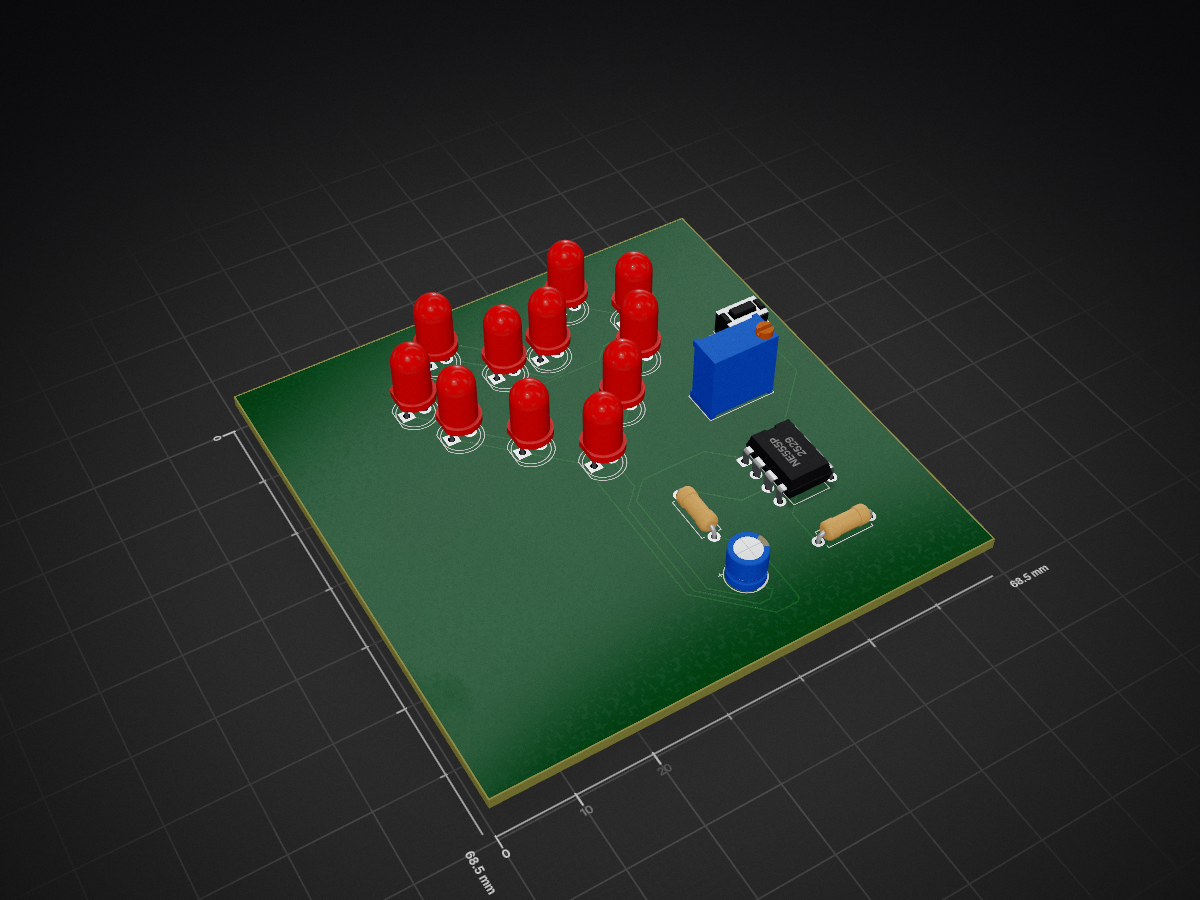
 MaeeTech/Pumping_heart_NE555
A heart-shaped LED circuit based on the NE555 timer IC designed in KiCad.
PumpingHeart is an open-source printed circuit board by MaeeTech, from the MaeeTech/Pumping_heart_NE555 repository on GitHub, published under the MIT licence. It is a 2-layer board with 17 parts on 6 nets, routed with 100 tracks and 0 vias.
It is built around the NE555P.
A heart-shaped LED circuit based on the NE555 timer IC. The schematic was designed in KiCad, and the circuit was physically assembled and tested on a perfboard.
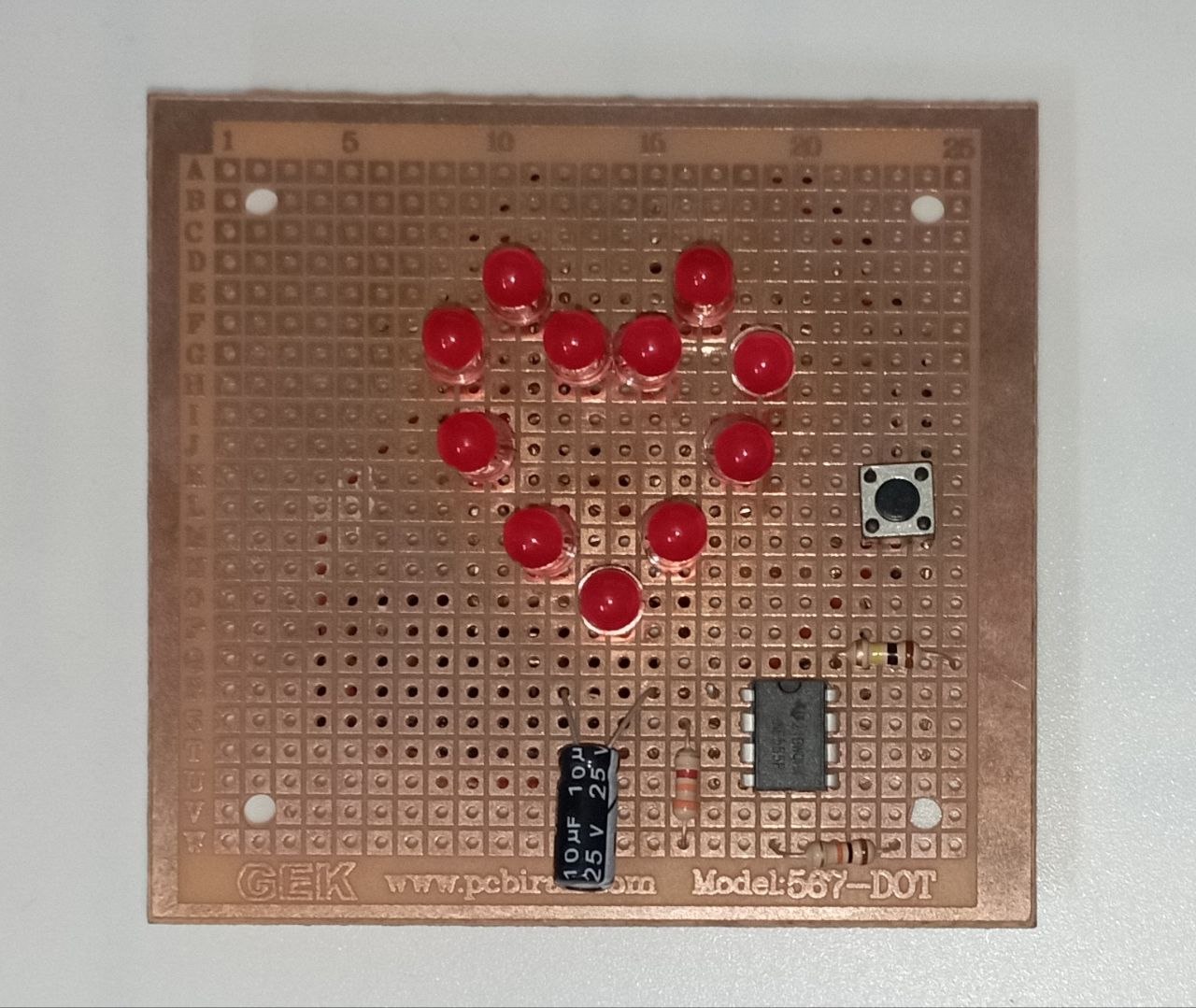
| Component | Quantity |
|---|---|
| NE555 Timer IC | 1 |
| 5 mm Red LED | 11 |
| 10kΩ & 3.3kΩ Resistor | 1 |
| 10uF Electrolytic Capacitor | 1 |
| Push Button | 1 |
| 9V Battery | 1 |
| 9V Battery Clip | 1 |
| Perfboard | 1 |
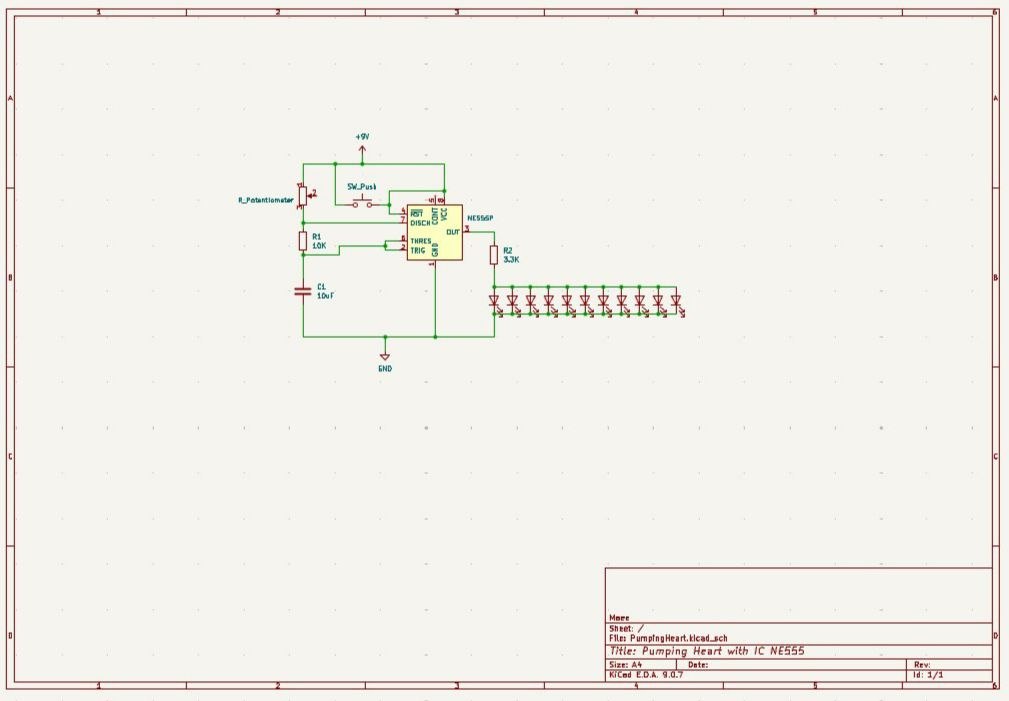
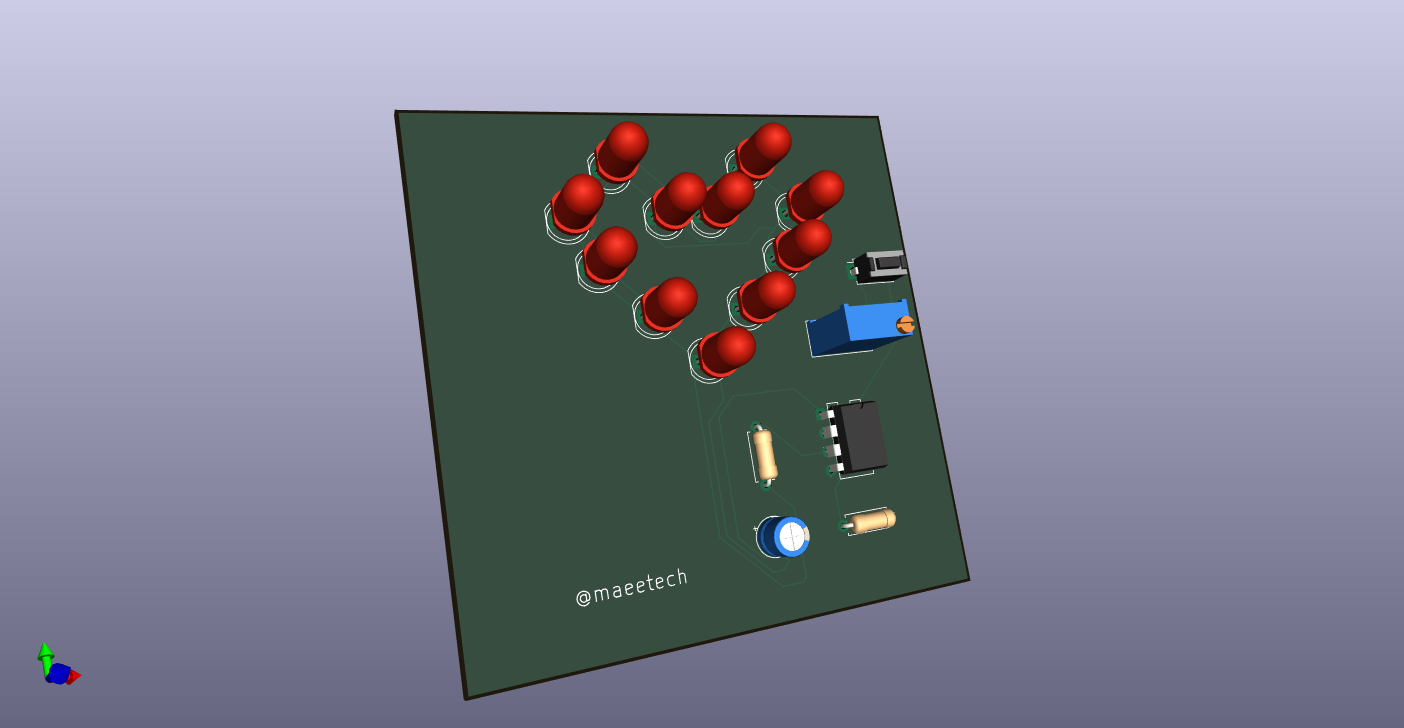
Watch the project in action on Instagram
| Qty | Value | Footprint | References |
|---|---|---|---|
| 1 | NE555P | Package_DIP:DIP-8_W7.62mm | U1 |
The 1 most common of 17 parts.
baldengineer/bit-preserve
Project for capturing vintage, classic, aka old computer schematics in KiCad.

The-Invent0r/8-bit-Computer-PCB
These are the KiCAD files for my 8-Bit Computer.

DarcyJProjects/touchtone555
An open-source DIY, NE555-based analogue synthesizer - play notes with a stylus


benjiaomodular/SynthCard
I designed this project with the help of PCBWay. You can get a copy of these cards through the PCBWay Shared Projects page.

fortinsylvain/MyCpu
Home brew CPU Hardware with 1-bit ALU implementation using 74LSxx, a micro-code and assembler coded in C#.

hackup/C128Diag
Replica of the Commodore C128 Diagnostic Test cartridge Assy No. 325093-01.
17 parts, built around the NE555P. The full list of its parts is on this page, with links to each part's symbol and footprint where PCBKit's library has them.
From the MaeeTech/Pumping_heart_NE555 repository on GitHub, at the commit this page was made from: the board is PumpingHeart.kicad_pcb and its schematic PumpingHeart.kicad_sch. PCBKit opens the board in the browser, with nothing to install.
Its repository publishes it under the MIT licence: you may reuse it on that licence's terms (keep the author's notice, and for a copyleft licence share your changes alike).