
2 layers64 × 78 mm
Actuator board
ieb/autopilot
An ML Autopilot designed and written almost entirely by Google AntiGravity.
37 parts
 HABBOUBY/MONGEYA_2
Autonomous cleaning station with waste sorting robot ,built for Hack Club Beest.
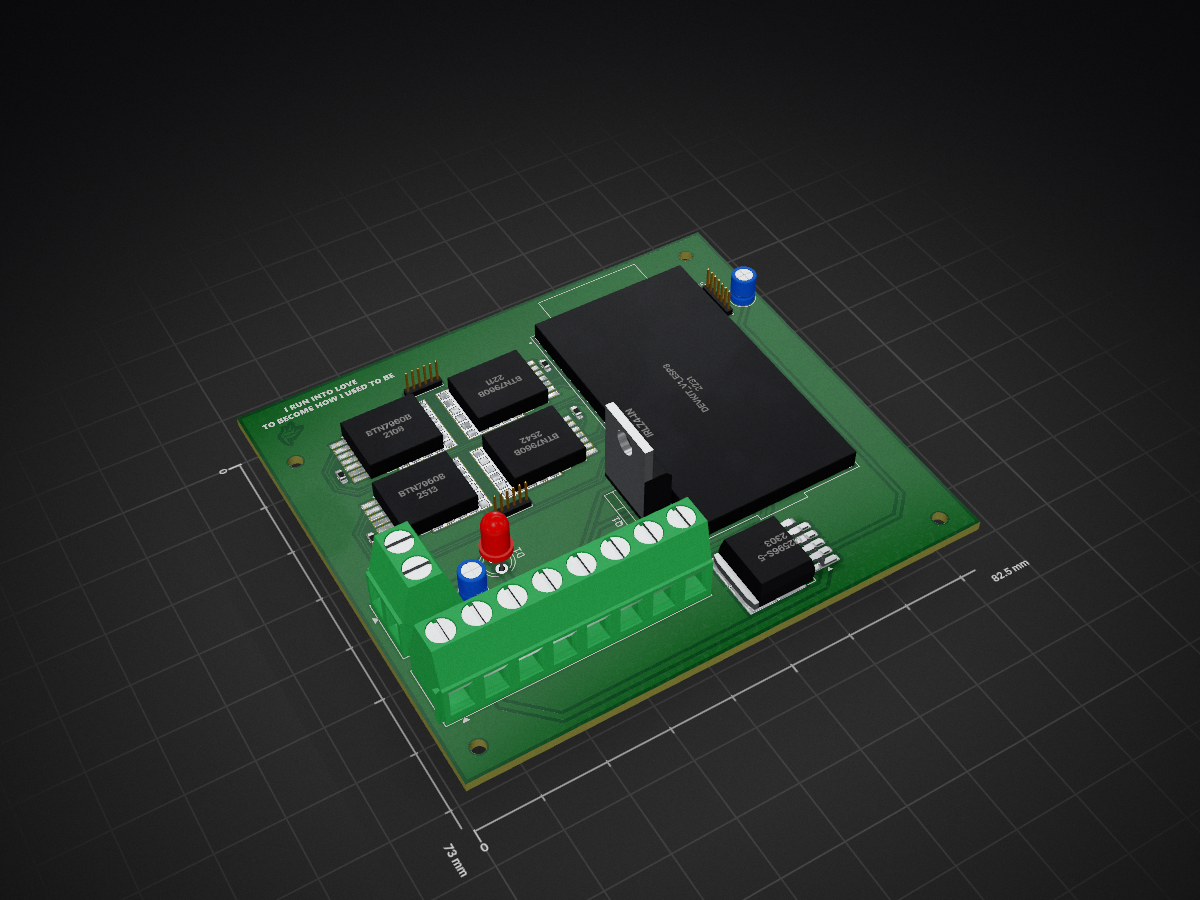
FABRICATION is an open-source printed circuit board by HABBOUBY, from the HABBOUBY/MONGEYA_ repository on GitHub, published under the MIT licence. It is a 2-layer board of 82.5 × 73 mm with 25 parts on 58 nets, routed with 178 tracks and 0 vias.
It is built around the BTN7960B, LM2596S-5.0 and IRLZ44N. Its parts include 6 ICs, 5 resistors, 5 connectors, 2 capacitors and 1 diode. It belongs with the robots and motor control boards and the ESP32 boards of this library.


A modular robotic ecosystem designed to automate repetitive household cleaning tasks.



Built by HABBOUBY EDEM
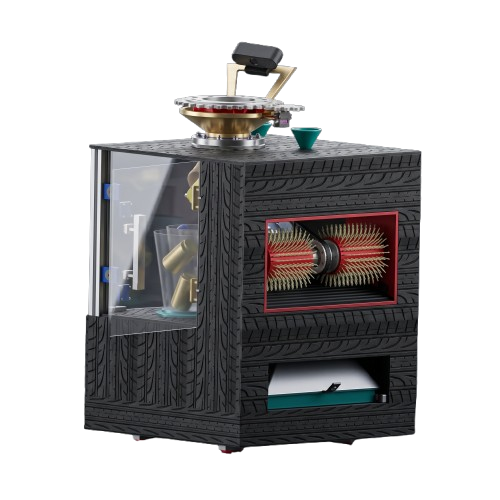
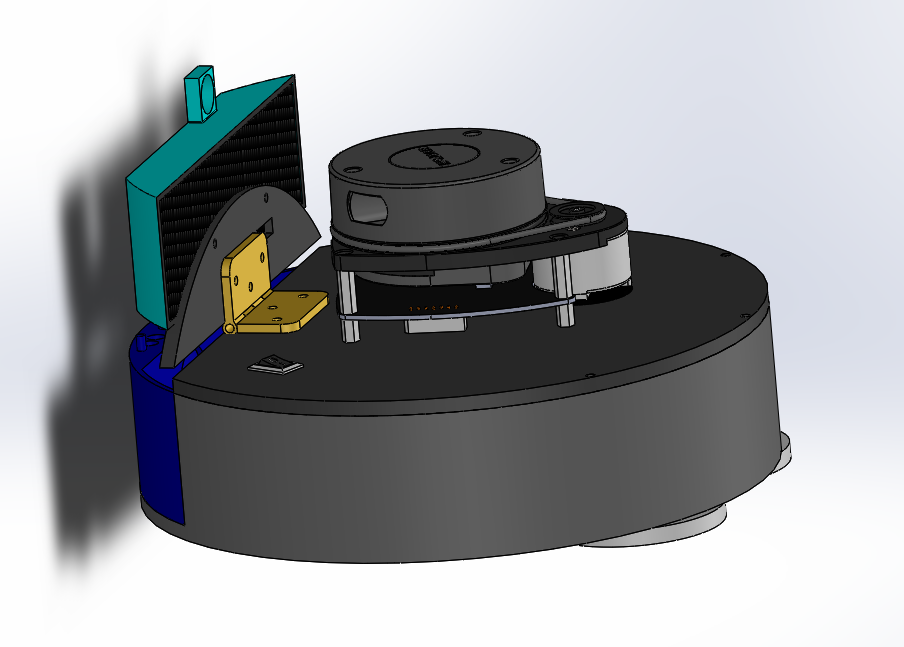
MONGEYA is a smart cleaning station that automates several repetitive household tasks. It combines multiple cleaning systems inside a single machine and works together with MONGY, a compact autonomous robot that leaves the station to clean the floor before returning automatically to recharge.
The entire mechanical structure, electronics, and custom PCB were designed from scratch.
This submission covers the mechanical design (CAD) and the custom PCB (KiCad) for MONGEYA and Mongy. Firmware/embedded code is not included at this stage — this project is being submitted as a hardware and electronics design.
This submission is provided as a complete, print-ready CAD and PCB design (STEP, STL, and KiCad project).
I do not currently have access to a 3D printer, and professional 3D printing services are costly and limited where I live (Tunisia). For this reason, I was not able to physically fabricate and photograph the assembled parts before submission.
Every file needed to reproduce MONGEYA and Mongy — including slicer-ready STL exports and print settings — is included in this repository, so the design can be fabricated and verified by anyone with access to a 3D printer.
On 3D printing access in Tunisia: Access to 3D printing hardware in Tunisia is particularly constrained. Import duties and customs taxes on 3D printers and electronics significantly raise their price compared to international markets, putting personal ownership out of reach for many students. Local makerspaces with printing capability are few, mostly concentrated in the capital, and operate as private, paid facilities with limited slots rather than open-access community labs. Online/local printing services exist but are costly and add delays for a project of this scale (multiple large structural parts). For these reasons, physical fabrication of MONGEYA and Mongy has not yet been possible, and the design is submitted as a complete, print-ready package so it can be reproduced and verified by anyone with printer access.
Consequence for the live demo / playable version: for the same reason, no live demo or playable version of the physical robot exists yet — there is no functioning hardware to record or interact with. In place of a live demo, the Demo URL points to a CAD walkthrough (renders / exploded view / turntable) so reviewers can still see the design in motion and in detail.
As this is my first time using GitHub to structure and share a project of this scale, I used AI assistance to help review this submission against the shipping guide requirements, research relevant resources, and refine parts of this documentation. All design work — CAD modeling, PCB design, and engineering decisions — is my own.
The inspiration behind MONGEYA comes from my mother.
Every day she spends a significant amount of time cleaning shoes, sorting waste, and handling repetitive household chores. I wanted to design a machine capable of taking over these repetitive tasks, giving her more free time while making home cleaning easier and smarter.
MONGY is the autonomous cleaning robot inside MONGEYA.
MONGY leaves its docking station, cleans the surrounding area using multiple cleaning mechanisms, and automatically returns to recharge.
MONGY — Compact 3S LiPo battery MONGEYA — Three independent 3S LiPo batteries powering different subsystems
| Property | Value |
|---|---|
| Diameter | 210 mm |
| Height | 50 mm |
| Weight | ~2 kg |
| Property | Value |
|---|---|
| Length | 400 mm |
| Width | 400 mm |
| Height | 600 mm |
| Weight | ~15 kg |
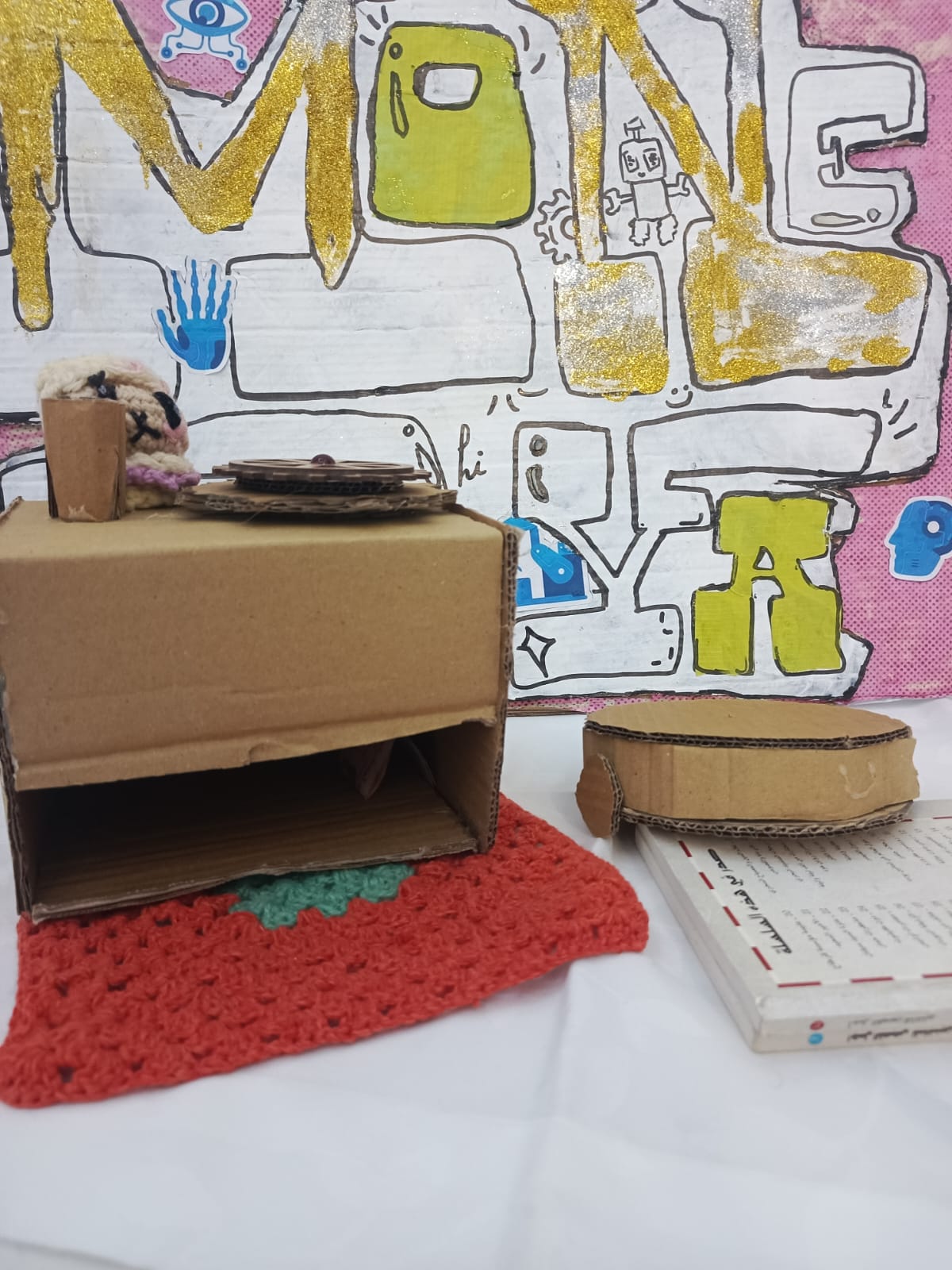
While a full-scale 3D print of MONGEYA was not possible for the reasons explained above (no 3D printer access, high import costs on electronics/printers in Tunisia), a physical 1:3.5 scale cardboard mockup was built by hand to demonstrate the real-world footprint, proportions, and general layout of the station.
This mockup shows:
It is not a functional prototype — no electronics, sensors, or motors are installed — but it serves as tangible, physical proof of the design's real-world scale and proportions, complementing the CAD renders and STL/STEP files included in this repository.
| Setting | Value |
|---|---|
| Layer Height | 0.20 mm |
| Nozzle | 0.4 mm |
| Infill | 20% |
| Walls | 3 |
| Supports | Only where needed |
| Screw | Quantity |
|---|---|
| M3 × 10 mm | 25 |
| M3 × 13 mm | 15 |
| M3 × 15 mm | 15 |
| M3 × 19 mm | 5 |
Total: 60 M3 screws
MONGY uses a custom PCB designed in KiCad around the ESP32-WROOM-32.
The 02_PCB/mongy/ folder contains:
FABRICATION/The MONGEYA station intentionally uses modular perfboards for auxiliary circuits such as chemical dispensing and opto-isolated interfaces, making maintenance and future upgrades easier.
mongeya-main/
│
├── 01_3D/
│   ├── SOLIDWORKS PARTS/
│   │   ├── MONGEYA & MONGY solidworks parts/   # Full native source — Mongy lives inside MONGEYA, so its parts are bundled here too
│   │   ├── MONGY solidworks parts/              # Standalone native source for Mongy only
│   │   ├── protection system/
│   │
│   │
│   │
│   ├── STL/
│   │   ├── STL FILES MONGEYA/
│   │   └── STL MONGY/
│   │
│   ├── cleaning robot mongySTEP/                # STEP source for Mongy only — the standalone cleaning robot, separate from the station
│   └── main station mongeyaSTEP.rar             # Single .rar — this assembly is a single (but heavy) STEP file, zipped to keep the repo light
│
├── 02_PCB/
│   └── mongy/
│       ├── FABRICATION/     # Gerbers + drill files
│       └── Component list PCB DESIGN.xlsx
│
├── 03_docs/
│ ├── CAD different view/On the "MONGEYA & MONGY solidworks parts" folder: since Mongy physically docks and lives inside MONGEYA (it's the little robot that comes out of the big station, hihi 🐢🏠), the full combined SolidWorks source for both is kept together in one folder — this is the one to open if you want the complete ecosystem in a single assembly. The separate "MONGY solidworks parts" folder exists for anyone who only wants to reproduce the standalone cleaning robot on its own, without the station.
On cleaning robot mongySTEP: this folder holds the STEP export specifically for Mongy alone — useful if you just want to print/inspect the robot without pulling in the whole MONGEYA station.
Note on file compression: The main station mongeya assembly is provided as a single .rar because it is one large STEP file — zipping it keeps the repository lighter and faster to clone. It can be extracted with any standard tool (WinRAR, 7-Zip, The Unarchiver), and the STEP file inside remains fully editable in any CAD application. The STL exports are already slicer-ready as-is, no extraction needed beyond opening the STL folders.
01_3D/STL/) using the settings above.03_docs/renders/.03_docs/wiring/.This repository includes:
01_3D/cleaning robot mongySTEP/ for Mongy, and 01_3D/main station mongeyaSTEP.rar for MONGEYA, fully editable in any CAD tool01_3D/SOLIDWORKS PARTS/, split into the combined MONGEYA+MONGY assembly and the standalone Mongy parts01_3D/STL/, ready to slice and printallowing anyone to modify, remix, or reproduce the project.
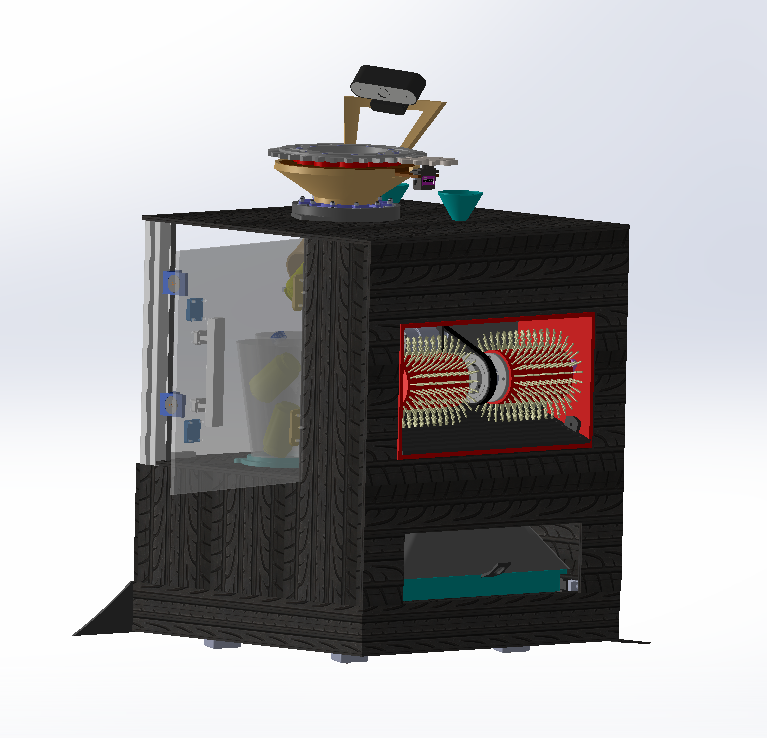
Additional documentation is available inside 03_docs/, including:
PRESENTATION.pdf)CAD different view/, renders/)wiring/)This project is released under the MIT License.
| Qty | Value | Footprint | References |
|---|---|---|---|
| 5 | R | Resistor_SMD:R_0603_1608Metric_Pad0.98x0.95mm_HandSolder | R1, R2, R3, R4, R5 |
| 4 | BTN7960B | BTN7960B:IC_BTN7960B | U1, U2, U3, U4 |
| 2 | Conn_01x06 | Connector_PinHeader_1.00mm:PinHeader_1x06_P1.00mm_Vertical | J1, J2 |
| 1 | C | Capacitor_THT:C_Radial_D4.0mm_H5.0mm_P1.50mm | C14 |
| 1 | C_Polarized | Capacitor_THT:C_Radial_D4.0mm_H5.0mm_P1.50mm | C13 |
| 1 | Conn_01x07 | Connector_PinHeader_1.00mm:PinHeader_1x07_P1.00mm_Vertical | J5 |
| 1 | DEVKIT_V1_ESP32-WROOM-32 | DEVKIT_V1_ESP32-WROOM-32:MODULE_DEVKIT_V1_ESP32-WROOM-32 | U5 |
| 1 | IRLZ44N | Package_TO_SOT_THT:TO-220-3_Vertical | Q1 |
| 1 | LED | LED_THT:LED_D4.0mm | D1 |
| 1 | LM2596S-5 | Package_TO_SOT_SMD:TO-263-5_TabPin3 | U6 |
| 1 | LOGO | preety.mod:logo | G*** |
| 1 | Screw_Terminal_01x02 | TerminalBlock_Phoenix:TerminalBlock_Phoenix_MKDS-1,5-2_1x02_P5.00mm_Horizontal | J3 |
| 1 | Screw_Terminal_01x08 | TerminalBlock_Phoenix:TerminalBlock_Phoenix_MKDS-1,5-8-5.08_1x08_P5.08mm_Horizontal | J4 |
The 21 most common of 25 parts.
ieb/autopilot
An ML Autopilot designed and written almost entirely by Google AntiGravity.

UWCubeSat/PHAT-3-Main-Board
PCB design for the PHAT-3 weather balloon payload's main board, housing a radio, sensors, camera, and buck converter.

anadskman/Water-Dispenser
A water dispenser that can dispense water mixed with flavouring like blackcurrent

virgile-tchidehou/smart-soja
An autonomous IoT-based mobile system for soybean pre-processing, integrating embedded systems, industrial automation, solar energy and cloud connectivity.


NHuang58/Piano_Hand_Electronics
API using Music 21 and MIDI to convert midi files and piano notes to coordinates for a piano hand
It measures 82.5 × 73 mm and has 2 copper layers, 1.6 mm thick.
25 parts, built around the BTN7960B, LM2596S-5.0 and IRLZ44N. The full list of its parts is on this page, with links to each part's symbol and footprint where PCBKit's library has them.
From the HABBOUBY/MONGEYA_ repository on GitHub, at the commit this page was made from: the board is 02_PCB/FABRICATION/FABRICATION.kicad_pcb and its schematic 02_PCB/FABRICATION/FABRICATION.kicad_sch. PCBKit opens the board in the browser, with nothing to install.
Its repository publishes it under the MIT licence: you may reuse it on that licence's terms (keep the author's notice, and for a copyleft licence share your changes alike).